Critical care nursing is where everything you know gets tested at once.
It is where you simultaneously interpret a waveform, troubleshoot a ventilator alarm, titrate a vasopressor infusion, communicate with a specialist team, and comfort a terrified family — all while managing a patient whose condition can change from stable to catastrophic between one assessment and the next. It is the specialty that demands the deepest clinical knowledge, the sharpest assessment instincts, and the most disciplined clinical judgment in all of nursing.
And it is the specialty where the gap between excellent preparation and inadequate preparation is measured in patient outcomes.
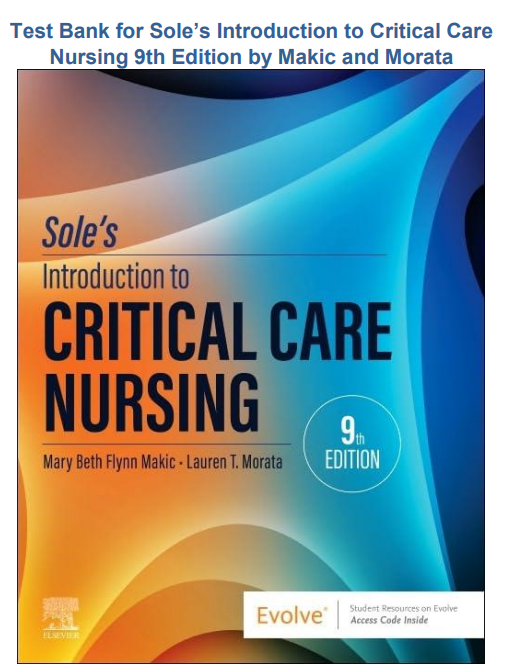
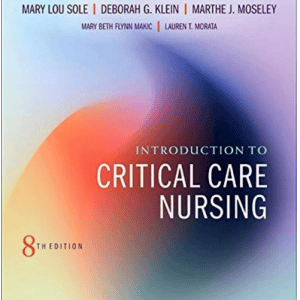
This comprehensive test bank is built for the 9th Edition of Sole’s Introduction to Critical Care Nursing by Makic and Morata. It is one of the most authoritative, most clinically rigorous, and most widely used critical care nursing textbooks in undergraduate and graduate nursing education — and this test bank helps you master every chapter with the focused, high-acuity, evidence-based clinical practice that critical care nursing demands.
Whether you are preparing for a critical care nursing course exam, a progressive care unit competency evaluation, CCRN certification, or building the advanced clinical foundation that ICU nursing requires, this resource delivers the hemodynamic reasoning, pathophysiological depth, and evidence-based management precision that Makic and Morata have established as the standard for critical care nursing education in the 9th Edition.
What’s Inside?
- Hundreds of practice questions covering every chapter
- Multiple-choice, select-all-that-apply, priority, and complex clinical scenario questions
- Complete answer keys with thorough, evidence-based critical care clinical rationales
- Questions aligned with NCLEX-RN and CCRN certification examination content standards
- Coverage of all major critical care body systems, monitoring technologies, and advanced nursing interventions — fully updated for the 9th Edition
Table of Contents
1 Overview of Critical Care Nursing
2 Patient and Family Response to the Critical Care Experience
3 Ethical and Legal Issues in Critical Care Nursing
4 Palliative and End-of-Life Care
5 Organ Donation
6 Comfort and Sedation
7 Nutritional Therapy
8 Dysrhythmia Interpretation and Management
9 Hemodynamic Monitoring
10 Ventilatory Assistance
11 Rapid Response Teams and Code Management
12 Shock, Sepsis, and Multiple Organ Dysfunction Syndrome
13 Cardiovascular Alterations
14 Nervous System Alterations
15 Acute Respiratory Failure
16 Acute Kidney Injury
17 Hematological and Immune Disorders
18 Gastrointestinal Alterations
19 Endocrine Alterations
20 Trauma and Surgical Management
21 Burns
Who Is This Test Bank For?
This resource is ideal for:
- Undergraduate RN nursing students in critical care or advanced medical-surgical courses
- New graduate nurses completing critical care unit orientation and competency programs
- CCRN and PCCN certification examination candidates
- Graduate nursing students in acute care or critical care NP programs
- Nursing faculty developing critical care course exams and clinical competency assessments
- Experienced nurses transitioning from general nursing into ICU or progressive care settings
- Flight nurses, transport nurses, and emergency nurses seeking to reinforce critical care foundations
- Students whose programs use the 9th Edition of Sole’s Introduction to Critical Care Nursing
Topics Covered Include:
- Foundations of critical care nursing practice — philosophy, environment, and professional standards
- Legal, ethical, and end-of-life considerations in critical care
- Hemodynamic monitoring — arterial lines, CVP, pulmonary artery catheters, and advanced monitoring
- Cardiac rhythm interpretation and dysrhythmia management in critical care
- 12-lead ECG interpretation in the critical care setting
- Airway management — endotracheal intubation principles and advanced airway techniques
- Mechanical ventilation — modes, settings, alarms, monitoring, and weaning strategies
- Cardiovascular critical care — heart failure, acute coronary syndromes, and cardiogenic shock
- Shock states — hypovolemic, distributive, obstructive, and cardiogenic pathophysiology
- Respiratory failure — ARDS, pulmonary embolism, and ventilator-associated complications
- Neurological critical care — TBI, stroke, ICP monitoring, and status epilepticus
- Renal failure in critical care — AKI assessment and continuous renal replacement therapy
- Gastrointestinal critical care — GI bleeding, hepatic failure, and acute pancreatitis
- Hematological emergencies and disseminated intravascular coagulation
- Endocrine emergencies — diabetic ketoacidosis, HHS, and thyroid storm
- Multisystem trauma and burns critical care nursing
- Sepsis — recognition, Surviving Sepsis Campaign protocols, and multiorgan dysfunction
- Pain, agitation, and delirium management in the ICU
- Nutrition support in critically ill patients
- Caring for the critically ill older adult
- Family-centered care in the critical care environment
- Interprofessional collaboration in the ICU
Why This Test Bank Delivers Results
Makic and Morata’s 9th Edition of Sole’s Introduction to Critical Care Nursing represents the most comprehensive update in this textbook’s distinguished history — incorporating the latest evidence-based critical care practice guidelines, expanded interprofessional collaboration content, updated Surviving Sepsis Campaign recommendations, current ARDS Network protocols, revised pain-agitation-delirium management guidelines, and the most current hemodynamic monitoring standards available.
It is a textbook written by critical care nurses who understand what critical care nurses actually face — the cognitive complexity of managing multiple simultaneous clinical priorities, the hemodynamic reasoning required to interpret invasive monitoring data in real time, the communication challenges of a complex ICU team environment, and the emotional and moral weight of end-of-life care in the intensive care unit.
This test bank is built to develop the clinical competency that this environment demands.
Every question is grounded in real critical care clinical scenarios drawn from the Makic and Morata framework. You will not simply recall normal hemodynamic parameters in isolation — you will interpret a complete hemodynamic profile in the context of a specific patient presentation and determine whether the clinical picture represents cardiogenic shock, distributive shock, hypovolemia, or obstructive pathology — and then select the evidence-based management response most appropriate for that diagnosis. You will not just name ventilator modes — you will troubleshoot a ventilator alarm in a deteriorating patient, identify the most likely cause, and determine the correct priority action. You will not merely define sepsis criteria — you will recognize a patient meeting Sepsis-3 criteria before septic shock develops and initiate the time-critical bundle interventions that determine survival.
The 9th Edition’s updated evidence base is fully reflected in this test bank — including the latest Surviving Sepsis Campaign hour-1 bundle recommendations, current PADIS guidelines for pain, agitation, and delirium management, updated ARDS Network lung-protective ventilation protocols, and current ACC/AHA critical care cardiovascular management standards.
Detailed rationales explain the hemodynamic reasoning, pathophysiological mechanisms, evidence-based protocols, and critical care clinical decision-making framework behind every correct answer. Questions are organized chapter by chapter for structured, systematic study. Build the advanced clinical judgment that critical care nursing demands — one high-acuity scenario at a time.
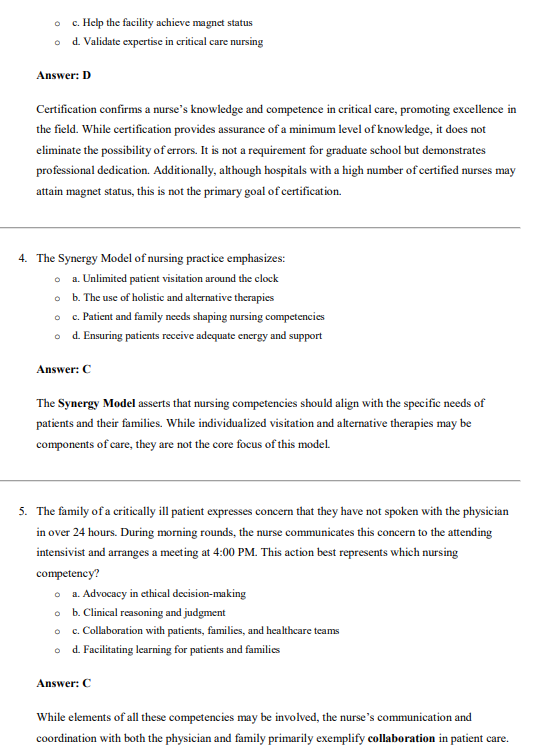
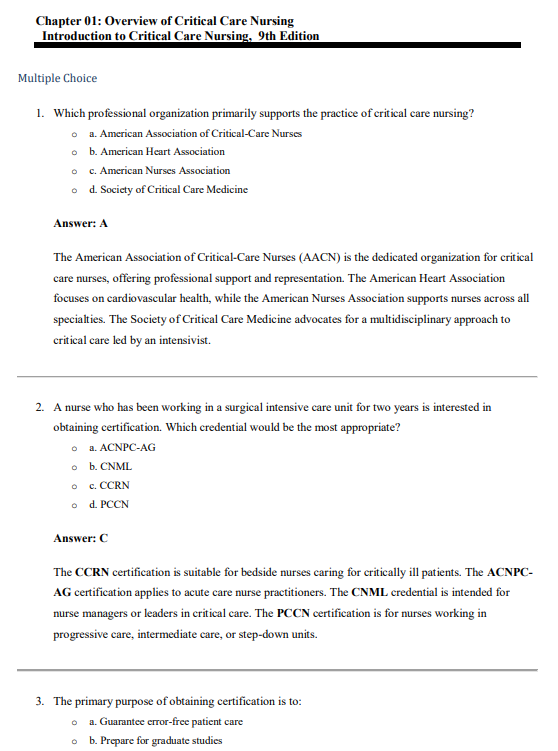
Sample Questions
Question 1
A critical care nurse is monitoring a post-cardiac surgery patient. The following hemodynamic profile is obtained — blood pressure 82/50 mmHg, heart rate 118 bpm, CVP 18 mmHg, pulmonary artery wedge pressure 24 mmHg, cardiac output 2.8 L/min, cardiac index 1.4 L/min/m², and systemic vascular resistance 1,840 dynes/sec/cm⁻⁵. The patient’s extremities are cool and mottled with capillary refill of five seconds. Which hemodynamic diagnosis and priority management intervention is most appropriate?
- A) Hypovolemic shock — administer a 1,000 mL IV crystalloid bolus immediately to correct volume deficit
- B) Cardiogenic shock — notify the cardiac surgery team immediately, avoid aggressive fluid administration, and prepare for inotropic and vasopressor therapy per protocol
- C) Distributive shock — administer broad-spectrum antibiotics and initiate norepinephrine infusion for vasoplegic management
- D) Obstructive shock — prepare for immediate pericardiocentesis to relieve suspected cardiac tamponade
Correct Answer: B
Rationale: This hemodynamic profile is the classic signature of cardiogenic shock — the most feared complication following cardiac surgery. Systematic hemodynamic interpretation reveals a coherent picture of pump failure. The markedly elevated CVP of 18 mmHg and pulmonary artery wedge pressure of 24 mmHg confirm elevated right and left ventricular filling pressures — a fluid-overloaded, failing heart that cannot effectively eject its preload. The cardiac output of 2.8 L/min and cardiac index of 1.4 L/min/m² — critically below the normal range of 2.2–4.0 L/min/m² — confirm severely reduced forward flow. The elevated SVR of 1,840 dynes/sec/cm⁻⁵ reflects maximal compensatory peripheral vasoconstriction as the body attempts to maintain perfusion pressure despite catastrophically low cardiac output. The clinical signs — hypotension, tachycardia, cool mottled extremities, and prolonged capillary refill — confirm end-organ hypoperfusion. Aggressive fluid administration in this profile would be contraindicated — the already-elevated filling pressures indicate the ventricle is volume-overloaded, and additional fluid would worsen pulmonary congestion without improving cardiac output. Management centers on inotropic support to enhance contractility (dobutamine or milrinone), vasopressor support to maintain perfusion pressure (norepinephrine), and immediate cardiac surgery team notification for potential mechanical circulatory support consideration. Hypovolemic shock presents with low CVP and low PAWP. Distributive shock presents with low SVR and warm extremities. Obstructive shock requires clinical evidence of pericardial tamponade or tension pneumothorax — not the elevated filling pressures of pump failure.
Question 2
A mechanically ventilated patient in the surgical ICU suddenly triggers a high-pressure alarm. The nurse enters the room and finds the patient extremely agitated, biting the endotracheal tube, with an SpO₂ that has dropped from 98% to 84% in the past three minutes. Breath sounds are absent on the left and the trachea appears deviated to the right. Blood pressure has dropped to 76/44 mmHg. Which action is the absolute priority?
- A) Increase the sedation infusion rate to reduce patient agitation and resolve the high-pressure alarm
- B) Disconnect the patient from the ventilator, manually ventilate with a bag-valve-mask device, call for emergency assistance, and prepare for immediate needle decompression of the left chest
- C) Obtain a portable chest X-ray to confirm the suspected diagnosis before any intervention
- D) Increase the FiO₂ to 100% and reposition the endotracheal tube by advancing it two centimeters
Correct Answer: B
Rationale: This clinical presentation is a tension pneumothorax — a rapidly fatal emergency requiring immediate action without waiting for radiographic confirmation. The clinical triad of absent breath sounds on the affected side, tracheal deviation away from the affected side, and hemodynamic collapse — along with the mechanism of positive pressure mechanical ventilation, which can drive air into a pleural breach — constitutes the clinical diagnosis of tension pneumothorax. Tension pneumothorax occurs when air accumulates under pressure in the pleural space with no means of escape, progressively collapsing the ipsilateral lung and shifting the mediastinum contralaterally, ultimately compressing the great vessels and impairing venous return, causing the cardiovascular collapse seen here. Every minute of delay in decompression worsens the cardiovascular collapse. The priority action sequence is to immediately disconnect the patient from the ventilator — which is actively worsening the tension by continuing to force positive pressure air — manually ventilate with a BVM to verify whether resistance is from the patient or the ventilator, call for emergency assistance simultaneously, and prepare for immediate needle decompression at the second intercostal space midclavicular line on the affected side followed by definitive chest tube placement. Increasing sedation addresses agitation but does not treat the life-threatening cause. A chest X-ray is absolutely contraindicated as the initial response to clinical tension pneumothorax with hemodynamic collapse — this is a clinical diagnosis requiring immediate intervention. Repositioning the ETT addresses a different problem and would not relieve pleural tension.
Question 3
A critical care nurse is caring for a patient with septic shock who has received appropriate fluid resuscitation — 30 mL/kg IV crystalloid — over the past hour. The patient’s current MAP remains at 58 mmHg despite fluid resuscitation. Current vasopressor therapy includes norepinephrine at 0.12 mcg/kg/min. Lactate drawn one hour ago was 4.2 mmol/L. The nurse notes that blood cultures were drawn and antibiotics were initiated within the first hour. Which additional intervention is most consistent with current Surviving Sepsis Campaign hour-1 bundle recommendations?
- A) Administer an additional 30 mL/kg IV crystalloid bolus since the MAP remains below 65 mmHg
- B) Administer hydrocortisone 200 mg IV per day as continuous infusion since the patient has not responded to vasopressors alone
- C) Repeat the lactate measurement since the initial lactate was above 2 mmol/L and reassess the trend to guide resuscitation adequacy
- D) Discontinue norepinephrine and switch to vasopressin as the sole vasopressor to achieve MAP target
Correct Answer: C
Rationale: Current Surviving Sepsis Campaign guidelines and the hour-1 bundle specify five core interventions — measuring lactate, obtaining blood cultures before antibiotics, administering broad-spectrum antibiotics, administering 30 mL/kg crystalloid for hypotension or lactate ≥ 4 mmol/L, and applying vasopressors for MAP below 65 mmHg. The initial lactate of 4.2 mmol/L is critically elevated — above 4 mmol/L indicates high-risk sepsis with significant risk of mortality. The Surviving Sepsis Campaign specifically recommends remeasuring lactate within two hours when the initial lactate is elevated, to assess the trajectory of lactate clearance as a key indicator of resuscitation adequacy and tissue perfusion improvement. Lactate clearance of 10% or greater per hour has been associated with improved outcomes. Blood cultures and antibiotics have been administered. Fluid resuscitation of 30 mL/kg has been completed. Vasopressor therapy is ongoing. The most critical remaining intervention from the bundle is remeasuring lactate to evaluate the resuscitation response. Additional fluid boluses beyond the initial 30 mL/kg require reassessment of fluid responsiveness rather than automatic administration — particularly given the risk of fluid overload in septic shock. Hydrocortisone is recommended for septic shock refractory to adequate vasopressor doses — this patient is on a single vasopressor at a moderate dose, not yet meeting the refractory threshold. Vasopressin may be added as a second vasopressor to reduce norepinephrine requirements but should not replace norepinephrine as the first-line agent per current guidelines.
Question 4
A critical care nurse is managing a patient on mechanical ventilation for ARDS with the following ventilator settings and clinical data — mode: volume control AC, tidal volume 6 mL/kg IBW, PEEP 14 cmH₂O, FiO₂ 0.70, respiratory rate 22 breaths/min, plateau pressure 34 cmH₂O, PaO₂ 62 mmHg, PaCO₂ 52 mmHg, pH 7.28. The provider considers increasing the tidal volume to improve PaCO₂ and pH. Which nursing response most accurately reflects current ARDS Network lung-protective ventilation evidence?
- A) Support the tidal volume increase since correcting the respiratory acidosis takes priority over lung protection in ARDS management
- B) Advocate against the tidal volume increase — the plateau pressure of 34 cmH₂O is already at the upper limit of safe range and increasing tidal volume risks worsening ventilator-induced lung injury; permissive hypercapnia accepting elevated PaCO₂ to prioritize lung protection is an established evidence-based ARDS management strategy
- C) Recommend immediately increasing FiO₂ to 1.0 rather than changing tidal volume to address the hypoxemia
- D) Suggest decreasing PEEP to reduce plateau pressure before considering tidal volume changes
Correct Answer: B
Rationale: This question requires applying ARDS Network lung-protective ventilation principles — the most evidence-based and mortality-reducing ventilation strategy for ARDS. The cornerstone of ARDS Network protocol is limiting tidal volume to 4–6 mL/kg of ideal body weight and maintaining plateau pressure at or below 30 cmH₂O. This patient’s plateau pressure of 34 cmH₂O is already at the upper acceptable limit — increasing tidal volume would push plateau pressure higher, increasing the risk of ventilator-induced lung injury through volutrauma and barotrauma. VILI is a major contributor to ARDS mortality and reversing it is a primary priority of lung-protective ventilation. Permissive hypercapnia — intentionally accepting elevated PaCO₂ and mild respiratory acidosis to achieve lung-protective ventilation goals — is a well-established, evidence-based strategy in ARDS management. The ARDS Network trial demonstrated that low tidal volume ventilation (6 mL/kg IBW with plateau pressure below 30 cmH₂O) reduced ARDS mortality by 22% compared to higher tidal volumes — even when this resulted in permissive hypercapnia. The pH of 7.28, while significantly acidotic, is the accepted tradeoff for lung protection in ARDS, particularly when it results from permissive hypercapnia rather than metabolic acidosis. Increasing FiO₂ to 1.0 creates oxygen toxicity risk without addressing the ventilation concern. Decreasing PEEP would worsen oxygenation in ARDS without addressing the tidal volume question — PEEP is a critical tool for alveolar recruitment in ARDS and should not be decreased while hypoxemia is present.
Question 5
A critical care nurse is performing a CPOT assessment on a post-operative patient who is intubated, sedated, and cannot self-report pain. During position change for turning, the nurse observes the following — facial muscles tensed with brow lowering and eye tightening, upper limbs showing resistance to movement with muscle rigidity, no tolerance of the ventilator with coughing on the tube, and no verbalization possible. Which CPOT score does this assessment represent and what is the priority nursing action?
- A) CPOT score of 2 — document the findings and reassess in four hours per routine protocol
- B) CPOT score of 8 — the maximum score indicating significant pain; administer prescribed analgesic therapy immediately and reassess the CPOT score 30 minutes after intervention to evaluate response
- C) CPOT score of 4 — reassess in one hour and administer analgesics only if the score increases further
- D) CPOT score of 0 — the patient is showing normal ICU responses to repositioning and no analgesic intervention is required
Correct Answer: B
Rationale: The Critical-Care Pain Observation Tool assigns scores across four behavioral domains — facial expression, body movements, compliance with the ventilator or vocalization, and muscle tension — each scored 0, 1, or 2 for a total possible score of 0–8. Scoring this patient: facial expression showing tensing with brow lowering and eye tightening = 2 (grimacing); body movements showing resistance and rigidity = 2 (rigid); ventilator compliance showing coughing on the tube = 2 (fighting the ventilator); muscle tension assessed as rigidity = 2 (very tense or rigid). Total CPOT score = 8 — the maximum possible score, indicating severe behavioral pain indicators. A CPOT score of 3 or above is the recommended threshold for analgesic intervention according to current PADIS (Pain, Agitation/Sedation, Delirium, Immobility, and Sleep Disruption) guidelines published by SCCM. A score of 8 demands immediate analgesic intervention — not delayed reassessment. The nurse must administer prescribed analgesics as per the ordered protocol and reassess the CPOT score 30 minutes after intervention to evaluate whether the intervention has achieved adequate pain relief. This reflects the systematic, validated approach to pain management in non-verbal ICU patients — ensuring that mechanically ventilated patients receive equitable, evidence-based pain assessment and treatment regardless of their inability to self-report. Pain management in the ICU using validated behavioral tools is a core component of the ABCDEF bundle — the evidence-based framework for optimizing ICU patient outcomes.
Frequently Asked Questions (FAQs)
What edition does this test bank cover?
This test bank is written specifically for the 9th Edition of Sole’s Introduction to Critical Care Nursing by Makic and Morata. All questions are fully aligned with the current edition’s chapter organization, updated hemodynamic monitoring standards, current evidence-based critical care protocols, and the latest Surviving Sepsis Campaign, ARDS Network, and PADIS guidelines reflected in the 9th Edition.
How are the questions organized?
Questions are arranged chapter by chapter, allowing you to study systematically through all critical care content areas or focus on specific high-acuity topics — such as hemodynamic monitoring, mechanical ventilation, shock states, or neurological critical care — based on your course exam schedule or CCRN certification preparation priorities.
How does this test bank differ from the Sole 8th Edition test bank?
This test bank is written specifically for the 9th Edition of Sole’s Introduction to Critical Care Nursing by Makic and Morata. The 9th Edition includes updated Surviving Sepsis Campaign recommendations, revised PADIS guidelines, current ARDS Network protocols, expanded interprofessional collaboration content, and updated hemodynamic monitoring standards not reflected in previous editions. Students using the 9th Edition should use this test bank for fully current, edition-specific exam preparation.
Is this test bank aligned with the CCRN examination?
Yes. Questions are written to reflect the clinical complexity, hemodynamic reasoning, and application-level thinking assessed on the CCRN certification examination administered by AACN. The emphasis on critical interpretation, priority clinical decision-making, and complex multi-system patient scenarios directly mirrors the cognitive demands of CCRN board preparation.
Is this test bank appropriate for new graduate nurses entering critical care?
Absolutely. New graduates completing ICU orientation will find this test bank an invaluable resource for building the clinical reasoning and pathophysiological understanding that critical care practice demands. The detailed rationales are particularly valuable for new nurses developing the hemodynamic and ventilator management knowledge base that experienced critical care nurses rely on daily.
How quickly can I access the test bank after purchase?
Immediately. As soon as your purchase is complete, you receive instant digital access with no waiting period. Study on your own schedule, at your own pace, from any device.
Are the rationales grounded in current critical care evidence and guidelines?
Yes. Every rationale reflects current evidence-based critical care standards — including AACN practice guidelines, Surviving Sepsis Campaign recommendations, ARDS Network protocols, PADIS guidelines, Brain Trauma Foundation standards, and ACC/AHA critical care cardiovascular management standards — consistent with the evidence-based framework Makic and Morata establish throughout the 9th Edition.
Can nursing faculty use this test bank for course assessments?
Absolutely. The chapter-by-chapter organization, complex clinical scenario emphasis, hemodynamic reasoning questions, and varied question formats make this an outstanding resource for faculty building quizzes, unit exams, and comprehensive assessments for undergraduate critical care nursing courses and graduate acute care NP programs using the 9th Edition.


Leo Fernandez –
The resource has really been helpful in my ICU studies
Caleb Martins –
Perfectly organized for thorough exam prep
Kamara Reid –
Excellent!
fred m –
Very very helpful
Norah Helen –
I like it a lot
Peterson S. –
Perfect
Carol Kay –
Clear rationales after every question.
Morgan Fraiser –
Worth every minute studying.
Kevin May –
A valuable addition to my study materials
Lucille Maria –
A solid addition to my study routine
Liam Mbogo –
Boosted my confidence and helped identify knowledge gaps.
Winnie M. –
Perfect for quick study sessions
Thomas K. –
An excellent study guide