Mental health nursing is where clinical science and human compassion meet at their most essential intersection.
It is where your words are your primary clinical instrument. Where the quality of your therapeutic communication determines whether a patient discloses the suicidal ideation they have been carrying silently for weeks. Where recognizing the difference between a patient’s grief and clinical depression, between behavioral variation and psychosis, between medication side effects and new symptom emergence can determine the entire trajectory of their care.
It is also one of the most challenging — and most misunderstood — clinical specialties in nursing. The stigma that surrounds mental illness in broader society sometimes finds its way into clinical settings too. The nurse who enters psychiatric care with genuine compassion, clinical rigor, and a commitment to therapeutic presence becomes one of the most powerful advocates a vulnerable patient will ever have.
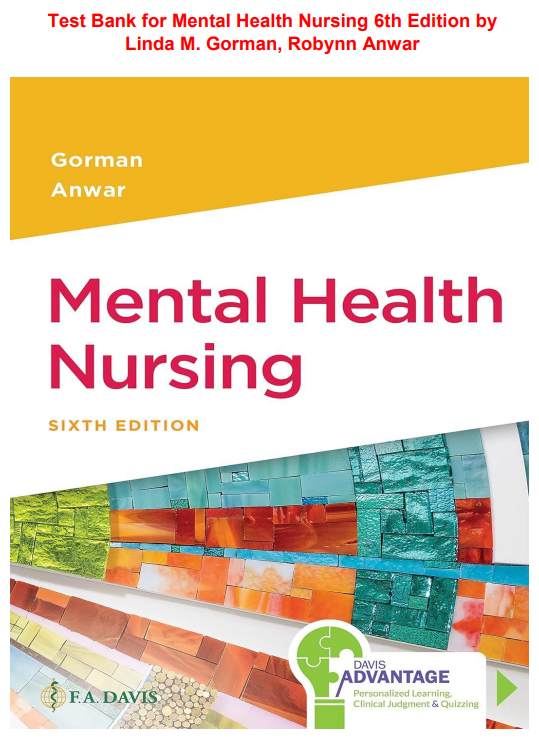
This comprehensive test bank is built for the 6th Edition of Mental Health Nursing by Linda M. Gorman and Robynn Anwar. It is one of the most practically focused, clinically grounded, and student-accessible mental health nursing textbooks in undergraduate nursing education — and this test bank helps you master every chapter with the focused, evidence-based, therapeutic communication-centered practice that mental health nursing demands.
Whether you are preparing for a psychiatric nursing course exam, an ATI mental health assessment, or the NCLEX-RN, this resource delivers the clinical knowledge, therapeutic reasoning, and patient safety focus that Gorman and Anwar have built into this textbook — and that every mental health patient deserves from their nurse.
What’s Inside?
- Hundreds of practice questions covering every chapter
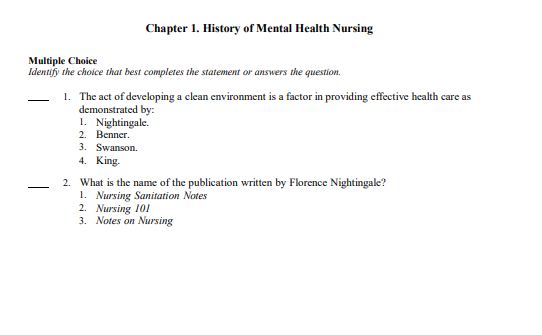
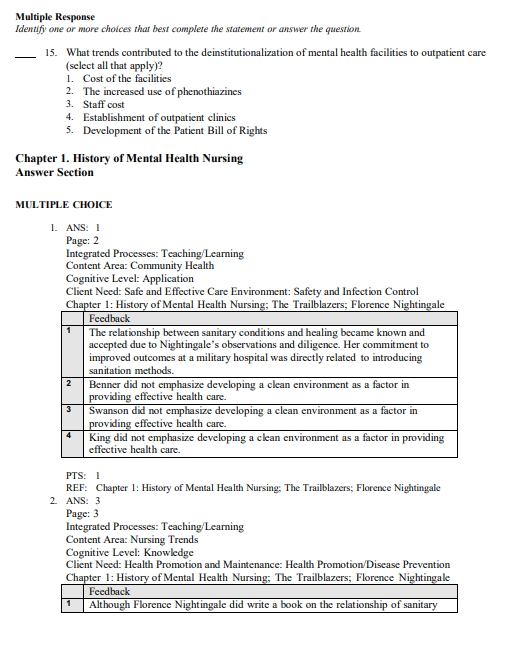
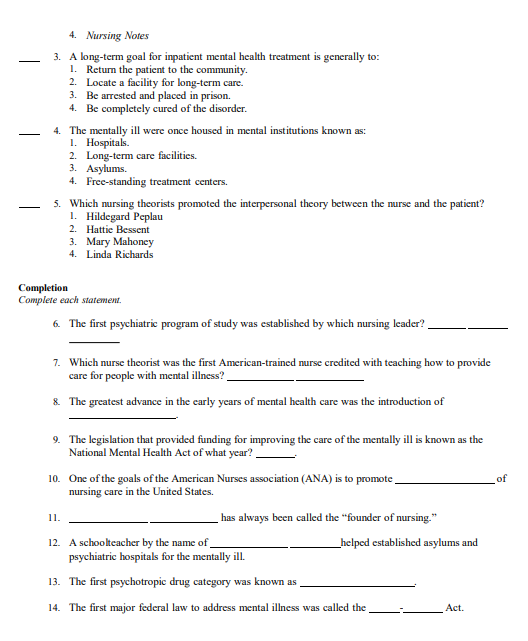
- Multiple-choice, select-all-that-apply, and therapeutic communication scenario questions
- Complete answer keys with thorough, evidence-based clinical rationales
- Questions aligned with current NCLEX-RN and NCLEX-PN examination standards
- Coverage of psychiatric disorders, therapeutic communication, psychopharmacology, and mental health nursing across the lifespan
Table of Contents
I. Foundations for Mental Health Nursing
1. History of Mental Health Nursing
2. Basics of Communication
3. Ethics, Evidence-Based Practice, and Regulations
4. Developmental Psychology Throughout the Life Span
5. Sociocultural Influences on Mental Health
6. Nursing Process in Mental Health
7. Stress, Coping, and Defense Mechanisms
8. Medications and Other Therapies
9. Complementary and Alternative Treatment Modalities
II. Threats to Mental Health
10. Anxiety, Somatic Symptom Disorders, and Post-Traumatic Stress Disorder
11. Depressive Disorders
12. Bipolar Disorders
13. Suicide
14. Personality Disorders
15. Schizophrenia Spectrum and Other Psychotic Disorders
16. Neurocognitive Disorders: Delirium and Dementia
17. Substance Use and Addictive Disorders
18. Eating Disorders
III. Special Populations
19. Childhood and Adolescent Mental Health Issues
20. Postpartum Issues in Mental Health
21. Aging Population
22. Abuse and Violence
Who Is This Test Bank For?
This resource is ideal for:
- Undergraduate RN and LPN nursing students in psychiatric and mental health nursing courses
- NCLEX-RN and NCLEX-PN candidates reviewing psychosocial integrity content
- RN-to-BSN students building psychiatric nursing competency
- Nursing faculty developing psychiatric nursing course exams and clinical assessments
- Mental health technicians and behavioral health professionals pursuing nursing licensure
- Nursing students in accelerated BSN or second-degree programs covering psychiatric content
- Students whose programs use the 6th Edition of Gorman and Anwar as their course text
Topics Covered Include:
- Foundations of mental health nursing — history, philosophy, and scope of practice
- Legal and ethical issues in psychiatric nursing — involuntary commitment and patient rights
- Theories of personality and human behavior — major psychiatric frameworks
- Therapeutic communication — principles, techniques, barriers, and clinical application
- The nurse-patient relationship — phases, boundaries, and therapeutic use of self
- The mental status examination and psychiatric nursing assessment
- Psychopharmacology — antipsychotics, antidepressants, mood stabilizers, and anxiolytics
- Anxiety disorders — generalized anxiety, panic disorder, phobias, and OCD
- Trauma and stressor-related disorders — PTSD and acute stress disorder
- Depressive disorders — major depression, persistent depressive disorder, and seasonal affective disorder
- Bipolar spectrum disorders — bipolar I, bipolar II, and cyclothymia
- Schizophrenia spectrum and other psychotic disorders
- Personality disorders — clusters A, B, and C
- Substance use and co-occurring disorders
- Eating disorders — anorexia nervosa, bulimia, and binge-eating disorder
- Neurocognitive disorders — delirium, dementia, and mild cognitive impairment
- Child and adolescent psychiatric disorders — ADHD, autism, and conduct disorders
- Older adult mental health — late-life depression, anxiety, and dementia care
- Crisis intervention — suicide assessment, de-escalation, and safety planning
- Trauma-informed care and PTSD management
- Somatic symptom and related disorders
- Community mental health and psychiatric rehabilitation
- Violence in healthcare — workplace safety and de-escalation
- Cultural considerations in mental health nursing
Why This Test Bank Delivers Results
Gorman and Anwar built Mental Health Nursing around a philosophy that distinguishes this textbook from more theoretically oriented psychiatric nursing resources — that mental health nursing is a practical, skills-based clinical specialty that can be learned, practiced, and continuously improved through focused, applied preparation.
The 6th Edition reflects that philosophy more completely than any previous edition — with updated DSM-5-TR diagnostic criteria, revised psychopharmacology content reflecting current prescribing guidelines and FDA safety communications, enhanced trauma-informed care content, expanded crisis intervention and safety planning material, and the most current evidence-based therapeutic communication frameworks.
This test bank is built to develop the practical clinical competencies that Gorman and Anwar emphasize.
Mental health nursing questions are unlike any other questions in nursing school — and this test bank prepares you for exactly what makes them challenging. Four answer choices can all sound therapeutic. Four nursing responses can all appear compassionate. The difference between the correct answer and the three distractors often comes down to a single therapeutic communication principle — and understanding which principle applies in which clinical context is precisely what this test bank develops.
Every therapeutic communication question is constructed around the evidence-based frameworks that Gorman and Anwar embed throughout the textbook — empathic reflection, open-ended questioning, active listening, non-judgmental response, and direct safety assessment. You will not just identify the right answer. You will understand exactly why it is therapeutic — and why the other three options are less effective, subtly harmful, or therapeutically counterproductive.
Beyond therapeutic communication, this test bank covers the full clinical scope of mental health nursing. Psychopharmacology questions challenge you to recognize medication side effects, identify toxicity risks, and prioritize safety interventions for patients on lithium, antipsychotics, MAOIs, and other high-risk psychiatric medications. Disorder-based questions build your ability to recognize clinical presentations using current DSM-5-TR criteria, identify nursing priorities, and select appropriate interventions. Crisis and safety questions sharpen the rapid assessment and de-escalation skills that psychiatric nursing — and the NCLEX — demand.
Detailed rationales explain the psychiatric nursing principles, therapeutic communication frameworks, and current evidence-based practice guidelines behind every correct answer. Questions are organized chapter by chapter for structured, systematic study. Build the mental health nursing competency that Gorman and Anwar demand — and that every psychiatric patient deserves.
Sample Questions
Question 1
A nurse is working in an inpatient psychiatric unit when a patient with a diagnosis of major depressive disorder says, “I have been thinking that I would be better off not being here anymore, and I have been thinking about how I could make that happen.” Which nursing response is most appropriate?
- A) “Everyone goes through difficult periods — things will improve with time and treatment.”
- B) “You should not think that way — you have family who cares about you and a lot to live for.”
- C) “I hear that you are having some very painful thoughts. I need to ask you directly — are you thinking about ending your life, and do you have a plan?”
- D) “Let’s talk about something more positive. Tell me what you enjoy doing outside of the hospital.”
Correct Answer: C
Rationale: This patient’s statement contains multiple direct indicators of suicidal ideation — expressing that they would be better off not existing and specifically disclosing that they have been thinking about how to act on these thoughts. This represents a significant escalation from passive ideation to active ideation with planning intent. The therapeutic response requires two simultaneous elements — empathic acknowledgment of the patient’s emotional pain that validates their experience and communicates that the nurse is present and engaged, followed by direct, clear questioning about suicidal intent and plan. Direct questioning about suicide is mandated by current evidence-based safety assessment guidelines — research consistently demonstrates that asking directly about suicide does not plant or amplify suicidal thinking, and it is the only way to accurately assess intent and plan. Option A minimizes and dismisses the patient’s experience with false reassurance. Option B imposes the nurse’s values and uses guilt-based redirection — both therapeutically counterproductive techniques that damage trust and shut down disclosure. Option D abruptly redirects away from an actively disclosed crisis — abandoning the patient at the moment they have chosen to seek help. In mental health nursing, moving toward difficult disclosures rather than away from them is always the therapeutic imperative.
Question 2
A patient with chronic schizophrenia who takes haloperidol decanoate has been receiving the medication for three years. During a routine assessment, the nurse observes the patient making repetitive lip-smacking movements, tongue protrusion, and slow writhing movements of the fingers and hands that the patient appears unaware of. These movements persist during rest and do not resolve with distraction. Which condition does this presentation most likely represent and what is the priority nursing action?
- A) Akathisia — a subjective sense of inner restlessness requiring the addition of a beta-blocker such as propranolol to the medication regimen
- B) Tardive dyskinesia — a late-onset, potentially irreversible movement disorder from chronic antipsychotic use; document the findings, notify the provider immediately, and assess using the AIMS scale for baseline severity documentation
- C) Acute dystonia — sudden, sustained muscle contractions requiring immediate administration of diphenhydramine or benztropine IM
- D) Pseudo-parkinsonism — drug-induced parkinsonian symptoms requiring dose reduction and addition of an anticholinergic agent
Correct Answer: B
Rationale: This clinical presentation — repetitive, involuntary orofacial movements including lip smacking and tongue protrusion, combined with choreiform movements of the hands and fingers, developing after three years of antipsychotic therapy, present at rest, and of which the patient is unaware — is the classic presentation of tardive dyskinesia. TD is a late-onset movement disorder caused by chronic dopamine receptor blockade from prolonged antipsychotic use. It is theorized to result from dopamine receptor supersensitivity and neuroplastic changes in the nigrostriatal pathway. TD is characterized by involuntary, repetitive, purposeless movements most commonly involving the orofacial region — lip smacking, chewing, tongue protrusion, facial grimacing — as well as choreiform movements of the extremities. Unlike acute dystonia — which involves sudden, sustained painful muscle contractions — TD movements are slow, writhing, and often choreiform. Unlike pseudo-parkinsonism — which presents with bradykinesia, rigidity, tremor, and shuffling gait similar to Parkinson’s disease — TD movements are hyperkinetic. Akathisia presents as subjective motor restlessness and an inability to remain still — the patient is aware of and distressed by the sensation. The nurse must document the observation comprehensively, notify the provider immediately, and administer the Abnormal Involuntary Movement Scale assessment to quantify current severity for baseline documentation. Early recognition is critical — TD can be partially or fully irreversible if not addressed promptly. The provider may consider reducing or changing the antipsychotic medication.
Question 3
A nurse is conducting a group therapy session on an inpatient psychiatric unit when one group member — a patient with borderline personality disorder — begins to verbally attack another patient, saying, “You are pathetic and weak — you do not deserve to be in this group.” The targeted patient begins to cry. Which nursing intervention best reflects evidence-based management of this situation?
- A) Ask the attacking patient to share why they feel the other patient does not belong in the group to encourage open expression of feelings
- B) Immediately terminate the group session and send all patients back to their rooms to prevent further conflict
- C) Calmly and firmly redirect the attacking patient by setting a clear behavioral limit — “That kind of comment is not acceptable in this group. In here, we treat each other with respect.” — then address the emotional impact on the targeted patient and redirect the group’s focus therapeutically
- D) Ignore the interaction since confronting the patient might escalate the situation and reinforce attention-seeking behavior
Correct Answer: C
Rationale: This scenario requires applying therapeutic limit-setting — a core evidence-based intervention in the care of patients with borderline personality disorder — while simultaneously managing the group therapeutic environment and addressing harm to another patient. Patients with BPD frequently engage in interpersonal behaviors including idealization, devaluation, and intense relational conflicts — often escalating in group settings where interpersonal triggers are amplified. The therapeutic nurse response must accomplish several simultaneous goals. Limit-setting must be calm, clear, and non-punitive — identifying the specific unacceptable behavior without attacking the patient’s character, maintaining the structure that the group therapeutic environment requires, and modeling appropriate interpersonal boundaries. The limit must be stated firmly but without hostility — “That comment is not acceptable here” rather than “You need to stop being mean.” Simultaneously, the nurse must acknowledge the emotional impact on the targeted patient — validating their distress and ensuring they feel protected within the therapeutic space. The group must then be redirected therapeutically — processing what occurred in a manner that transforms the disruption into a therapeutic learning opportunity where clinically appropriate. Encouraging the attacking behavior to continue by asking the patient to elaborate further validates the devaluing comment. Terminating the session abruptly abandons the group’s therapeutic work and may reinforce that interpersonal conflict produces powerful environmental responses — a secondary gain for the patient with BPD. Ignoring the interaction fails the targeted patient and abandons the nurse’s therapeutic leadership responsibility.
Question 4
A patient with bipolar I disorder has been stable on lithium carbonate 600 mg three times daily for eight months with an INR of 0.9 mEq/L. The patient calls the psychiatric clinic reporting three days of fever, vomiting, and diarrhea from a gastrointestinal illness. The patient asks whether they should continue taking their lithium. Which nursing response most accurately reflects the clinical pharmacology of lithium in this situation?
- A) “Continue taking your lithium as prescribed — gastrointestinal illness does not affect lithium levels significantly.”
- B) “Stop taking your lithium immediately and do not resume until you are fully recovered from the illness.”
- C) “Contact your provider today — your gastrointestinal illness is causing sodium and fluid loss that can significantly raise your lithium level to toxic range; you may need lithium held, your level checked urgently, and IV fluids to prevent toxicity.”
- D) “Take an extra dose of lithium today to compensate for any absorption reduction from the vomiting.”
Correct Answer: C
Rationale: This patient education response requires applying pharmacokinetic knowledge about lithium’s sodium-dependent renal handling to a common clinical scenario that every mental health nurse must recognize as urgent. Lithium has an extremely narrow therapeutic index — therapeutic range 0.6–1.2 mEq/L for maintenance — making it one of the most pharmacologically sensitive medications in psychiatric practice. The critical clinical principle is that lithium and sodium compete for reabsorption in the renal proximal tubule. During significant sodium and fluid loss — as occurs with fever, vomiting, and diarrhea from a gastrointestinal illness — the kidney compensates by increasing proximal tubule sodium reabsorption. Because lithium shares this transport mechanism with sodium, increased sodium reabsorption drives concurrent lithium reabsorption, dramatically reducing renal lithium clearance and causing plasma lithium accumulation. Early lithium toxicity symptoms — nausea, tremors, ataxia, confusion, and blurred vision — can develop rapidly in this context and may be confused with the gastrointestinal illness itself, delaying recognition. This situation requires urgent provider contact — the provider will assess whether to hold the lithium temporarily, check an urgent serum lithium level, and consider IV fluid administration to restore sodium and fluid balance and enhance renal lithium clearance. Continuing lithium without provider assessment carries serious toxicity risk. Stopping lithium independently without guidance risks abrupt medication discontinuation and bipolar relapse. Adding an extra dose would push an already accumulating drug to potentially dangerous levels.
Question 5
A nurse is caring for a patient admitted following a suicide attempt by overdose. The patient is medically stable and now presents as cooperative and calm, reporting that they feel “completely fine now” and are ready to go home. The patient’s family is reassured by the patient’s apparent recovery and is requesting discharge. Which nursing assessment principle most accurately guides the nurse’s response to this situation?
- A) The patient’s current calm presentation and insight indicate genuine resolution of the suicidal crisis — support the family’s request and facilitate discharge planning
- B) Recognize that a calm, resolved presentation in the immediate post-attempt period may represent the calm before a more lethal attempt — maintain safety precautions, conduct a comprehensive suicide risk reassessment using a validated tool, communicate findings to the treatment team, and advocate for continued psychiatric evaluation before any discharge decision is made
- C) Defer entirely to the patient’s self-report since patients have the right to self-determination and have the best knowledge of their own mental state
- D) Focus exclusively on the patient’s medical stability since psychiatric assessment is the psychiatrist’s responsibility and outside the nurse’s scope of practice
Correct Answer: B
Rationale: This scenario addresses one of the most clinically dangerous phenomena in suicidology — the post-attempt calm that can mislead families, clinical staff, and sometimes even patients themselves about the genuine resolution of suicidal risk. Research in suicidology has consistently identified that the period immediately following a suicide attempt — particularly when the patient appears calm, cooperative, and communicative about feeling better — does not reliably indicate resolution of the underlying suicidal crisis. In some cases, this calm reflects genuine ambivalence and relief at having survived. In other cases, it reflects decision — the patient has resolved their internal conflict by deciding to make a more lethal next attempt, producing a calm that is diagnostically misleading and clinically dangerous. The nurse’s responsibility is to recognize that post-attempt calm cannot be accepted at face value without comprehensive psychiatric risk reassessment. A validated suicide risk assessment tool — such as the Columbia Suicide Severity Rating Scale — must be administered and communicated to the full treatment team. The nurse must advocate for appropriate psychiatric evaluation before any discharge decision. Family reassurance, while understandable, does not constitute a clinical safety assessment. Patient self-determination is a valid principle in many clinical contexts but does not override the duty to protect a patient from imminent risk of self-harm during a psychiatric crisis. Psychiatric assessment is always within the nurse’s scope — it is one of the core competencies of mental health nursing.
Frequently Asked Questions (FAQs)
What edition does this test bank cover?
This test bank is written specifically for the 6th Edition of Mental Health Nursing by Linda M. Gorman and Robynn Anwar. All questions are fully aligned with the current edition’s chapter organization, updated DSM-5-TR diagnostic criteria, revised psychopharmacology content, and current evidence-based psychiatric nursing practice standards.
How are the questions organized?
Questions are arranged chapter by chapter, allowing you to study systematically through the entire psychiatric nursing curriculum or target specific content areas — such as therapeutic communication, psychopharmacology, mood disorders, or psychotic disorders — based on your upcoming exam schedule or identified knowledge gaps.
Is this test bank aligned with the NCLEX-RN and NCLEX-PN?
Yes. Questions are written to reflect current NCLEX-RN and NCLEX-PN examination standards, with strong emphasis on the psychosocial integrity client needs category. Therapeutic communication, safe care, pharmacological safety, crisis intervention, and clinical prioritization questions are featured throughout — directly mirroring the NCLEX’s significant and consistent focus on psychiatric nursing content.
How does this test bank differ from other psychiatric nursing test banks?
This test bank is built specifically around the practical, clinically focused framework that Gorman and Anwar establish in the 6th Edition. The therapeutic communication questions are constructed with the precision and clinical nuance that psychiatric nursing demands — not just identifying correct responses but deeply explaining the therapeutic principles behind them and why alternative responses fall short. That clinical depth distinguishes this resource.
Is this test bank useful for LPN students?
Absolutely. Mental health content appears on both the NCLEX-RN and NCLEX-PN. LPN students will find the foundational psychiatric concepts, therapeutic communication questions, and psychopharmacology content directly relevant to their licensing examination preparation and clinical practice requirements.
How quickly can I access the test bank after purchase?
Immediately. As soon as your purchase is complete, you receive instant digital access with no waiting period. Study on your own schedule, at your own pace, from any device.
Are the rationales clinically accurate and grounded in current psychiatric standards?
Yes. Every rationale reflects current psychiatric nursing standards, DSM-5-TR diagnostic criteria, evidence-based therapeutic communication principles, and current psychopharmacology guidelines — consistent with the practical clinical framework Gorman and Anwar establish throughout the 6th Edition.
Can nursing faculty use this test bank for course assessments?
Absolutely. The chapter-by-chapter organization, clinical scenario emphasis, therapeutic communication question depth, and varied question formats make this an outstanding resource for faculty building quizzes, unit exams, and comprehensive assessments for undergraduate psychiatric mental health nursing courses at both the RN and PN level.


Kevin May –
Great practice questions with clear explanations
Winnie M. –
Excellent resource for nursing exam preparation
Helen Christie –
Helpful questions that reinforce key concepts.
Liam Mbogo –
Easy to use and well organized.
Dorcas M. –
Great coverage of important mental health nursing topics
Melania Angel –
Definitely helpful for building nursing exam confidence
Beverly –
Useful questions that challenged my understanding
Lucille Maria –
Great questions for nursing exam preparation
Winnie M. –
Helped me review important clinical concepts
Yunice M –
Boosted my nursing exam confidence
Norah Helen –
Great study resource for NCLEX preparation
Mary Lincoln –
Definitely worth using alongside regular nursing study materials