PSYCHIATRIC NURSING IS UNLIKE ANY OTHER COURSE YOU WILL TAKE
And most students feel that the moment they open the textbook.
There are no vital signs to memorize in the traditional sense. There are no wound care steps to practice. The assessments are conversations. The interventions are words. The outcomes live in a patient’s thoughts, behaviors, relationships, and sense of self.
Psychiatric mental health nursing asks you to be clinically precise in an arena that feels deeply human and, at times, profoundly unpredictable. It asks you to understand not just what a patient is experiencing — but why. Not just what to say — but how, when, and what never to say at all.
And then it asks you to sit for an exam on all of it.
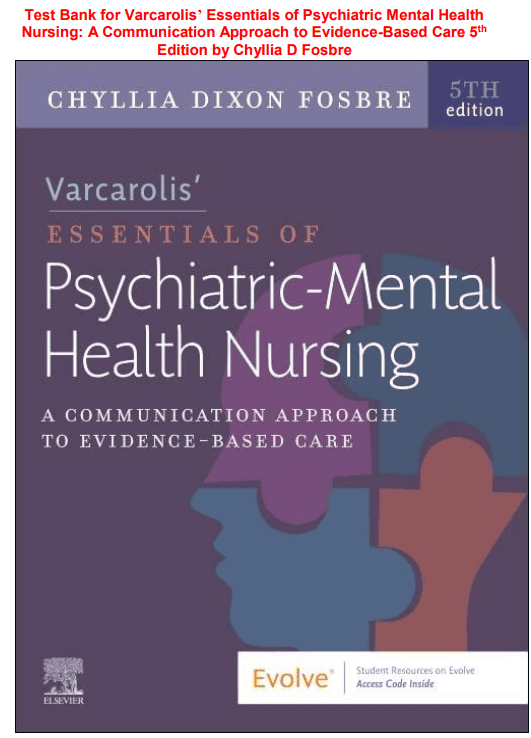
Varcarolis’ Essentials of Psychiatric Mental Health Nursing, 5th Edition by Chyllia D. Fosbre is one of the most respected psychiatric nursing textbooks available. It teaches the communication skills, the evidence-based frameworks, and the clinical knowledge that the specialty demands.
This test bank was built to help you prove you have learned them.
THE CHALLENGE NOBODY TALKS ABOUT
Here is what makes psychiatric nursing exams harder than students expect.
In most nursing courses, the right answer is usually the most clinically aggressive one. You see a problem, you act, you fix it. Psych is different. The right answer is often the most therapeutically restrained one. You pause. You reflect. You respond with intention.
On a psych nursing exam, the wrong answer is often something that sounds helpful in everyday life but is therapeutically harmful in a clinical context. Offering advice when therapeutic communication is needed. Reassuring a patient with false hope. Defending the treatment team when a patient expresses distrust. Asking why questions. Changing the subject.
These traps catch students who know the content but have not practiced applying it in exam format.
This test bank closes that gap. The questions are written to put you inside those exact scenarios — with the distractors specifically designed to test whether you know the difference between therapeutic and non-therapeutic responses, between correct clinical intervention and well-intentioned but harmful reactions.
You will not just know psych nursing after working through this test bank. You will think like a psychiatric nurse.
📦 WHAT COMES WITH YOUR PURCHASE
Everything you need to study, practice, and pass:
- A comprehensive bank of multiple-choice questions covering every chapter of the 5th edition
- Questions written in NCLEX-RN format with a strong focus on clinical scenarios and therapeutic communication
- Every question paired with a clearly marked correct answer
- Detailed rationales explaining the clinical, therapeutic, and evidence-based reasoning behind each answer — including why the wrong answers are wrong
- Questions covering psychiatric disorders, therapeutic communication, psychopharmacology, legal and ethical issues, and across-the-lifespan mental health content
- Both PDF and Word formats included for flexible, device-friendly studying
- Content built exclusively around Fosbre’s 5th edition — current, accurate, and exam-relevant
📚 COMPLETE CONTENT COVERAGE
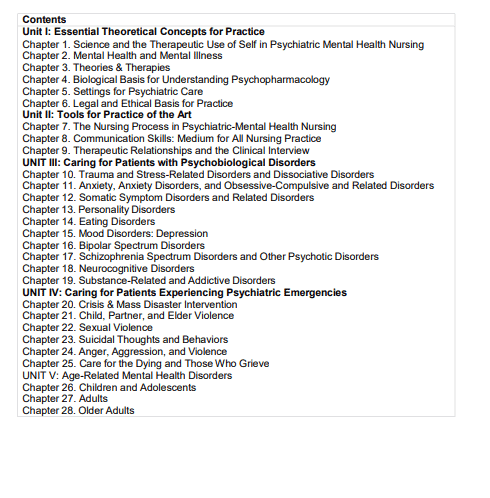
Every unit. Every chapter. Every major concept in the 5th edition.
Unit 1 — Foundations of Psychiatric Mental Health Nursing
- The history of psychiatric nursing and its evolution
- Current trends in mental health care delivery
- Theoretical frameworks — psychodynamic, behavioral, cognitive, biological, and humanistic
- The mental health continuum — from wellness to severe mental illness
- Stigma and its impact on patients seeking mental health care
- Cultural humility and culturally responsive psychiatric nursing
- The psychiatric nursing role — generalist versus specialist practice
- Standards of practice in psychiatric mental health nursing
Unit 2 — Therapeutic Communication
- The therapeutic relationship — phases, boundaries, and goals
- Therapeutic versus non-therapeutic communication techniques
- Active listening and empathic responding
- Verbal and nonverbal communication in psychiatric settings
- Motivational interviewing basics for nursing practice
- Communicating with patients experiencing psychosis, depression, mania, and anxiety
- Documentation of psychiatric nursing care
- Self-awareness and the use of self as a therapeutic tool
Unit 3 — Psychiatric Nursing Assessment
- The psychiatric nursing assessment — components and documentation
- Mental status examination — appearance, behavior, cognition, affect, thought content
- Standardized assessment tools — PHQ-9, GAD-7, AUDIT, Columbia Suicide Severity Rating Scale
- Risk assessment — suicide, self-harm, violence, and elopement
- Differentiating psychiatric symptoms from medical causes
- Psychosocial history and its role in care planning
- Functional assessment and level of care determination
Unit 4 — Legal and Ethical Issues in Psychiatric Nursing
- Voluntary versus involuntary hospitalization
- Patient rights in psychiatric settings
- Least restrictive environment and treatment principles
- Informed consent and capacity to consent in psychiatric patients
- Confidentiality, HIPAA, and the duty to warn
- Restraint and seclusion — legal standards, nursing responsibilities, and documentation
- Ethical frameworks applied to psychiatric nursing dilemmas
- Advocacy for the psychiatric patient
Unit 5 — Psychopharmacology
- Principles of psychopharmacology — receptor theory, pharmacokinetics in psychiatric patients
- Antidepressants — SSRIs, SNRIs, TCAs, MAOIs, and atypical agents
- Antipsychotics — first generation (typical) and second generation (atypical)
- Mood stabilizers — lithium, valproate, lamotrigine, carbamazepine
- Anxiolytics and sedative-hypnotics — benzodiazepines, buspirone, non-benzo options
- Stimulants and non-stimulant medications for ADHD
- Medication adherence in psychiatric patients — barriers and nursing strategies
- Patient education for psychiatric medications
- Monitoring for medication side effects — EPS, tardive dyskinesia, metabolic syndrome, serotonin syndrome, lithium toxicity
Unit 6 — Anxiety and Related Disorders
- Generalized anxiety disorder — assessment, interventions, and pharmacotherapy
- Panic disorder and panic attacks — nursing response and patient education
- Social anxiety disorder and specific phobias
- Obsessive-compulsive disorder — symptoms, therapeutic approaches, and nursing care
- Post-traumatic stress disorder — trauma-informed nursing care
- Acute stress disorder
- Somatic symptom and related disorders
- Nursing care planning for anxiety spectrum disorders
Unit 7 — Depressive and Bipolar Disorders
- Major depressive disorder — diagnostic criteria, nursing assessment, and care
- Persistent depressive disorder and dysthymia
- Postpartum depression and perinatal mood disorders
- Seasonal affective disorder
- Bipolar I and Bipolar II — distinguishing features and nursing implications
- Cyclothymic disorder
- Suicidal ideation assessment and safety planning
- Electroconvulsive therapy — indications, nursing responsibilities, and patient education
- Therapeutic communication with depressed and manic patients
Unit 8 — Schizophrenia Spectrum and Psychotic Disorders
- Schizophrenia — positive and negative symptoms, nursing assessment, and care planning
- Schizoaffective disorder
- Brief psychotic disorder and schizophreniform disorder
- Delusional disorder — types and nursing approaches
- Substance-induced psychosis
- Communicating with patients experiencing hallucinations and delusions
- Antipsychotic therapy — monitoring for EPS, tardive dyskinesia, and metabolic effects
- De-escalation techniques in acute psychosis
- Community reintegration and long-term care for patients with schizophrenia
Unit 9 — Personality Disorders
- Cluster A, B, and C personality disorders — overview and nursing considerations
- Borderline personality disorder — self-harm, emotional dysregulation, and dialectical behavior therapy
- Antisocial personality disorder — safety considerations in clinical settings
- Narcissistic and histrionic personality disorders
- Obsessive-compulsive and avoidant personality disorders
- Setting therapeutic limits and maintaining boundaries
- Countertransference and self-care when working with personality disorder patients
Unit 10 — Substance Use Disorders
- Substance use disorder — screening, brief intervention, and referral to treatment
- Alcohol use disorder — CAGE screening, detoxification protocols, and nursing care
- Opioid use disorder — withdrawal management and medication-assisted treatment
- Stimulant and cannabis use disorders
- Co-occurring psychiatric and substance use disorders
- Motivational interviewing and harm reduction approaches
- Supporting recovery — nursing’s role in relapse prevention
Unit 11 — Eating Disorders
- Anorexia nervosa — medical complications, nursing assessment, and refeeding considerations
- Bulimia nervosa — behavioral patterns and nursing interventions
- Binge eating disorder
- Avoidant and restrictive food intake disorder
- Body image disturbance and therapeutic communication
- Interdisciplinary care in eating disorder treatment
- Family involvement and patient education in eating disorder recovery
Unit 12 — Neurodevelopmental and Neurocognitive Disorders
- ADHD across the lifespan — assessment, medication management, and nursing support
- Autism spectrum disorder — communication strategies and care adaptations
- Intellectual disability and nursing care
- Delirium — causes, assessment, prevention, and nursing management
- Major and mild neurocognitive disorders — Alzheimer’s disease and other dementias
- Behavioral and psychological symptoms of dementia
- Safety planning for patients with cognitive impairment
- Supporting caregivers of patients with neurocognitive disorders
Unit 13 — Special Populations and Settings
- Child and adolescent psychiatric nursing — developmental considerations
- Psychiatric care of older adults — ageism, polypharmacy, and late-life mental illness
- Mental health in the perinatal period
- Psychiatric nursing in the emergency department
- Forensic psychiatric nursing
- Community mental health and assertive community treatment
- Telehealth and technology in mental health care delivery
- Crisis intervention — models, assessment, and nursing response
Unit 14 — Self-Care and Professional Resilience
- Compassion fatigue and burnout in psychiatric nursing
- Vicarious trauma and its impact on mental health nurses
- Building resilience and maintaining professional boundaries
- Peer support and supervision as professional resources
- Self-care strategies that actually work in high-demand settings
- Sustaining a long-term career in psychiatric mental health nursing
🎯 WHO THIS TEST BANK IS FOR
Nursing students currently enrolled in a psychiatric mental health nursing course who want exam-focused practice that goes beyond re-reading notes.
Students using Fosbre’s 5th edition who want questions built specifically around their assigned textbook — not a generic psych bank with outdated or mismatched content.
NCLEX-RN candidates who know that psychosocial integrity and mental health content make up a meaningful portion of the licensing exam and want focused, high-quality practice in those areas.
Nurses completing a psychiatric clinical rotation who want to reinforce classroom content with scenario-based questions that mirror real clinical situations.
Nursing faculty teaching psychiatric mental health nursing who need a ready-built, high-quality question pool aligned to the 5th edition for building course exams and quizzes.
Graduate students and nurses pursuing psychiatric-mental health nurse practitioner certification who want foundational review material for their advanced practice preparation.
💭 THE PSYCH NURSING MINDSET SHIFT
Something changes in students who do well in psychiatric nursing.
They stop looking for the action and start looking for the response. They stop treating exams like a race to the intervention and start slowing down inside the scenario. They read the patient’s words carefully. They notice what the patient did not say. They ask themselves — what does this patient need right now, in this moment — and they answer that question before they pick an option.
That shift does not happen by reading about therapeutic communication. It happens by practicing it — over and over, in question after question, until the right instinct becomes automatic.
That is what this test bank builds.
Work through it consistently. Pay attention to every rationale, especially on questions you get right. Sometimes the right answer for the wrong reason is more dangerous than a wrong answer you understand. Know why you got it right. Know why the other three were wrong. Build that reasoning into muscle memory.
By the time you sit for your exam, you will not be guessing. You will be thinking like a psychiatric nurse.
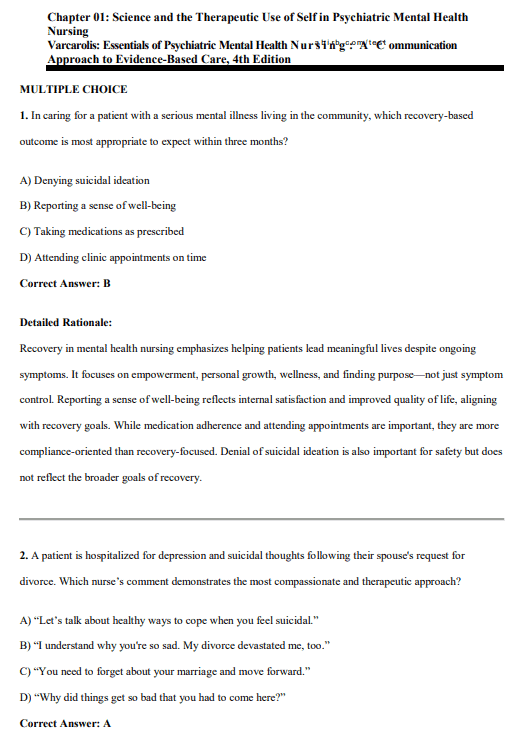
📝 10 SAMPLE QUESTIONS
These are real examples from the test bank. Work through them carefully.
Question 1
A nurse is caring for a patient with major depressive disorder who says, “Nothing I do matters. I am completely worthless.” Which response is most therapeutic?
- A. “That is not true at all. You have so many people who care about you.”
- B. “You sound like you are in a lot of pain right now. Can you tell me more about what you are feeling?”
- C. “Try to think positively. Things will get better soon.”
- D. “You should not feel that way. You have a lot to be grateful for.”
Correct Answer: B Rationale: This response uses reflection and an open-ended question to acknowledge the patient’s emotional experience without challenging, dismissing, or minimizing it. Options A and D use reassurance and contradiction, which invalidate the patient’s feelings and close down therapeutic dialogue. Option C offers false reassurance and advice without addressing the patient’s expressed experience. Therapeutic communication in depression focuses on making the patient feel heard and understood — not on fixing their perspective.
Question 2
A patient with schizophrenia tells the nurse, “The television is sending me personal messages. I know because the anchorman looked directly at me and blinked twice.” How should the nurse respond?
- A. “That must be very frightening. Tell me what the messages say.”
- B. “I understand that feels very real to you, but I do not see the television sending you messages.”
- C. “That sounds like your illness talking. The TV cannot send personal messages.”
- D. “You are right to be concerned. We will keep the TV off for now.”
Correct Answer: B Rationale: This response neither reinforces the delusion nor aggressively confronts it, both of which are non-therapeutic. The nurse acknowledges the patient’s subjective experience while gently and respectfully presenting reality. Option A reinforces the delusional content by engaging with it as if it were real. Option C is dismissive and labels the patient in a way that damages therapeutic alliance. Option D validates the delusion directly, which is harmful to treatment.
Question 3
A patient is admitted voluntarily for a psychiatric evaluation. The following morning they tell the nurse they have changed their mind and want to leave. What is the most appropriate nursing action?
- A. Tell the patient they cannot leave because the physician has not approved the discharge
- B. Inform the patient of their right to leave, notify the treatment team immediately, and follow facility protocol for voluntary discharge
- C. Ask the patient to wait until the treatment team completes morning rounds before making a decision
- D. Contact the patient’s family to come in and persuade them to stay
Correct Answer: B Rationale: Voluntary patients retain the right to leave a psychiatric facility. The nurse must inform the patient of this right, notify the treatment team, and follow facility protocol — which may include a brief hold period if the patient is assessed as a risk to self or others. Blocking a voluntary patient’s departure without legal authority violates their rights. Contacting family without the patient’s consent violates confidentiality. Asking the patient to wait without explanation delays honoring their right without clinical justification.
Question 4
A nurse is caring for a patient on haloperidol who develops sudden muscle rigidity, hyperthermia, diaphoresis, and an altered level of consciousness. What is the priority nursing action?
- A. Administer the next scheduled dose of haloperidol and monitor closely
- B. Recognize this as a potential neuroleptic malignant syndrome and treat it as a medical emergency
- C. Reassure the patient that these are expected side effects of antipsychotic therapy
- D. Administer a PRN benzodiazepine and document the symptoms in the chart
Correct Answer: B Rationale: The clinical presentation — muscle rigidity, hyperthermia, diaphoresis, and altered consciousness in a patient on antipsychotics — is a classic presentation of neuroleptic malignant syndrome, a rare but life-threatening adverse reaction. The antipsychotic must be stopped immediately and the patient requires urgent medical intervention including supportive care, hydration, and possibly dantrolene. Continuing the medication or treating this as a routine side effect is dangerous and could be fatal.
Question 5
A patient with borderline personality disorder becomes angry when informed that their nurse will be on vacation for two weeks. They say, “You are abandoning me just like everyone else. You never really cared.” Which nursing response is most therapeutic?
- A. “I understand you are upset. I will make sure another nurse covers your care and we will talk when I return.”
- B. “That is not fair. I have been nothing but supportive of you.”
- C. “You are overreacting. Two weeks is not a long time.”
- D. “I can stay longer if it will help you feel better about this.”
Correct Answer: A Rationale: Patients with borderline personality disorder are particularly sensitive to real or perceived abandonment due to patterns of unstable relationships and fear of rejection. The therapeutic response acknowledges the patient’s feelings without becoming defensive, dismissive, or enabling. Option B is defensive and engages in a power struggle. Option C minimizes the patient’s emotional experience. Option D reinforces maladaptive behavior by suggesting the nurse will alter professional boundaries in response to emotional pressure.
Question 6
A nurse is conducting a suicide risk assessment for a patient who has expressed passive suicidal ideation. Which finding most significantly increases the nurse’s concern for imminent risk?
- A. The patient has a history of depression and takes antidepressants
- B. The patient states they have a loaded firearm at home and has been thinking about a specific time to use it
- C. The patient reports feeling sad and hopeless about their financial situation
- D. The patient has a supportive family and an outpatient therapist they see weekly
Correct Answer: B Rationale: The most significant predictors of imminent suicide risk are the presence of a specific plan, access to a lethal means, and a stated timeframe. A loaded firearm combined with a specific plan dramatically elevates risk and requires immediate safety intervention — including means restriction counseling, notifying the treatment team, and potentially initiating a higher level of care. Hopelessness and depression are risk factors but do not indicate imminent danger without a plan. Protective factors such as family support and therapy reduce risk.
Question 7
Which statement made by a patient newly started on lithium indicates a need for further teaching?
- A. “I should drink plenty of fluids every day, especially in hot weather.”
- B. “I need to keep my sodium intake consistent and avoid crash diets.”
- C. “If I miss a dose I should take two doses next time to catch up.”
- D. “I should report any tremors, confusion, or nausea to my provider right away.”
Correct Answer: C Rationale: Doubling a lithium dose to compensate for a missed dose is dangerous and could push serum lithium levels into the toxic range. Lithium has a narrow therapeutic index and toxicity can develop quickly. The patient should be instructed to skip the missed dose and resume the regular schedule. All other statements reflect correct understanding — adequate hydration prevents toxicity, consistent sodium intake keeps lithium levels stable, and early recognition of toxicity symptoms is essential for safe management.
Question 8
A nurse is using motivational interviewing with a patient who is ambivalent about stopping alcohol use. The patient says, “I know I should cut back but drinking is the only thing that helps me relax.” Which response best reflects motivational interviewing principles?
- A. “You need to understand that alcohol is only making your problems worse.”
- B. “I hear that drinking feels helpful for relaxation. What are some things that concern you about your drinking?”
- C. “Let me tell you about the health consequences of alcohol use disorder.”
- D. “You will not be able to get better until you decide to stop drinking entirely.”
Correct Answer: B Rationale: Motivational interviewing is a collaborative, patient-centered approach that explores ambivalence without confrontation or coercion. This response reflects the patient’s stated experience — validating it without endorsing it — and then invites the patient to explore their own concerns, which is a core MI technique called evoking change talk. Options A and D are confrontational and increase resistance. Option C provides unsolicited information, which is directive rather than collaborative and is unlikely to move an ambivalent patient toward change.
Question 9
A nursing student asks why psychiatric nurses must maintain especially clear professional boundaries with patients. What is the most accurate response?
- A. Boundaries are a formality required by hospital policy but are not clinically significant
- B. Psychiatric patients are manipulative and boundaries prevent them from taking advantage of staff
- C. Clear professional boundaries create the safety and predictability that allow the therapeutic relationship to function effectively and protect both the patient and the nurse
- D. Boundaries exist primarily to protect the nurse from legal liability
Correct Answer: C Rationale: Professional boundaries are not merely procedural — they are clinically and therapeutically essential. They create a consistent, safe structure within which the patient can engage honestly and trust that the relationship exists for their benefit. Boundary violations — even well-intentioned ones — can replicate patterns of exploitation or inconsistency that many psychiatric patients have experienced in their lives, causing therapeutic harm. The framing in option B is stigmatizing and reflects a misunderstanding of psychiatric populations.
Question 10
A nurse is caring for a patient in the acute phase of a manic episode. The patient is pacing, speaking rapidly, and has not slept in 36 hours. Which nursing intervention is the highest priority?
- A. Engaging the patient in a group therapy session to provide social stimulation
- B. Providing a calm, low-stimulation environment and ensuring the patient’s physical safety
- C. Encouraging the patient to journal their thoughts to process the manic episode
- D. Leaving the patient alone so they can use up their excess energy independently
Correct Answer: B Rationale: During acute mania, the patient’s nervous system is in overdrive. The priority nursing intervention is to reduce stimulation, protect physical safety, and prevent exhaustion-related complications from prolonged sleep deprivation. Group therapy increases stimulation and is contraindicated in the acute phase. Journaling requires a level of focus the patient cannot sustain during acute mania. Leaving the patient unsupervised is unsafe — patients in acute manic states are at risk of impulsive, dangerous behavior and injury from physical hyperactivity.
🧠 STUDYING PSYCH NURSING DIFFERENTLY
Psychiatric mental health nursing rewards a different kind of study approach than your other nursing courses. Here are three methods that work specifically well for this content:
The Scenario Immersion Method
Do not just answer the question. Live in it for a moment. Read the patient’s words out loud if you can. Notice the emotion underneath what they are saying. Ask yourself what this patient needs right now — not what they should do, not what the textbook says about their diagnosis, but what they need in this specific moment of the scenario. Then look at the answer options with that question in your head. This slows you down in exactly the right way and builds the therapeutic instinct psych exams test for.
The Wrong Answer Autopsy
For every question you get wrong — and even some you get right — spend time with the wrong answers. Ask yourself: why does this option sound right? What instinct does it appeal to? Usually, wrong answers in psych appeal to the helper instinct — the impulse to reassure, advise, or fix. Learning to recognize that instinct and override it with therapeutic reasoning is one of the most valuable skills you can build in this course.
The Communication Technique Flashcard Hybrid
After working through questions on therapeutic communication, create a simple two-column reference for yourself — therapeutic technique on one side, example from the question on the other. Over time you will build a mental library of what good therapeutic responses look and sound like. When you encounter a scenario on your exam, you will recognize the technique being asked for and the answer will feel obvious.
❓ FREQUENTLY ASKED QUESTIONS
Is this the official Elsevier test bank for the 5th edition? No. This is an independently developed study resource. It is not affiliated with Elsevier or Chyllia D. Fosbre. It is a supplementary product designed to support students and educators using the 5th edition.
I find psychiatric nursing confusing and abstract. Will this test bank help? Yes — and specifically because of how the rationales are written. Every rationale explains not just what the correct answer is but why each wrong answer is wrong. That level of explanation is especially valuable in psych nursing where the distinctions between options are often subtle and conceptual rather than straightforward clinical facts.
What formats are included with my purchase? Both PDF and Word formats are included. PDF is ideal for reading on any device without formatting issues. Word allows you to edit questions, build custom practice exams, or adapt questions for course use if you are an instructor.
How quickly will I receive my file? Your download link is sent to your email automatically the moment payment is confirmed. There is no manual processing involved. Most students have their file within minutes of completing checkout.
Is this useful for the NCLEX-RN? Strongly yes. Psychosocial integrity is a core client needs category on the NCLEX-RN and includes content on mental health disorders, therapeutic communication, crisis intervention, and psychopharmacology. The questions in this test bank are written in NCLEX format and build the exact reasoning skills the licensing exam tests in this domain.
Is this test bank useful for students in a psychiatric clinical rotation? Absolutely. The scenario-based questions mirror the kinds of situations students encounter in clinical settings. Working through the questions and rationales helps students connect classroom theory to clinical reality and builds confidence in therapeutic communication and clinical decision making.
Can I use this if I am studying for the PMHNP certification exam? This test bank is written at the RN generalist level and aligns with undergraduate and early graduate psychiatric nursing content. It is a strong foundational review tool but should be supplemented with PMHNP-specific resources for advanced practice certification preparation.
What if there is a problem with my order or file? Reach out to our support team directly. We take product quality seriously and respond quickly to resolve any issue. Your access to this resource matters to us.
🏁 ONE LAST THOUGHT BEFORE YOU GO
Psychiatric nursing is the specialty that reminds us why we became nurses.
Not because it is easy. It is not. Not because it always ends well. It does not. But because it asks us to show up — fully present, deeply attentive, therapeutically intentional — for patients who are often at the most vulnerable point of their lives.
The skills this course teaches — how to listen, how to respond, how to hold space for suffering without flinching from it — are not just psychiatric nursing skills. They are the skills that will make you a better nurse in every setting you ever work in.
Study this material with the seriousness it deserves. Use this test bank to push your thinking, catch your gaps, and build the clinical confidence that exam rooms and clinical floors both demand.
You are not just preparing for a test. You are preparing to care for minds and hearts. That work matters.

Dorcas –
A solid test bank. Exactly what I was looking for
Jannygrey –
The textbook is overwhelming, but this test bank has really simplified things for me. Thanks.
Winnie M. –
Extremely helpful. recommend
Helen Christie –
Perfect
Norah Helen –
Exactly what I needed for this course
Kevin May –
Well worth the money