Advanced practice prescribing is a privilege earned through mastery — and a responsibility that never rests.
When you write a prescription as a nurse practitioner or physician assistant, you are exercising one of the most consequential clinical privileges in healthcare. You are applying pharmacokinetic knowledge to determine how a specific drug will behave in a specific patient’s body. You are integrating pharmacodynamic understanding to predict the drug’s therapeutic effect and its adverse effect profile. You are navigating a pharmacological landscape where the right drug for one patient can be the wrong drug — or even a dangerous drug — for another patient with slightly different renal function, hepatic metabolism, genetic polymorphisms, or drug interactions.
Pharmacotherapeutics at the advanced practice level is not about knowing what drugs exist. It is about knowing which drug is right — for this patient, in this clinical context, at this specific dose, in the setting of their full medication regimen and their complete clinical picture.
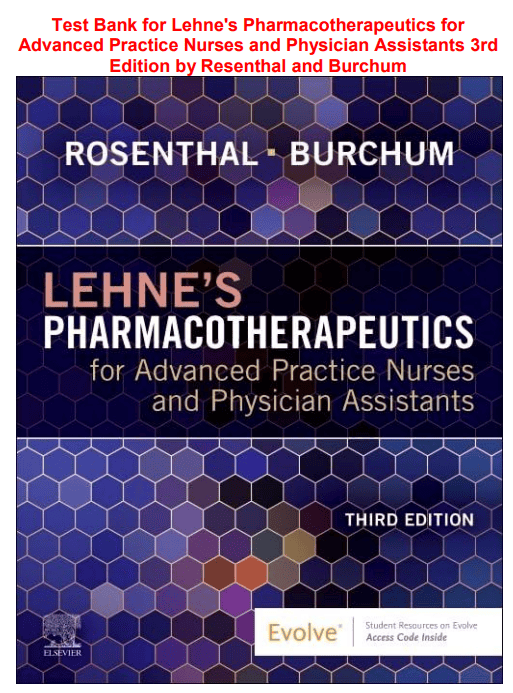
This comprehensive test bank is built for the 3rd Edition of Lehne’s Pharmacotherapeutics for Advanced Practice Nurses and Physician Assistants by Rosenthal and Burchum. It is the most authoritative, most clinically rigorous, and most comprehensively organized pharmacotherapeutics textbook in graduate nursing and PA education — and this test bank helps you master every chapter with the focused, prescribing-level, mechanism-driven practice that advanced pharmacotherapy mastery demands.
Whether you are preparing for a graduate pharmacotherapeutics course exam, a clinical practicum assessment, or AANP, ANCC, and NCCPA certification examinations, this resource delivers the prescribing precision, drug interaction mastery, and evidence-based treatment selection knowledge that Rosenthal and Burchum have established as the standard for advanced practice pharmacotherapy.
What’s Inside?
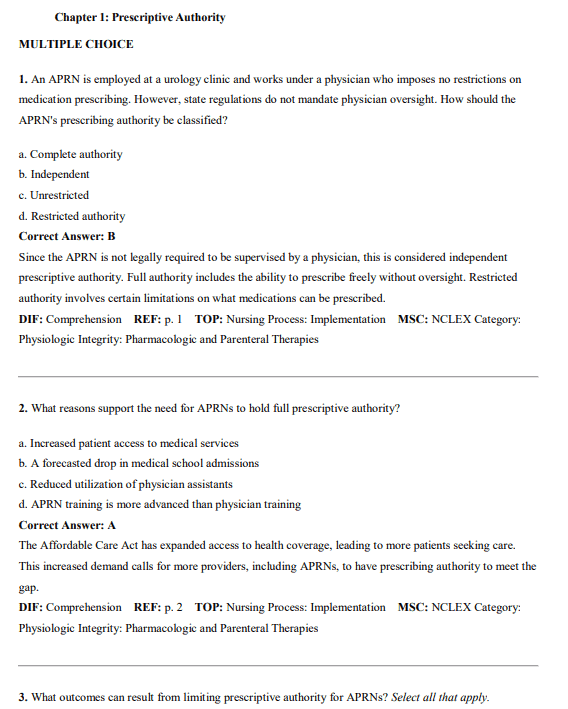
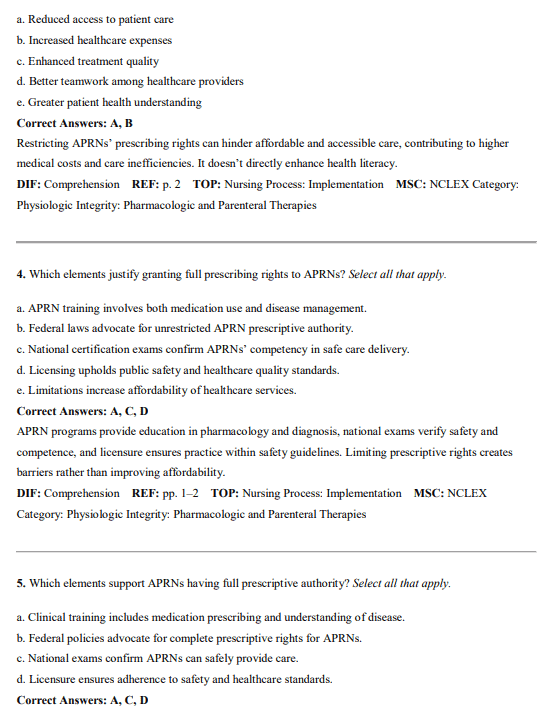
- Hundreds of chapter-by-chapter practice questions
- Multiple-choice, select-all-that-apply, and complex clinical scenario questions
- Complete answer keys with thorough, evidence-based pharmacological rationales
- Questions aligned with AANP, ANCC FNP-BC, and NCCPA certification examination standards
- Coverage of the full scope of advanced practice pharmacotherapeutics — from foundational prescribing principles through complex drug therapy management across all body systems
Who Is This Test Bank For?
This resource is ideal for:
- Family NP and Adult-Gerontology NP students in graduate pharmacotherapeutics courses
- PA students completing pharmacotherapeutics coursework and clinical rotations
- AANP-C and ANCC FNP-BC certification examination candidates
- NCCPA PANCE and PANRE candidates reviewing pharmacotherapy content
- DNP students completing advanced pharmacotherapy coursework
- Nursing faculty developing graduate-level pharmacotherapeutics course exams
- Advanced practice nurses and PAs preparing for recertification examinations
- Students whose programs use the 3rd Edition of Rosenthal and Burchum as their pharmacotherapy text
Table of Contents
UNIT I Introduction
1. Prescriptive Authority
2. Rational Drug Selection and Prescription Writing
3. Promoting Positive Outcomes of Drug Therapy
UNIT II Basic Principles of Pharmacology
4. Pharmacokinetics, Pharmacodynamics, and Drug Interactions
5. Adverse Drug Reactions and Medication Errors
6. Individual Variation in Drug Responses
7. Genetic and Genomic Considerations in Pharmacotherapeutics
UNIT III Drug Therapy Across the Life Span
8. Drug Therapy During Pregnancy and Breastfeeding
9. Drug Therapy in Pediatric Patients
10. Drug Therapy in Geriatric Patients
UNIT IV Peripheral Nervous System Drugs
11. Basic Principles of Neuropharmacology
12. Physiology of the Peripheral Nervous System
13. Muscarinic Agonists and Cholinesterase Inhibitors
14. Muscarinic Antagonists
15. Adrenergic Agonists
16. Adrenergic Antagonists
17. Indirect-Acting Antiadrenergic Agents
UNIT V Central Nervous System Drugs
18. Introduction to Central Nervous System Pharmacology
19. Drugs for Parkinson Disease
20. Drugs for Alzheimer Disease
21. Drugs for Seizure Disorders
22. Drugs for Muscle Spasm and Spasticity
UNIT VI Drugs for Pain
23. Local Anesthetics
24. Opioid Analgesics, Opioid Antagonists, and Nonopioid Centrally Acting Analgesics
25. Drugs for Headache
UNIT VII Psychotherapeutic Drugs
26. Antipsychotic Agents and Their Use in Schizophrenia
27. Antidepressants
28. Drugs for Bipolar Disorder
29. Sedative-Hypnotic Drugs
30. Management of Anxiety Disorders
31. Central Nervous System Stimulants and Attention-Deficit/Hyperactivity Disorder
UNIT VIII Substance Use Disorders
32. Substance Use Disorders I: Basic Considerations
33. Substance Use Disorders II: Alcohol
34. Substance Use Disorders III: Nicotine and Smoking
35. Substance Use Disorders IV: Major Drugs of Misuse Other Than Alcohol and Nicotine
UNIT IX Drugs That Affect the Heart, Blood Vessels, Blood, and Blood Volume
36. Review of Hemodynamics
37. Diuretics
38. Drugs Acting on the Renin-Angiotensin-Aldosterone System
39. Calcium Channel Blockers
40. Vasodilators
41. Drugs for Hypertension
42. Drugs for Heart Failure
43. Antidysrhythmic Drugs
44. Prophylaxis of Atherosclerotic Cardiovascular Disease: Drugs That Help Normalize Cholesterol and Triglyceride Levels
45. Drugs for Angina Pectoris
46. Anticoagulant and Antiplatelet Drugs
47. Drugs for Deficiency Anemias
UNIT X Drugs for Endocrine Disorders
48. Drugs for Diabetes
49. Drugs for Thyroid Disorders
UNIT XI Reproductive Health
50. Estrogens and Progestins: Basic Pharmacology and Noncontraceptive Applications
51. Birth Control
52. Androgens
53. Drugs for Benign Prostatic Hyperplasia
54. Drugs for Sexual Dysfunction
55. Transgender Health
UNIT XII Antiinflammatory, Antiallergic, and Immunologic Drugs
56. Review of the Immune System
57. Childhood Immunization
58. Antihistamines
59. Cyclooxygenase Inhibitors, Nonsteroidal Antiinflammatory Drugs, and Acetaminophen
60. Glucocorticoids in Nonendocrine Disorders
UNIT XIII Drugs for Bone and Joint Disorders
61. Drug Therapy for Rheumatoid Arthritis
62. Drug Therapy for Gout
63. Drugs Affecting Calcium Levels and Bone Mineralization
UNIT XIV Respiratory Tract Drugs
64. Drugs for Asthma and Chronic Obstructive Pulmonary Disease
65. Drugs for Allergic Rhinitis, Cough, and Colds
UNIT XV Gastrointestinal Drugs
66. Drugs for Peptic Ulcer Disease
67. Laxatives
68. Other Gastrointestinal Drugs
UNIT XVI Nutrition and Complementary Therapies
69. Vitamins
70. Drugs for Obesity
71. Complementary and Alternative Therapy
UNIT XVII Therapy for Infectious and Parasitic Diseases
72. Basic Principles of Antimicrobial Therapy
73. Drugs That Weaken the Bacterial Cell Wall I: Penicillins
74. Drugs That Weaken the Bacterial Cell Wall II: Other Drugs
75. Bacteriostatic Inhibitors of Protein Synthesis
76. Aminoglycosides: Bactericidal Inhibitors of Protein Synthesis
77. Sulfonamide Antibiotics and Trimethoprim
78. Drug Therapy for Urinary Tract Infections
79. Drug Therapy for Tuberculosis
80. Miscellaneous Antibacterial Drugs
81. Antifungal Agents
82. Antiviral Agents I: Drugs for Non-HIV Viral Infections
83. Antiviral Agents II: Drugs for HIV Infection
84. Drug Therapy for Sexually Transmitted Infections
85. Anthelmintics
UNIT XVIII Cancer Therapy
86. Introduction to Immunomodulators
87. Supportive Care of Patients Receiving Anticancer Drugs
88. Drugs for Cancer Pain
UNIT XIX Drugs for Eyes, Ears, and Skin
89. Drugs for Disorders of the Eye
90. Drugs for Disorders of the Skin
91. Drugs for Disorders of the Ear
UNIT XX Drug Therapy in Acute Care
92. Agents Affecting the Volume and Ion Content of Body Fluids
93. Management of ST-Elevation Myocardial Infarction
94. Drugs for Acute Care
Why This Test Bank Stands Out
Rosenthal and Burchum’s Lehne’s Pharmacotherapeutics has defined the standard for advanced practice pharmacotherapy education because it operates at a level of clinical depth and prescribing specificity that undergraduate pharmacology resources cannot match.
The 3rd Edition builds on that legacy with the most comprehensive update in the textbook’s history — incorporating updated FDA drug approvals and safety communications, revised clinical practice guidelines across every therapeutic area, expanded coverage of emerging drug classes including SGLT-2 inhibitors, GLP-1 receptor agonists, biologic therapies, and direct oral anticoagulants, and enhanced prescribing-specific content that reflects the realities of contemporary advanced practice.
This test bank is built to develop the prescribing-level pharmacotherapeutic competency that graduate nursing and PA education demands — and that patients receiving advanced practice care deserve.
Every question in this test bank requires prescribing-level clinical reasoning — not undergraduate-level drug identification. You will apply evidence-based guideline knowledge to select the most appropriate first-line pharmacotherapy for a specific patient with specific comorbidities. You will recognize a clinically significant drug interaction before it reaches the patient — and determine whether dose adjustment, monitoring intensification, or drug substitution is the appropriate response. You will apply the Beers Criteria and STOPP guidelines to a geriatric patient’s medication regimen — identifying inappropriate prescriptions and recommending evidence-based safer alternatives. You will calculate dose adjustments for renally impaired patients taking antibiotics with narrow therapeutic windows.
Detailed rationales go beyond identifying correct answers — they walk through the pharmacological mechanism, clinical guideline application, patient-specific prescribing rationale, and safety monitoring requirement behind every decision.
Sample Questions
Question 1
A nurse practitioner is evaluating a 58-year-old patient with type 2 diabetes, established cardiovascular disease — history of myocardial infarction two years ago — and an eGFR of 55 mL/min/1.73m². Current medications include metformin 1000 mg twice daily and atorvastatin 40 mg daily. HbA1c is 8.3%. Blood pressure is 136/84 mmHg. Which additional pharmacotherapy most accurately reflects current ADA Standards of Medical Care for this patient’s glycemic management and cardiovascular risk reduction?
- A) Add a sulfonylurea such as glipizide — it provides effective glycemic lowering and has established long-term safety data in cardiovascular disease
- B) Add a GLP-1 receptor agonist such as semaglutide or liraglutide — which have demonstrated cardiovascular outcome benefit in patients with established cardiovascular disease, independent of glycemic effect, making them the preferred add-on agent in this clinical context
- C) Add basal insulin glargine immediately since HbA1c above 8% always requires insulin initiation as the next step in type 2 diabetes management
- D) Add sitagliptin — a DPP-4 inhibitor — as a neutral, well-tolerated agent with established cardiovascular safety in this patient population
Correct Answer: B
Rationale: This prescribing scenario requires applying the ADA’s cardiovascular risk-stratified approach to type 2 diabetes pharmacotherapy — one of the most important paradigm shifts in diabetes management in the past decade. For patients with type 2 diabetes and established atherosclerotic cardiovascular disease — defined as a history of MI, stroke, symptomatic peripheral arterial disease, or other atherosclerotic events — current ADA Standards of Medical Care recommend adding either a GLP-1 receptor agonist or an SGLT-2 inhibitor with demonstrated cardiovascular benefit, regardless of baseline HbA1c, because the cardiovascular and renal protective effects of these agents extend beyond glycemic control. GLP-1 receptor agonists including liraglutide (LEADER trial), semaglutide (SUSTAIN-6 trial), and dulaglutide (REWIND trial) have demonstrated significant reductions in major adverse cardiovascular events — cardiovascular death, non-fatal MI, and non-fatal stroke — in patients with established CVD. This cardiovascular benefit is independent of HbA1c reduction and occurs even when baseline glycemic control is adequate. Sulfonylureas carry significant hypoglycemia risk and have demonstrated neutral cardiovascular outcomes without benefit — they are not preferred in this high-cardiovascular-risk population. Immediate insulin initiation is not indicated when other effective oral and injectable agents have not been optimized. DPP-4 inhibitors have demonstrated cardiovascular safety — not benefit — and do not carry the cardiovascular risk reduction that makes GLP-1 agonists specifically preferred in established CVD. With an eGFR of 55 mL/min/1.73m², SGLT-2 inhibitors with established renal benefit could also be considered per current guidelines.
Question 2
A physician assistant is reviewing medications for a 45-year-old patient who takes phenelzine — a monoamine oxidase inhibitor — for treatment-resistant depression. The patient presents with a new complaint of severe rhinorrhea and nasal congestion and asks whether they can take pseudoephedrine — available over the counter — for symptom relief. Which response most accurately reflects the pharmacotherapeutic safety concern in this scenario?
- A) Pseudoephedrine is safe with phenelzine since it is an over-the-counter medication that does not require a prescription and therefore cannot have serious drug interactions with prescription antidepressants
- B) Pseudoephedrine is absolutely contraindicated with phenelzine — combining a sympathomimetic with an MAOI creates risk of a potentially fatal hypertensive crisis through accumulation of norepinephrine at adrenergic synapses; recommend intranasal saline irrigation and intranasal corticosteroids as safe alternative options
- C) Pseudoephedrine can be used cautiously with phenelzine at half the standard dose with blood pressure monitoring since the interaction risk is dose-dependent
- D) The interaction between pseudoephedrine and phenelzine is a theoretical concern only — no clinical cases of hypertensive crisis have been documented with this specific combination
Correct Answer: B
Rationale: This drug interaction scenario represents one of the most dangerous and well-documented drug interactions in clinical pharmacotherapy — the combination of a monoamine oxidase inhibitor with any sympathomimetic agent. MAOIs such as phenelzine inhibit monoamine oxidase — the enzyme responsible for the intraneuronal degradation of catecholamines including norepinephrine, dopamine, and serotonin. When an MAOI is present, catecholamines cannot be metabolized normally at adrenergic nerve terminals. Pseudoephedrine is a sympathomimetic agent that promotes norepinephrine release from adrenergic nerve terminals and inhibits norepinephrine reuptake. When pseudoephedrine is administered in a patient taking an MAOI, the released norepinephrine — which cannot be metabolized due to MAOI-induced enzyme inhibition — accumulates to massive concentrations in adrenergic synapses, producing intense, uncontrolled adrenergic stimulation. The clinical result is a hypertensive crisis — potentially catastrophic blood pressure elevation that can cause hypertensive encephalopathy, intracranial hemorrhage, and death. This interaction is not dose-dependent in a way that makes any dose safe — the combination is absolutely contraindicated. This warning extends to all indirect-acting sympathomimetics. Safe alternatives for nasal congestion include saline irrigation, intranasal corticosteroids, and antihistamines without sympathomimetic components. The MAOI-sympathomimetic interaction is one of the highest-priority drug interaction contraindications in prescribing education.
Question 3
A family nurse practitioner is managing a 32-year-old woman with epilepsy who is well-controlled on valproic acid monotherapy. The patient has just learned she is eight weeks pregnant and is extremely anxious about her medications. She asks whether she can stop the valproic acid immediately to protect her baby. Which pharmacotherapeutic counseling most accurately reflects the clinical complexity and evidence-based approach to this situation?
- A) Recommend immediate valproic acid discontinuation since any seizure medication is harmful to the fetus and seizure-free intervals of several months before pregnancy confirm the patient no longer needs anticonvulsant therapy
- B) Counsel the patient that this decision requires urgent consultation with her neurologist and obstetrician — valproic acid carries significant teratogenic risk including neural tube defects and neurodevelopmental effects, and transition to a safer anticonvulsant is strongly preferred; however, abrupt discontinuation without medical supervision risks breakthrough seizures which carry their own serious maternal and fetal risks including trauma, hypoxia, and miscarriage
- C) Reassure the patient that valproic acid is completely safe during pregnancy and that no medication change is necessary since seizure control is the highest priority regardless of fetal risk
- D) Recommend switching immediately to carbamazepine since it has no teratogenic risk and is the preferred anticonvulsant during pregnancy
Correct Answer: B
Rationale: This pharmacotherapeutic counseling scenario involves one of the most clinically and ethically complex prescribing decisions in advanced practice — managing anticonvulsant therapy during pregnancy. The tension is genuine and requires transparent, evidence-based communication. Valproic acid carries the highest teratogenic risk of any commonly used anticonvulsant — associated with a 1–2% risk of neural tube defects (spina bifida), cardiac defects, craniofacial abnormalities, and the fetal valproate syndrome characterized by dysmorphic features and cognitive impairment. Neurodevelopmental outcomes including reduced IQ, autism spectrum disorder, and ADHD have been documented in valproate-exposed children. Current FDA, EMA, and ACOG guidelines strongly recommend avoiding valproic acid in women who are pregnant or planning pregnancy unless no effective alternative exists. However, the alternative — abrupt anticonvulsant discontinuation — carries serious risks of its own. Breakthrough generalized tonic-clonic seizures during pregnancy risk maternal trauma, aspiration, anoxia, and placental abruption — all carrying significant fetal mortality risk. Status epilepticus is a life-threatening emergency. The appropriate response is urgent multidisciplinary consultation — neurology for anticonvulsant management planning and possible transition to lamotrigine or levetiracetam, which have more favorable pregnancy safety profiles; obstetrics for pregnancy risk assessment and monitoring; and close follow-up for both maternal seizure control and fetal surveillance. Carbamazepine is not teratogenic-risk-free — it also carries neural tube defect risk, though lower than valproate. No anticonvulsant is completely without risk during pregnancy.
Question 4
A nurse practitioner is managing a 68-year-old male patient with atrial fibrillation and a CHA₂DS₂-VASc score of 4. The patient has been taking warfarin for three years with consistent therapeutic INRs. He presents reporting that his daughter read that “newer blood thinners” are safer and better and is requesting a medication change to rivaroxaban. Which response most accurately reflects evidence-based anticoagulation pharmacotherapy for this patient?
- A) Transition to rivaroxaban immediately since direct oral anticoagulants are always superior to warfarin for all patients with atrial fibrillation regardless of clinical context
- B) Engage in a shared decision-making discussion — DOACs including rivaroxaban have demonstrated non-inferiority or superiority to warfarin for stroke prevention with favorable bleeding profiles and no requirement for INR monitoring; however, a patient who is stable and consistently therapeutic on warfarin with good tolerability represents a context where transition requires individualized assessment including renal function, adherence capability, cost considerations, and patient preference
- C) Decline the medication change entirely — warfarin remains the only guideline-recommended anticoagulant for atrial fibrillation and DOACs have not been approved for this indication
- D) Transition to rivaroxaban only if the patient’s INR has been unstable — patients with stable therapeutic INRs should always remain on warfarin
Correct Answer: B
Rationale: This prescribing scenario requires applying evidence-based anticoagulation guidelines within a shared decision-making framework — a core advanced practice pharmacotherapy competency. The major DOAC trials — ARISTOTLE (apixaban), ROCKET-AF (rivaroxaban), RE-LY (dabigatran), and ENGAGE AF-TIMI 48 (edoxaban) — have demonstrated that DOACs provide at least equivalent stroke prevention to warfarin in non-valvular atrial fibrillation with generally favorable or equivalent bleeding profiles, and with the significant practical advantage of fixed dosing without INR monitoring. Current ACC/AHA atrial fibrillation guidelines recommend DOACs as preferred over warfarin for most patients with non-valvular AF who are anticoagulation-naive or transitioning from warfarin. However, the prescribing decision for a patient who is stable and consistently therapeutic on warfarin requires individualized assessment rather than automatic transition. Key considerations include renal function — rivaroxaban requires dose adjustment for eGFR below 50 mL/min/1.73m² and is contraindicated below 15 mL/min; adherence capability — DOACs require strict twice or once-daily adherence without a monitoring system to detect missed doses; cost and formulary access — DOACs are significantly more expensive than warfarin; and whether the patient and family genuinely understand and prefer the DOAC’s characteristics. The nurse practitioner should facilitate an informed, evidence-based shared decision-making conversation rather than either automatically transitioning or reflexively declining based on INR stability alone.
Question 5
A physician assistant is prescribing antibiotic therapy for a 55-year-old patient with a confirmed left lower lobe pneumonia caused by Streptococcus pneumoniae, identified on blood culture with sensitivity results showing susceptibility to penicillin but resistance to azithromycin. The patient has a documented penicillin allergy described as “rash as a child — exact nature unknown.” Which prescribing decision most accurately reflects current antimicrobial stewardship and allergy assessment principles?
- A) Prescribe azithromycin since it is the standard macrolide for community-acquired pneumonia despite the sensitivity report showing resistance
- B) Prescribe levofloxacin — a respiratory fluoroquinolone — as appropriate empiric therapy covering resistant S. pneumoniae while avoiding beta-lactams in a patient with documented penicillin allergy
- C) Conduct a structured penicillin allergy assessment — most childhood penicillin allergy histories represent non-immune-mediated reactions or tolerance that has developed over time; if allergy is low-risk, consider penicillin skin testing or graded oral amoxicillin challenge; if confirmed low-risk allergy, amoxicillin remains the preferred narrow-spectrum agent consistent with antimicrobial stewardship — if allergy requires avoidance, select doxycycline or a respiratory fluoroquinolone based on susceptibility
- D) Prescribe cephalexin since all cephalosporins are completely safe to use in patients with penicillin allergy and provide equivalent S. pneumoniae coverage
Correct Answer: C
Rationale: This prescribing scenario integrates antimicrobial stewardship principles with evidence-based penicillin allergy assessment — a pharmacotherapeutic competency that has become increasingly important as the clinical and public health consequences of beta-lactam allergy over-diagnosis have become clear. Approximately 10% of patients report penicillin allergy, but rigorous evaluation demonstrates that fewer than 1% of these patients have confirmed IgE-mediated allergy. The majority of historical penicillin allergy reports represent mislabeled reactions — non-immune-mediated side effects such as nausea or diarrhea, viral exanthems misattributed to the antibiotic, or reactions that have resolved with immune tolerance development over time. A childhood rash of unknown character is a particularly low-specificity allergy history that warrants structured assessment before lifelong avoidance of the beta-lactam class. Structured penicillin allergy assessment — using validated risk stratification tools followed by skin testing or graded challenge where appropriate — can successfully delabel low-risk patients, restoring access to the most appropriate narrow-spectrum antibiotics. For culture-confirmed penicillin-susceptible S. pneumoniae pneumonia, amoxicillin remains the preferred narrow-spectrum, guideline-concordant agent. Prescribing broader-spectrum agents such as fluoroquinolones based on an unvalidated allergy history contributes to antimicrobial resistance, adverse drug effects, and drug costs. The clinical imperative is to assess the allergy rather than reflexively avoid the entire beta-lactam class based on an ambiguous historical report. Macrolide resistance confirmed on sensitivity testing makes azithromycin an inappropriate choice regardless of allergy history.
Frequently Asked Questions (FAQs)
What edition does this test bank cover?
This test bank is written specifically for the 3rd Edition of Lehne’s Pharmacotherapeutics for Advanced Practice Nurses and Physician Assistants by Rosenthal and Burchum. All questions are fully aligned with the current edition’s chapter organization, updated drug therapy guidelines, current FDA safety communications, and current evidence-based pharmacotherapeutic standards.
Does this test bank follow the textbook’s unit and chapter structure?
Yes. Questions are organized to mirror the 3rd Edition’s complete unit and chapter structure — from Unit I (Basic Principles of Pharmacology) through Unit XX (Drugs for Weight Loss) — allowing you to study systematically through all 91 chapters or focus on specific units based on your course exam schedule or certification preparation priorities.
Is this a fresh version distinct from all previous versions in this conversation?
Yes. This version contains entirely new sample questions, clinical scenarios, drug interaction examples, prescribing decision rationales, and a new meta description — completely distinct from all three previous versions of this product description created earlier in this conversation.
Is this test bank aligned with NP and PA certification examinations?
Yes. Questions are written to reflect the pharmacological knowledge and prescribing-level clinical reasoning assessed on the AANP-C, ANCC FNP-BC, PANCE, and PANRE certification examinations. The emphasis on drug selection rationale, drug interaction management, evidence-based prescribing guidelines, and patient-specific pharmacotherapy decisions directly mirrors the content of these board examinations.
Is this test bank useful for both NP and PA students?
Absolutely. Lehne’s Pharmacotherapeutics is widely used in both graduate nursing and PA programs. The clinical scenarios reflect the prescribing decisions and patient management challenges that both NPs and PAs encounter in advanced practice — making this test bank equally valuable for both audiences.
How quickly can I access the test bank after purchase?
Immediately. As soon as your purchase is complete, you receive instant digital access with no waiting period. Study on your own schedule, at your own pace, from any device.
Are the rationales grounded in current pharmacological evidence and prescribing guidelines?
Yes. Every rationale reflects current evidence-based pharmacotherapy guidelines — including ADA Standards of Medical Care, ACC/AHA cardiovascular guidelines, IDSA infectious disease protocols, AGS Beers Criteria, FDA prescribing standards, and current antimicrobial stewardship principles — consistent with the evidence-based prescribing framework Rosenthal and Burchum establish throughout the 3rd Edition.
Can nursing faculty use this test bank for graduate course assessments?
Absolutely. The chapter-by-chapter and unit-by-unit organization, prescribing-level clinical scenario emphasis, and graduate-level question complexity make this an outstanding resource for faculty building quizzes, unit exams, and comprehensive assessments for graduate pharmacotherapeutics courses in both NP and PA programs.

Bennytah –
Excellent. well worth the money
Janty956 –
Perfectly organized, top quality test bank.
Martini508 –
I like that every question is followed by the correct answer and a detailed rationale.
kchomba –
what a gem! Keep updating the store with more like this and i will keep coming back
Ngech –
So far so good. Top quality product
Mitacho K –
perfect!
Barbara Kimani –
Great for overcoming exam anxiety
Craig J. –
worth every penny
Kenny Patrick –
Good
Karen G –
exactly what I have been looking for
Gerald M. –
Excellent!
Lydiah Mich –
My first time buying a document here, and I absolutely love it.
Terence Mao –
Makes my studies easier by miles
Mike Prince –
A solid test bank.
Carol Kay –
Very helpful document
Rosemary R –
one of my favorite resource for this course
Thomas K. –
Exactly what I needed to face my finals with renewed confidence
Kevin Fraser –
the best
Caleb Martins –
Great questions perfect answers and detailed rationales
Lucille Maria –
The pdf document is searchable making it it extremely easy for me to find the content I want when I want it.
Winnie M. –
So far so good
Janny Cummings –
Excellent!
Leo Fernandez –
Excellent Quality
Lisa Horton –
Well organized and searchable
Vmansteain –
Much better than I expected
Benpoly –
I love it!
Cayte N. –
What a game changer!
Liam Mbogo –
Very good practice questions
Morgan Fraiser –
A lot of questions for this test bank appeared in the final exam
Betty N. –
A very good resource for pharmacology
Bruno Molino –
Quite useful
Kevin May –
One of the best test banks I’ve ever purchased.
Dorcas M. –
Helped me study efficiently and boosted my exam confidence
Alicia Silva –
Comprehensive questions covered important nursing topics
Lucas Gabriel –
Helped reinforce my classroom learning
Jarrod Bent –
Lots of useful questions covering important topics.
Alan Kuqi –
Helped identify my weak areas
Melania Angel –
Hundreds of relevant exam questions
Leah Kiptum –
Helpful questions that improved my test confidence
Beverly –
Very useful for building confidence before test day.
Penny Msoo –
very very useful study resource as I prepare for my final exams
Dennys –
I like it a lot
Joyce Burns –
ery useful for exam preparation and practice.
Carlos Jones –
Great variety of questions covering essential pharmacology concepts.
Helena Peters –
Made studying more organized and much less stressful.
Patricia Joyce –
The questions closely matched what I needed to review.
Kenny P. –
Helpful resource for building confidence before exams.
Marcus R. –
Excellent practice material for advanced nursing students preparing for pharmacology exams
Aadhya Priya –
Convenient way to test knowledge and identify weak areas.
Karen Njiru –
Really helped me prepare for exams
Youri Nice –
Excellent resource, boosted my nursing exam preparation
Milly Chan –
Clear questions with helpful explanations and rationales.
Peris Hart –
Great test bank for nursing students.
Alexander Savic –
I used this regularly and noticed improvement in my test-taking confidence
Terry Anne –
Excellent practice for NCLEX-style question formats
A. Conte –
Made studying more structured and manageable.
Danny Milner –
Great resource for advanced nursing pharmacology exam preparation
Harry Peters –
Helpful questions with clear explanations
Romy Cleo –
Excellent practice for nursing pharmacology students