The NCLEX does not just test what you know. It tests what you do with what you know.
Any nursing student can memorize the signs of hypovolemic shock. But can you recognize which of your four assigned patients needs immediate attention when three of them are simultaneously calling for help? Can you determine which task is safe to delegate to a nursing assistant and which one requires your direct nursing judgment? Can you assign patients to nursing staff based on acuity, scope of practice, and clinical stability — and defend every decision you make?
That is the level of clinical thinking the NCLEX demands. That is the level of clinical thinking that protects patients. And that is precisely what this test bank is designed to build.
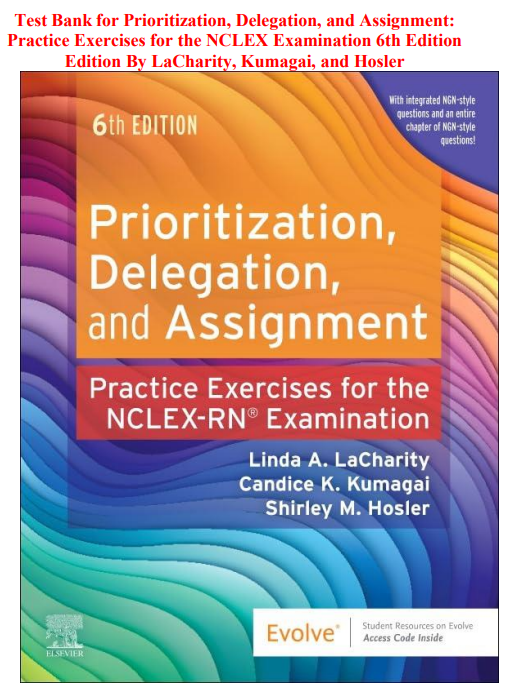
This comprehensive test bank is built for the 6th Edition of Prioritization, Delegation, and Assignment: Practice Exercises for the NCLEX Examination by LaCharity, Kumagai, and Hosler. It is the most widely used and clinically respected resource for developing the prioritization, delegation, and assignment skills that the NCLEX tests — and that real nursing practice demands every single shift.
Whether you are preparing for the NCLEX-RN, a comprehensive nursing course final, or simply trying to build the clinical judgment that transforms a nursing student into a safe, confident practicing nurse, this resource delivers the scenario-based, high-stakes clinical thinking practice that no other study tool provides quite like LaCharity.
What’s Inside?
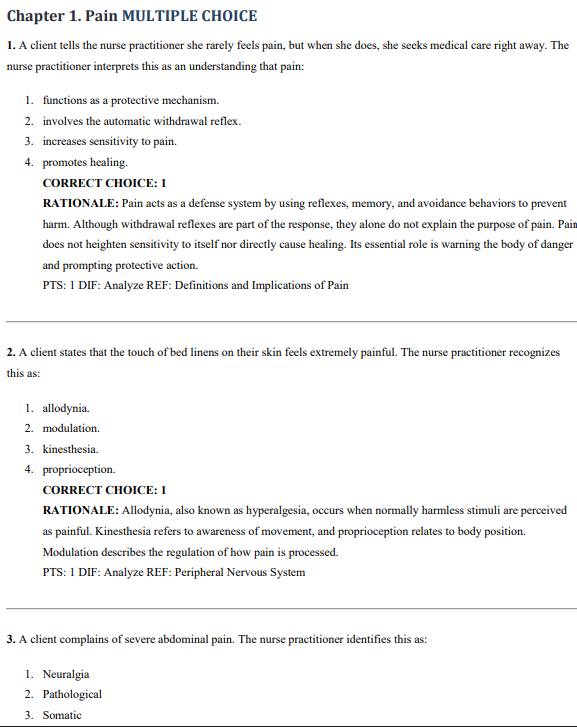
- Hundreds of practice questions covering every chapter and clinical specialty area
- Multiple-choice, select-all-that-apply, and complex multi-patient scenario questions
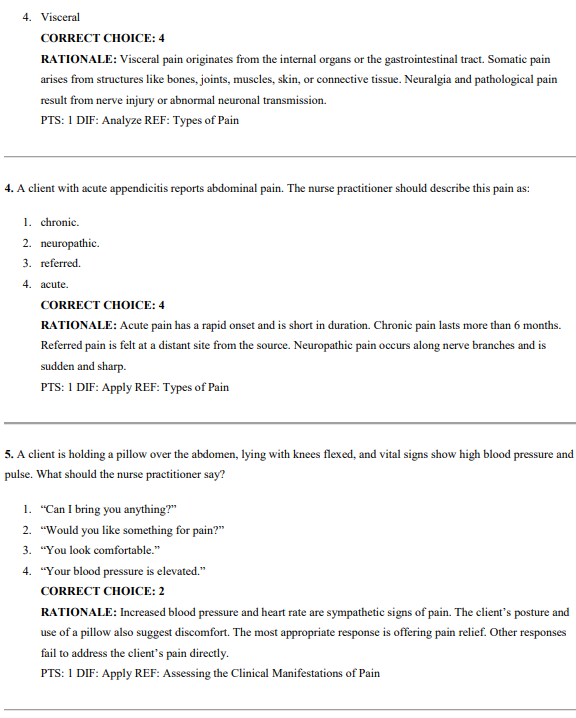
- Complete answer keys with thorough, clinically grounded rationales
- Questions aligned with current NCLEX-RN and Next Generation NCLEX examination standards
- Coverage of prioritization, delegation, and assignment across all major medical-surgical, specialty, and community nursing settings
Who Is This Test Bank For?
This resource is perfect for:
- Undergraduate RN nursing students preparing for NCLEX-RN
- Senior nursing students completing comprehensive nursing courses and capstone practicums
- NCLEX-RN candidates who struggle with prioritization and delegation question types
- New graduate nurses building clinical judgment and assignment confidence
- Nursing faculty developing NCLEX-preparatory course exams and clinical judgment assessments
- Nursing students in accelerated BSN or second-degree programs
- Nursing students preparing for Next Generation NCLEX clinical judgment questions
- RN-to-BSN students strengthening evidence-based clinical decision-making skills
Topics Covered Include:
- Introduction to prioritization — frameworks, principles, and clinical decision-making models
- Introduction to delegation — the five rights of delegation and scope of practice principles
- Introduction to assignment — patient acuity, nursing competency, and safe staffing principles
- Respiratory disorders prioritization and delegation
- Cardiovascular disorders prioritization — chest pain, heart failure, and dysrhythmias
- Hematological and oncological nursing prioritization
- Neurological disorders — stroke, TBI, and seizure prioritization
- Visual and auditory disorders delegation and assignment
- Musculoskeletal disorders and orthopedic nursing delegation
- Gastrointestinal and nutritional disorders prioritization
- Diabetes and endocrine disorders assignment and prioritization
- Renal and urological disorders prioritization
- Reproductive and sexually transmitted infection prioritization
- Integumentary disorders and wound care delegation
- Immune and infectious disease prioritization
- Mental health and behavioral disorders prioritization
- Maternal-newborn nursing prioritization and delegation
- Pediatric nursing prioritization, delegation, and assignment
- Community and home health nursing delegation
- Surgical and perioperative nursing prioritization
- Emergency and disaster nursing triage and prioritization
- Leadership, management, and quality improvement in nursing assignments
Why This Test Bank Stands Out
LaCharity, Kumagai, and Hosler created something that no standard nursing textbook or question bank provides — a systematic, specialty-by-specialty framework for developing the clinical judgment skills that every NCLEX candidate struggles with most.
Prioritization questions are the ones students fear. Delegation questions are the ones students get wrong even when they know the content. Assignment questions are the ones that separate students who understand nursing as a profession from students who only understand it as a collection of clinical facts.
This test bank is built to eliminate that fear — and replace it with genuine clinical confidence.
Every question in this test bank is constructed around the same high-stakes, multi-patient, real-world clinical reasoning framework that LaCharity, Kumagai, and Hosler establish throughout the textbook. You will manage a four-patient assignment and determine who to assess first — not based on which patient sounds sickest in the abstract, but based on which specific clinical finding represents the most immediate threat to life or safety. You will receive a list of tasks and determine which ones can be safely delegated to a licensed practical nurse or nursing assistant — applying the five rights of delegation with precision. You will receive a staffing situation and assign patients to available nurses based on acuity, competency, and scope of practice.
The 6th Edition reflects the most current NCLEX test plan, incorporating the Next Generation NCLEX clinical judgment emphasis that makes prioritization and delegation content more important than ever before. This test bank is fully aligned with that evolution — featuring clinical scenario questions that challenge you to recognize cues, prioritize hypotheses, generate solutions, and evaluate outcomes — all in the context of multi-patient clinical assignments.
Detailed rationales do not just confirm correct answers. They explain the clinical reasoning framework, patient safety principles, delegation boundaries, and prioritization logic behind every decision. That level of explanation builds the transferable clinical judgment that carries you through the NCLEX — and through every shift of your nursing career.
Questions are organized chapter by chapter — clinical specialty by clinical specialty — for structured, systematic study. Work through the entire textbook methodically, or target the specialty areas where your prioritization and delegation confidence is lowest.
Sample Questions
Question 1
A nurse on a medical-surgical unit has just received a shift report on four patients. Which patient should the nurse assess first?
- A) A 58-year-old patient with stable chronic heart failure who is requesting their morning medications
- B) A 72-year-old patient post right total hip arthroplasty on day two who reports pain rated 5 out of 10
- C) A 45-year-old patient with type 2 diabetes whose morning blood glucose is 214 mg/dL
- D) A 66-year-old patient with COPD whose respiratory rate has increased from 16 to 28 breaths per minute over the past two hours and who is now using accessory muscles to breathe
Correct Answer: D
Rationale: Prioritization in nursing uses the principle of addressing actual, acute, life-threatening physiological changes before stable or anticipated findings. The patient with COPD represents the most urgent clinical concern — a respiratory rate that has acutely increased from 16 to 28 breaths per minute over two hours, combined with accessory muscle use, signals significant respiratory distress and potential impending respiratory failure. This is an acute physiological change requiring immediate nursing assessment. In COPD patients, rising respiratory rate and accessory muscle use can deteriorate rapidly to respiratory arrest. The heart failure patient is described as stable. Post-hip arthroplasty pain of 5 out of 10 on day two is expected and manageable but does not represent acute deterioration. A blood glucose of 214 mg/dL in a type 2 diabetic patient is elevated but not emergent — it does not represent the acute physiological threat of impending respiratory failure. Acute changes in vital signs and respiratory effort always take priority over stable or anticipated clinical findings.
Question 2
A registered nurse is working with a nursing assistant on a busy medical-surgical unit. Which task is most appropriate for the RN to delegate to the nursing assistant?
- A) Performing a focused respiratory assessment on a patient with new-onset shortness of breath
- B) Administering a prescribed PRN oral analgesic to a patient with chronic back pain
- C) Measuring and recording urine output for a stable postoperative patient with an indwelling catheter
- D) Evaluating a patient’s understanding of newly prescribed anticoagulation therapy
Correct Answer: C
Rationale: The five rights of delegation require that the task be within the scope of practice of the person to whom it is delegated, that the person have the training and competency to perform it safely, and that the task not require nursing assessment or clinical judgment. Measuring and recording urine output from an established indwelling urinary catheter in a stable postoperative patient is a routine, non-invasive task that falls within the nursing assistant’s scope of practice and requires no nursing assessment or independent clinical judgment. Performing a respiratory assessment requires professional nursing assessment skills and cannot be delegated. Medication administration requires a licensed nurse — oral analgesics cannot be delegated to unlicensed assistive personnel. Patient education — including evaluating understanding of anticoagulation therapy — requires professional nursing judgment, teaching expertise, and clinical assessment and is never appropriate to delegate to a nursing assistant.
Question 3
A charge nurse is making patient assignments at the beginning of the shift. The available staff includes one experienced RN, one new graduate RN in the third month of orientation, one LPN, and one nursing assistant. Which patient assignment is most appropriate for the new graduate RN?
- A) A patient with septic shock receiving norepinephrine titration and continuous cardiac monitoring
- B) A patient with stable chronic obstructive pulmonary disease awaiting discharge with completed teaching
- C) A patient admitted overnight with new-onset atrial fibrillation with rapid ventricular response requiring frequent rhythm monitoring and potential cardioversion
- D) A patient two hours post emergency exploratory laparotomy requiring intensive hemodynamic monitoring and wound assessment
Correct Answer: B
Rationale: Safe patient assignment requires matching patient acuity and clinical complexity to the nurse’s demonstrated competency level. A new graduate RN in the third month of orientation is still developing clinical judgment, hemodynamic assessment skills, and independent decision-making competence. The patient with stable COPD awaiting discharge with completed teaching represents the lowest acuity assignment — the patient is clinically stable, discharge criteria are met, and the primary nursing task involves confirming readiness and coordinating discharge — appropriate for a developing nurse with appropriate supervision. Septic shock with vasopressor titration requires advanced hemodynamic management skills beyond a new graduate’s current competency. New-onset atrial fibrillation with rapid ventricular response and potential cardioversion requires advanced cardiac assessment and emergency intervention readiness. A two-hour post-emergency laparotomy patient requires intensive surgical nursing assessment skills. Assigning any of these high-acuity patients to a third-month new graduate nurse without appropriate supervision is unsafe and represents a failure of charge nurse responsibility.
Question 4
A nurse is caring for five patients on a medical-surgical unit and must prioritize which patient to reassess after completing morning medications. Which patient requires reassessment first?
- A) A patient with rheumatoid arthritis who received their scheduled methotrexate one hour ago and reports mild nausea
- B) A patient with a UTI who received their first dose of nitrofurantoin 30 minutes ago and now reports severe difficulty breathing and generalized urticaria
- C) A patient with hypertension whose blood pressure is 148/92 mmHg one hour after receiving their scheduled antihypertensive
- D) A patient with type 2 diabetes whose blood glucose is 168 mg/dL two hours after receiving their morning insulin
Correct Answer: B
Rationale: The patient who received nitrofurantoin and is now reporting severe difficulty breathing and generalized urticaria is experiencing signs of anaphylaxis — a life-threatening hypersensitivity reaction requiring immediate emergency intervention. Anaphylaxis can progress to complete airway obstruction and cardiovascular collapse within minutes of onset. This patient requires immediate assessment and emergency response — airway management, epinephrine administration, IV access, and provider notification — before any other patient on the unit is assessed. Mild nausea following methotrexate is a common, expected side effect that is uncomfortable but not immediately life-threatening. A blood pressure of 148/92 mmHg following antihypertensive administration is elevated but not a hypertensive crisis and does not represent immediate danger. A blood glucose of 168 mg/dL in a diabetic patient two hours post-insulin is a common post-meal finding that does not represent an acute emergency. Anaphylaxis is always the immediate priority — it is a rapidly evolving, potentially fatal medical emergency.
Question 5
A registered nurse receives a call from a nursing assistant who reports that a patient assigned to the nurse seems confused and is trying to climb out of bed. The nurse is currently performing a dressing change on another patient in a room down the hall. Which nursing action is most appropriate?
- A) Ask the nursing assistant to apply soft wrist restraints to prevent the patient from falling while the nurse completes the dressing change
- B) Instruct the nursing assistant to stay with the patient, ensure the bed is in the lowest position with side rails up, and go to assess the patient immediately
- C) Ask the nursing assistant to redirect the patient verbally and check back in 10 minutes
- D) Call the provider to request a sedative order before going to assess the patient
Correct Answer: B
Rationale: New onset confusion with attempts to get out of bed represents an acute change in neurological status — a clinical finding that requires immediate registered nurse assessment. The cause of sudden confusion in a hospitalized patient can range from medication adverse effects and infection to hypoxia, hypoglycemia, or neurological emergency — all of which require nursing assessment and clinical judgment to identify and manage. The nurse must delegate appropriate safety measures to the nursing assistant within their scope — remaining with the patient, lowering the bed, and ensuring side rails are up — while immediately going to assess the patient directly. Restraint application requires a provider order and nursing assessment — it cannot be independently initiated by a nursing assistant. Verbal redirection and a 10-minute delay is inappropriate for an acute neurological change that may represent a life-threatening emergency. Requesting a sedative before assessing the patient is clinically inappropriate — sedation without assessment of the cause of confusion can mask or worsen a serious underlying condition.
Frequently Asked Questions (FAQs)
What edition does this test bank cover?
This test bank is written specifically for the 6th Edition of Prioritization, Delegation, and Assignment: Practice Exercises for the NCLEX Examination by LaCharity, Kumagai, and Hosler. All questions are fully aligned with the current edition’s chapter organization, updated clinical content, and the latest NCLEX-RN and Next Generation NCLEX examination standards.
How are the questions organized?
Questions are arranged chapter by chapter — clinical specialty by clinical specialty — mirroring the structure of the LaCharity textbook. This allows you to study systematically through all specialty areas or focus on specific clinical settings — such as cardiovascular, neurological, or maternal-newborn nursing — where your prioritization and delegation confidence is lowest.
Is this test bank specifically useful for NCLEX preparation?
Absolutely — this is one of the most NCLEX-targeted test banks available. Prioritization, delegation, and assignment questions represent a significant and growing portion of the NCLEX-RN examination — and they are consistently among the question types that candidates find most challenging. This test bank directly targets those question types with the clinical reasoning depth and specialty-specific scenarios that NCLEX preparation demands.
Is this test bank aligned with the Next Generation NCLEX?
Yes. The 6th Edition of LaCharity reflects the NGN clinical judgment framework — and this test bank incorporates NGN-aligned clinical scenario questions that challenge candidates to apply all six cognitive skills of the NCLEX Clinical Judgment Measurement Model in prioritization, delegation, and assignment contexts.
Is this test bank useful for new graduate nurses beyond the NCLEX?
Absolutely. Prioritization, delegation, and assignment are daily nursing practice skills — not just exam content. New graduate nurses completing orientation will find this test bank an invaluable resource for building the clinical judgment and assignment confidence that experienced nurses rely on. The specialty-by-specialty organization makes it equally useful for nurses transitioning into new clinical areas.
How quickly can I access the test bank after purchase?
Immediately. As soon as your purchase is complete, you receive instant digital access with no waiting period. Study on your own schedule, at your own pace, from any device.
Are the rationales detailed enough to explain the clinical reasoning behind prioritization and delegation decisions?
Yes. Every rationale explains the clinical reasoning framework, patient safety principles, scope of practice boundaries, and prioritization logic behind every correct answer. This approach builds the genuine clinical judgment that LaCharity, Kumagai, and Hosler emphasize throughout the textbook — the kind that carries candidates through the NCLEX and through every shift of their nursing career.
Can nursing faculty use this test bank for course assessments?
Absolutely. The chapter-by-chapter specialty organization, NCLEX-style question formats, and clinical judgment emphasis make this an outstanding resource for faculty building NCLEX-preparatory assessments, comprehensive course finals, and clinical judgment evaluations for senior nursing students across all specialty areas.


Goldbridge –
Perfectly organized
Purityk –
A total game-changer
Jardins M. –
perfect
Jeremy N –
i like the detailed rationales
Barnabas K. –
top quality
Helen Christie –
Very good study resource
Nancy975 –
perfect quality
Lucille Maria –
I like it
Mary Lincoln –
A solid study guide extremely rich in content
Rosemary R –
Very helpful
Grace W. –
The test bank is much better than I expected
Nelly –
Perfect!
Chris martin –
Searchable pdf with well organized, detailed content
Carol Kay –
Excellent resource
Craig Bellamy –
Top quality
Bruno Molino –
I nailed my finals thanks to this gem
Liam Mbogo –
Quick practice whenever I had time
Caleb Martins –
Detailed rationales make reviewing incorrect answers much easier
Kamara Reid –
Simple, effective, and easy to use.
Melania Angel –
Increased my confidence with test questions
Nelius M. –
Excellent!