Maternal-child nursing is where two of nursing’s highest clinical stakes exist simultaneously — and where the decisions you make in seconds can determine outcomes that last a lifetime.
It is where you monitor a laboring patient’s fetal heart rate tracing and recognize in thirty seconds that a pattern has shifted from reassuring to non-reassuring — and that the window for intervention is narrowing. Where you assess a newborn’s transition to extrauterine life and determine within the first minute of life whether this baby is adapting well or needs immediate resuscitation support. Where you identify postpartum hemorrhage before it becomes hemodynamic shock, recognize early preeclampsia before it becomes eclampsia, and support a mother struggling with postpartum depression before it becomes a safety crisis.
And it is where the pediatric nurse recognizes that a four-year-old’s change in level of consciousness is not behavioral — it is neurological. Where a school-age child’s recurrent abdominal pain is not anxiety — it is an early presentation of inflammatory bowel disease. Where a toddler’s growth curve deviation tells you something important about what is happening in that family’s home.
Maternal-child nursing covers two distinct patient populations across the most critical developmental periods of human life. Mastering it requires a textbook that integrates obstetric precision, neonatal assessment expertise, pediatric developmental knowledge, and family-centered care into a single coherent clinical framework. Perry, Hockenberry, Cashion, Alden, Olshansky, and Lowdermilk’s 7th Edition does exactly that.
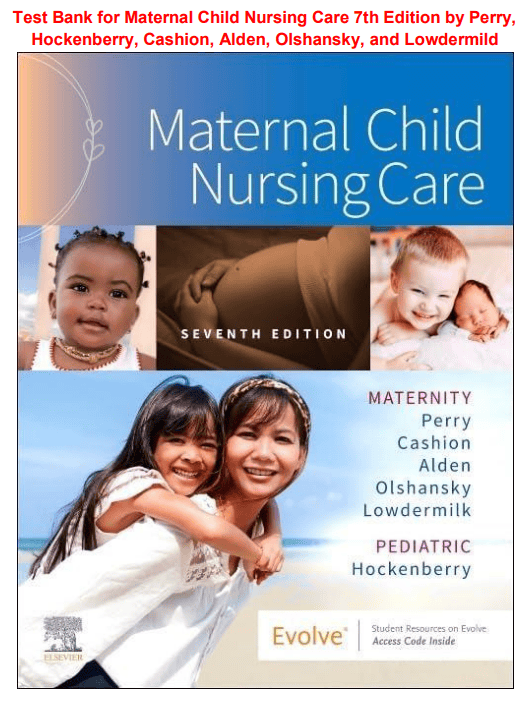
This comprehensive test bank is built for the 7th Edition of Maternal Child Nursing Care by Perry, Hockenberry, Cashion, Alden, Olshansky, and Lowdermilk. It helps you master every chapter with the focused, evidence-based, family-centered clinical practice that maternal-child nursing demands — and that two generations of nursing students have depended on this textbook to provide.
What’s Inside?
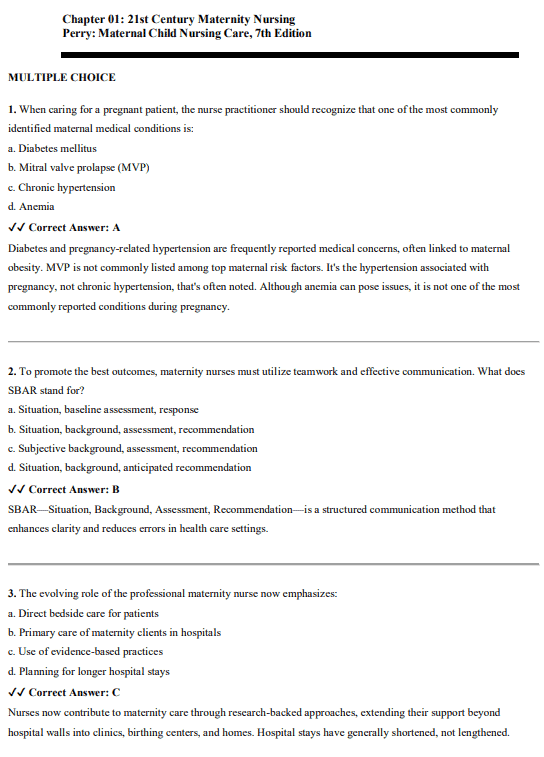
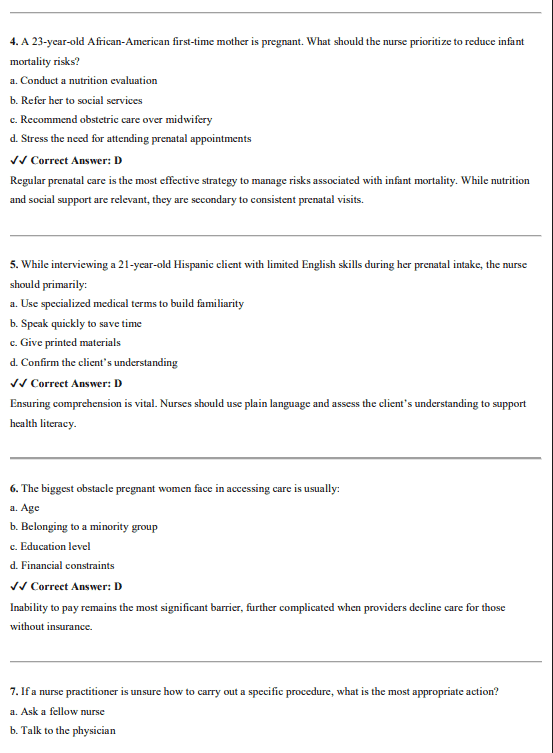
- Hundreds of practice questions covering every chapter
- Multiple-choice, select-all-that-apply, priority, and clinical scenario questions
- Complete answer keys with thorough, evidence-based clinical rationales
- Questions aligned with current NCLEX-RN examination standards
- Coverage of maternity, newborn, and pediatric nursing content across the full care continuum
Table of Contents
PART 1: MATERNITY NURSING
Unit 1: Introduction to Maternity Nursing
1. 21st Century Maternity Nursing
2. The Family, Culture, Spirituality, and Home Care
Unit 2: Reproductive Years
3. Assessment and Health Promotion
4. Reproductive System Concerns
5. Infertility, Contraception, and Abortion
Unit 3: Pregnancy
6. Genetics, Conception, and Fetal Development
7. Anatomy and Physiology of Pregnancy
8. Nursing Care of the Family During Pregnancy
9. Maternal and Fetal Nutrition
10. Assessment of High-Risk Pregnancy
11. High-Risk Perinatal Care: Preexisting Conditions
12. High-Risk Perinatal Care: Gestational Conditions
Unit 4: Labor and Birth
13. Labor and Birth Processes
14. Maximizing Comfort for the Laboring Woman
15. Fetal Assessment During Labor
16. Nursing Care of the Family During Labor and Birth
17. Labor and Birth Complications
Unit 5: Postpartum Period
18. Physiologic and Behavioral Adaptations of the Newborn
19. Nursing Care of the Family During the Postpartum Period
20. Transition to Parenthood
21. Postpartum Complications
Unit 6: Newborn
22. Physiologic and Behavioral Adaptations of the Newborn
23. Nursing Care of the Newborn and Family
24. Newborn Nutrition and Feeding
25. The High-Risk Newborn
PART 2: PEDIATRIC NURSING
Unit 7: Children, Their Families, and the Nurse
26. 21st Century Pediatric Nursing
27. Social, Cultural, Religious, and Family Influences on Child Health Promotion
28. Developmental and Genetic Influences on Child Health Promotion
Unit 8: Assessment of the Child and Family
29. Communication and Physical Assessment of the Child and Family
30. Pain Assessment and Management in Children
Unit 9: Health Promotion and Special Health Problems
31. The Infant and Family
32. The Toddler and Family
33. The Preschooler and Family
34. The School-Age Child and Family
35. Health Promotion of the Adolescent and Family
Unit 10: Special Needs, Illness, and Hospitalization
36. Impact of Chronic Illness, Disability, or End-of-Life Care on the Child and Family
37. Impact of Cognitive or Sensory Impairment on the Child and Family
38. Family-Centered Care of the Child During Illness and Hospitalization
39. Pediatric Nursing Interventions and Skills
Unit 11: Health Problems of Children
40. The Child with Respiratory Dysfunction
41. The Child with Gastrointestinal Dysfunction
42. The Child with Cardiovascular Dysfunction
43. The Child with Hematologic and Immunologic Dysfunction
44. The Child with Cancer
45. The Child with Genitourinary Dysfunction
46. The Child with Cerebral Dysfunction
47. The Child with Endocrine Dysfunction
48. The Child with Musculoskeletal or Articular Dysfunction
49. The Child with Neuromuscular or Muscular Dysfunction
50. The Child with Integumentary Dysfunction
Who Is This Test Bank For?
This resource is perfect for:
- Undergraduate RN nursing students in obstetric and pediatric nursing courses
- NCLEX-RN candidates reviewing maternal-child health content
- LPN-to-RN bridge students building maternal-child nursing competency
- Nursing faculty developing OB and pediatric course exams and assessments
- Certified nurse-midwifery students reviewing primary maternity care concepts
- Nursing students in accelerated BSN or second-degree nursing programs
Why This Test Bank Delivers Results
The 7th Edition of Maternal Child Nursing Care by Perry, Hockenberry, Cashion, Alden, Olshansky, and Lowdermilk remains the gold standard in maternal-child nursing education because it accomplishes something that few textbooks achieve — it integrates obstetric precision, neonatal assessment expertise, developmental pediatric knowledge, and family-centered care philosophy into a single, clinically coherent framework that prepares nurses for the full scope of maternal-child practice.
Every element of this textbook builds toward one goal — producing nurses who can care for mothers, newborns, and children with the clinical depth and family-centered sensitivity that these patients deserve. This test bank is built to assess and reinforce exactly that preparation.
Every question reflects real maternal-child clinical scenarios drawn from the Perry, Hockenberry framework. You will not simply recall the stages of labor — you will interpret a labor progress note and determine whether cervical dilation is proceeding normally or signals a labor complication requiring intervention. You will not just define postpartum hemorrhage — you will recognize its earliest clinical signs in a patient whose blood pressure is still normal, whose fundus is not yet massively boggy, but whose tachycardia and restlessness suggest blood loss that is accelerating. You will not merely list pediatric developmental milestones — you will apply them to a clinical scenario in which a parent’s concerns about their child’s development require you to distinguish normal variation from a genuine red flag.
The 7th Edition reflects the most current evidence-based maternal-child nursing practice — including current AWHONN intrapartum care guidelines, AAP neonatal resuscitation program standards, current CDC immunization schedules, and updated pediatric disease management evidence. This test bank is fully aligned with every update.
Detailed rationales explain the physiological basis, obstetric principles, pediatric assessment standards, and current evidence-based practice guidelines behind every correct answer. Questions are organized chapter by chapter — mirroring the textbook’s unit structure — for structured, systematic study.
Sample Questions
Question 1
A labor and delivery nurse is monitoring a patient at 39 weeks gestation who is in active labor at 7 cm dilation. The fetal heart rate tracing shows a baseline of 145 bpm with moderate variability. Over the past 20 minutes, the nurse has noted recurrent late decelerations — gradual onset decelerations beginning after the peak of contractions and returning to baseline after the contraction ends — with each of the last four contractions. The patient is receiving oxytocin at 8 mU/min for labor augmentation. Which nursing action sequence is most appropriate?
- A) Increase the oxytocin infusion rate to accelerate delivery and reduce the total duration of fetal exposure to contractions
- B) Discontinue the oxytocin infusion, reposition the patient to the left lateral position, apply supplemental oxygen via non-rebreather mask at 8–10 L/min, increase IV fluid rate, notify the provider immediately, and prepare for possible urgent delivery
- C) Continue the oxytocin infusion at the current rate and reassess the fetal heart rate pattern in 30 minutes since moderate variability is reassuring
- D) Perform an amnioinfusion to relieve umbilical cord compression causing the late decelerations
Correct Answer: B
Rationale: Late decelerations are the fetal heart rate pattern most directly associated with uteroplacental insufficiency — inadequate blood flow through the placenta to the fetus during uterine contractions. The gradual onset and offset, beginning after the peak of contractions and returning to baseline after the contraction ends, reflect the delayed detection of fetal hypoxia by chemoreceptors as oxygenated blood is temporarily reduced to the fetus during the peak of uterine contraction. Recurrent late decelerations — occurring with four consecutive contractions — indicate a non-reassuring pattern requiring immediate intervention. The presence of moderate variability is a partially reassuring sign — indicating the fetal autonomic nervous system is still responding — but does not eliminate the urgency of the intervention requirement. The priority intervention sequence follows the standard non-reassuring FHR response protocol — discontinue oxytocin immediately, as it is directly increasing uterine contraction frequency and potentially worsening uteroplacental insufficiency; reposition to the left lateral position to relieve aortocaval compression and improve placental blood flow; apply supplemental oxygen to maximize maternal and fetal oxygen delivery; increase IV fluid rate to improve uteroplacental perfusion; and notify the provider immediately for assessment and decision about continued labor management or urgent delivery. Amnioinfusion is specifically indicated for variable decelerations from cord compression — not late decelerations from uteroplacental insufficiency. Increasing oxytocin would directly worsen the pattern by intensifying contractions.
Question 2
A postpartum nurse is performing a one-hour postpartum assessment on a patient who delivered vaginally 60 minutes ago following a prolonged second stage of 2.5 hours. The nurse finds the uterine fundus at the level of the umbilicus and firm. Lochia rubra is moderate. Vital signs — blood pressure 104/66 mmHg, heart rate 108 bpm, respiratory rate 18 breaths per minute, temperature 37.2°C. The patient’s blood pressure on admission was 118/74 mmHg with a heart rate of 78 bpm. Which finding requires the most immediate nursing follow-up and why?
- A) The fundal height at the umbilicus — this is elevated for one hour postpartum and suggests uterine atony
- B) The moderate lochia rubra — this is heavier than expected and indicates active hemorrhage requiring immediate intervention
- C) The tachycardia of 108 bpm combined with a blood pressure decrease from 118/74 to 104/66 mmHg — representing hemodynamic changes that may indicate early compensated hemorrhage in the context of a prolonged second stage
- D) The temperature of 37.2°C — this is elevated for one hour postpartum and suggests early endometritis
Correct Answer: C
Rationale: This question requires applying the principle that hemodynamic vital sign changes are more sensitive early indicators of postpartum hemorrhage than visible blood loss alone. The combination of tachycardia (108 bpm — up from baseline of 78 bpm, representing a 30 bpm increase) and blood pressure decrease (from 118/74 to 104/66 mmHg, a 14-point systolic drop) represents a hemodynamic trajectory that is concerning for early compensated hemorrhage. The body’s compensatory mechanisms in hemorrhage maintain blood pressure for longer than heart rate — tachycardia is therefore an earlier and more sensitive indicator of blood volume loss than hypotension. A prolonged second stage of 2.5 hours is a significant risk factor for uterine atony — the most common cause of postpartum hemorrhage — due to uterine muscle fatigue from prolonged contractions. The fundal height at the umbilicus is normal for one hour postpartum — the uterus typically descends approximately one fingerbreadth per day. The firm fundus is reassuring against atony as the current cause. Moderate lochia rubra at one hour is within the expected range. A temperature of 37.2°C is completely normal — endometritis typically presents 24–72 hours or later after delivery. The priority is further assessment of the hemodynamic changes — reassessing vital signs every 15 minutes, performing a thorough hemorrhage assessment, quantifying cumulative blood loss, and notifying the provider if the hemodynamic trend continues to deteriorate.
Question 3
A neonatal nurse is performing a two-hour newborn assessment on an infant born at 38 weeks gestation via elective cesarean section without labor. The nurse notes a respiratory rate of 72 breaths per minute, mild subcostal retractions, an intermittent expiratory grunt, and nasal flaring. The infant’s oxygen saturation is 91% on room air. The infant is maintaining temperature and has a strong suck reflex. Which condition is most likely and which nursing intervention is the priority?
- A) Respiratory distress syndrome from surfactant deficiency — administer surfactant therapy immediately per neonatal protocol
- B) Transient tachypnea of the newborn from retained lung fluid — initiate supplemental oxygen to maintain SpO₂ above 94%, notify the neonatal provider, and monitor for clinical improvement over the next 24–72 hours
- C) Meconium aspiration syndrome from meconium-stained amniotic fluid — initiate aggressive suctioning below the vocal cords immediately
- D) Normal newborn respiratory transition — document findings and reassess in four hours
Correct Answer: B
Rationale: This presentation is consistent with transient tachypnea of the newborn — the most common respiratory condition in term and late preterm newborns delivered by cesarean section without labor. During vaginal birth, the mechanical compression of the thorax and the hormonal surge of labor stimulate reabsorption and expulsion of fetal lung fluid. Elective cesarean delivery without labor bypasses both of these mechanisms, leaving residual fluid in the airways and alveoli that must be absorbed passively over the first 24–72 hours. This produces the characteristic presentation of TTN — tachypnea above 60 breaths per minute, mild subcostal retracting, expiratory grunting, and nasal flaring — typically resolving within 24–72 hours as fluid reabsorption is completed. The oxygen saturation of 91% requires supplemental oxygen to maintain adequate oxygenation during the resolution period. The provider must be notified for clinical assessment and potential chest radiograph to confirm the diagnosis and exclude more serious pathology. RDS occurs primarily in premature infants from surfactant deficiency — at 38 weeks, surfactant production is typically adequate. Meconium aspiration requires meconium-stained amniotic fluid — not described in this scenario. While some degree of respiratory adjustment is normal, the severity of this presentation — tachypnea of 72 bpm with subcostal retracting, grunting, and hypoxemia — exceeds normal transitional physiology and requires clinical intervention.
Question 4
A pediatric nurse is caring for a six-year-old child admitted for an acute asthma exacerbation. The child’s current peak flow is 48% of their personal best, they are using accessory muscles to breathe, speaking in short phrases, and their oxygen saturation is 90% on room air despite bronchodilator therapy 20 minutes ago. The child’s respiratory rate is 34 breaths per minute. Which assessment finding most concerns the nurse as a potential sign of impending respiratory failure requiring immediate escalation?
- A) The oxygen saturation of 90% — which is below normal but expected during an acute asthma exacerbation
- B) The respiratory rate of 34 breaths per minute — which is elevated but appropriate compensation for the bronchospasm
- C) The sudden absence of the previously audible wheezing, with the child now appearing exhausted, barely able to speak, and having markedly decreased air movement on auscultation
- D) The peak flow of 48% — which indicates moderate rather than severe obstruction
Correct Answer: C
Rationale: In pediatric acute asthma, the sudden disappearance of wheezing is an ominous clinical sign rather than a reassuring one — particularly when accompanied by deteriorating clinical status. During an asthma exacerbation, wheezing is generated by turbulent airflow through partially obstructed bronchioles. When airflow becomes so severely reduced that insufficient air movement can generate the turbulence required to produce wheezing, breath sounds become silent — this is the silent chest phenomenon, indicating impending respiratory arrest. The child’s progressive deterioration — exhaustion replacing the compensatory accessory muscle use, markedly decreased air movement replacing audible wheezing, and near-inability to speak — indicates that the respiratory muscles are fatiguing and the compensatory mechanisms are failing. This represents a pediatric respiratory emergency requiring immediate escalation — provider notification, preparation for magnesium sulfate administration, and readiness for non-invasive or invasive ventilatory support. A peak flow of 48% indicates moderate-severe obstruction but does not represent the acute change described. Oxygen saturation of 90% is concerning but not the most immediately alarming new finding. Elevated respiratory rate in asthma is expected compensatory tachypnea. The silent chest in a deteriorating child is the critical clinical signal that demands immediate action above all other findings.
Question 5
A pediatric oncology nurse is caring for a seven-year-old child receiving chemotherapy for acute lymphoblastic leukemia. Morning laboratory results show an absolute neutrophil count of 320 cells/mm³. At 1400, the child’s temperature is 38.2°C — their first fever during this hospitalization. The child is alert, appears mildly flushed, and denies pain. Vital signs otherwise stable. Which nursing action is the priority?
- A) Administer acetaminophen for fever management and reassess temperature in two hours before notifying the provider
- B) Notify the provider immediately — a temperature of 38°C or above in a neutropenic patient with ANC below 500 cells/mm³ constitutes a febrile neutropenia emergency requiring urgent blood cultures and empiric broad-spectrum antibiotic initiation within one hour
- C) Encourage oral fluid intake to reduce the temperature through increased renal heat dissipation and reassess in one hour
- D) Obtain a single blood culture from a peripheral site and await results before initiating antibiotic therapy
Correct Answer: B
Rationale: Febrile neutropenia — defined as a single temperature of 38.3°C or above, or a temperature of 38°C sustained for more than one hour, in a patient with an ANC below 500 cells/mm³ — is a pediatric oncology emergency with a mortality risk that increases substantially with each hour of delay in treatment initiation. Current Children’s Oncology Group and IDSA guidelines mandate that febrile neutropenia be treated as a medical emergency — the provider must be notified immediately and empiric broad-spectrum antibiotic therapy initiated within one hour of fever detection, regardless of the child’s apparent clinical stability. The child’s ANC of 320 cells/mm³ represents severe neutropenia — the immune system has insufficient neutrophils to mount an effective defense against bacterial invasion, and infections that would be clinically insignificant in an immunocompetent child can cause rapidly progressive bacteremia and septic shock in a neutropenic patient. The child’s stable appearance and mild clinical symptoms are deceptive and must not delay emergency response — neutropenic patients can deteriorate from apparent stability to septic shock with alarming rapidity because the inflammatory response that generates clinical warning signs is blunted by neutropenia. The standard febrile neutropenia workup includes blood cultures from all central line lumens and peripheral sites before antibiotics, urinalysis and culture, and chest radiograph if respiratory symptoms are present — but antibiotic initiation must not be delayed awaiting culture results.
Frequently Asked Questions (FAQs)
What edition does this test bank cover?
This test bank is written specifically for the 7th Edition of Maternal Child Nursing Care by Perry, Hockenberry, Cashion, Alden, Olshansky, and Lowdermilk. All questions are fully aligned with the current edition’s chapter organization, updated clinical guidelines, and current evidence-based maternal-child nursing practice standards — including AWHONN, ACOG, AAP, and CDC recommendations.
Does this test bank follow the textbook’s unit and chapter structure?
Yes. Questions are organized to mirror the 7th Edition’s unit and chapter structure — from Unit 1 (Introduction to Maternity and Pediatric Nursing) through Unit 11 (Health Problems of Children) — allowing you to study systematically or focus on specific units based on your course schedule.
Is this a fresh version distinct from previous versions in this conversation?
Yes. This version contains entirely new sample questions, updated clinical scenarios, fresh rationales, and a new meta description — completely distinct from all previous versions of this product description created earlier in this conversation.
Is this test bank aligned with the NCLEX-RN?
Yes. Questions are written to reflect current NCLEX-RN examination standards, with strong emphasis on physiological adaptation, health promotion, safety and infection control, and psychosocial integrity client needs categories. Clinical scenario, priority, and obstetric emergency questions are featured throughout.
Is this test bank useful for students whose programs cover OB and pediatrics in separate courses?
Absolutely. The chapter-by-chapter and unit-by-unit organization makes this test bank equally useful whether your program integrates maternal-child content into one course or separates obstetric and pediatric nursing into distinct courses.
How quickly can I access the test bank after purchase?
Immediately. As soon as your purchase is complete, you receive instant digital access with no waiting period. Study on your own schedule, at your own pace, from any device.
Are the rationales grounded in current maternal-child nursing evidence?
Yes. Every rationale reflects current evidence-based practice standards — including AWHONN intrapartum care guidelines, ACOG obstetric management recommendations, AAP neonatal resuscitation program standards, and current CDC pediatric immunization guidelines.
Can nursing faculty use this test bank for course assessments?
Absolutely. The unit-and-chapter organization, clinical scenario emphasis, and varied question formats make this an outstanding resource for faculty building quizzes, unit exams, and comprehensive assessments for both undergraduate obstetric and pediatric nursing courses.


Evelyn –
Good I recommend
Sarah –
Extremely helpful
Beverly –
An excellent study resource
Norah Helen –
top quality content, perfectly organized study guide
Winnie M. –
Extremely useful resource
Betty N. –
I like it
Peterson S. –
Perfect!
Bruno Molino –
Has to be one of the best test banks I’ve ever used.
Lucille Maria –
Excellent
Caleb Martins –
Exactly what I needed to build exam confidence
Kamara Reid –
Perfectly designed for efficient revision
Betty N. –
Helped me prepare more effectively for exams.
Carol Kay –
Great way to test your knowledge
Craig Bellamy –
Convenient study tool for busy schedules.
Leo Fernandez –
Clear explanations made studying much easier.
Cayte N. –
The rationales helped reinforce important clinical concepts.
Mary Lincoln –
Easy to navigate and packed with useful practice
Yunice M –
Excellent review material for nursing students.
Perpetual Gates –
Clear questions that make nursing exam preparation much easier.
Lisa Horton –
Great resource for reviewing important concepts quickly
Nelius M. –
Helpful explanations make difficult topics easier to understand.
Theresa M. –
I appreciated having realistic questions to supplement my studies