Medical-surgical nursing is where clinical knowledge becomes clinical identity.
It is the specialty that defines what nurses do — day in, day out, across every hospital floor, every medical unit, every surgical ward in the world. It is where you manage the patient recovering from open-heart surgery in the morning and the newly diagnosed diabetic requiring education in the afternoon. Where you recognize the early warning signs of sepsis in a post-operative patient before the rapid response team is called. Where the depth of your clinical knowledge, the sharpness of your assessment skills, and the speed of your clinical judgment determine the quality of care your patients receive.
It is also the most heavily tested content area on the NCLEX — and the foundation upon which every nursing specialty is built.
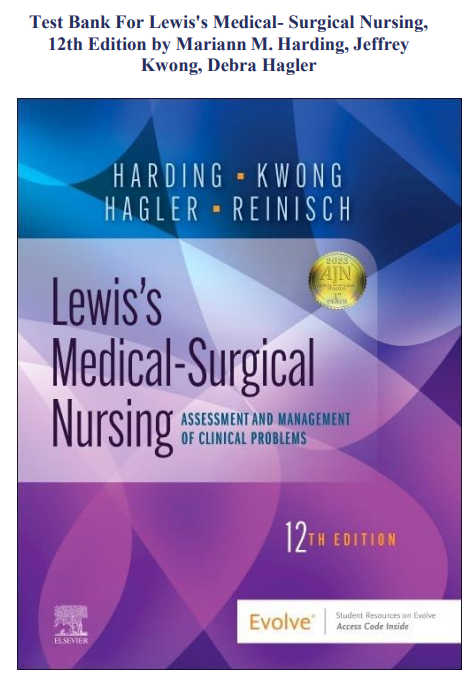
This comprehensive test bank is built for the 12th Edition of Lewis’s Medical-Surgical Nursing by Mariann M. Harding, Jeffrey Kwong, and Debra Hagler. It is the most widely used and clinically authoritative medical-surgical nursing textbook in undergraduate nursing education — and the 12th Edition represents its most current, evidence-based, and Next Generation NCLEX-aligned iteration to date.
This test bank helps you master every chapter with the focused, systems-based, clinical judgment-driven practice that Lewis’s framework demands — and that medical-surgical nursing practice rewards every single shift.
Whether you are preparing for a unit exam, a comprehensive course final, a clinical competency assessment, or the NCLEX-RN, this resource delivers the clinical depth, pathophysiological reasoning, and evidence-based practice precision that Lewis’s Medical-Surgical Nursing has always represented — and that your patients deserve.
What’s Inside?
- Hundreds of practice questions mapped to every chapter
- Multiple-choice, select-all-that-apply, priority, delegation, and Next Generation NCLEX-style clinical scenario questions
- Complete answer keys with thorough, pathophysiologically grounded clinical rationales
- Questions aligned with current NCLEX-RN and Next Generation NCLEX examination standards
- Coverage of all major body systems, surgical nursing concepts, and evidence-based medical-surgical practice — fully aligned with the 12th Edition content updates
Who Is This Test Bank For?
This resource is perfect for:
- Undergraduate RN nursing students in medical-surgical nursing courses using the 12th Edition
- NCLEX-RN candidates seeking the most comprehensive and current med-surg content review
- LPN-to-RN bridge students updating and expanding medical-surgical nursing knowledge
- Nursing faculty building rigorous 12th Edition-aligned course exams and comprehensive unit assessments
- Nursing students in accelerated BSN or second-degree programs covering medical-surgical nursing
- New graduate nurses reinforcing and consolidating foundational med-surg clinical competency
- Nurses preparing for specialty certification examinations in medical-surgical nursing
Topics Covered Include:
- Professional nursing practice — concepts, roles, and evidence-based care
- Health disparities, social determinants of health, and culturally competent care
- Health history, physical examination, and clinical assessment
- Patient and caregiver education in medical-surgical nursing
- Chronic illness, disability management, and palliative care
- Stress, coping, and adaptation in medical-surgical patients
- Sleep and rest disorders in clinical practice
- Pain — acute and chronic pain assessment and management
- Substance use disorders in the medical-surgical setting
- Complementary and alternative therapies in nursing practice
- Fluid, electrolyte, and acid-base imbalances
- Perioperative nursing care — preoperative, intraoperative, and postoperative management
- Inflammation, healing, and infection management
- Genetics, genomics, and personalized healthcare in nursing
- Immune system disorders — HIV/AIDS, allergies, and autoimmune conditions
- Cancer nursing — pathophysiology, treatment, and oncological emergencies
- Integumentary system disorders and burn care
- Visual and auditory system disorders
- Endocrine system disorders — diabetes, thyroid, adrenal, and pituitary conditions
- Respiratory system disorders — COPD, asthma, pneumonia, and respiratory failure
- Hematological system disorders — anemia, clotting disorders, and blood cancers
- Cardiovascular system disorders — heart failure, CAD, dysrhythmias, and vascular disease
- Gastrointestinal system disorders and hepatic conditions
- Urinary system disorders and renal failure management
- Reproductive system disorders — male and female conditions
- Musculoskeletal system disorders and orthopedic nursing
- Neurological system disorders — stroke, TBI, seizures, and neurodegenerative conditions
- Critical care and emergency nursing concepts
Why This Test Bank Delivers Results
Lewis’s Medical-Surgical Nursing has been the gold standard med-surg textbook in nursing education for decades — and the 12th Edition by Harding, Kwong, and Hagler raises that standard further.
The 12th Edition introduces expanded Next Generation NCLEX clinical judgment content, updated evidence-based practice guidelines across every body system, enhanced coverage of social determinants of health and health equity, and the most current pharmacological and surgical management updates in the textbook’s history. It reflects nursing practice as it is actually practiced today — complex, interprofessional, technology-integrated, and deeply rooted in evidence.
This test bank rises to meet that standard — question by question, chapter by chapter.
Every question is grounded in the pathophysiological reasoning, evidence-based clinical management, and nursing process application framework that Harding, Kwong, and Hagler establish throughout the 12th Edition. You will not simply recall normal laboratory values — you will interpret them in the context of a patient’s full clinical picture and determine their significance. You will not just define heart failure — you will recognize the clinical presentation of acute decompensated heart failure, prioritize interventions, and evaluate whether therapy is achieving the intended hemodynamic outcomes. You will not only identify post-operative complications — you will recognize their earliest warning signs, differentiate them from expected post-operative findings, and initiate the evidence-based nursing response before deterioration escalates.
The 12th Edition’s NGN integration means that this test bank includes clinical scenario questions built around the six cognitive skills of the NCLEX Clinical Judgment Measurement Model — recognize cues, analyze cues, prioritize hypotheses, generate solutions, take actions, and evaluate outcomes. These are the questions that challenge you most on the NCLEX — and the questions that most directly prepare you for real clinical practice.
Detailed rationales explain the pathophysiology, nursing priorities, evidence-based practice guidelines, and clinical reasoning behind every correct answer. The 12th Edition content is fully reflected — including the latest body system updates, pharmacological changes, and surgical nursing revisions that distinguish this edition from its predecessors.
Questions are organized chapter by chapter for focused, efficient studying. Target the body systems where your clinical knowledge and reasoning are weakest. Return to high-yield Lewis content areas as your NCLEX or course exam approaches. Build the systematic, confident clinical judgment that Lewis’s Medical-Surgical Nursing has always been designed to develop — and that your patients will depend on.
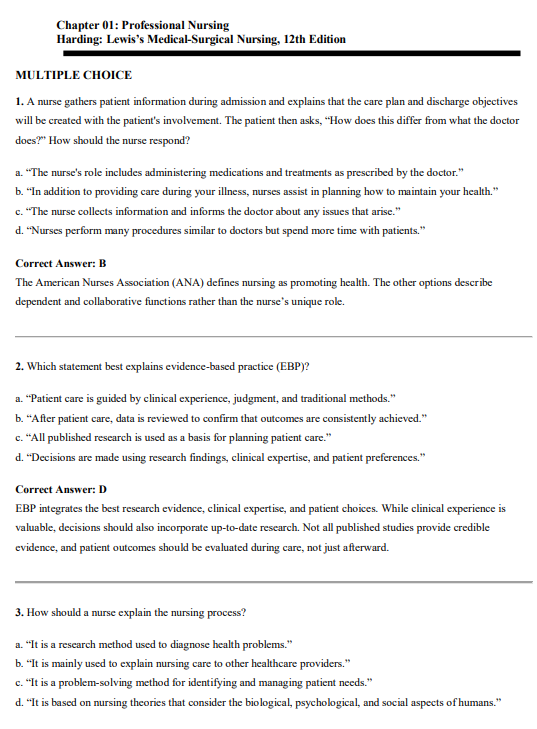
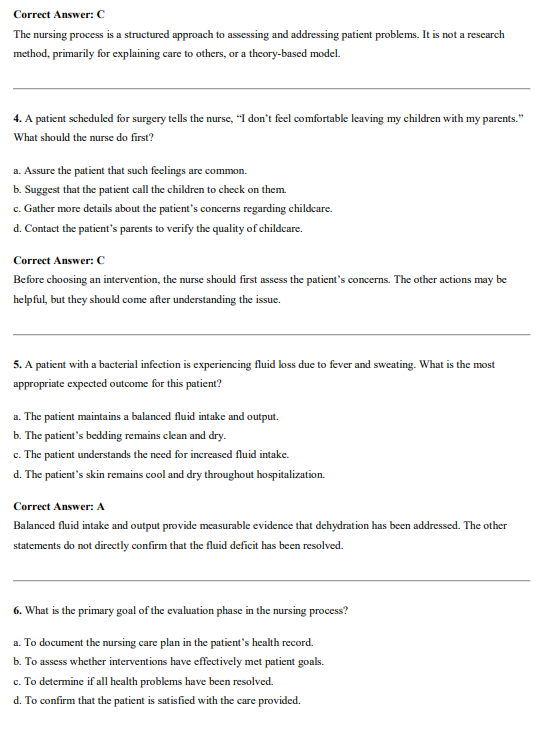
Sample Questions
Question 1
A nurse is caring for a patient admitted with acute decompensated heart failure. Assessment findings include bilateral crackles throughout the lung fields, oxygen saturation of 89% on room air, blood pressure of 162/98 mmHg, heart rate of 108 bpm, jugular venous distension, and 3+ bilateral pitting edema. The patient is anxious and reports severe dyspnea. Which priority sequence of nursing interventions is most appropriate?
- A) Obtain a 12-lead ECG, draw blood for BNP level, and administer scheduled oral diuretic
- B) Position the patient in high Fowler’s, apply supplemental oxygen, establish IV access, and notify the provider immediately for urgent pharmacological management
- C) Weigh the patient, measure abdominal girth, and restrict fluid intake to 1,000 mL for the shift
- D) Administer prescribed PRN oral anxiolytic for distress and reassess respiratory status in one hour
Correct Answer: B
Rationale: This patient is in acute decompensated heart failure with respiratory compromise — an immediately life-threatening situation requiring emergency nursing intervention. The clinical picture confirms severe fluid overload — bilateral crackles indicating pulmonary edema, oxygen saturation of 89% indicating hypoxemia, hypertension and tachycardia reflecting sympathetic activation, JVD indicating elevated right-sided pressures, and significant peripheral edema. The priority nursing interventions follow the ABCDE emergency framework. High Fowler’s positioning — sitting the patient upright — immediately reduces preload by pooling blood in the lower extremities and maximizes diaphragmatic excursion to improve respiratory mechanics. Supplemental oxygen corrects hypoxemia — targeting SpO₂ above 94%. IV access must be established urgently for intravenous diuresis — typically furosemide — and vasodilator therapy. Provider notification must be simultaneous with these interventions. Obtaining an ECG and BNP are important diagnostic steps but do not take priority over immediate respiratory and hemodynamic stabilization. Weight and abdominal measurement are important monitoring tools but are not emergency priorities. Administering an anxiolytic before addressing the physiological cause of distress — hypoxemia and pulmonary congestion — is inappropriate and potentially dangerous.
Question 2
A nurse is caring for a patient with chronic kidney disease stage 4 who is receiving hemodialysis three times per week. The nurse reviews the morning laboratory results — serum potassium 6.6 mEq/L, serum sodium 138 mEq/L, BUN 58 mg/dL, creatinine 5.2 mg/dL, and hemoglobin 9.4 g/dL. The patient’s cardiac monitor shows peaked T waves. Which nursing action is the priority?
- A) Notify the dietitian to reinforce dietary potassium restriction at the next meal
- B) Notify the provider immediately, obtain a 12-lead ECG, and prepare for emergency interventions to stabilize cardiac membrane potential
- C) Administer the scheduled oral sodium polystyrene sulfonate and reassess potassium in four hours
- D) Document the laboratory findings and include them in the provider’s morning rounds report
Correct Answer: B
Rationale: A serum potassium of 6.6 mEq/L with peaked T waves on cardiac monitoring represents severe, symptomatic hyperkalemia — a cardiac emergency in a patient with CKD whose impaired kidneys cannot excrete potassium effectively. Peaked T waves are the earliest ECG manifestation of hyperkalemia, reflecting accelerated ventricular repolarization. As potassium continues to rise, the ECG will progress to widening QRS complexes, PR prolongation, sine wave pattern, ventricular fibrillation, and asystole — a rapidly lethal sequence. The provider must be notified immediately for emergency pharmacological management. A 12-lead ECG quantifies the cardiac impact. Emergency interventions in severe hyperkalemia follow a priority sequence — calcium gluconate or calcium chloride IV to stabilize cardiac membrane potential and protect against dysrhythmia, followed by insulin with dextrose to shift potassium intracellularly, sodium bicarbonate if acidotic, and emergent or expedited dialysis for definitive potassium removal. Dietary counseling is appropriate for chronic management but is wholly inadequate for an acute cardiac emergency. Waiting for rounds delays potentially life-saving intervention. Sodium polystyrene sulfonate acts over hours — far too slowly for a patient with peaked T waves and potassium of 6.6 mEq/L.
Question 3
A nurse is performing a postoperative assessment on a patient who is 18 hours post right-sided pneumonectomy. The patient is receiving supplemental oxygen at 4 L/min via nasal cannula with SpO₂ at 94%. During assessment, the patient suddenly becomes severely dyspneic, the trachea is visibly deviated to the left, breath sounds are absent on the right, blood pressure drops to 82/50 mmHg, and heart rate rises to 136 bpm. Which condition is most likely occurring and what is the priority nursing action?
- A) Expected post-pneumonectomy atelectasis — position the patient on the operative side and increase oxygen flow
- B) Tension pneumothorax — notify the surgeon immediately for emergency needle decompression while maintaining airway and IV access
- C) Pulmonary embolism — administer prescribed anticoagulation and prepare for CT pulmonary angiography
- D) Postoperative hemorrhage into the pleural space — position supine and administer IV fluid bolus
Correct Answer: B
Rationale: This clinical presentation is the classic triad of tension pneumothorax — tracheal deviation away from the affected side, absent breath sounds on the affected side, and hemodynamic collapse with hypotension and tachycardia. Following pneumonectomy, the empty pleural space is susceptible to tension pneumothorax if air accumulates and cannot escape. As pressure builds, the mediastinum is displaced toward the unaffected side — shifting the trachea and compressing the contralateral lung and great vessels. This impairs venous return, causing the precipitous hemodynamic collapse seen here. Tension pneumothorax is a surgical emergency with minutes to death if untreated. The nurse must notify the surgeon immediately for emergency needle decompression — insertion of a large-bore needle into the second intercostal space, midclavicular line on the affected side — to release the tension. Simultaneously maintaining airway patency, IV access for fluid resuscitation, and continuous monitoring are essential concurrent nursing actions. Positioning on the operative side for atelectasis is inappropriate — this patient is in cardiovascular collapse. Pulmonary embolism would not cause absent breath sounds or tracheal deviation. Hemorrhage into the pleural space produces hemothorax — not the tension pneumothorax pattern described here.
Question 4
A nurse is educating a 52-year-old patient who was newly diagnosed with type 2 diabetes mellitus and is being started on metformin. The patient’s HbA1c is 8.6% and fasting glucose is 192 mg/dL. The patient reports being scheduled for a contrast CT of the abdomen next week and asks if there are any concerns. Which nurse response reflects the most accurate and complete patient education?
- A) “There are no concerns — metformin and contrast dye are completely safe to take together.”
- B) “You will need to stop taking metformin before the contrast procedure and not restart it until your kidney function is confirmed normal afterward — your provider will give you specific instructions.”
- C) “You should skip your metformin dose only on the morning of the contrast procedure and resume it that evening.”
- D) “Contrast dye interferes with metformin’s ability to lower blood sugar — your glucose may be elevated for several days after the scan.”
Correct Answer: B
Rationale: Iodinated contrast media used in CT imaging can cause contrast-induced nephropathy — an acute decline in renal function that, if it occurs in a patient taking metformin, creates significant risk for metformin accumulation and potentially fatal lactic acidosis. Metformin is renally cleared and accumulates when renal function declines — lactic acidosis is a rare but serious and potentially lethal adverse effect of metformin accumulation. Current ACR and ADA guidelines recommend withholding metformin before elective contrast procedures in patients with risk factors for contrast nephropathy and holding it for 48 hours after the procedure until renal function is confirmed stable. The nurse must educate the patient clearly about this requirement and ensure the provider has been notified about the upcoming contrast study. Simply skipping the morning dose on the day of the procedure is insufficient protection. The interaction between contrast and metformin is not about glucose control — it is about acute kidney injury and lactic acidosis risk. This question reflects Lewis’s 12th Edition emphasis on connecting pharmacology to procedural nursing care and patient safety education.
Question 5
A charge nurse is making patient assignments at the beginning of a night shift. The staff available includes two experienced RNs, one new graduate RN in the second month of orientation, and one LPN. Which patient assignment is most appropriate for the new graduate RN with appropriate supervision?
- A) A patient with septic shock requiring norepinephrine titration, continuous arterial line monitoring, and hourly urine output assessment
- B) A patient with stable community-acquired pneumonia on day three of IV antibiotics who is transitioning to oral antibiotics and preparing for discharge tomorrow
- C) A patient admitted four hours ago with new-onset ST-elevation myocardial infarction who has returned from the cardiac catheterization laboratory following primary PCI
- D) A patient with acute liver failure secondary to acetaminophen overdose requiring hourly neurological assessment for hepatic encephalopathy and close coagulation monitoring
Correct Answer: B
Rationale: Safe patient assignment requires the charge nurse to match patient acuity, clinical complexity, and required nursing judgment with each nurse’s demonstrated competency level. A new graduate RN in the second month of orientation is in the advanced beginner stage of clinical competency development — building foundational assessment skills and developing clinical judgment with supervision. A patient with stable community-acquired pneumonia on day three of therapy who is clinically improving and preparing for discharge represents the most appropriate assignment — the patient is stable and predictable, the primary nursing tasks involve monitoring, medication administration during antibiotic transition, and discharge education — all within the developing competency level of an early-orientation new graduate with appropriate charge nurse support. Septic shock with vasopressor titration requires advanced hemodynamic management skills. A post-primary PCI STEMI patient in the immediate hours after intervention requires acute cardiovascular assessment expertise and recognition of reperfusion complications. Acute liver failure with encephalopathy requires complex neurological and coagulation monitoring skills. Each of these assignments carries a level of clinical complexity and required judgment that exceeds what can be safely managed by a second-month new graduate — regardless of supervision availability.
Frequently Asked Questions (FAQs)
What edition does this test bank cover?
This test bank is written specifically for the 12th Edition of Lewis’s Medical-Surgical Nursing by Mariann M. Harding, Jeffrey Kwong, and Debra Hagler. All questions are fully aligned with the current edition’s chapter organization, updated clinical content, evidence-based practice guidelines, and Next Generation NCLEX clinical judgment integration that distinguish the 12th Edition.
How are the questions organized?
Questions are arranged chapter by chapter — body system by body system — mirroring the structure of the Lewis 12th Edition textbook. This allows you to study systematically through every major content area or target specific body systems — such as cardiovascular, respiratory, or neurological nursing — based on your upcoming exam priorities or identified clinical reasoning gaps.
Is this test bank aligned with the NCLEX and Next Generation NCLEX?
Yes. Questions are written to reflect current NCLEX-RN examination standards and incorporate the clinical judgment emphasis of the Next Generation NCLEX Clinical Judgment Measurement Model. The 12th Edition’s expanded NGN content is fully reflected in this test bank — with clinical scenario questions built around all six NGN cognitive skills in the context of medical-surgical patient care across every body system.
How does this test bank differ from previous Lewis edition test banks?
This test bank is written specifically for the 12th Edition of Lewis’s Medical-Surgical Nursing. The 12th Edition includes updated evidence-based practice guidelines across all body systems, expanded NGN clinical judgment content, enhanced health equity and social determinants of health coverage, and new pharmacological and surgical management updates. Students using the 12th Edition should use this test bank — not earlier edition versions — for fully current, edition-specific exam preparation.
Is this test bank useful for NCLEX-RN candidates reviewing med-surg content?
Absolutely. Lewis’s Medical-Surgical Nursing represents the most comprehensive undergraduate med-surg resource available — and medical-surgical content represents the largest single content category on the NCLEX-RN. This test bank provides systematic, chapter-by-chapter coverage combined with NGN-aligned clinical reasoning questions, making it one of the most effective NCLEX med-surg review resources for students using the Lewis 12th Edition.
How quickly can I access the test bank after purchase?
Immediately. As soon as your purchase is complete, you receive instant digital access with no waiting period. Study on your own schedule, at your own pace, from any device.
Are the rationales detailed enough to reflect the clinical depth of Lewis’s 12th Edition?
Yes. Every rationale is written to explain the pathophysiology, nursing priorities, evidence-based practice guidelines, and clinical reasoning behind every correct answer — reflecting the same depth and clinical authority that Harding, Kwong, and Hagler establish throughout the Lewis 12th Edition. These are not surface-level rationales — they are the kind of mechanistic, clinically grounded explanations that build genuine medical-surgical nursing competence.
Can nursing faculty use this test bank for course assessments?
Absolutely. The chapter-by-chapter organization, NGN-aligned question formats, body-system emphasis, and clinical scenario complexity make this an outstanding resource for faculty building unit exams, comprehensive course finals, and NCLEX-preparatory assessments for undergraduate medical-surgical nursing courses aligned with the Lewis 12th Edition.


Sarah J –
Accurate and very well-organized
Jordan M. –
Perfect for exam prep!
Michael T., LPN to RN –
Clear questions, great rationales
Beth Future RN –
Highly recommend for mastering Med-Surg
Jardins M. –
Great for overcoming exam anxiety
Mitacho K –
good
Karen765 –
exceeded my expectations
Norah Helen –
Perfect
Rosemary R –
much better than expected
Caleb Martins –
Very good
Lucille Maria –
The best resource for the course
Bruno Molino –
What a gem! I’m really lucky to have it
Liam Mbogo –
A perfect study guide
Leo Fernandez –
I like it
Lucas Gabriel –
Great resource for exam preparation.
Mary Kesh –
Questions were pretty close to exam style
Terence V. –
Helped me spot my weak areas quickly
Carol Kay –
Great questions that reinforce key nursing concepts
Morgan Fraiser –
Practice questions were relevant and challenging
Benjamin Campbell –
Useful resource for preparing gradually instead of cramming.
Sally K. –
Good material for reviewing material from previous lessons.
Kevin May –
Practice set provides helpful opportunities for self-assessment.
Moureen Mbaye –
Convenient study resource for revisiting difficult areas.
Alexander Savic –
Helpful questions make independent review more structured.
Rachael M. –
Convenient questions for ongoing nursing exam practice
Zipporah Shaw –
Good material for strengthening understanding of healthcare concepts
Alan Aaron –
Good practice material for improving subject familiarity
Terry Anne –
Makes independent revision more productive
Francis Pelosi –
Helpful questions for revisiting difficult concepts