Pharmacology is the science that stands between your patient and harm.
Every drug you administer carries a therapeutic promise — and a potential risk. Every dose calculation you perform, every adverse effect you identify, every patient education moment you create is an expression of your pharmacological competence. In nursing, there is no passive role in medication management. You are not simply a delivery mechanism for a provider’s prescription. You are an independent clinical thinker — the last checkpoint between the drug and the patient.
That responsibility is enormous. And it demands preparation that goes far beyond memorizing drug names and side effect lists.
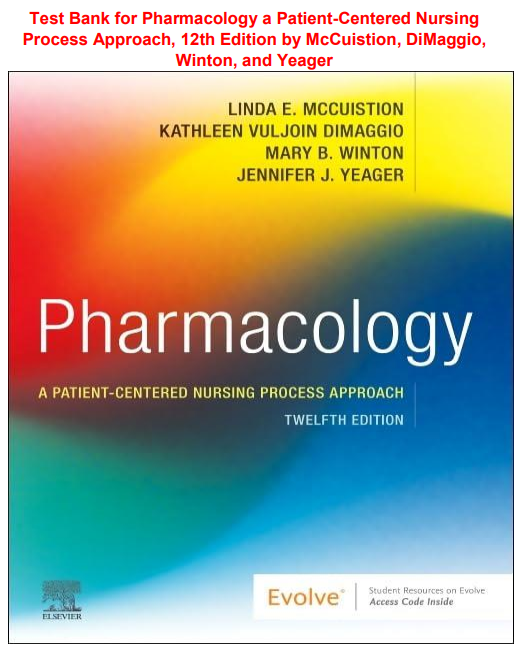
This comprehensive test bank is built for the 12th Edition of Pharmacology: A Patient-Centered Nursing Process Approach by McCuistion, DiMaggio, Winton, and Yeager. It is one of the most widely used and clinically respected pharmacology textbooks in undergraduate nursing education — and the 12th Edition represents its most current, evidence-based, and NCLEX-aligned iteration yet.
This test bank helps you master every chapter with the focused, patient-centered, nursing-process-driven practice that transforms pharmacology knowledge into medication safety competence — in the classroom, on the NCLEX, and at the bedside.
What’s Inside?
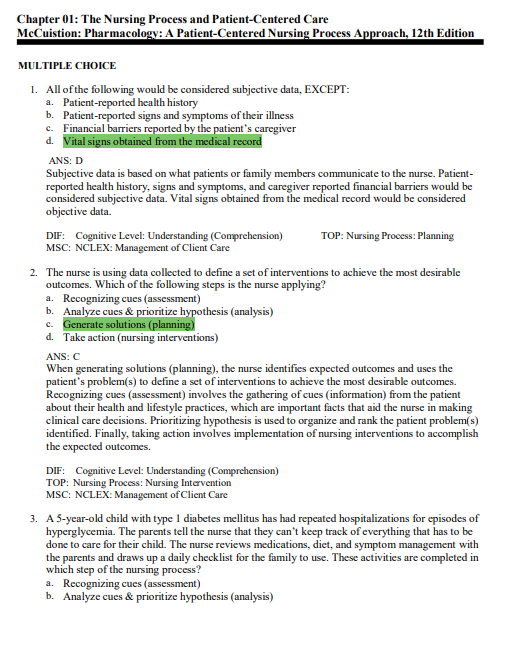
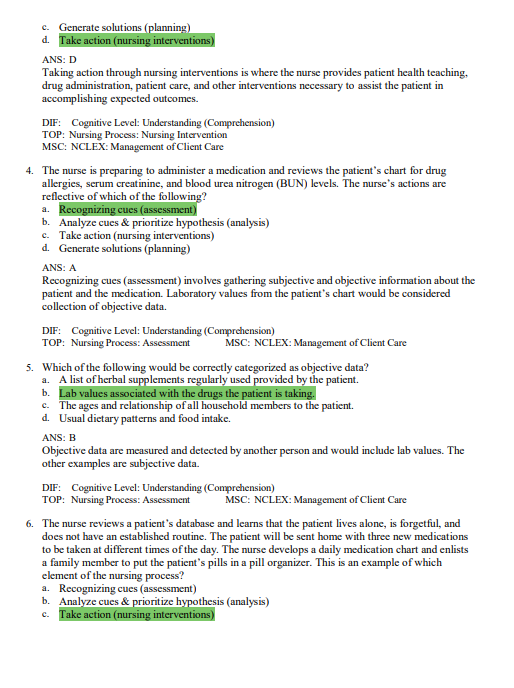
- Hundreds of practice questions covering every chapter
- Multiple-choice, select-all-that-apply, alternate-format, and Next Generation NCLEX-style clinical scenario questions
- Complete answer keys with thorough, clinically grounded pharmacological rationales
- Questions aligned with current NCLEX-RN, NCLEX-PN, and Next Generation NCLEX examination standards
- Coverage of all major drug classifications, nursing implications, patient education priorities, and pharmacological safety across every body system
Who Is This Test Bank For?
This resource is perfect for:
- Undergraduate RN and LPN nursing students in pharmacology courses using the 12th Edition
- NCLEX-RN and NCLEX-PN candidates seeking targeted pharmacology content review
- Nursing students completing ATI pharmacology proctored assessments
- Nursing faculty developing pharmacology course exams and comprehensive unit assessments
- LPN-to-RN bridge students updating and expanding pharmacological knowledge
- Nursing students in accelerated BSN or second-degree programs covering pharmacology
- New graduate nurses reinforcing foundational medication safety and drug therapy knowledge
Topics Covered Include:
- Principles of pharmacokinetics — absorption, distribution, metabolism, and excretion
- Pharmacodynamics — drug-receptor interactions, dose-response relationships, and drug potency
- Drug interactions, adverse drug reactions, and medication safety principles
- The nursing process applied comprehensively to pharmacological care
- Patient education, health literacy, and medication adherence strategies
- Lifespan pharmacology — pediatric, geriatric, and pregnancy considerations
- Cultural and genetic influences on pharmacotherapy
- Analgesics — opioid agonists, partial agonists, antagonists, and non-opioid agents
- Anti-inflammatory agents — NSAIDs, corticosteroids, and DMARDs
- Antibiotics — penicillins, cephalosporins, tetracyclines, fluoroquinolones, and macrolides
- Antivirals, antifungals, antiprotozoals, and antiretroviral therapy
- Cardiovascular drugs — antihypertensives, antidysrhythmics, and heart failure agents
- Anticoagulants, antiplatelets, and thrombolytic therapy
- Diuretics and renal pharmacotherapy
- Central nervous system drugs — antidepressants, antipsychotics, anxiolytics, and mood stabilizers
- Antiepileptic drugs and neurological pharmacotherapy
- Endocrine pharmacotherapy — insulin, oral antidiabetics, thyroid, and adrenal agents
- Respiratory pharmacotherapy — bronchodilators, corticosteroids, and antihistamines
- Gastrointestinal pharmacotherapy — antacids, antiemetics, and bowel agents
- Oncology pharmacotherapy principles and biotherapy
- Immunological agents — vaccines, immunosuppressants, and biologics
- Reproductive and women’s health pharmacotherapy
- Vitamins, minerals, herbal products, and dietary supplement considerations
Why This Test Bank Delivers Results
The 12th Edition of McCuistion, DiMaggio, Winton, and Yeager represents the most current and comprehensively updated version of one of nursing education’s most trusted pharmacology resources.
It reflects the latest FDA drug approvals, current clinical guidelines, updated black box warning communications, and the Next Generation NCLEX clinical judgment framework. It integrates the nursing process more deeply than any previous edition — making it not just a pharmacology textbook but a clinical decision-making guide that teaches nurses how to think about medications, not just what to know about them.
This test bank is built to match that standard.
Every question reflects the patient-centered nursing process approach that defines this textbook. You will not simply identify what a drug does — you will apply the nursing process to a real patient receiving it. You will assess before the first dose. You will identify the priority nursing diagnosis that guides your monitoring plan. You will implement safe administration with precision. You will evaluate whether therapy is achieving its intended outcome. And you will educate your patient in language that promotes safety and adherence.
The 12th Edition introduces updated Next Generation NCLEX-style question formats — and so does this test bank. Clinical scenario questions challenge you to recognize cues, analyze information, prioritize hypotheses, take actions, and evaluate outcomes — the six cognitive processes of the NGN Clinical Judgment Measurement Model — all within a pharmacological patient care context.
Detailed rationales explain the pharmacological mechanisms, nursing process applications, patient safety principles, and clinical reasoning behind every correct answer. The 12th Edition content is fully reflected — including the latest drug therapy updates that distinguish this edition from the 11th.
Questions are organized chapter by chapter for structured, systematic study. Target drug classes where your knowledge is weakest. Return to high-yield pharmacological categories as your NCLEX or course exam approaches. Build the medication safety mindset that every nursing patient deserves — and that every nursing exam demands.
Sample Questions
Question 1
A nurse is preparing to administer IV digoxin 0.25 mg to a patient with newly diagnosed heart failure and atrial fibrillation. The nurse assesses the patient and finds an apical pulse of 52 beats per minute, blood pressure of 108/68 mmHg, and the patient reports seeing yellow-green halos around lights and feeling nauseated since yesterday. The most recent serum digoxin level from this morning is 2.4 ng/mL. Which nursing action is most appropriate?
- A) Administer the digoxin as prescribed since the dose is standard for heart failure management
- B) Hold the digoxin, withhold the next scheduled dose only, and document the findings
- C) Hold the digoxin immediately, notify the provider urgently, obtain an ECG, and assess serum electrolytes
- D) Administer half the prescribed dose and reassess the apical pulse and vision symptoms in two hours
Correct Answer: C
Rationale: This patient is presenting with multiple concurrent indicators of digoxin toxicity — a medical emergency requiring immediate action. A serum digoxin level of 2.4 ng/mL exceeds the therapeutic range of 0.5–2.0 ng/mL. Bradycardia with an apical pulse of 52 bpm exceeds the standard threshold for holding digoxin in adults — typically below 60 bpm. The visual disturbances — yellow-green halos and xanthopsia — are pathognomonic signs of digoxin toxicity resulting from the drug’s effect on phototransduction in the retina. Nausea is an additional early toxicity sign. The nurse must hold the digoxin immediately and notify the provider urgently. An ECG is essential — digoxin toxicity produces characteristic cardiac dysrhythmias including heart block, junctional rhythms, and ventricular dysrhythmias. Serum electrolytes — particularly potassium and magnesium — must be assessed immediately because hypokalemia dramatically potentiates digoxin toxicity by increasing drug binding at myocardial Na⁺/K⁺-ATPase receptors. Administering any dose — full or partial — in the presence of confirmed toxicity signs is a serious, potentially fatal medication safety error.
Question 2
A nurse practitioner student is completing a clinical pharmacology case study on a 72-year-old patient newly prescribed warfarin 5 mg daily for pulmonary embolism. The patient also takes levothyroxine, omeprazole, and recently started a course of fluconazole for a fungal infection. Which drug interaction poses the greatest immediate patient safety risk?
- A) Warfarin and levothyroxine increasing sensitivity to anticoagulation effects
- B) Warfarin and omeprazole reducing warfarin absorption and decreasing anticoagulation efficacy
- C) Warfarin and fluconazole causing CYP2C9 inhibition significantly elevating warfarin levels and bleeding risk
- D) Warfarin and levothyroxine causing thyroid hormone displacement and metabolic rate changes
Correct Answer: C
Rationale: Fluconazole is a potent inhibitor of CYP2C9 — the primary cytochrome P450 enzyme responsible for the metabolism of warfarin’s more potent S-enantiomer. When fluconazole inhibits CYP2C9, warfarin clearance is dramatically reduced, causing drug accumulation and significantly elevated plasma warfarin levels — resulting in a markedly elevated INR and substantially increased bleeding risk. This interaction can raise INR by 50–100% or more within days of fluconazole initiation, creating risk of serious or fatal hemorrhage. This is one of the most clinically significant warfarin drug interactions in nursing pharmacology. While warfarin and levothyroxine do interact — hyperthyroidism increases vitamin K-dependent clotting factor catabolism, enhancing warfarin effect — this interaction is less immediate and less dramatic in magnitude than the CYP2C9 inhibition caused by fluconazole. The provider must be notified immediately, INR monitoring must be increased, and a dose reduction or alternative antifungal must be considered.
Question 3
A nurse is caring for a 68-year-old patient with type 2 diabetes who has been taking glipizide — a sulfonylurea — for five years. The patient is admitted for a non-cardiac procedure requiring nothing by mouth after midnight. At 0700, the patient’s blood glucose is 64 mg/dL and the patient is diaphoretic, tremulous, and confused. Which priority sequence of nursing actions is most appropriate?
- A) Administer the morning glipizide dose as scheduled and provide orange juice with the medication
- B) Hold the glipizide, administer 15–20 grams of fast-acting oral carbohydrate if the patient can swallow safely, recheck glucose in 15 minutes, and notify the provider
- C) Hold the glipizide, administer IV dextrose 50% immediately, and transfer to the ICU for continuous glucose monitoring
- D) Administer glucagon 1 mg subcutaneously and hold the glipizide until blood glucose normalizes
Correct Answer: B
Rationale: This patient is experiencing symptomatic hypoglycemia — blood glucose of 64 mg/dL with neurological symptoms of diaphoresis, tremor, and confusion — caused by the sulfonylurea glipizide in the NPO setting. Sulfonylureas stimulate pancreatic insulin secretion regardless of food intake, making them particularly dangerous when patients are NPO — the insulin secretion continues without the counterbalancing effect of dietary carbohydrate intake. The priority sequence follows the 15-15 hypoglycemia rule — hold the causative agent, administer 15–20 grams of fast-acting carbohydrate if the patient can safely swallow, recheck blood glucose in 15 minutes, and repeat if glucose remains below 70 mg/dL. The provider must be notified. IV dextrose 50% is appropriate for unconscious patients or those who cannot swallow safely — this patient, while confused, is not described as unconscious. Glucagon is reserved for severe hypoglycemia when IV access and oral intake are both unavailable. Administering glipizide to an NPO patient with symptomatic hypoglycemia would be a life-threatening medication error.
Question 4
A nurse is providing medication teaching to a 45-year-old patient newly prescribed sertraline 50 mg daily for major depressive disorder. The patient asks when they can expect to feel better. Which nursing response is most accurate and therapeutically appropriate?
- A) “Most patients feel completely better within the first three to five days of starting sertraline.”
- B) “Sertraline works immediately — you should notice a significant improvement in mood by tomorrow.”
- C) “Full antidepressant effect typically takes two to four weeks or longer — you may notice sleep and appetite improvements first, with mood improvements following over several weeks.”
- D) “If sertraline does not work within one week, you should stop taking it and contact your provider for a different medication.”
Correct Answer: C
Rationale: This response reflects accurate pharmacokinetic and pharmacodynamic knowledge of selective serotonin reuptake inhibitors — essential for patient education and medication adherence. SSRIs require a therapeutic lag period of two to four weeks — and sometimes six to eight weeks for full antidepressant effect — because their mechanism of action involves gradual neuroadaptive changes in serotonin receptor density and intracellular signaling cascades rather than immediate serotonin flooding. Clinically, patients typically experience improvement in vegetative symptoms — sleep disturbance, appetite changes, and energy — before experiencing mood elevation. Educating patients about this timeline is critical to preventing premature discontinuation — a leading cause of treatment failure in depression. Options A and B are pharmacologically inaccurate and create false expectations that may lead to patient disappointment and non-adherence. Option D encourages inappropriate self-discontinuation — abrupt sertraline cessation can cause discontinuation syndrome and relapse of depressive symptoms.
Question 5
A nurse is reviewing orders for a 78-year-old patient with chronic insomnia who has been self-medicating with diphenhydramine — Benadryl — 50 mg nightly for six months. The patient reports the medication is no longer helping and asks for a stronger sleep aid. Which nursing response reflects the most appropriate application of the nursing process and current pharmacological safety principles for this patient?
- A) Suggest the patient double the diphenhydramine dose for better efficacy given their developed tolerance
- B) Recommend switching to a benzodiazepine such as temazepam for more reliable sedation in older adults
- C) Explain the risks of anticholinergic medications in older adults, assess for cognitive and urinary side effects, and recommend non-pharmacological sleep strategies and provider consultation for safer alternatives
- D) Reassure the patient that diphenhydramine is completely safe for long-term use in older adults and tolerance is the only concern
Correct Answer: C
Rationale: This response reflects the nurse’s role as patient advocate, educator, and medication safety guardian — the core of the patient-centered nursing process framework. Diphenhydramine is an anticholinergic antihistamine listed on the American Geriatrics Society Beers Criteria as a potentially inappropriate medication in older adults — regardless of dose or duration. Anticholinergic effects in elderly patients include cognitive impairment, increased fall risk, urinary retention, constipation, and paradoxical agitation. Prolonged use further increases risk of delirium and dementia. Tolerance to the sedative effect — which this patient has clearly developed — is additional evidence that the drug is not meeting therapeutic goals. The nurse must assess for existing side effects, educate the patient about the specific risks in their age group, reinforce evidence-based non-pharmacological sleep hygiene strategies, and facilitate a provider consultation for safer alternatives — such as low-dose melatonin, doxepin, or cognitive behavioral therapy for insomnia. Doubling the dose worsens anticholinergic exposure. Benzodiazepines are also on the Beers Criteria for older adults due to fall and cognitive impairment risks.
Frequently Asked Questions (FAQs)
What edition does this test bank cover?
This test bank is written specifically for the 12th Edition of Pharmacology: A Patient-Centered Nursing Process Approach by McCuistion, DiMaggio, Winton, and Yeager. All questions are fully aligned with the 12th Edition’s chapter organization, updated drug content, current FDA safety communications, Next Generation NCLEX integration, and current evidence-based nursing pharmacology practice standards.
How is this test bank different from the 11th Edition test bank?
This test bank is written specifically for the 12th Edition of McCuistion et al. The 12th Edition includes updated drug therapy guidelines, new FDA approvals and safety communications, expanded Next Generation NCLEX clinical judgment content, and revised chapter organization compared to the 11th Edition. Students using the 12th Edition textbook should use this test bank for fully aligned, edition-specific exam preparation.
How are the questions organized?
Questions are arranged chapter by chapter, allowing you to study systematically through all pharmacological content or focus on specific drug classes — such as cardiovascular agents, anti-infectives, or CNS medications — based on your course exam schedule or NCLEX preparation priorities. The patient-centered nursing process framework is integrated throughout every chapter’s question set.
Is this test bank aligned with the NCLEX and Next Generation NCLEX?
Yes. Questions are written to reflect current NCLEX-RN and NCLEX-PN examination standards and incorporate the clinical judgment emphasis of the Next Generation NCLEX framework. The 12th Edition’s NGN integration is fully reflected in this test bank’s clinical scenario questions — which challenge students to recognize cues, prioritize hypotheses, and evaluate outcomes in pharmacological patient care contexts.
Is this test bank useful for both RN and LPN students?
Absolutely. Pharmacological and parenteral therapy content is heavily tested on both the NCLEX-RN and NCLEX-PN. LPN students will find the foundational pharmacokinetics, drug classification, nursing implication, and patient education content directly aligned with their pharmacology course requirements and licensing examination preparation.
How quickly can I access the test bank after purchase?
Immediately. As soon as your purchase is complete, you receive instant digital access with no waiting period. Study on your own schedule, at your own pace, from any device.
Are the rationales detailed enough to support genuine pharmacological learning?
Yes. Every rationale explains the pharmacological mechanisms, nursing process application, patient safety principles, and clinical reasoning behind the correct answer — not just identifies it. This approach builds the deep, transferable pharmacological understanding that the 12th Edition’s patient-centered framework emphasizes — and that every patient deserves from their nurse.
Can nursing faculty use this test bank for course assessments?
Absolutely. The chapter-by-chapter organization, NGN-style question formats, nursing process integration, and clinical scenario emphasis make this an outstanding resource for faculty building unit exams, ATI-style proctored assessments, and comprehensive pharmacology course finals for undergraduate nursing programs at both the RN and PN level.
Dennys –
Perfectly organized. I recommend
Nancy975 –
What a gem!
Ruth –
A comprehensive test bank.
Hunter M. –
perfect!
Nath F. –
Exceeded my expectations
Feremy F. –
The questions somehow mirror the actual test perfectly.
Triza H –
This is exactly what I have been looking for.
Maureen Tah –
Perfect!!
Tabby K. –
I good document. I recomend
Rosemary R –
This study guide is very rich in content. Exactly what I needed to prepare for my finals
Grace W. –
Very good!
Winnie M. –
An excellent study guide
Lucille Maria –
I like this material
Kevin May –
Saved me a lot of time and money
Peterson S. –
Excellent material for pharmacology exam prep
Helen Christie –
Very helpful resource
Bruno Molino –
No regrets getting this. I nailed my finals with relative ease
Caleb Martins –
Excellent!
Carol Kay –
Worth every buck
Benpoly –
Exactly what I needed to hack pharmacology
Cayte N. –
Very helpful
Craig Bellamy –
A perfect test bank
Vmansteain –
I can now face my exam with confidence
Liam Mbogo –
A solid test bank.
Chris martin –
Great for squeezing in extra study time
Norah Helen –
Lots of questions without feeling overwhelming
Beverly –
Questions encouraged deeper clinical thinking
Geoffrey GN. –
Excellent study guide for quick revision
Kamara Reid –
Great study companion for nursing students preparing for exams.
Even Njeri –
Helped reinforce what I learned in class
Lucas Gabriel –
A valuable resource for nursing exam preparation.