YOUR PHARMACOLOGY EXAM IS CLOSER THAN YOU THINK
Let us be direct with you.
Pharmacology for the primary care provider is not the kind of course you wing. Drug names pile up fast. Mechanisms overlap. Contraindications look similar until they are not. And the clinical scenarios on exams catch you off guard when you have only memorized facts instead of building real understanding.
This test bank exists to change how you prepare.
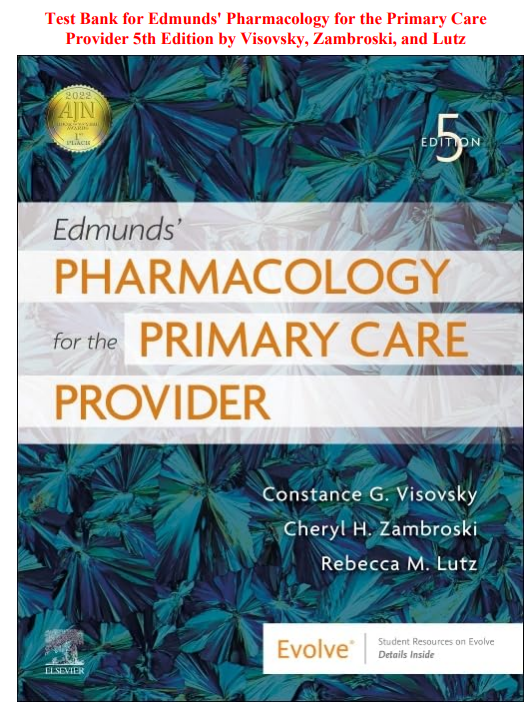
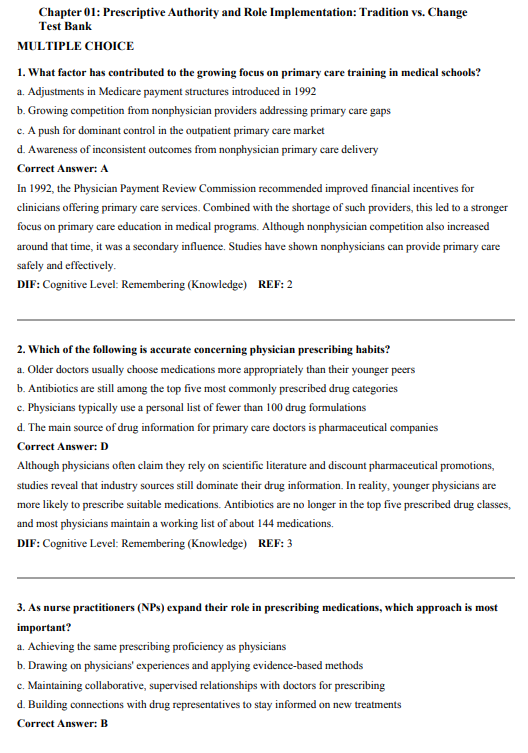
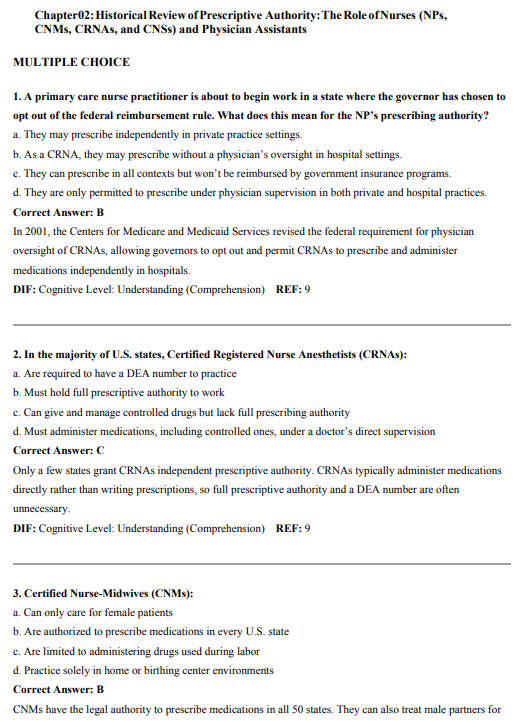
Built around Edmunds’ Pharmacology for the Primary Care Provider, 5th Edition by Visovsky, Zambroski, and Lutz, this resource gives you one thing above all else — practice that mirrors what your exam will actually look like. Not flashcards. Not a summary. Real exam questions with the answers and the reasoning laid out clearly.
Prepare smarter. Understand deeper. Score higher.
What Makes This Different
Most test banks feel like they were written in a hurry. Generic questions. Vague rationales. No clear connection to what you are actually studying.
This one is different in three specific ways.
1. The questions match how pharmacology is actually tested. Primary care pharmacology exams do not ask you to list drug names. They put you in a scenario. A patient comes in with a condition. You have to pick the right drug, the right dose consideration, the right counseling point, or the right safety flag. That is exactly how these questions are written.
2. The rationales teach, not just confirm. When you get a question wrong, a good rationale does not just say “B is correct because B is right.” It explains the mechanism. It tells you why the other options are wrong. It connects the answer to something you can use clinically. That is what the rationales in this test bank do.
3. It is built on the 5th edition specifically. Every question is tied to the content, sequencing, and clinical focus of Visovsky, Zambroski, and Lutz’s 5th edition. Nothing from an older edition that no longer applies. Nothing generic that could belong to any pharmacology book.
Everything Inside the Package
When you purchase this test bank, here is what lands in your inbox:
- A comprehensive bank of multiple-choice questions covering every chapter
- Questions written in the clinical scenario format used in APRN and primary care exams
- One correct answer per question, clearly identified
- A full rationale for every question explaining the pharmacological reasoning
- Questions targeting drug selection, mechanisms, contraindications, interactions, monitoring, and patient education
- Both PDF and Word formats included — study on any device, edit for your own use
- Content built exclusively around the 5th edition curriculum
Every Chapter. Every Drug Class. Every Concept.
Here is a full breakdown of the content this test bank covers:
Unit 1 — Foundations of Primary Care Pharmacology
- Principles of drug action and pharmacokinetics
- Pharmacodynamics — how drugs produce their effects
- Drug interactions and polypharmacy
- Adverse effects, toxicity, and drug safety
- Legal and ethical considerations in prescribing
- Cultural and lifespan considerations in drug therapy
Unit 2 — The Prescribing Process
- Writing and interpreting prescriptions
- Controlled substances and DEA regulations
- Medication adherence and patient counseling
- Shared decision making in drug therapy
- Patient education strategies for primary care
Unit 3 — Antimicrobials
- Antibiotics — penicillins, cephalosporins, macrolides, fluoroquinolones, tetracyclines
- Antivirals — influenza, HIV, herpes, hepatitis
- Antifungals and antiparasitics
- Antibiotic resistance and stewardship
- Choosing the right antimicrobial for common infections
Unit 4 — Cardiovascular and Renal Drugs
- Antihypertensives — ACE inhibitors, ARBs, beta-blockers, calcium channel blockers, diuretics
- Heart failure pharmacotherapy
- Anticoagulants and antiplatelet agents
- Lipid-lowering therapy — statins, fibrates, niacin
- Drugs for arrhythmias
Unit 5 — Respiratory Pharmacology
- Bronchodilators — SABAs, LABAs, anticholinergics
- Inhaled and systemic corticosteroids
- Antihistamines and decongestants
- Drugs for allergic rhinitis and sinusitis
- Cough suppressants and expectorants
Unit 6 — Central Nervous System Drugs
- Antidepressants — SSRIs, SNRIs, TCAs, MAOIs
- Anxiolytics and sedative-hypnotics
- Antipsychotics — first and second generation
- Drugs for ADHD
- Anticonvulsants and mood stabilizers
- Drugs for Alzheimer’s disease and dementia
Unit 7 — Endocrine and Metabolic Drugs
- Insulin types, regimens, and administration
- Oral antidiabetic agents — metformin, sulfonylureas, SGLT2 inhibitors, GLP-1 agonists
- Thyroid and antithyroid drugs
- Corticosteroids and their clinical applications
- Osteoporosis pharmacotherapy
Unit 8 — Gastrointestinal Drugs
- Antacids, H2 blockers, and proton pump inhibitors
- Antiemetics and prokinetics
- Laxatives, antidiarrheals, and bowel agents
- Drugs for inflammatory bowel disease
- Hepatic and biliary pharmacology
Unit 9 — Musculoskeletal and Pain Management
- NSAIDs — mechanisms, uses, and GI and cardiovascular risks
- Opioid analgesics — selection, monitoring, and risk mitigation
- Muscle relaxants
- Gout pharmacotherapy
- Disease-modifying antirheumatic drugs
Unit 10 — Women’s Health and Reproductive Pharmacology
- Oral contraceptives and contraceptive options
- Hormone replacement therapy
- Drugs used in pregnancy and lactation safety
- Drugs for menopause-related symptoms
- Prenatal vitamins and supplements
Unit 11 — Pediatric and Geriatric Pharmacology
- Dosing principles in pediatric patients
- Off-label drug use in children
- Polypharmacy and the Beers Criteria in older adults
- Age-related pharmacokinetic changes
- Medication reconciliation and deprescribing
The Student This Was Built For
This test bank is the right match if you recognize yourself in any of these:
You are in an NP, PA, or advanced practice nursing program and pharmacology is your current or upcoming course. You are using Edmunds’ 5th Edition as your assigned textbook. You passed the content quizzes but feel unprepared when the questions get clinical and complex. You have tried re-reading chapters and still feel like the knowledge is not sticking. You are preparing for certification and want to lock in your primary care pharmacology foundation. You are an instructor who teaches pharmacology and needs a ready-built question pool to draw from.
If any of that sounds familiar, this test bank was built for you.
A Smarter Way to Study Pharmacology
Here is the truth about how most students study pharmacology — and why it does not work as well as it should.
They read the chapter. They highlight. They make flashcards of drug names and drug classes. Then they sit down for the exam and face a scenario they have never practiced, with a patient who has three comorbidities and takes four other drugs, and they freeze.
The problem is not that they did not study. The problem is that they studied the wrong way.
Pharmacology for primary care is applied. It is clinical. It asks you to reason through a situation, not recite a list. The only way to get good at that is to practice doing it.
That is what this test bank trains you for. Question by question, scenario by scenario, you build the clinical reasoning that pharmacology exams — and real patients — demand.
10 Sample Questions — Try Before You Buy
These questions are taken directly from the test bank. Work through them before you decide.
Question 1
A primary care provider is selecting an antihypertensive for a 58-year-old Black patient with hypertension and no comorbidities. Which drug class is recommended as first-line therapy based on current evidence?
- A. ACE inhibitor
- B. Beta-blocker
- C. Thiazide diuretic or calcium channel blocker
- D. Angiotensin receptor blocker
Correct Answer: C Rationale: Clinical evidence consistently shows that Black patients with hypertension respond better to thiazide diuretics and calcium channel blockers than to ACE inhibitors or ARBs when used as monotherapy. This is due to differences in renin-angiotensin system activity. ACE inhibitors and ARBs are still appropriate when comorbidities such as diabetes or chronic kidney disease are present, but they are not the preferred first-line choice in this population without those indications.
Question 2
A patient on chronic warfarin therapy reports adding a daily fish oil supplement. How should the primary care provider respond?
- A. Tell the patient fish oil has no known effect on warfarin
- B. Discontinue the warfarin and switch to a DOAC
- C. Counsel the patient that fish oil can enhance anticoagulation and increase bleeding risk, and schedule a follow-up INR check
- D. Ask the patient to halve their warfarin dose until the INR is rechecked
Correct Answer: C Rationale: Omega-3 fatty acids in fish oil have antiplatelet effects and can potentiate warfarin’s anticoagulant activity, increasing the risk of bleeding. The appropriate response is to counsel the patient about this interaction, not to change the warfarin dose preemptively. An INR check should be scheduled to assess whether the level has shifted and dose adjustments should only be made based on actual INR results.
Question 3
Which patient characteristic most significantly affects the choice and dosing of drugs metabolized by the CYP450 enzyme system?
- A. The patient’s weight and BMI
- B. Genetic polymorphisms that alter enzyme activity
- C. The patient’s dietary sodium intake
- D. Whether the patient exercises regularly
Correct Answer: B Rationale: CYP450 enzymes are responsible for metabolizing a large portion of commonly prescribed drugs. Genetic polymorphisms can make a patient a poor metabolizer — leading to drug accumulation and toxicity — or an ultra-rapid metabolizer — leading to subtherapeutic levels. This is why pharmacogenomics is becoming increasingly important in primary care prescribing decisions.
Question 4
A 72-year-old patient is prescribed a benzodiazepine for short-term insomnia. Why should the primary care provider exercise special caution in this patient?
- A. Benzodiazepines are less effective in older adults
- B. Older adults metabolize benzodiazepines faster, requiring higher doses
- C. Benzodiazepines are on the Beers Criteria and increase fall and cognitive impairment risk in older adults
- D. The patient is unlikely to develop dependence at this age
Correct Answer: C Rationale: The American Geriatrics Society Beers Criteria explicitly identifies benzodiazepines as potentially inappropriate medications in older adults. Age-related decreases in hepatic metabolism cause these drugs to accumulate, significantly increasing the risks of sedation, falls, fractures, and cognitive impairment. Non-pharmacological approaches and safer alternatives should always be considered first in this population.
Question 5
A patient with type 2 diabetes and a history of heart failure is being started on a new antidiabetic agent. Which drug class offers both glycemic control and proven cardiovascular benefit in this population?
- A. Sulfonylureas
- B. Thiazolidinediones
- C. SGLT2 inhibitors
- D. Alpha-glucosidase inhibitors
Correct Answer: C Rationale: SGLT2 inhibitors such as empagliflozin and dapagliflozin have demonstrated significant cardiovascular benefits in clinical trials, including reduced hospitalizations for heart failure and cardiovascular mortality. Thiazolidinediones are contraindicated in heart failure because they cause fluid retention. Sulfonylureas carry risk of hypoglycemia and have no proven cardiovascular benefit. SGLT2 inhibitors are now a preferred agent in patients with type 2 diabetes and established heart failure.
Question 6
A patient taking an SSRI for depression asks about starting St. John’s Wort, which a friend recommended. What is the primary concern?
- A. St. John’s Wort reduces the absorption of SSRIs, making them ineffective
- B. The combination can cause serotonin syndrome, a potentially life-threatening condition
- C. St. John’s Wort is a controlled substance and cannot be combined with prescription medications
- D. There is no known interaction between SSRIs and herbal supplements
Correct Answer: B Rationale: St. John’s Wort has serotonergic activity. When combined with an SSRI, the additive effect on serotonin levels can trigger serotonin syndrome — characterized by agitation, hyperthermia, tachycardia, diaphoresis, and neuromuscular abnormalities. This is a dangerous and potentially fatal interaction. Patients must be counseled to avoid this combination and to always disclose herbal supplement use to their provider.
Question 7
A primary care provider is prescribing a fluoroquinolone for an uncomplicated urinary tract infection in a 65-year-old patient. What should the provider consider before prescribing?
- A. Fluoroquinolones are the first-line agent for all UTIs and no special consideration is needed
- B. Fluoroquinolones carry an FDA black box warning for tendinitis, tendon rupture, and peripheral neuropathy, and safer alternatives should be considered first
- C. The patient’s age makes fluoroquinolones the safest choice due to reduced kidney function
- D. Fluoroquinolones should only be avoided in patients under 18 years of age
Correct Answer: B Rationale: The FDA has issued a black box warning for fluoroquinolones due to serious risks including tendinitis, tendon rupture, peripheral neuropathy, and central nervous system effects. These risks are heightened in older adults, patients on corticosteroids, and transplant recipients. For uncomplicated UTIs, first-line alternatives such as nitrofurantoin or trimethoprim-sulfamethoxazole should be used when appropriate, reserving fluoroquinolones for cases where no suitable alternative exists.
Question 8
A patient newly diagnosed with hypothyroidism is prescribed levothyroxine. What is the most important counseling point regarding administration?
- A. Take the medication at bedtime with a full glass of milk
- B. Take the medication in the morning on an empty stomach, 30 to 60 minutes before eating
- C. The medication can be taken at any time of day with or without food
- D. Take the medication with calcium supplements to improve absorption
Correct Answer: B Rationale: Levothyroxine absorption is significantly affected by food, calcium, iron, and antacids. Taking it on an empty stomach in the morning — 30 to 60 minutes before breakfast — ensures maximum and consistent absorption. Inconsistent administration leads to fluctuating thyroid levels, which complicates dose management and symptom control. Patients should be counseled to take it the same way every day.
Question 9
Which of the following best describes the clinical significance of the first-pass effect in pharmacology?
- A. It refers to the initial therapeutic effect seen after the first dose of a medication
- B. It describes the reduction in drug bioavailability when an orally administered drug is metabolized in the gut wall or liver before reaching systemic circulation
- C. It explains why injectable drugs work faster than oral medications
- D. It is the process by which the kidneys filter a drug during its first pass through the renal system
Correct Answer: B Rationale: The first-pass effect occurs when an orally administered drug is substantially metabolized by the gut wall or liver before it reaches systemic circulation, significantly reducing its bioavailability. This is why some drugs — such as nitroglycerin and testosterone — are administered sublingually, transdermally, or by injection to bypass hepatic first-pass metabolism and achieve adequate plasma concentrations.
Question 10
A primary care provider is counseling a patient with chronic kidney disease about NSAID use for arthritis pain. What is the most important message to convey?
- A. NSAIDs are safe as long as the patient stays well hydrated
- B. Low-dose NSAIDs are acceptable for occasional use in CKD
- C. NSAIDs should be avoided in CKD because they reduce renal blood flow and can accelerate kidney damage
- D. NSAIDs are only harmful in CKD when taken with acetaminophen
Correct Answer: C Rationale: NSAIDs inhibit prostaglandin synthesis, which plays a key role in maintaining renal blood flow — especially in patients whose kidneys are already compromised. In patients with CKD, NSAID use can cause acute kidney injury, fluid retention, and accelerated progression of renal disease. Acetaminophen is the preferred analgesic for pain management in this population, and the patient should be clearly counseled to avoid NSAIDs including over-the-counter formulations.
How Students Use This Test Bank
There is no one right way to use it. Here are three approaches that work well depending on how you study:
The Chapter-by-Chapter Method Work through the questions for each chapter right after your lecture or reading. Use wrong answers as a signal to revisit that section of the textbook. This keeps your studying active and connected to your coursework in real time.
The Exam Prep Sprint In the week before a major exam, work through the questions for all chapters being tested. Time yourself. Treat it like the real exam. Review every rationale — not just the ones you got wrong. This builds both confidence and speed.
The Certification Countdown If you are preparing for APRN or PA board certification, use this test bank as a pharmacology review tool. Work through it systematically by drug class or body system rather than by chapter. Focus heavily on rationales to reinforce clinical reasoning at the level boards require.
Frequently Asked Questions
Is this the publisher’s official test bank from Elsevier? No. This is an independently developed study product. It is not affiliated with Elsevier, F.A. Davis, or the authors of the 5th edition. It is a separate resource created to help students and educators working with this textbook.
I am using an older edition of Edmunds’ Pharmacology. Will this still work for me? The test bank is built specifically for the 5th edition. Core pharmacology principles overlap across editions, but chapter structure, drug selection, and clinical guidelines may differ. For the best alignment, use this with the 5th edition.
Do I need the textbook to use this effectively? Not necessarily. The rationales are written to be informative on their own. However, when a rationale mentions a concept you are unfamiliar with, having the textbook as a reference lets you dig deeper. The two work best together.
What formats are included? Your purchase includes both a PDF and a Word version. PDF works on any device with no formatting loss. Word lets you copy, edit, or build your own practice sets from the questions — useful for instructors and for students who like to create custom quizzes.
How do I get my file after purchasing? Your download link is sent to your email automatically the moment your payment is confirmed. No manual steps required on our end. Most customers have their file open within minutes of checkout.
Is this useful for APRN or PA certification exam preparation? Yes, and specifically so. Pharmacology for the primary care provider is a heavily weighted domain on APRN and PA certification exams. The clinical scenario format of these questions mirrors what certification boards test. Use it as part of a broader certification prep plan.
Can I share this with classmates? Your purchase is licensed for individual use. If your classmates want access, direct them to Nursing Exams Vault to get their own copy. Sharing undermines the work that goes into building quality resources — and frankly, studying with your own copy means you learn more anyway.
What if the file does not open or something looks wrong? Contact our support team right away. Include your order details and describe the issue. We respond quickly and we will get you a working file without hassle.
The Bottom Line
Edmunds’ Pharmacology for the Primary Care Provider is a serious textbook for a serious course. It covers the drugs you will prescribe, monitor, and counsel patients about for the rest of your career.
This test bank does not make that easy. Pharmacology is never easy. But it makes your preparation smarter, your understanding deeper, and your exam performance stronger.
Stop re-reading chapters and hoping the knowledge sticks. Start practicing the way the exam will test you.
Yunice M –
Good
Even Njeri –
bang on the buck!
Kamara Reid –
A must-have for nursing exam review
Lucille Maria –
Extremely helpful for nursing school success
Bruno Molino –
Great practice tool for upcoming exams
Helen Christie –
Challenging questions with helpful explanations
Rosemary R –
Made complex topics easier to understand