Caring for older adults is one of the most clinically complex and most personally rewarding specialties in advanced practice nursing.
It is where you must simultaneously manage a patient’s hypertension, heart failure, type 2 diabetes, osteoarthritis, mild cognitive impairment, polypharmacy risks, fall history, and functional decline — all in a single primary care visit. Where the standard adult dosing guideline must be filtered through a lens of altered pharmacokinetics, reduced renal clearance, decreased hepatic metabolism, and heightened sensitivity to anticholinergic effects. Where a patient’s social isolation, caregiver burden, and financial constraints are just as clinically relevant as their hemoglobin A1c.
Geriatric advanced practice is not adult medicine with older patients. It is a distinct clinical specialty with its own assessment frameworks, its own pharmacological principles, its own evidence base, and its own ethical and social dimensions — and it demands preparation that rises to meet all of those dimensions simultaneously.
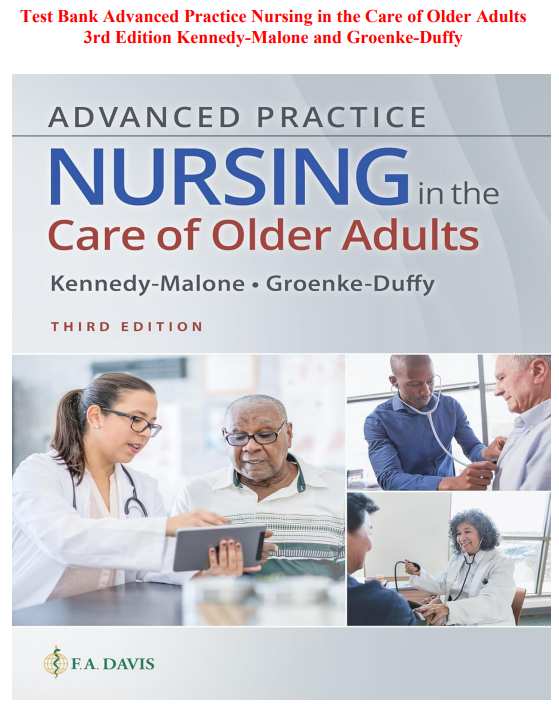
This comprehensive test bank is built for the 3rd Edition of Advanced Practice Nursing in the Care of Older Adults by Kennedy-Malone and Groenke-Duffy. It is the most clinically focused, most comprehensively organized, and most evidence-based geriatric advanced practice nursing textbook in graduate nursing education — and this test bank helps you master every chapter with the rigorous, patient-centered, age-specific clinical practice that caring for older adults demands.
Whether you are preparing for a graduate gerontological nursing course exam, a clinical practicum assessment, or ANCC Adult-Gerontology NP certification, this resource delivers the diagnostic reasoning, geriatric pharmacology expertise, and comprehensive older adult assessment knowledge that Kennedy-Malone and Groenke-Duffy have established as essential for advanced practice in gerontological care.
What’s Inside?
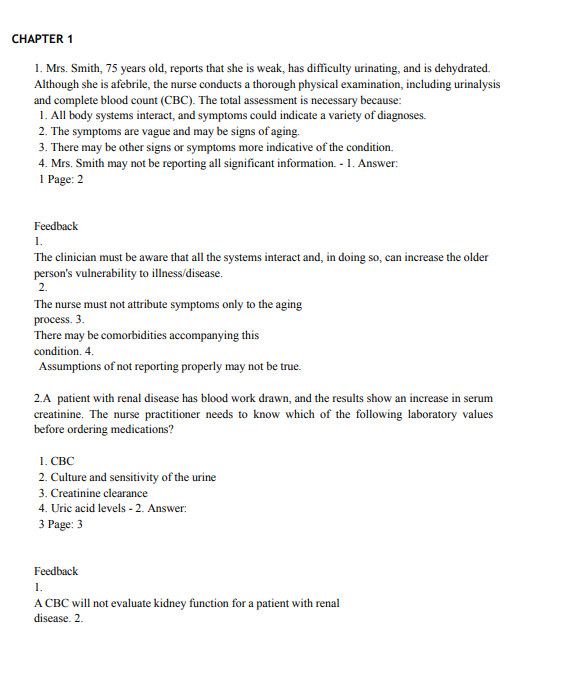
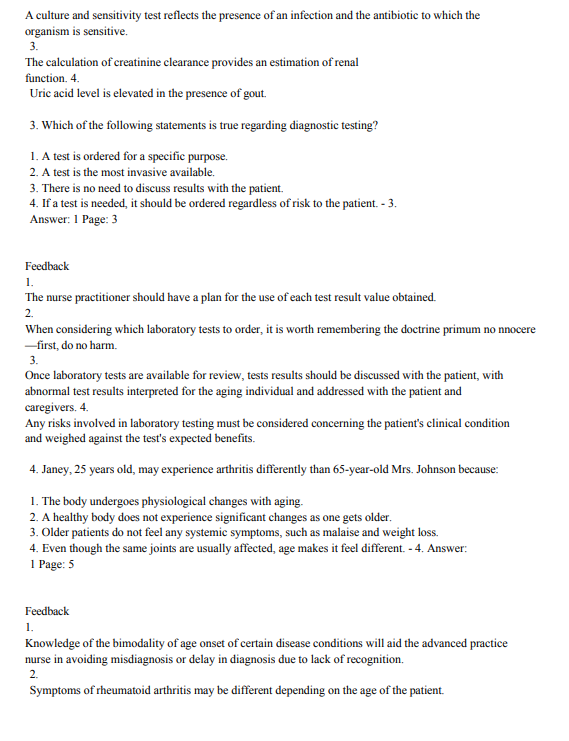
- Hundreds of chapter-by-chapter practice questions
- Multiple-choice, select-all-that-apply, and complex clinical scenario questions
- Complete answer keys with thorough, evidence-based geriatric clinical rationales
- Questions aligned with ANCC Adult-Gerontology NP and AANP certification examination standards
- Coverage of the full scope of advanced practice gerontological nursing — from comprehensive geriatric assessment through complex chronic disease management and end-of-life care
Table of Contents
Unit I: The Healthy Older Adult
CHAPTER 1 Changes with Aging
CHAPTER 2 Health Promotion
CHAPTER 3 Exercise in Older Adults
CHAPTER 4 Nutritional Support in the Older Adult
CHAPTER 5 Settings of Care
Unit II: Assessment
CHAPTER 6 Comprehensive Geriatric Assessment
CHAPTER 7 Symptoms and Syndromes
Unit III: Treating Disorders
CHAPTER 8 Dermatologic Disorders
CHAPTER 9 Head, Neck, and Face Disorders
CHAPTER 10 Cardiovascular Disorders
CHAPTER 11 Respiratory Disorders
CHAPTER 12 Peripheral Vascular Disorders
CHAPTER 13 Gastrointestinal Disorders
CHAPTER 14 Urologic and Renal Disorders
CHAPTER 15 Gynecologic Disorders
CHAPTER 16 Musculoskeletal Disorders
CHAPTER 17 Central and Peripheral Nervous System Disorders
CHAPTER 18 Endocrine and Metabolic Disorders
CHAPTER 19 Hematologic Disorders
CHAPTER 20 Psychosocial Disorders
Unit IV: Complex Illness
CHAPTER 21 Polypharmacy
CHAPTER 22 Chronic Illness and the APRN
CHAPTER 23 Palliative Care and End-of-Life
Who Is This Test Bank For?
This resource is ideal for:
- Adult-Gerontology Primary Care NP and Adult-Gerontology Acute Care NP students
- Family NP students with significant geriatric clinical content in their programs
- ANCC AGPCNP-BC and AGACNP-BC certification examination candidates
- DNP students completing gerontological advanced practice clinical coursework
- Geriatric clinical nurse specialists in graduate programs
- Nursing faculty developing graduate-level gerontological nursing course exams
- Advanced practice nurses transitioning into geriatric or long-term care practice settings
- Primary care NPs and PAs seeking to strengthen their geriatric clinical competency
Topics Covered Include:
- Theories of aging — biological, psychological, and sociological frameworks
- Demographics of aging and the epidemiology of older adult health
- Comprehensive geriatric assessment — functional, cognitive, and psychosocial evaluation
- The geriatric physical examination — age-related changes and clinical significance
- Geriatric pharmacology — pharmacokinetic and pharmacodynamic changes in older adults
- Polypharmacy — identification, risk stratification, and medication reconciliation
- The Beers Criteria and STOPP/START guidelines for appropriate prescribing
- Cardiovascular disease management in older adults
- Hypertension in older adults — evidence-based management considerations
- Heart failure management in the older adult population
- Respiratory conditions in older adults — COPD, pneumonia, and asthma
- Endocrine disorders in older adults — diabetes, thyroid, and adrenal conditions
- Neurological conditions — dementia, Parkinson’s disease, and stroke management
- Cognitive assessment — MCI, Alzheimer’s disease, and dementia care
- Depression, anxiety, and late-life mental health conditions
- Delirium — recognition, prevention, and management in older adults
- Osteoporosis, fall prevention, and fracture risk management
- Musculoskeletal and rheumatological conditions in older adults
- Genitourinary conditions — urinary incontinence and BPH management
- Gastrointestinal conditions in older adults
- Sensory impairments — vision and hearing loss management
- Skin integrity and dermatological conditions in older adults
- Nutritional assessment and malnutrition in the aging population
- Pain assessment and management in older adults
- Palliative care, hospice, and end-of-life decision-making
- Elder abuse and neglect — recognition, assessment, and reporting
- Long-term care, assisted living, and care transitions
- Legal and ethical considerations in geriatric advanced practice
Why This Test Bank Stands Out
Advanced practice nursing in the care of older adults demands a level of clinical complexity management that few other specialties can match.
The older adult patient presenting to your clinic does not have one problem — they have twelve. And those twelve problems interact with each other, interact with their seventeen medications, interact with their functional limitations, and interact with the social and environmental context of their daily lives in ways that no single clinical guideline fully captures. Managing that complexity well requires not just knowledge of geriatric medicine — it requires a fundamentally geriatric way of thinking.
This test bank is built to develop that geriatric clinical thinking.
Every question is grounded in the age-specific assessment frameworks, geriatric pharmacological principles, and evidence-based management standards that Kennedy-Malone and Groenke-Duffy establish throughout the 3rd Edition. You will not simply recall which medication is listed on the Beers Criteria — you will apply that knowledge to a specific older adult patient and determine which medication adjustment is most clinically appropriate given their renal function, cognitive status, fall risk, and comorbidity burden. You will not just identify dementia screening tools — you will apply them in a clinical scenario, interpret the findings accurately, and determine the most appropriate next step in the diagnostic workup. You will not merely list fall risk factors — you will conduct a comprehensive fall risk assessment for a specific patient and design a multifactorial prevention plan grounded in current evidence.
The 3rd Edition reflects the most current evidence-based gerontological care standards — including updated American Geriatrics Society Beers Criteria, current USPSTF preventive care recommendations for older adults, updated ACC/AHA cardiovascular guidelines addressing older adult-specific considerations, and the latest dementia management evidence. This test bank is fully aligned with every update.
Detailed rationales explain the age-specific physiological basis, geriatric pharmacological principles, evidence-based management guidelines, and clinical reasoning behind every correct answer. Questions are organized chapter by chapter for structured, systematic study. Target the geriatric clinical areas where your advanced practice knowledge needs the most development. Build the comprehensive, age-specific clinical competence that older adult patients deserve — and that geriatric advanced practice certification demands.
Sample Questions
Question 1
An adult-gerontology NP is reviewing the medication list of a new 82-year-old patient with moderate Alzheimer’s disease, chronic atrial fibrillation, osteoarthritis, and hypertension. Current medications include warfarin, lisinopril, diphenhydramine 50 mg nightly for insomnia, oxybutynin for urge urinary incontinence, and ibuprofen 400 mg three times daily for knee pain. Which medication adjustment reflects the most clinically urgent application of the American Geriatrics Society Beers Criteria?
- A) Reduce the lisinopril dose since ACE inhibitors are contraindicated in patients over 80 years of age
- B) Discontinue both diphenhydramine and oxybutynin given their significant anticholinergic burden in a patient with cognitive impairment, and replace ibuprofen with acetaminophen to eliminate NSAID-related risks including gastrointestinal bleeding and warfarin interaction
- C) Increase the warfarin dose since older adults with atrial fibrillation require higher anticoagulation targets
- D) Add a proton pump inhibitor to allow safe continuation of ibuprofen in this patient
Correct Answer: B
Rationale: This medication list contains multiple high-priority Beers Criteria medications requiring urgent reconciliation in an older adult with cognitive impairment. Diphenhydramine is a first-generation antihistamine with significant anticholinergic properties — listed on the Beers Criteria as potentially inappropriate in all older adults due to risks of cognitive impairment, sedation, urinary retention, and constipation, with heightened risk in patients with existing dementia. Oxybutynin is a highly anticholinergic bladder medication similarly listed on the Beers Criteria — its use in a patient with Alzheimer’s disease compounds the cognitive impairment risk dramatically and may be contributing to worsening confusion beyond the dementia itself. The combined anticholinergic burden of these two medications in a patient with moderate Alzheimer’s disease represents a significant patient safety concern requiring immediate intervention. Ibuprofen — an NSAID — is also on the Beers Criteria for older adults due to gastrointestinal bleeding risk, renal impairment risk, and the clinically significant warfarin drug interaction that substantially elevates INR and hemorrhage risk. Acetaminophen is the preferred analgesic for osteoarthritis pain management in older adults. Lisinopril is not contraindicated by age and remains appropriate. Warfarin targets in atrial fibrillation do not increase with age — bleeding risk actually requires careful monitoring in older adults.
Question 2
An AGPCNP is performing a comprehensive cognitive assessment on a 76-year-old patient whose family reports increasing forgetfulness, difficulty managing finances, getting lost while driving familiar routes, and repeating questions within the same conversation over the past year. The patient scores 22 out of 30 on the MMSE and 17 out of 30 on the MoCA. The patient is alert, pleasant, and denies any memory concerns. Which clinical assessment and next step most accurately reflects current dementia diagnostic guidelines?
- A) Reassure the patient and family that these scores represent normal age-related cognitive decline and schedule routine follow-up in one year
- B) Immediately diagnose major neurocognitive disorder and initiate cholinesterase inhibitor therapy without further workup
- C) Recognize that cognitive screening scores combined with reported functional decline and informant history are consistent with a major neurocognitive disorder — initiate a comprehensive diagnostic workup including laboratory evaluation, neuropsychological testing, and neuroimaging before confirming diagnosis
- D) Attribute the findings to depression and initiate antidepressant therapy without cognitive workup
Correct Answer: C
Rationale: This presentation raises significant clinical concern for a major neurocognitive disorder — likely Alzheimer’s disease — based on the convergence of multiple diagnostic criteria. MMSE scores below 24 and MoCA scores below 26 indicate clinically significant cognitive impairment beyond normal aging. The reported functional changes — difficulty managing finances, navigational disorientation on familiar routes, and repetitive questioning — constitute meaningful functional decline in instrumental activities of daily living, which is a required criterion distinguishing major from mild neurocognitive disorder. The patient’s anosognosia — lack of awareness of their own cognitive decline — is itself a characteristic feature of Alzheimer’s disease. However, current NIA-AA and American Geriatrics Society guidelines emphasize that a diagnosis of dementia should not be made based on screening tools and history alone without a comprehensive evaluation to identify potentially reversible causes and characterize the pattern of impairment. The workup includes laboratory evaluation to exclude reversible causes including thyroid disease, B12 deficiency, syphilis, and metabolic disorders; neuropsychological testing to characterize the cognitive domain pattern; and neuroimaging with MRI to identify structural causes including normal pressure hydrocephalus, subdural hematoma, or vascular disease. Scores of 22/30 on MMSE and 17/30 on MoCA with functional decline are not within the normal aging range. Immediate pharmacotherapy without completing the diagnostic workup is premature. Attributing these findings exclusively to depression without cognitive evaluation misses a serious diagnosis.
Question 3
An NP is managing a 79-year-old patient with type 2 diabetes, stage 3b CKD, and a history of two hypoglycemic episodes in the past month requiring assistance. His current HbA1c is 7.1% on glipizide 10 mg twice daily. He lives alone and reports that hypoglycemic symptoms sometimes wake him at night. Which medication management decision most accurately reflects current AGS and ADA guidelines for glycemic management in this older adult?
- A) Intensify therapy by adding insulin glargine since the HbA1c of 7.1% is above the target of 6.5% for older adults
- B) Discontinue the glipizide due to unacceptable hypoglycemia risk in this older adult and transition to a safer antidiabetic agent with a lower intrinsic hypoglycemia risk given his clinical profile
- C) Continue the current glipizide regimen since the HbA1c is well-controlled and the hypoglycemic episodes are manageable
- D) Increase the glipizide dose since the HbA1c of 7.1% indicates suboptimal glycemic control for a diabetic patient
Correct Answer: B
Rationale: This patient’s clinical situation demands a fundamental reconsideration of his glycemic management approach. Current AGS and ADA guidelines for older adults with diabetes explicitly recognize that the benefits and risks of tight glycemic control differ significantly from those in younger adults. For an older adult living alone with CKD stage 3b, a history of recurrent hypoglycemic episodes requiring assistance, and nocturnal hypoglycemia, the risks of sulfonylurea therapy dramatically outweigh its benefits. Sulfonylureas such as glipizide cause hypoglycemia by stimulating insulin secretion regardless of blood glucose level — the risk is further amplified by CKD-related reduced drug clearance. Nocturnal hypoglycemia in an older adult living alone is particularly dangerous — it may be unrecognized and untreated for prolonged periods, risking fall, cardiac event, or death. The AGS Beers Criteria lists sulfonylureas as potentially inappropriate in older adults specifically because of hypoglycemia risk. Current ADA guidelines for complex older adults with significant comorbidities recommend a less stringent HbA1c target of 8–8.5% rather than the 7% standard target — meaning this patient’s HbA1c of 7.1% may actually represent over-treatment rather than under-treatment in this specific clinical context. A safer alternative — such as a DPP-4 inhibitor, which carries minimal intrinsic hypoglycemia risk — should replace the glipizide. Intensifying therapy or continuing the current regimen ignores a documented, life-threatening safety concern.
Question 4
An NP is evaluating an 84-year-old woman who presents after a fall resulting in a wrist fracture. A comprehensive fall risk assessment reveals the patient has reduced grip strength, difficulty rising from a chair without using her arms, reduced gait speed, unintentional weight loss of 8 pounds over six months, and reports fatigue and decreased activity over the same period. Which clinical syndrome does this presentation most likely represent and what is the most appropriate management approach?
- A) Normal aging changes — reassure the patient and recommend routine follow-up in six months
- B) Sarcopenia alone — initiate protein supplementation and resistance exercise referral
- C) Frailty syndrome — implement a comprehensive, multidomain intervention including exercise, nutritional optimization, medication review, and fall prevention strategies
- D) Depression-related functional decline — initiate antidepressant therapy without further assessment
Correct Answer: C
Rationale: This clinical presentation is consistent with the frailty syndrome — a distinct geriatric clinical entity representing a state of decreased physiological reserve and increased vulnerability to stressors that confers substantially elevated risk of adverse outcomes including falls, hospitalization, disability, and mortality. The Fried Frailty Phenotype identifies five criteria — unintentional weight loss, exhaustion, low physical activity, slow gait speed, and weak grip strength — with frailty defined by the presence of three or more criteria. This patient meets all five criteria, confirming severe frailty. Frailty is distinct from normal aging and from sarcopenia alone — it represents a multisystem syndrome requiring comprehensive, multidomain intervention. Current evidence-based frailty management includes structured exercise programs combining resistance and aerobic components to improve muscle strength, power, and functional capacity; nutritional intervention targeting protein intake and caloric adequacy; comprehensive medication review to eliminate medications contributing to weakness, sedation, or appetite suppression; and multifactorial fall prevention including home safety assessment. These components must be addressed simultaneously — frailty does not respond to single-domain interventions. The wrist fracture resulting from this fall highlights the severity of functional decline and the urgency of intervention. Dismissing this presentation as normal aging represents a failure of geriatric clinical recognition. Antidepressant therapy without comprehensive assessment misses the multidimensional nature of frailty.
Question 5
An adult-gerontology NP is having a goals-of-care conversation with a 91-year-old patient with end-stage heart failure, stage 5 CKD, and moderate vascular dementia who is being evaluated after a third hospitalization in four months for acute decompensation. The patient has previously expressed, in a lucid period, that they do not want to die in a hospital and do not want “machines keeping me alive.” The patient’s adult children are insisting on continued aggressive treatment and hospital-based care. Which approach best reflects evidence-based geriatric advanced practice ethics and palliative care principles?
- A) Defer entirely to the family’s preference since the patient has cognitive impairment and therefore lacks legal decision-making authority
- B) Honor the patient’s previously expressed values and preferences, engage the family in a structured goals-of-care discussion that centers the patient’s documented wishes, and facilitate referral to palliative care and hospice evaluation
- C) Continue aggressive hospital-based treatment indefinitely since stopping treatment constitutes abandonment of the patient
- D) Discharge the patient immediately to a long-term care facility without family discussion
Correct Answer: B
Rationale: This scenario represents one of the most clinically and ethically complex situations in geriatric advanced practice — navigating between a cognitively impaired patient’s previously expressed values and a family’s desire for continued aggressive treatment. Ethical and legal standards in geriatric care prioritize the patient’s previously expressed preferences and values — when a patient with dementia has expressed specific wishes during a period of lucidity, those wishes carry significant moral and legal weight in guiding care decisions, even when the patient can no longer actively reiterate them. The NP’s ethical obligation is to advocate for the patient’s expressed preferences while engaging the family compassionately and therapeutically. A structured goals-of-care family meeting, ideally with palliative care consultation support, allows the NP to honor the patient’s dignity and autonomy, address the family’s fears and grief, reframe the discussion from “doing everything” to “doing what is right for this patient,” and explore palliative care and hospice as the most appropriate, evidence-based care pathway given the patient’s clinical trajectory and expressed wishes. Deferring entirely to family ignores the patient’s autonomous rights and the legal framework governing advance directives and previously expressed preferences. Framing palliative care and hospice as treatment withdrawal or abandonment is a common but clinically inaccurate characterization — palliative care actively addresses suffering and maximizes quality of life.
Frequently Asked Questions (FAQs)
What edition does this test bank cover?
This test bank is written specifically for the 3rd Edition of Advanced Practice Nursing in the Care of Older Adults by Kennedy-Malone and Groenke-Duffy. All questions are fully aligned with the current edition’s chapter organization, updated geriatric clinical guidelines, current AGS Beers Criteria, and current evidence-based gerontological advanced practice standards.
How are the questions organized?
Questions are arranged chapter by chapter, allowing you to study systematically through the full scope of geriatric advanced practice content or focus on specific clinical areas — such as geriatric pharmacology, dementia management, frailty, or end-of-life care — based on your certification examination preparation priorities or current clinical rotation focus.
Is this test bank aligned with ANCC Adult-Gerontology NP certification examinations?
Yes. Questions are written to reflect the clinical reasoning, comprehensive geriatric assessment skills, and evidence-based management depth assessed on the ANCC AGPCNP-BC and AGACNP-BC certification examinations. The emphasis on age-specific pharmacological principles, functional assessment, and complex chronic disease management in older adults directly mirrors the cognitive demands of these board examinations.
Is this test bank useful for Family NP students who care for older adult patients?
Absolutely. Geriatric content represents a significant and growing portion of every FNP certification examination, reflecting the aging demographic of the primary care population. Family NP students will find this test bank invaluable for building the age-specific pharmacological reasoning, geriatric assessment expertise, and complex chronic disease management knowledge that FNP board examinations and clinical practice increasingly require.
How quickly can I access the test bank after purchase?
Immediately. As soon as your purchase is complete, you receive instant digital access with no waiting period. Study on your own schedule, at your own pace, from any device.
Are the rationales grounded in current geriatric evidence and clinical guidelines?
Yes. Every rationale reflects current evidence-based gerontological practice standards — including AGS Beers Criteria, ADA older adult diabetes guidelines, ACC/AHA cardiovascular management recommendations for older adults, NIA-AA dementia diagnostic criteria, and current palliative care and hospice standards — consistent with the evidence-based framework the 3rd Edition establishes throughout.
Can nursing faculty use this test bank for graduate course assessments?
Absolutely. The chapter-by-chapter organization, clinical scenario complexity, geriatric pharmacology emphasis, and evidence-based rationale construction make this an outstanding resource for faculty building quizzes, unit exams, case-based assessments, and comprehensive examinations for graduate-level gerontological advanced practice nursing courses.


Caleb Martins –
Perfect!
Mary Lincoln –
A very good study guide
Lucille Maria –
An solid test bank!
Lisa Horton –
It is searchable and i can easily find what I need when I need it.
Winnie M. –
Well worth the money
Helen Christie –
I like it
Lucas Gabriel –
Questions closely matched exam style
Terence V. –
Easy to use and effective
Rosemary R –
Excellent practice tool for gero nursing students.
Peterson S. –
Amazing practice questions and rationales
Melania Angel –
Helped identify my weak areas
Grace W. –
Increased my confidence with test questions
Perpetual Gates –
A must-have study companion from gero students
Mary Kesh –
Excellent resource for reviewing difficult gero topics.
Theresa M. –
Questions closely matched what I studied
Yunice M –
Helped me identify my weak areas quickly