

EVERY CHILD IS A DIFFERENT PATIENT. EVERY AGE IS A DIFFERENT EXAM
That is what makes pediatric nursing both fascinating and demanding.
The eight-year-old in Room 4 and the eight-week-old in Room 7 share a unit. They do not share a single clinical parameter. Normal heart rate. Normal respiratory rate. Normal blood pressure. Normal developmental milestone. Normal response to pain. Normal dose of medication. Normal fear in a hospital room. All of it is different. All of it matters. And all of it will be on your exam.
Wong’s Nursing Care of Infants and Children is not a light read. It is one of the most comprehensive pediatric nursing textbooks ever written — detailed, evidence-based, and clinically precise across every age group from the newborn nursery to the adolescent unit. It has shaped how generations of pediatric nurses think and practice.
This test bank was built to help you master it.
Not just read it. Not just highlight it. Master it — in the way that shows up on exams, in clinical rotations, on the NCLEX-RN, and eventually at the bedside of a sick child who needs a nurse who genuinely knows what they are doing.
THE SPECIFIC CHALLENGE OF PEDIATRIC NURSING EXAMS
Before you open this test bank, understand what makes pediatric exams different from everything else in your curriculum. Because if you approach pediatric questions the same way you approach adult med-surg questions, you will consistently choose the wrong answer for the wrong reasons.
Here is what changes in pediatric nursing.
The patient cannot always tell you what is wrong. A neonate cannot describe pain. A toddler cannot localize a headache. A preschooler may tell you their tummy hurts when they are actually terrified. Your assessment skills must compensate for what the history cannot provide.
The family is part of the clinical picture. In adult nursing, the patient is the unit of care. In pediatric nursing, the family is. A parent’s fear, misunderstanding, or coping style is clinical data. A caregiver’s ability to manage a discharge medication regimen at home affects outcomes just as much as the medication itself.
Normal changes constantly. What is reassuring in a newborn is alarming in a three-year-old. What is expected in a five-year-old is delayed in a ten-year-old. You cannot apply a single reference range. You have to carry a different frame of reference for each developmental stage and apply the right one instantly under exam conditions.
Dosing is weight-based and age-specific. There is no standard adult dose to default to. Every calculation requires the child’s weight, the age-appropriate range, and a safety check against both. A dosing error in a 10-kilogram toddler carries a different magnitude of risk than in a 70-kilogram adult.
Priority questions test pediatric-specific urgency. A stridorous infant is a different emergency than a stridorous adult. A febrile seizure in a two-year-old requires a different response than a new-onset seizure in a twelve-year-old. The clinical urgency framework you built in adult nursing needs to be recalibrated for pediatric patients.
This test bank forces that recalibration. Question by question, scenario by scenario, it builds the pediatric-specific clinical reasoning that your exams — and your future patients — will demand.
📦 EVERYTHING INSIDE YOUR PURCHASE
Here is what you receive when you purchase this test bank:
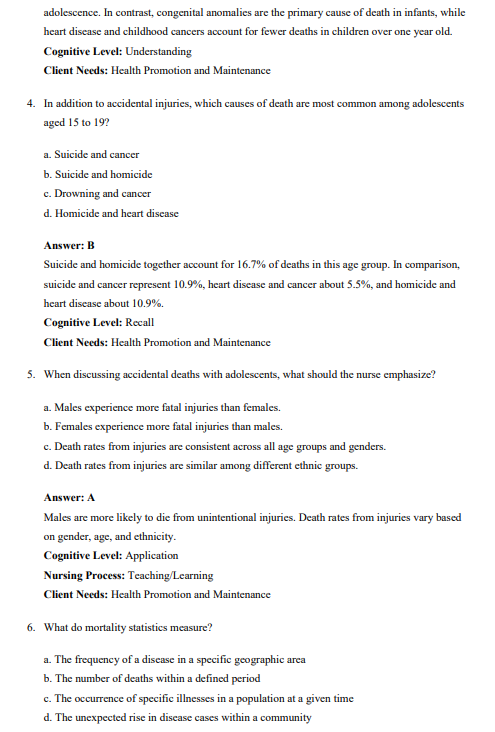
- A comprehensive bank of multiple-choice questions covering every unit and chapter of the 12th edition
- Questions written in NCLEX-RN format with age-specific pediatric clinical scenarios throughout
- Every question paired with a clearly identified correct answer
- Detailed rationales explaining the developmental, physiological, and clinical reasoning behind each answer — including why each wrong answer is wrong
- Questions spanning growth and development, health promotion, acute and chronic pediatric illness, emergency pediatric care, and family-centered nursing
- Both PDF and Word formats included for flexible, multi-device study
- Content built exclusively around the 12th edition — fully current and completely aligned
📚 COMPLETE CONTENT COVERAGE
Every unit. Every chapter. Every concept you need to master.
Unit 1 — Children, Their Families, and the Nurse
- Philosophy of pediatric nursing — family-centered and atraumatic care
- The family as the unit of care — family systems theory and nursing application
- Cultural competence and culturally responsive pediatric nursing
- Social determinants of health and pediatric health disparities
- Communicating with children and families across developmental stages
- The hospitalized child — psychological impact and nursing strategies
- Child advocacy and the nurse’s role in promoting child health policy
- Evidence-based practice in pediatric nursing
Unit 2 — Assessment of the Child and Family
- Health history for infants, children, and adolescents
- Physical assessment — age-specific techniques and normal findings by developmental stage
- Developmental screening — tools, milestones, and red flags
- Nutritional assessment across childhood
- Pain assessment in children — FLACC scale, Wong-Baker FACES, numeric rating scales, behavioral indicators
- Mental health and behavioral assessment in pediatric settings
- Environmental and safety assessment for families
- Preparing children and families for procedures and hospitalization
Unit 3 — The Newborn
- Physiological adaptations of the newborn — respiratory transition, cardiovascular changes, thermoregulation
- Newborn assessment — Apgar scoring, gestational age assessment, Ballard score
- Head-to-toe physical examination of the newborn
- Newborn reflexes and their clinical significance
- Neonatal pain assessment and management
- Newborn care — cord care, circumcision, thermoregulation, skin care
- Newborn nutrition — breastfeeding initiation, formula preparation, and feeding assessment
- Parent education for newborn care at home
- Newborn screening — metabolic, hearing, and critical congenital heart disease
Unit 4 — The High-Risk Newborn
- Classification of high-risk newborns — gestational age and birth weight
- Preterm infant care — respiratory support, nutritional needs, thermoregulation, developmental care
- Post-term infant — risks and nursing management
- Small for gestational age and large for gestational age newborns
- Respiratory distress syndrome — pathophysiology, surfactant therapy, and nursing care
- Bronchopulmonary dysplasia
- Intraventricular hemorrhage — risk factors, grading, and nursing implications
- Necrotizing enterocolitis — recognition, management, and nursing care
- Neonatal hyperbilirubinemia — physiological versus pathological, phototherapy, exchange transfusion
- Hypoglycemia in the newborn — risk factors, screening, and intervention
- Newborn of a diabetic mother
- Neonatal abstinence syndrome — assessment using Finnegan score and management
- Congenital anomalies identified at birth — nursing response and family support
- Birth injuries — types, assessment, and nursing care
- NICU environment and developmental care principles
- Family support and bonding in the NICU
Unit 5 — Infant
- Growth and development — birth to 12 months
- Erikson’s trust versus mistrust — application to infant nursing care
- Nutritional needs and feeding milestones in infancy
- Solid food introduction — timing, sequence, and safety
- Sleep patterns and safe sleep guidelines — SIDS prevention
- Sensory and motor development milestones
- Immunization schedule for infants — vaccine types, schedules, and nursing considerations
- Dental health in infancy
- Safety promotion — fall prevention, choking hazards, drowning, car seat safety
- Separation anxiety and stranger anxiety — clinical significance
- Infant play and stimulation
Unit 6 — Toddler
- Growth and development — 1 to 3 years
- Erikson’s autonomy versus shame and doubt
- Language development milestones — red flags for speech delay
- Toilet training — readiness signs and nursing guidance for parents
- Nutritional needs and feeding challenges of the toddler
- Sleep and rest — normal patterns, sleep problems, and nursing guidance
- Safety promotion — poisoning prevention, drowning, choking, and pedestrian safety
- Temper tantrums and limit-setting — anticipatory guidance for parents
- Toddler hospitalization — separation anxiety, regression, and nursing strategies
Unit 7 — Preschool
- Growth and development — 3 to 6 years
- Erikson’s initiative versus guilt
- Cognitive development — Piaget’s preoperational stage applied to pediatric care
- Language and communication milestones
- Nutritional needs and feeding behaviors of the preschooler
- Sleep and rest — nightmares, night terrors, and nursing guidance
- Preschool readiness and preparation
- Fears of the preschool child — hospitalization, body mutilation, death
- Communicating with preschoolers about procedures and illness
- Safety promotion — vehicle safety, fire safety, stranger awareness
- Play — the work of the preschooler
Unit 8 — School-Age Child
- Growth and development — 6 to 12 years
- Erikson’s industry versus inferiority
- Cognitive development — Piaget’s concrete operational stage
- School performance, learning disabilities, and ADHD in the school-age child
- Peer relationships, social development, and bullying
- Nutritional needs — childhood obesity prevention and healthy eating
- Physical activity recommendations for school-age children
- Safety promotion — bicycle safety, sports injuries, internet safety
- Chronic illness in the school-age child — impact on school and social functioning
- Preparing the school-age child for hospitalization and procedures
Unit 9 — Adolescent
- Growth and development — 12 to 18 years
- Erikson’s identity versus role confusion
- Puberty — physical changes in males and females and nursing implications
- Cognitive development — Piaget’s formal operational stage
- Adolescent risk-taking behavior — substance use, sexual activity, and injury
- Mental health in adolescence — depression, anxiety, eating disorders, and self-harm
- Suicide risk assessment in adolescents
- Confidentiality and consent in adolescent healthcare
- Nutritional needs during adolescence
- Safety promotion — motor vehicle safety, sports injuries, and violence prevention
- Communicating with adolescents — establishing trust and therapeutic rapport
- Adolescent hospitalization — privacy, autonomy, and peer influence
Unit 10 — Health Promotion and Special Health Problems
- Immunization — current schedule, vaccine-preventable diseases, contraindications, and adverse effects
- Communicable diseases of childhood — assessment, management, isolation, and parent education
- Integumentary conditions — eczema, psoriasis, acne, impetigo, tinea, scabies, burns
- Eye and ear disorders — otitis media, hearing loss, strabismus, vision problems
- Dental and oral health across childhood
- Poisoning and ingestion — common substances, management, and prevention
- Child maltreatment — physical abuse, sexual abuse, emotional abuse, neglect, Munchausen by proxy
- Mandatory reporting responsibilities and nursing documentation
Unit 11 — The Child with Dysfunction
Respiratory Disorders
- Upper respiratory infections — the common cold, pharyngitis, tonsillitis, otitis media
- Croup syndromes — laryngotracheobronchitis, epiglottitis, spasmodic croup
- Bronchiolitis and RSV — assessment, management, and infection control
- Asthma — pathophysiology, stepwise management, peak flow monitoring, and nursing care
- Pneumonia — bacterial versus viral, assessment, and management
- Cystic fibrosis — multisystem involvement, airway clearance, nutritional management, and nursing care
- Respiratory failure and nursing response
Cardiovascular Disorders
- Congenital heart defects — acyanotic and cyanotic, pathophysiology, and nursing care
- Heart failure in children — assessment, medication management, and nursing priorities
- Kawasaki disease — diagnostic criteria, aspirin therapy, and nursing care
- Rheumatic fever — Jones criteria, nursing management, and prophylaxis
- Infective endocarditis — risk factors and nursing implications
- Dysrhythmias in children
- Hypertension in children and adolescents
Hematological and Oncological Disorders
- Iron deficiency anemia — causes, assessment, oral iron therapy, and parent education
- Sickle cell disease — pathophysiology, vaso-occlusive crisis, acute chest syndrome, and nursing care
- Beta-thalassemia — management and transfusion therapy
- Hemophilia — bleeding management, factor replacement, and activity restrictions
- Immune thrombocytopenic purpura
- Leukemia — ALL and AML, chemotherapy protocols, and nursing care
- Lymphomas — Hodgkin’s and non-Hodgkin’s
- Brain tumors in children
- Wilms tumor — assessment and surgical nursing care
- Neuroblastoma and retinoblastoma
- Bone tumors — osteosarcoma and Ewing sarcoma
- Oncology nursing — chemotherapy administration, side effect management, and supportive care
Gastrointestinal Disorders
- Cleft lip and palate — preoperative and postoperative nursing care
- Esophageal atresia and tracheoesophageal fistula
- Pyloric stenosis — projectile vomiting, surgical management, and postoperative care
- Intussusception — assessment, hydrostatic reduction, and nursing management
- Hirschsprung disease — diagnosis and postoperative care
- Gastroesophageal reflux disease in infants and children
- Appendicitis — assessment, surgical preparation, and postoperative care
- Celiac disease — gluten-free diet education and nursing support
- Inflammatory bowel disease — Crohn’s disease and ulcerative colitis
- Short bowel syndrome and parenteral nutrition support
- Liver disease and biliary atresia
Genitourinary Disorders
- Urinary tract infections — assessment, antibiotic therapy, and prevention education
- Vesicoureteral reflux
- Nephrotic syndrome — edema management, corticosteroid therapy, and nursing care
- Acute glomerulonephritis
- Acute kidney injury and chronic kidney disease in children
- Wilms tumor — nephron-sparing considerations
- Hypospadias and epispadias — surgical correction and postoperative care
- Cryptorchidism and hydrocele
Neurological Disorders
- Neurological assessment in children — Glasgow Coma Scale, pupillary response, age-specific tools
- Increased intracranial pressure — recognition, management, and nursing priorities
- Seizure disorders — febrile seizures, epilepsy, status epilepticus, and nursing care
- Meningitis — bacterial and viral, assessment, isolation, and management
- Encephalitis
- Hydrocephalus — shunt management and nursing assessment
- Cerebral palsy — types, functional implications, and nursing care
- Neural tube defects — spina bifida, meningocele, myelomeningocele
- Head injury — mild, moderate, and severe — nursing assessment and management
- Brain death and organ donation in pediatric patients
Musculoskeletal Disorders
- Fractures in children — growth plate injuries, Salter-Harris classification, casting care
- Developmental dysplasia of the hip — Pavlik harness care and post-surgical nursing
- Legg-Calvé-Perthes disease
- Slipped capital femoral epiphysis
- Scoliosis — screening, bracing, and surgical nursing care
- Osteomyelitis — assessment and antibiotic management
- Juvenile idiopathic arthritis — pain management and functional preservation
- Muscular dystrophy — Duchenne’s, respiratory implications, and family support
Endocrine and Metabolic Disorders
- Type 1 diabetes mellitus — insulin management, sick day rules, hypoglycemia, and DKA
- Type 2 diabetes in children and adolescents
- Hypothyroidism and hyperthyroidism in children
- Congenital hypothyroidism — newborn screening and levothyroxine therapy
- Growth hormone deficiency and growth disorders
- Adrenal disorders — congenital adrenal hyperplasia, Cushing syndrome, Addison disease
- Inborn errors of metabolism — PKU and nursing implications
- Obesity in childhood — assessment and interdisciplinary management
Neurodevelopmental and Behavioral Disorders
- Attention deficit hyperactivity disorder — assessment, stimulant therapy, and school-related nursing support
- Autism spectrum disorder — communication strategies, sensory considerations, and family support
- Intellectual disability — functional assessment and individualized care
- Learning disabilities and school-based nursing support
Unit 12 — The Child with a Long-Term Condition or Terminal Illness
- Impact of chronic illness on the child and family — developmental and psychosocial considerations
- Coping strategies for children with chronic illness
- Siblings of children with chronic illness — nursing support
- Palliative care in pediatric nursing — goals, principles, and communication
- Pediatric end-of-life care — symptom management, family support, and nursing presence
- Grief and bereavement support for families after the death of a child
- Sudden unexpected death in infancy — SIDS and SUID — nursing and family support
- The nurse’s experience of pediatric loss — self-care and professional resilience
Unit 13 — Pediatric Emergency and Critical Care
- The pediatric assessment triangle — appearance, work of breathing, circulation to skin
- Pediatric rapid assessment — ABCDEs in children
- Respiratory emergencies — foreign body aspiration, severe asthma, respiratory failure, epiglottitis
- Shock in the pediatric patient — hypovolemic, distributive, cardiogenic, obstructive
- Pediatric cardiopulmonary resuscitation — age-specific techniques, compression ratios, and emergency medications
- Pediatric trauma — mechanisms, injury patterns, and primary and secondary survey
- Burns in children — assessment, fluid resuscitation, wound care, and pain management
- Drowning and submersion injury in children
- Poisoning emergencies — common agents, antidotes, and nursing management
- Anaphylaxis in children — epinephrine administration and nursing care
- Status epilepticus — drug therapy and nursing priorities
- Pain and sedation management in the PICU
🎯 WHO THIS TEST BANK IS FOR
Nursing students in a pediatric or maternal child nursing course who want a comprehensive, chapter-aligned practice question bank built to match their assigned textbook.
Students preparing for unit exams, midterms, and final exams covering newborn care, infant and child health promotion, acute pediatric illness, or pediatric emergency content.
Students using Wong’s 12th Edition as their primary text who want exam practice that mirrors the depth, focus, and content sequencing of this specific edition.
NCLEX-RN candidates who want focused, high-quality pediatric practice questions across health promotion, growth and development, acute illness, and family-centered care — all well-represented domains on the licensing exam.
New graduate nurses entering pediatric, NICU, or pediatric emergency settings who want to deepen and consolidate their knowledge base before and during orientation.
Nursing faculty teaching pediatric nursing who need a well-organized, evidence-aligned question bank for building quizzes, unit exams, and course assessments.
💡 HOW TO THINK THROUGH PEDIATRIC EXAM QUESTIONS
There is a mental checklist that separates students who consistently answer pediatric questions correctly from those who struggle despite knowing the content. It comes down to asking five questions before you commit to an answer.
One — What is the child’s age? Every normal value, every developmental milestone, every appropriate intervention, and every common diagnosis is filtered through age first. Read the age in the scenario before you read anything else. Let it orient your entire frame of reference.
Two — Who are the two patients in this scenario? The child is one. The family is the other. Who is the question really asking about? Sometimes the child’s clinical status is stable and the real nursing priority is the parent’s understanding or coping.
Three — Is this normal or abnormal for this age? Before you decide what to do, decide what you are seeing. A heart rate of 130 in a neonate is normal. A heart rate of 130 in a ten-year-old at rest is not. Name the finding, classify it, and then choose your action.
Four — What is the most urgent threat? Airway, breathing, circulation — in that order — but calibrated to the pediatric patient. A two-year-old with stridor is different from a two-year-old with a rash. Know which one you drop everything for.
Five — What does atraumatic care require here? Pediatric nursing is built on the principle of minimizing unnecessary physical and psychological harm during healthcare. The right clinical answer is not always the one that fixes the problem fastest — it is the one that fixes it safely, with the child’s emotional experience accounted for.
Apply this checklist consciously while you work through the test bank. Over time it becomes automatic.
📝 10 SAMPLE QUESTIONS
These are real questions drawn from the full test bank. Work through each one using the clinical reasoning framework above.
Question 1
A nurse is assessing a six-month-old infant brought to the clinic for a well-child visit. Which finding requires follow-up?
- A. The infant turns their head toward a sound
- B. The infant is unable to sit independently without support
- C. The infant does not yet use pincer grasp to pick up objects
- D. The infant smiles spontaneously and responds to familiar faces
Correct Answer: — None — all findings are developmentally appropriate EXCEPT if the infant cannot be engaged to smile or respond to familiar faces. Let us reframe for exam accuracy:
Revised Question 1
A nurse is assessing a six-month-old infant at a well-child visit. Which finding should the nurse report to the provider as a potential developmental concern?
- A. The infant cannot yet pull to a standing position
- B. The infant does not babble or make consonant sounds
- C. The infant sits briefly with support but cannot sit unsupported
- D. The infant reaches for objects with both hands
Correct Answer: B Rationale: By six months, infants should be babbling and producing consonant-vowel combinations such as “ba” or “da.” Absence of babbling at six months is a red flag for speech and language delay and warrants further evaluation including hearing screening. Pulling to stand is a nine-to-twelve-month milestone. Sitting briefly with support is appropriate at six months — independent sitting develops by seven to eight months. Bilateral reaching is a normal six-month gross motor milestone.
Question 2
A three-year-old is admitted for a scheduled tonsillectomy. The child begins crying and clinging to their parent when the nurse enters the room to begin the preoperative assessment. Which nursing action is most appropriate?
- A. Ask the parent to step outside so the child can be assessed without distraction
- B. Allow the parent to remain present and use play and age-appropriate language to conduct the assessment
- C. Postpone the assessment until the child stops crying
- D. Ask another nurse to complete the assessment since the child is distressed
Correct Answer: B Rationale: Separation anxiety peaks between six months and three years of age. Asking the parent to leave increases the child’s distress and removes the most powerful source of security available. Family-centered and atraumatic care principles require keeping the parent present during assessments whenever possible. Using play, simple and concrete language, and allowing the child to touch equipment before it is used transforms a frightening procedure into a manageable one. Postponing the assessment or delegating it does not address the child’s needs.
Question 3
A nurse is caring for a ten-year-old with sickle cell disease who is admitted in vaso-occlusive crisis. The child rates their pain as 9 out of 10. Which intervention is the highest priority?
- A. Apply warm compresses to painful areas and reassess in one hour
- B. Encourage oral hydration and administer scheduled acetaminophen
- C. Administer prescribed IV opioid analgesia promptly and reassess pain within 30 minutes
- D. Distract the child with television and contact the provider if pain is still present after two hours
Correct Answer: C Rationale: Vaso-occlusive sickle cell crisis causes severe ischemic pain from sickling and vessel occlusion. Pain rated 9 out of 10 in a sickle cell crisis requires prompt IV opioid analgesia — not oral acetaminophen, heat alone, or distraction as primary interventions. Delayed or inadequate pain management in sickle cell crisis is both clinically harmful and ethically indefensible. Pain reassessment within 30 minutes of analgesic administration is required to evaluate effectiveness and guide further treatment. Waiting two hours to contact the provider is a dangerous delay.
Question 4
A nurse is preparing to administer amoxicillin to a 22-kilogram child. The prescribed dose is 40 mg/kg/day divided every eight hours. The available concentration is 250 mg per 5 mL. How many milliliters should the nurse administer per dose?
- A. 3.5 mL
- B. 5.9 mL
- C. 7.0 mL
- D. 8.8 mL
Correct Answer: B Rationale: Step one — calculate total daily dose: 40 mg/kg/day × 22 kg = 880 mg/day. Step two — divide into three doses: 880 ÷ 3 = 293.3 mg per dose. Step three — calculate volume: 293.3 mg ÷ 250 mg × 5 mL = 5.87 mL, rounded to 5.9 mL per dose. Pediatric dosing calculations must always account for weight-based dosing, correct division across the dosing interval, and the available concentration. Errors at any step produce a potentially harmful dose in a child with a narrow therapeutic margin.
Question 5
A parent brings a 15-month-old to the emergency department. The nurse observes multiple bruises in various stages of healing on the child’s back and buttocks, a human bite mark on the upper arm, and a spiral fracture of the humerus on x-ray. The parent states the child fell off the couch. What is the most appropriate nursing action?
- A. Document the parent’s explanation and discharge the family with safety education
- B. Reassure the parent that toddlers fall frequently and the injuries are likely accidental
- C. Recognize the injuries as highly suspicious for non-accidental trauma, document objectively, and report to the appropriate child protective services as required by law
- D. Confront the parent directly about the suspected abuse before involving other team members
Correct Answer: C Rationale: Multiple bruises in various stages, a human bite mark, and a spiral fracture of the humerus in a 15-month-old are incompatible with the stated mechanism of a couch fall. Spiral fractures of long bones in non-ambulatory or early-walking children are classic indicators of non-accidental trauma caused by twisting force. Nurses are mandated reporters — legal obligation to report reasonable suspicion of child maltreatment does not require confirmation. Objective documentation of observed findings — without editorializing — is essential. Confronting the parent directly can escalate danger to the child and should be avoided by the bedside nurse.
Question 6
A nurse is caring for an infant with bronchiolitis caused by RSV. Which assessment finding requires the most immediate nursing action?
- A. Mild subcostal retractions with a respiratory rate of 52 breaths per minute
- B. Nasal congestion and mild intermittent cough present for two days
- C. Oxygen saturation of 87% on room air with increased work of breathing and pallor
- D. Low-grade fever of 38.1°C and decreased appetite since yesterday
Correct Answer: C Rationale: An oxygen saturation of 87% on room air with increased work of breathing and pallor indicates significant respiratory compromise and impending respiratory failure. This requires immediate intervention — supplemental oxygen, repositioning, possible suctioning, and urgent provider notification. Mild retractions with a respiratory rate of 52 are concerning and warrant monitoring but do not represent immediate crisis. Nasal congestion, low-grade fever, and decreased appetite are consistent with the typical early clinical course of bronchiolitis and require supportive management.
Question 7
A nurse is caring for a four-year-old with suspected bacterial meningitis awaiting lumbar puncture. The child is photophobic, febrile, and crying inconsolably. Which nursing intervention is the priority?
- A. Position the child for lumbar puncture and prepare the sterile field
- B. Dim the room lights, minimize noise and stimulation, administer prescribed analgesics and antipyretics, and maintain isolation precautions
- C. Encourage the parent to take the child for a walk in the hallway to reduce crying
- D. Obtain a dietary consult for a high-calorie diet to support recovery
Correct Answer: B Rationale: Meningeal irritation causes extreme sensitivity to light and sound. The priority nursing interventions — prior to or while awaiting the lumbar puncture — focus on reducing environmental stimulation, managing fever and pain with prescribed medications, and maintaining droplet isolation precautions to prevent transmission. Moving the child to a hallway increases stimulation and environmental stimulation and is unsafe. Dietary consultation is not an acute priority. Preparing for lumbar puncture is important but is a team function coordinated with the provider — reducing the child’s suffering is the immediate nursing priority.
Question 8
A nurse is teaching the parents of a newly diagnosed eight-year-old with type 1 diabetes. Which statement by the parent indicates a need for further teaching?
- A. “If my child is sick and not eating, I should still give insulin and call the provider for guidance.”
- B. “Symptoms of low blood sugar include shakiness, sweating, and confusion.”
- C. “If my child’s blood sugar is high, I should have them exercise to bring it down quickly.”
- D. “We need to check my child’s blood sugar before meals and at bedtime.”
Correct Answer: C Rationale: Exercise lowers blood glucose by increasing glucose uptake into muscle cells — but this recommendation is appropriate only when blood glucose is in a safe range. When blood glucose is elevated and ketones are present, exercise can actually worsen diabetic ketoacidosis by increasing stress hormones. The parent must be taught to check for ketones when blood glucose is elevated and to contact the provider rather than defaulting to exercise as a correction strategy. The other statements reflect accurate understanding of insulin management during illness, hypoglycemia recognition, and routine monitoring.
Question 9
An adolescent is admitted following a suicide attempt by overdose. The patient is medically stable. When the nurse enters the room, the patient turns away and says, “I do not want to talk to anyone.” Which nursing response is most therapeutic?
- A. “I understand. I will leave you alone and check back later.”
- B. “You need to talk to someone. It is the only way we can help you.”
- C. “I am going to sit with you for a while. You do not have to say anything right now.”
- D. “Your parents are very worried. You should think about how this affects them.”
Correct Answer: C Rationale: A non-demanding, non-abandoning presence is the most therapeutically appropriate response for an adolescent who has just attempted suicide and is refusing verbal engagement. Leaving communicates abandonment and removes safety monitoring. Insisting the patient talk creates pressure and damages emerging therapeutic trust. Redirecting to the parents’ feelings shifts focus away from the patient’s experience and implies guilt. Staying — quietly, without demand — communicates safety, acceptance, and consistent presence, which are foundational to beginning a therapeutic relationship with a suicidal adolescent.
Question 10
A nurse is preparing discharge teaching for the parents of a two-month-old being sent home after treatment for RSV bronchiolitis. Which instruction is most important to include?
- A. “Your baby should sleep on their stomach to help drain secretions.”
- B. “Return to the emergency department immediately if your baby shows signs of increased work of breathing, color change, or refuses to feed.”
- C. “It is safe to use over-the-counter cold medications to manage symptoms at home.”
- D. “Your baby will not be contagious once they are discharged from the hospital.”
Correct Answer: B Rationale: RSV bronchiolitis in a two-month-old carries significant risk of clinical deterioration at home, particularly in the first week. Clear, specific return precautions are the most critical discharge teaching element. Parents must know exactly what to watch for — increased retractions, worsening color, refusal to feed, apnea — and that any of these findings warrants immediate return. Prone positioning contradicts safe sleep guidelines and increases SIDS risk. OTC cold medications are contraindicated in infants under two years. RSV is highly contagious and shedding may continue after discharge, particularly in immunocompromised contacts.
3 STUDY STRATEGIES BUILT FOR THIS CONTENT
The Age-Anchor Method
Before every study session, write out a quick age-specific reference grid for the topic you are covering. For respiratory rates — list the normal range for newborns, infants, toddlers, preschoolers, school-age, and adolescents. For developmental milestones — list the key motor, language, social, and cognitive markers for the age group in the chapter. For medication dosing — list the weight range and dose considerations relevant to the content. This takes five minutes and creates the reference scaffold your brain needs to answer age-specific exam questions accurately under pressure.
The Family-Centered Lens Exercise
After working through each set of questions, go back and identify every question where the family was part of the clinical scenario. Ask yourself — did the correct answer account for the family or just the child? Did the rationale mention the parent’s role, understanding, or coping? Over time this builds your instinct for recognizing when the clinical priority is a family-centered nursing intervention rather than a child-directed one — a distinction that appears constantly in pediatric NCLEX questions.
The Wrong Answer Pattern Tracker
Keep a running list of the wrong answers you choose and why you chose them. Most students find they make the same category of error repeatedly — choosing the intervention before completing assessment, underestimating urgency in respiratory questions, misapplying adult reference ranges to pediatric patients, or overlooking developmental context. Naming your error pattern is more efficient than re-reading chapters. Once you see your pattern, you can correct it deliberately.
❓ FREQUENTLY ASKED QUESTIONS
Is this the official Elsevier publisher test bank for the 12th edition? No. This is an independently developed study resource. It is not affiliated with Elsevier or the authors of Wong’s Nursing Care of Infants and Children. It is a supplementary product designed to support students and educators using the 12th edition.
My course uses a combined maternal child textbook. Will this test bank still be useful? Yes. Wong’s 12th Edition covers the full scope of pediatric nursing content — newborn through adolescent. If your course uses a combined maternal child text, this test bank covers the pediatric half comprehensively. For maternal content, consider pairing it with our test bank for Maternal Child Nursing Care by Perry et al.
What formats are included with my purchase? Both PDF and Word formats are included. PDF is ideal for reading on any device without formatting issues. Word allows you to select, edit, and organize questions for custom study sets or course exams if you are an instructor.
How quickly will I receive my file after purchasing? Your download link is sent to your email automatically the moment your payment is confirmed. No manual steps are involved on our end. Most students have their file open within minutes of completing checkout.
Is this test bank useful for NCLEX-RN preparation? Yes and specifically so. Health promotion and maintenance across the lifespan, growth and development, safe and effective care of the pediatric patient, and physiological adaptation in high-risk newborns and children are all well-tested domains on the NCLEX-RN. The questions in this test bank are written in NCLEX format and build the exact level of clinical reasoning the licensing exam requires.
I am a nursing instructor teaching pediatric nursing. Can I use this to build course exams? Absolutely. All questions include correct answers and detailed rationales. The Word format makes it easy to select questions by chapter or topic, adjust wording for your clinical context, and organize questions into course assessments. Many pediatric nursing educators use independently developed test banks to supplement their question pools.
Can I use this test bank if I am entering a pediatric nursing specialty orientation? Yes. New graduate nurses entering pediatric units often find that the academic depth of Wong’s is exactly the clinical knowledge base they need to consolidate during orientation. This test bank helps identify content gaps early and build confidence in pediatric-specific clinical reasoning before and during orientation.
What if something is wrong with my file or my order? Contact our support team directly with your order details. We respond promptly and will resolve any issue with your purchase quickly and without hassle.
🏁 CLOSING THOUGHT
Every nurse remembers their first critically ill pediatric patient.
Not because the clinical situation was necessarily the most complex they had ever faced — but because something about the smallness of the patient, the presence of the terrified parent, and the weight of being the nurse in that room changes you.
Pediatric nursing is not harder than other specialties because the content is more complicated. It is harder because the stakes feel different. Because when the patient is a child, everything matters more urgently, more personally, and more permanently.
Wong’s has been the textbook for this specialty for decades because it takes that weight seriously. It gives nursing students and nurses the knowledge, the framework, and the evidence base to care for children and families with genuine skill and genuine compassion.
This test bank was built to honor that standard. Use it to master the content. Use it to build the reasoning. Use it to walk into every exam — and every pediatric clinical encounter — knowing that you prepared the way the specialty deserves.

Jannny –
Very very helpful
Helen Christie –
A solid test bank
Rosemary R –
I like it
Caleb Martins –
The pdf is searchable and I can easily find what I need at any given moment.