Some students learn anatomy and physiology by reading. Others learn by seeing. Others by hearing. Most learn best through some combination of all three.
And all of them — regardless of learning style — need to understand the human body deeply enough to apply that understanding to clinical nursing and allied health practice.
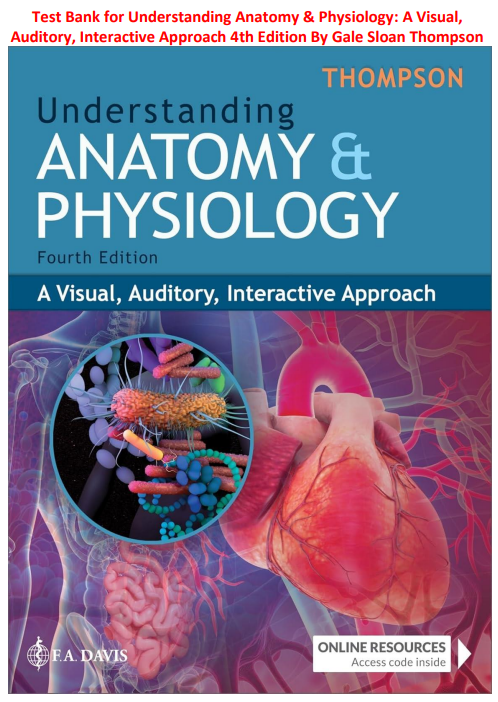
That is the philosophy behind Understanding Anatomy & Physiology: A Visual, Auditory, Interactive Approach by Gale Sloan Thompson. It is not just another anatomy and physiology textbook. It is a deliberately multi-sensory learning experience — one that meets students where they are, communicates complex biological concepts through visual clarity and accessible language, and builds the kind of foundational science understanding that lasts long after the final exam.
This comprehensive test bank is built for the 4th Edition of Understanding Anatomy & Physiology: A Visual, Auditory, Interactive Approach by Gale Sloan Thompson. It is one of the most innovative, most visually engaging, and most student-accessible anatomy and physiology textbooks in nursing and allied health education — and this test bank helps you master every chapter with the focused, clinically connected, body-system-by-body-system practice that A&P mastery demands.
Whether you are completing a nursing prerequisite, preparing for a course exam, or building the scientific foundation that your nursing or allied health program requires, this resource delivers the systematic, clinical-application-focused practice that Thompson’s unique approach to anatomy and physiology education inspires.
What’s Inside?
- Hundreds of practice questions covering every chapter
- Multiple-choice, true/false, matching, and clinical application questions
- Complete answer keys with clear, detailed rationales
- Questions covering anatomical structures, physiological processes, and clinical disease applications
- Content fully aligned with the 4th Edition’s updated chapter organization and visual learning framework
Who Is This Test Bank For?
This resource is perfect for:
- Pre-nursing students completing anatomy and physiology prerequisites using the 4th Edition
- Practical nursing and LPN students building foundational science knowledge
- Allied health students in medical assisting, radiography, and respiratory therapy programs
- Nursing students reviewing core anatomy and physiology concepts
- Science instructors building course exams and unit assessments for Thompson’s 4th Edition
- Healthcare professionals seeking a foundational science refresher
- Visual and interactive learners who need a study resource that matches the Thompson learning style
Topics Covered Include:
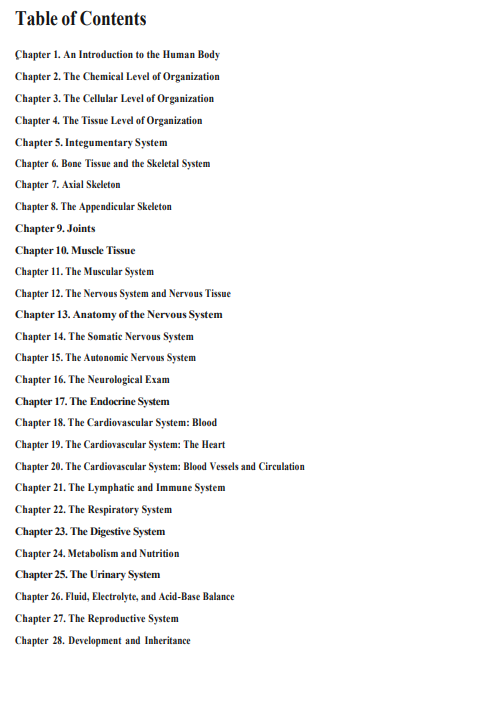
- Organization of the body — levels of structural organization and body cavities
- Basic chemistry and cellular biology — atoms, molecules, and cellular function
- Cellular metabolism and genetic expression
- Tissues — epithelial, connective, muscle, and nervous tissue
- The integumentary system — structure, function, and clinical conditions
- The skeletal system — bone structure, classification, and the axial and appendicular skeleton
- Joints — classification, movement, and clinical relevance
- The muscular system — muscle structure, contraction, and major muscle groups
- The nervous system — the brain, spinal cord, and peripheral nervous system
- The autonomic nervous system — sympathetic and parasympathetic divisions
- The special senses — vision, hearing, taste, smell, and equilibrium
- The endocrine system — hormones, glands, and regulation
- The blood — composition, types, and clotting mechanisms
- The cardiovascular system — the heart, blood vessels, and cardiac physiology
- The lymphatic system and immune response
- The respiratory system — anatomy, mechanics, and gas exchange
- The digestive system — organs, digestion, and nutrient absorption
- The urinary system — kidney anatomy, urine formation, and fluid regulation
- The reproductive system — male and female anatomy and physiology
- Fluid, electrolyte, and acid-base balance
- Development and inheritance — conception through birth
Why This Test Bank Works
Gale Sloan Thompson built Understanding Anatomy & Physiology around the recognition that most students who struggle with A&P are not struggling because they lack intelligence — they are struggling because traditional textbooks present complex biological information in ways that do not match how those students learn best.
The 4th Edition addresses that mismatch more comprehensively than ever. Every concept is presented through multiple modalities — visually through detailed, clean illustrations and diagrams, verbally through clear and accessible explanatory language, and interactively through learning activities that require students to engage actively with the content rather than passively absorb it. The result is a textbook that genuinely meets students where they are — and brings them to a level of anatomical and physiological understanding that traditional didactic approaches often fail to achieve.
This test bank is built to consolidate and assess the understanding that Thompson’s multi-sensory approach develops.
Every question is written at a level of clinical application that goes beyond anatomical recall. You will not simply name a structure — you will explain how its anatomy determines its function, or how its dysfunction produces the clinical signs and symptoms associated with a specific disease. You will not just memorize the steps of the cardiac cycle — you will apply that knowledge to understand why a patient with mitral stenosis develops the symptoms they do. You will not merely identify the parts of the nephron — you will trace the path of filtrate through each segment and explain what happens to fluid balance when any part of that system fails.
That applied understanding is exactly what nursing school, the NCLEX, and clinical practice require. And it is what this test bank develops — question by question, body system by body system.
The 4th Edition reflects the most current anatomical and physiological content, with updated clinical applications, refreshed disease examples, and expanded coverage of the body systems most heavily emphasized in nursing and allied health curricula. This test bank is fully aligned with every update.
Detailed rationales explain the anatomical structure, physiological mechanism, and clinical significance behind every correct answer — in clear, accessible language that matches the Thompson learning approach. Questions are organized chapter by chapter for structured, body-system-by-body-system study. Build the science foundation that every healthcare career requires — one concept, one system, one clinical connection at a time.
Sample Questions
Question 1
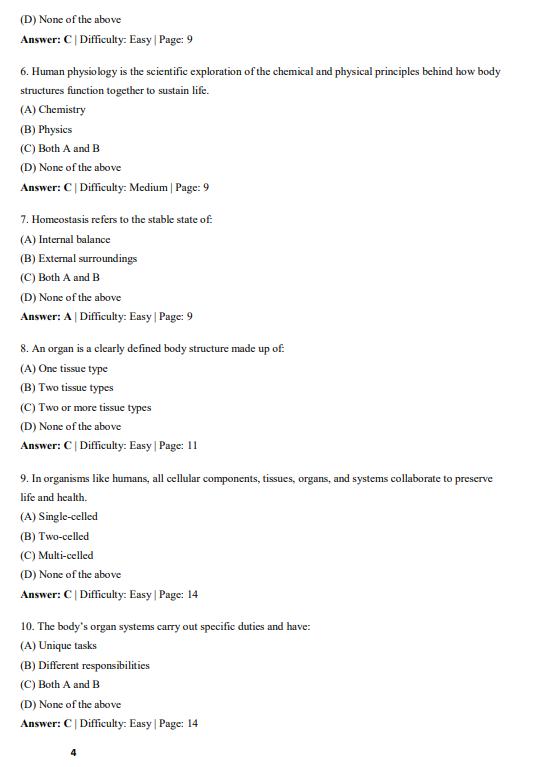
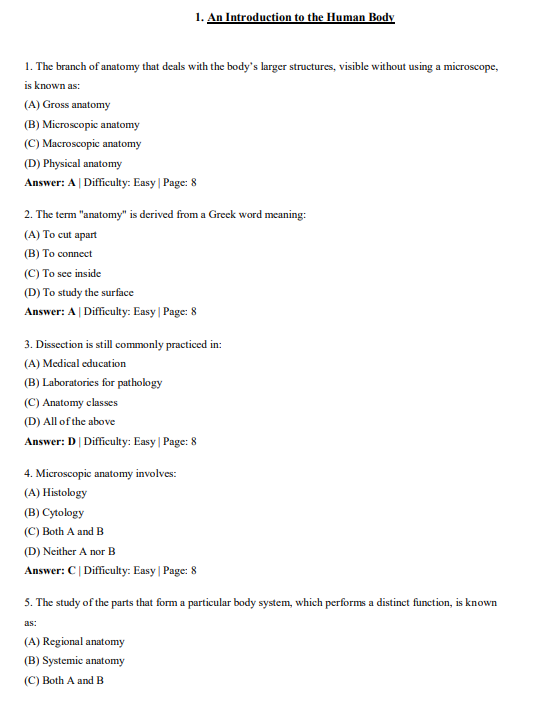
A nursing student is studying the structure of the plasma membrane and its role in maintaining cellular homeostasis. A patient is diagnosed with a condition causing progressive loss of membrane sodium-potassium ATPase pump function. Which physiological consequence would most directly result from this loss of pump function?
- A) The cell would gain sodium and lose potassium, leading to cellular swelling and disrupted electrical gradients
- B) The cell would gain potassium and lose sodium, leading to increased action potential frequency
- C) The membrane would become permanently impermeable to all substances, causing complete cellular isolation
- D) The cell would produce more ATP to compensate, restoring the sodium-potassium gradient automatically
Correct Answer: A
Rationale: The sodium-potassium ATPase pump is a critical active transport mechanism that uses ATP to move three sodium ions out of the cell and two potassium ions into the cell against their respective concentration gradients with each cycle. This creates the essential electrochemical gradients that underlie resting membrane potential, action potential generation in neurons and muscle cells, and the osmotic balance that prevents cellular swelling. When this pump fails — as occurs in conditions of severe ATP depletion, certain toxins, or specific disease states — sodium can no longer be actively transported out of the cell. Sodium accumulates intracellularly, drawing water in by osmosis, causing cellular swelling and potentially lysis. Simultaneously, intracellular potassium levels decline as potassium is no longer actively maintained at high intracellular concentrations, disrupting the negative resting membrane potential and impairing the ability of excitable cells such as neurons and cardiac myocytes to generate and propagate electrical signals. This explains why conditions that impair cellular ATP production — including ischemia, severe hypoxia, and metabolic poisons — produce cellular dysfunction and death through this mechanism. The cell cannot automatically produce more ATP to compensate when the underlying cause of pump failure is an ATP deficit — this is a positive feedback failure rather than a correctable homeostatic imbalance.
Question 2
A patient presents with a fracture of the lateral malleolus after twisting their ankle. Using anatomical knowledge, which bone contains the lateral malleolus?
- A) The tibia, the larger weight-bearing bone of the lower leg
- B) The fibula, the slender non-weight-bearing bone on the lateral aspect of the lower leg
- C) The talus, the ankle bone that articulates with both lower leg bones
- D) The calcaneus, the heel bone that forms the posterior aspect of the foot
Correct Answer: B
Rationale: The lateral malleolus is the bony prominence located on the lateral (outer) side of the ankle joint — it is the distal end of the fibula, the slender, non-primary-weight-bearing bone located on the lateral aspect of the lower leg. The fibula runs parallel to the tibia but bears significantly less axial weight — its primary structural role is providing attachment points for muscles and ligaments and forming the lateral aspect of the ankle mortise joint. The medial malleolus — the bony prominence on the inner side of the ankle — belongs to the tibia. Together, the medial malleolus of the tibia, the lateral malleolus of the fibula, and the inferior articular surface of the tibia form the ankle mortise that articulates with the talus. Ankle sprains — one of the most common musculoskeletal injuries — frequently involve the lateral ligaments anchoring the fibula’s lateral malleolus to the talus and calcaneus, explaining why a twisting mechanism often results in lateral ankle injury. The talus is the ankle bone that articulates with both the tibia and fibula to form the ankle joint — it does not have a malleolus. The calcaneus is the largest tarsal bone, forming the heel — it is not the site of the lateral malleolus.
Question 3
A nursing student is reviewing the physiology of the respiratory system. A patient is receiving mechanical ventilation with positive pressure. Understanding Boyle’s Law and respiratory mechanics, which physiological principle explains why positive pressure ventilation successfully inflates the lungs?
- A) Positive pressure ventilation works by increasing the concentration of oxygen in the alveoli, which draws air into the lungs through diffusion
- B) Positive pressure ventilation forces air into the lungs by creating a pressure gradient in which airway pressure exceeds alveolar pressure, overcoming the normal inspiratory mechanism and directly inflating the alveoli
- C) Positive pressure ventilation increases the size of the thoracic cavity by contracting the diaphragm electrically, producing negative pressure as in normal respiration
- D) Positive pressure ventilation increases the surface tension within the alveoli, causing them to expand through a surfactant-mediated mechanism
Correct Answer: B
Rationale: Normal spontaneous inspiration works by increasing the volume of the thoracic cavity — through diaphragmatic and intercostal muscle contraction — which decreases intrathoracic pressure below atmospheric pressure (Boyle’s Law: as volume increases, pressure decreases in a closed system). This pressure gradient draws air passively into the lungs from the higher-pressure atmosphere. Positive pressure ventilation — whether delivered by a mechanical ventilator or bag-valve-mask — works through an opposing mechanism. Instead of creating negative intrathoracic pressure to draw air in, positive pressure ventilation directly delivers air under pressure into the airway, creating a pressure gradient in which the delivered airway pressure exceeds alveolar pressure, forcing air into the lungs and expanding the alveoli. This is particularly important clinically because patients receiving positive pressure ventilation are unable to generate the inspiratory muscle effort required for spontaneous ventilation — the ventilator substitutes for this effort by actively pushing air in. This mechanism has important clinical implications — positive pressure increases intrathoracic pressure, which can reduce venous return, decrease preload, and lower cardiac output, explaining why mechanical ventilation can cause hemodynamic compromise in patients with pre-existing cardiovascular instability. Diffusion governs gas exchange at the alveolar-capillary membrane — not bulk air movement into the lungs. Positive pressure does not activate the diaphragm and reduces rather than increases surface tension effects by stretching alveoli.
Question 4
A student is learning about the endocrine system and studying the feedback mechanisms that regulate hormone secretion. A patient has a tumor of the anterior pituitary gland that secretes excess adrenocorticotropic hormone autonomously. Which clinical manifestation would most likely result from the chronic excess ACTH secretion in this patient?
- A) Decreased cortisol levels leading to hypoglycemia, hypotension, and electrolyte imbalances
- B) Elevated cortisol levels leading to the clinical features of Cushing’s syndrome including central obesity, muscle wasting, hyperglycemia, and hypertension
- C) Decreased aldosterone levels leading to hyponatremia and hyperkalemia
- D) Elevated growth hormone levels leading to acromegaly in an adult patient
Correct Answer: B
Rationale: Understanding this clinical manifestation requires tracing the hypothalamic-pituitary-adrenal axis from beginning to end. ACTH — adrenocorticotropic hormone — is secreted by the anterior pituitary gland and its primary target is the adrenal cortex, specifically the zona fasciculata, where it stimulates the synthesis and secretion of cortisol. When an autonomous pituitary tumor secretes excess ACTH continuously — independent of normal hypothalamic regulation and negative feedback — the adrenal cortex receives a constant, exaggerated ACTH signal and responds by producing chronically elevated levels of cortisol. Chronic cortisol excess produces the clinical syndrome of Cushing’s syndrome — characterized by central truncal obesity with peripheral muscle wasting (reflecting cortisol’s catabolic effects on peripheral muscle and fat redistribution to the trunk), hyperglycemia (from cortisol’s counter-regulatory gluconeogenic effects opposing insulin action), hypertension (from cortisol’s mineralocorticoid-like effects and direct vascular effects), osteoporosis, easy bruising, stretch marks, immunosuppression, and mood disturbances. When caused by excess pituitary ACTH specifically, this is called Cushing’s disease. Decreased cortisol would occur with adrenal insufficiency — the opposite of this scenario. Aldosterone is regulated primarily by the renin-angiotensin system, not by ACTH excess. Growth hormone excess produces acromegaly but is independent of ACTH physiology.
Question 5
A nursing student is studying the urinary system and the process of urine formation. A patient is diagnosed with acute glomerulonephritis following a streptococcal infection. Which pathophysiological change in glomerular function most directly explains the appearance of protein and blood cells in this patient’s urine?
- A) The glomerular filtration rate increases dramatically, forcing large molecules across an intact filtration membrane at an accelerated rate
- B) The glomerular filtration membrane becomes inflamed and its normal size-selective permeability barrier is disrupted, allowing proteins and red blood cells that would normally be retained in the capillaries to pass into the filtrate
- C) The renal tubules lose their reabsorptive capacity, allowing previously filtered and reabsorbed proteins to spill into the final urine
- D) The collecting duct becomes permeable to proteins due to inflammatory cytokine damage, adding proteins to the urine in its final concentration phase
Correct Answer: B
Rationale: Normal glomerular filtration depends on the selective permeability of the three-layer glomerular filtration membrane — the fenestrated capillary endothelium, the basement membrane with its negatively charged proteoglycans, and the podocytes with their filtration slits. This filtration barrier is designed to allow small molecules such as water, glucose, electrolytes, and small solutes to pass freely while retaining large proteins such as albumin and cellular elements including red blood cells and white blood cells within the capillary lumen. In acute glomerulonephritis — typically resulting from immune complex deposition in the glomerular basement membrane following streptococcal infection — an inflammatory response is triggered that directly damages this filtration barrier. Complement activation, neutrophil infiltration, and cytokine-mediated injury disrupt the architectural integrity and charge selectivity of the filtration membrane, allowing large proteins and red blood cells to pass through the damaged barrier into the filtrate. This explains the classic urinary findings of acute glomerulonephritis — proteinuria and hematuria. The GFR actually decreases in glomerulonephritis due to reduced filtration surface area and increased resistance — not increases. Tubular reabsorption of proteins is a minor mechanism — tubular handling does not explain the significant proteinuria of glomerular disease. The collecting duct’s primary function is water and electrolyte regulation — it does not represent the site of protein entry into the urine in glomerulonephritis.
Frequently Asked Questions (FAQs)
What edition does this test bank cover?
This test bank is written specifically for the 4th Edition of Understanding Anatomy & Physiology: A Visual, Auditory, Interactive Approach by Gale Sloan Thompson. All questions are fully aligned with the current edition’s chapter organization, updated anatomical and physiological content, and refreshed clinical application examples.
How are the questions organized?
Questions are arranged chapter by chapter — body system by body system — allowing you to study systematically from cellular biology through the reproductive system and development, or focus specifically on the systems where your examination performance needs the most improvement.
Is this test bank useful for nursing school prerequisite preparation?
Absolutely. This test bank is designed precisely for students completing anatomy and physiology prerequisites for nursing and allied health programs using Thompson’s 4th Edition. The questions mirror the level, style, and clinical application emphasis of course exams in pre-nursing and health science programs — making it an ideal companion for building the science foundation that nursing school requires.
Does this test bank match the visual and interactive learning style of Thompson’s textbook?
Yes. While this test bank uses a question-and-answer format appropriate for examination preparation, the questions are written to assess the applied, conceptual understanding that Thompson’s visual and interactive approach develops — not just anatomical memorization. Students who have engaged with Thompson’s visual learning content will find these questions assess exactly the type of understanding that approach builds.
Is this test bank appropriate for LPN and allied health students?
Yes. Understanding Anatomy & Physiology by Thompson is used in LPN, medical assisting, radiography, respiratory therapy, and other allied health programs. This test bank is equally valuable for students in all of these programs — wherever the 4th Edition is the course text, this test bank is a directly relevant study resource.
How quickly can I access the test bank after purchase?
Immediately. As soon as your purchase is complete, you receive instant digital access with no waiting period. Study on your own schedule, at your own pace, from any device.
Are the rationales written to support the accessible learning approach of Thompson’s textbook?
Yes. Every rationale explains the underlying anatomical structure, physiological mechanism, and clinical significance behind the correct answer in clear, accessible language — consistent with the Thompson approach of making complex biological concepts genuinely understandable without oversimplifying the science.
Can instructors use this test bank for course assessments?
Absolutely. The chapter-by-chapter organization, varied question formats, and clinical application emphasis make this an excellent resource for faculty building unit exams, quizzes, and comprehensive course assessments for anatomy and physiology courses in nursing and allied health programs using the 4th Edition of Thompson’s textbook.


Winnie M. –
I absolutely like this study guide
Melania Angel –
Much better than what I had hopped for
Rosemary R –
Perfect
Peterson S. –
Very very good
Leo Fernandez –
very very good
Theresa M. –
Very helpful for exam review
Kamara Reid –
Accurate, detailed, and reliable
Terence V. –
The questions are relevant and challenging.
Lisa Horton –
Helpful explanations made difficult topics easier to understand