


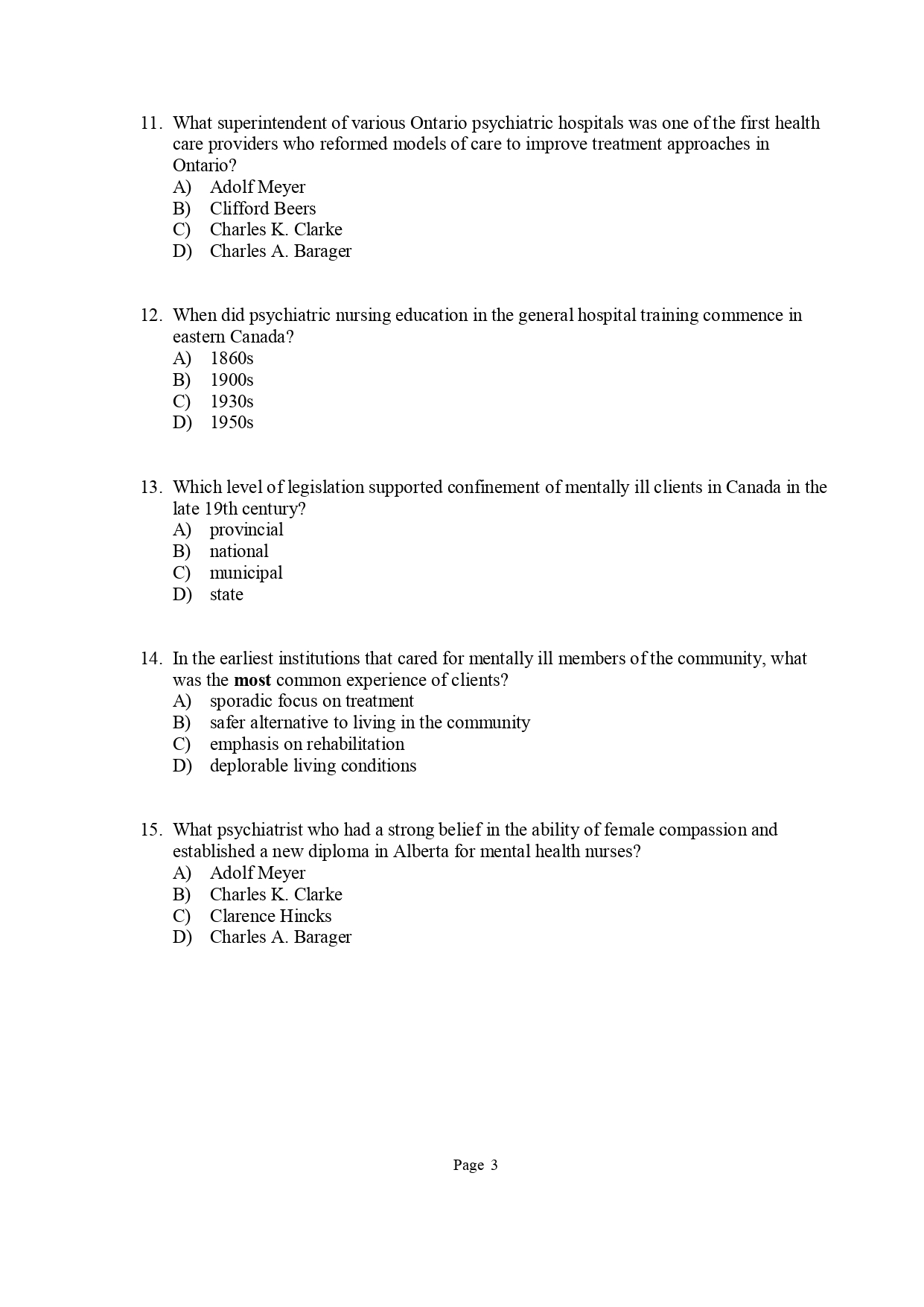
Master Compassionate, Evidence-Based Mental Health Nursing in the Canadian Context
Mental health nursing demands more than understanding diagnoses and medications. It requires therapeutic presence, cultural humility, trauma awareness, and navigation of complex healthcare systems while respecting patient rights and dignity.
This test bank accompanies Psychiatric & Mental Health Nursing for Canadian Practice 5th Edition by Austin, Peternelj-Taylor, Kunyk, and Boyd. It builds the specialized competencies needed for excellence in Canadian mental health nursing across diverse settings and populations.
Stop feeling intimidated by psychiatric nursing’s complexity. Start developing the comprehensive knowledge that creates recovery-oriented, person-centered mental healthcare.
Built Specifically for Canadian Mental Health Nursing
Canadian mental healthcare operates within unique contexts including universal healthcare, distinct mental health legislation across provinces, Indigenous reconciliation efforts, and bilingual service requirements in many regions.
This test bank addresses these Canadian realities explicitly. Questions incorporate provincial Mental Health Acts, Canadian healthcare delivery models, Indigenous mental health approaches, and culturally diverse populations comprising Canadian society.
You’ll gain knowledge applicable to actual Canadian practice environments, not generic psychiatric nursing divorced from context.
Essential Features for Canadian PMH Nursing:
- Recovery and resilience orientation throughout
- Therapeutic relationship as intervention foundation
- Trauma-informed care principles integration
- Indigenous mental health and reconciliation
- Provincial mental health legislation variations
- Cultural safety and anti-oppressive practice
- Harm reduction and housing-first approaches
- Community mental health and deinstitutionalization
- Psychopharmacology with Canadian medications
- Interprofessional collaboration emphasis
- Questions supporting RPN and RN programs
Why Mental Health Nursing Requires Specialized Expertise
Psychiatric patients can’t be reduced to diagnoses. Understanding the lived experience of mental illness, recovery journeys, and therapeutic relationships distinguishes effective mental health nurses.
These questions develop holistic understanding. You’ll appreciate how trauma, poverty, discrimination, and social determinants affect mental health. You’ll recognize recovery as nonlinear and person-defined. You’ll understand your therapeutic use of self.
This person-centered perspective creates healing relationships beyond symptom management.
Comprehensive Mental Health Content
Psychiatric nursing encompasses vast knowledge from neurobiology to psychotherapy, medication management to crisis intervention, forensic mental health to community support.
This test bank ensures complete preparation across all essential areas.
Major Psychiatric Nursing Topics:
- Therapeutic communication and relationships
- Mental health assessment across lifespan
- Neurobiology and psychopharmacology
- Recovery and resilience frameworks
- Trauma-informed care principles
- Mood disorders and interventions
- Anxiety and stress-related disorders
- Schizophrenia spectrum disorders
- Personality disorders understanding
- Substance use and concurrent disorders
- Eating disorders across populations
- Child and adolescent mental health
- Geriatric psychiatry and dementia care
- Indigenous mental health and wellness
- Suicide risk assessment and intervention
- Crisis and emergency psychiatric care
- Forensic mental health nursing
- Community mental health nursing
Therapeutic Relationship Excellence
The therapeutic relationship represents mental health nursing’s most powerful intervention. Understanding boundaries, self-awareness, and intentional interaction creates healing connections.
Questions develop relationship competence. You’ll establish therapeutic boundaries appropriately. You’ll use yourself therapeutically while maintaining professionalism. You’ll recognize countertransference and manage it constructively.
This relationship skill forms the foundation supporting all other interventions.
Recovery-Oriented Practice
Recovery-oriented care recognizes that people can live meaningful lives despite ongoing mental health challenges. Understanding recovery principles transforms how you view patients and outcomes.
These questions embed recovery orientation throughout. You’ll support patient-defined recovery goals. You’ll recognize strengths alongside challenges. You’ll partner with patients rather than directing their care.
This recovery framework creates hope-inspiring rather than symptom-focused care.
Trauma-Informed Care Integration
Trauma underlies many mental health presentations. Understanding trauma’s neurobiological impacts and trauma-informed approaches prevents re-traumatization while promoting healing.
Questions ensure trauma-informed competence. You’ll recognize trauma presentations across diagnoses. You’ll avoid practices that re-traumatize. You’ll create psychological safety intentionally.
This trauma awareness prevents inadvertent harm while supporting trauma recovery.
Indigenous Mental Health and Reconciliation
Canadian nursing occurs within the context of ongoing colonization and reconciliation efforts with Indigenous peoples. Understanding historical trauma, cultural healing practices, and decolonizing approaches proves essential.
These questions address Indigenous mental health respectfully. You’ll understand residential school legacy impacts. You’ll recognize cultural healing practices. You’ll practice cultural safety and humility.
This Indigenous focus supports reconciliation through respectful, culturally safe mental healthcare.
Mental Health Legislation Across Canada
Each province and territory maintains distinct Mental Health Acts governing involuntary admission, treatment consent, and patient rights. Understanding these legal frameworks protects both patients and nurses.
Questions address legislative variations. You’ll understand involuntary admission criteria in different provinces. You’ll know consent and capacity assessment requirements. You’ll recognize patients’ legal rights.
This legal knowledge ensures practice within appropriate jurisdictional frameworks.
Psychopharmacology for Canadian Practice
Understanding psychotropic medications, their mechanisms, side effects, and nursing implications enables safe medication management and patient education.
These questions develop pharmacology competence. You’ll understand medication classes and mechanisms. You’ll recognize serious adverse effects requiring intervention. You’ll educate patients about medications effectively.
This medication knowledge supports collaborative medication management and informed patient choices.
Mental Health Assessment Mastery
Comprehensive mental status examinations, risk assessments, and functional evaluations provide essential information guiding treatment planning.
Questions ensure assessment competence. You’ll conduct mental status exams systematically. You’ll assess suicide and violence risk appropriately. You’ll evaluate functional capacity and needs.
This assessment foundation identifies patient needs and risks accurately.
Mood Disorders Understanding
Depression and bipolar disorders affect millions of Canadians. Understanding presentation variations, treatment approaches, and nursing interventions improves outcomes.
These questions develop mood disorder expertise. You’ll recognize depression across age groups and cultures. You’ll understand bipolar disorder phases. You’ll implement evidence-based nursing interventions.
This mood disorder knowledge supports effective care for commonly encountered conditions.
Anxiety Disorders and Trauma
Anxiety disorders, PTSD, and trauma-related conditions create significant suffering. Understanding anxiety physiology and evidence-based interventions reduces distress.
Questions address anxiety comprehensively. You’ll differentiate anxiety disorder types. You’ll implement anxiety reduction techniques. You’ll support trauma survivors sensitively.
This anxiety expertise helps patients manage debilitating symptoms and reclaim functioning.
Schizophrenia Spectrum Care
Schizophrenia and related psychotic disorders require specialized understanding of symptoms, medications, and recovery support.
These questions ensure psychosis competence. You’ll understand positive and negative symptoms. You’ll manage antipsychotic medications safely. You’ll support recovery despite persistent symptoms.
This schizophrenia knowledge creates compassionate care free from stigmatizing attitudes.
Substance Use and Harm Reduction
Substance use disorders frequently co-occur with mental illness. Understanding harm reduction philosophy and evidence-based interventions supports patients without moralizing.
Questions develop addiction competence. You’ll implement harm reduction approaches. You’ll understand motivational interviewing. You’ll recognize withdrawal risks and management.
This harm reduction orientation respects patient autonomy while promoting health.
Eating Disorders Across Lifespan
Anorexia, bulimia, and binge eating disorders affect diverse populations. Understanding eating disorder complexity and specialized treatment approaches saves lives.
These questions address eating disorders sensitively. You’ll recognize eating disorder presentations. You’ll understand medical complications. You’ll provide compassionate, non-judgmental care.
This eating disorder awareness supports early identification and appropriate intervention.
Child and Adolescent Mental Health
Young people experience unique mental health challenges requiring developmentally appropriate assessment and intervention.
Questions ensure pediatric competence. You’ll assess children and adolescents appropriately. You’ll understand developmental psychopathology. You’ll engage families in treatment.
This pediatric knowledge supports effective mental healthcare across the lifespan.
Geriatric Psychiatry and Dementia
Older adults experience mental health issues including depression, anxiety, and dementia requiring specialized understanding.
These questions develop geriatric expertise. You’ll distinguish depression from dementia. You’ll provide dementia care compassionately. You’ll address elder abuse and neglect.
This geriatric competence supports quality mental healthcare for aging populations.
Suicide Risk Assessment and Intervention
Suicide represents a leading cause of death in Canada. Understanding risk assessment and evidence-based interventions prevents tragic deaths.
Questions ensure suicide competence. You’ll assess suicide risk systematically. You’ll implement safety planning collaboratively. You’ll support people with suicidal thoughts without overreacting or minimizing.
This suicide knowledge saves lives through skillful assessment and compassionate intervention.
Crisis Intervention Excellence
Mental health crises require rapid assessment and intervention. Understanding de-escalation, crisis stabilization, and appropriate resource utilization manages emergencies effectively.
These questions develop crisis competence. You’ll de-escalate agitation safely. You’ll assess crisis situations rapidly. You’ll coordinate emergency responses appropriately.
This crisis skill supports effective response during highest-acuity situations.
Forensic Mental Health Nursing
Forensic settings including correctional facilities and forensic psychiatric units require specialized knowledge of security, boundaries, and unique ethical challenges.
Questions address forensic nursing appropriately. You’ll understand forensic assessment and treatment. You’ll maintain therapeutic boundaries in security environments. You’ll navigate unique ethical dilemmas.
This forensic knowledge supports safe, effective practice in challenging environments.
Community Mental Health Practice
Most mental healthcare occurs in communities rather than hospitals. Understanding case management, ACT teams, and community support services prepares you for community practice.
These questions ensure community competence. You’ll understand community mental health models. You’ll coordinate care across services. You’ll support independent living.
This community focus reflects where most Canadian mental health nursing actually happens.
Cultural Safety and Anti-Oppressive Practice
Canada’s cultural diversity requires understanding how culture affects mental health expression, help-seeking, and treatment preferences.
Questions integrate cultural safety throughout. You’ll recognize cultural variations in mental health expression. You’ll avoid cultural stereotyping. You’ll practice anti-oppressive care actively.
This cultural competence creates accessible, respectful care for diverse populations.
Concurrent Disorders Management
Mental illness and substance use frequently co-occur, requiring integrated treatment approaches rather than sequential or separate care.
These questions develop concurrent disorder competence. You’ll understand the relationship between mental health and substance use. You’ll implement integrated interventions. You’ll avoid punitive approaches.
This integrated knowledge improves outcomes for complex presentations.
Study Efficiently for Demanding Courses
Psychiatric nursing courses present enormous content while students often find mental health content emotionally challenging.
This test bank enables focused learning. Practice specific disorders before exams. Take comprehensive quizzes identifying weak areas. Review systematically before NCLEX-RN.
The organization supports effective studying despite challenging content and emotional intensity.
NCLEX-RN and CPNRE Preparation
Canadian nursing licensure examinations test psychiatric nursing knowledge extensively. Understanding psychosocial integrity content improves examination performance.
This test bank provides licensure preparation. Questions match NCLEX-RN and CPNRE formats and difficulty. Content aligns with examination blueprints.
Students report this focused practice significantly improved their psychiatric nursing exam scores.
Prepare for Mental Health Clinical Rotations
Psychiatric clinical rotations feel intimidating initially. Will you know what to say? How will you manage your emotional reactions? Can you establish therapeutic relationships?
Extensive practice with this test bank prepares you thoroughly. You’ve mentally encountered diverse presentations. You understand therapeutic communication principles and intervention approaches.
This preparation reduces anxiety and improves initial clinical performance.
Build Progressive Psychiatric Competence
Psychiatric nursing develops from basic therapeutic communication through complex intervention planning. Early content establishes foundations. Advanced content demands sophisticated clinical reasoning.
This test bank follows natural progression. Foundational questions ensure basic understanding. Advanced questions require integrating multiple concepts across complex scenarios.
The graduated difficulty builds confidence while ensuring continuous skill development.
Address Stigma and Self-Awareness
Mental illness stigma persists even among healthcare providers. Understanding your own biases, fears, and reactions enables providing non-judgmental care.
Questions promote self-reflection. You’ll examine personal attitudes toward mental illness. You’ll recognize stigmatizing language and practices. You’ll develop genuine empathy and respect.
This self-awareness creates authentically therapeutic rather than superficially polite interactions.
Identify Knowledge Gaps Systematically
Wondering which psychiatric topics need concentrated study? This test bank reveals weak areas immediately.
Organize practice by disorder category or intervention type. Take diagnostic assessments before studying chapters. Your scores show exactly where focused effort helps most.
This targeted approach maximizes study efficiency and knowledge retention.
Connect Theory to Practice Realities
Psychiatric theory becomes meaningful when connected to actual patient care in real Canadian mental health settings.
Questions ground concepts in practice realities. You’ll apply knowledge to hospital units, community programs, and emergency departments. You’ll navigate actual Canadian healthcare system constraints.
This practical grounding makes abstract concepts immediately applicable.
Trusted Canadian Psychiatric Nursing Expertise
Austin, Peternelj-Taylor, Kunyk, and Boyd represent decades of psychiatric nursing practice and education specifically within Canadian contexts.
This test bank reflects that specialized Canadian expertise. Questions address actual Canadian practice environments, populations, and healthcare delivery systems.
Their wisdom ensures you gain genuinely Canadian psychiatric nursing knowledge, not American content with superficial Canadian adaptations.
Your Foundation for Mental Health Nursing Excellence
Psychiatric nursing offers profound opportunities for therapeutic connection and supporting recovery journeys. It also presents emotional challenges and requires ongoing self-care.
This test bank builds the knowledge foundation supporting compassionate, competent mental health nursing throughout your career. Nurses who master psychiatric nursing improve countless lives while finding deep professional meaning.
Don’t fear psychiatric nursing’s emotional intensity. Embrace the opportunity to develop specialized expertise that makes genuine differences for people experiencing mental health challenges.
Your future patients deserve nurses with comprehensive psychiatric knowledge, therapeutic presence, and genuine respect for their humanity beyond diagnoses. This test bank helps you become that skilled, compassionate mental health nurse who supports recovery, reduces suffering, and instills hope.

Kevin Fraser –
Exactly what I was looking for
Rosemary R –
perfect!
Nelly –
What a gem
Cayte N. –
Amazing resource for mastering nursing concepts
Bruno Molino –
Easy-to-use and very informative study aid
Alicia Silva –
Very useful for NCLEX-style practice
Lucille Maria –
Well-organized questions with helpful rationales