
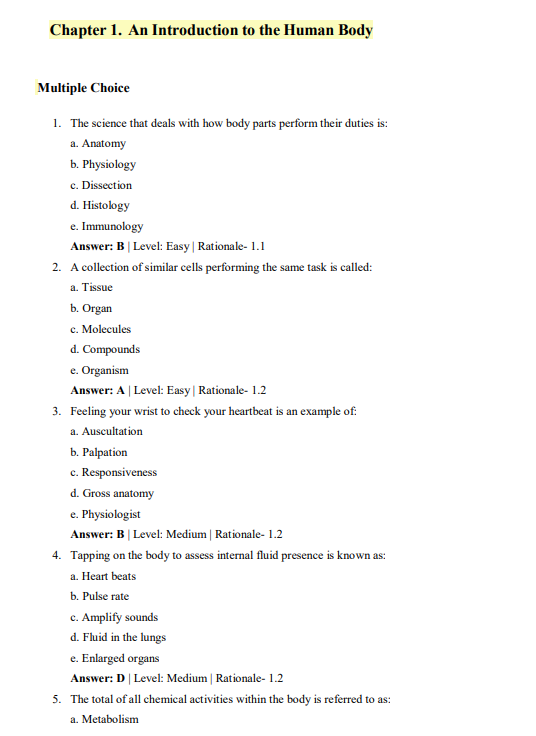
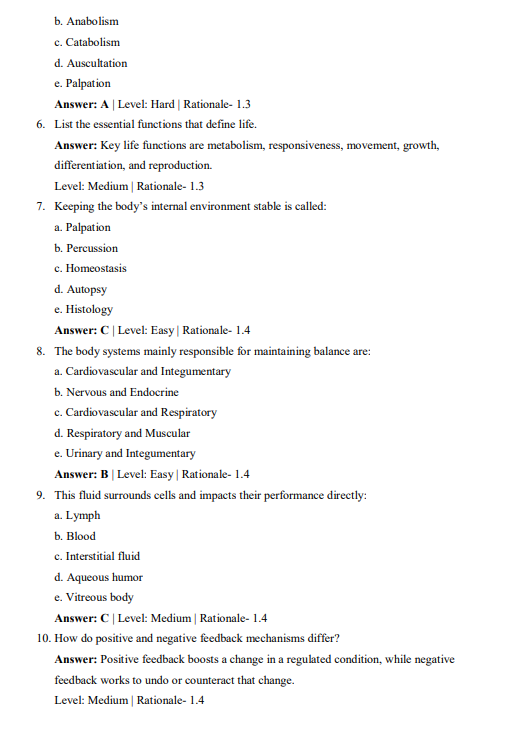
Some textbooks teach anatomy and physiology. Tortora and Derrickson define it.
For generations of students across nursing, medicine, physical therapy, dentistry, and every allied health discipline imaginable, Principles of Anatomy and Physiology has been the foundational science reference — the textbook that sets the standard for depth, accuracy, clinical relevance, and scientific rigor in human anatomy and physiology education. It is not the easiest A&P textbook. It is the most thorough. And that thoroughness is precisely why it produces graduates who understand the human body at a level that carries them through every subsequent course, every clinical rotation, and every patient interaction for an entire healthcare career.
The 16th Edition by Tortora and Derrickson is the most current, most comprehensively updated, and most clinically integrated iteration in this textbook’s distinguished history — reflecting the latest advances in anatomical science, physiological research, and clinical application in one authoritative resource.
This comprehensive test bank is built for the 16th Edition of Principles of Anatomy and Physiology by Gerard J. Tortora and Bryan H. Derrickson. It helps you master every chapter with the focused, mechanistically rigorous, clinically applied practice that Tortora and Derrickson’s level of depth demands — and that healthcare education rewards.
Whether you are completing a pre-health science prerequisite, preparing for a course exam, building toward the NCLEX, or laying the scientific foundation for any healthcare career, this resource delivers the systematic, clinically connected, body-system-by-body-system practice that the world’s most authoritative anatomy and physiology textbook demands.
What’s Inside?
- Hundreds of practice questions covering every chapter
- Multiple-choice, true/false, matching, and clinical application questions
- Complete answer keys with thorough, mechanistically grounded rationales
- Questions covering anatomical structures, physiological mechanisms, and clinical disease applications
- Content fully aligned with the 16th Edition’s updated chapter organization and expanded clinical content
Who Is This Test Bank For?
This resource is perfect for:
- Pre-nursing students completing anatomy and physiology prerequisites using Tortora and Derrickson
- Pre-medical, pre-dental, and pre-physical therapy students in rigorous A&P courses
- Undergraduate nursing students reviewing foundational anatomy and physiology concepts
- Allied health students in programs requiring comprehensive A&P competency
- Science instructors building course exams and unit assessments for the 16th Edition
- Healthcare professionals seeking a comprehensive foundational science refresher
- Graduate students in health sciences reviewing anatomical and physiological foundations
Topics Covered Include:
- Introduction to the human body — organization, homeostasis, and anatomical terminology
- The chemical level of organization — atoms, molecules, and biochemistry
- The cellular level of organization — cell structure, membrane transport, and cell division
- The tissue level of organization — epithelial, connective, muscular, and nervous tissues
- The integumentary system — skin structure, functions, and clinical conditions
- The skeletal system — bone tissue, bone structure, and the axial skeleton
- The appendicular skeleton — upper and lower limb bones and girdles
- Joints — classification, structure, and movements
- Muscle tissue — structure, contraction mechanism, and muscle fiber types
- The muscular system — major muscle groups, actions, and origins and insertions
- The nervous system — organization, neurons, and synaptic transmission
- The central nervous system — the brain and spinal cord
- The peripheral nervous system — cranial and spinal nerves and sensory receptors
- The autonomic nervous system — sympathetic and parasympathetic divisions
- The special senses — vision, hearing, equilibrium, taste, and smell
- The endocrine system — hormones, glands, and feedback regulation
- The cardiovascular system — blood composition, the heart, and blood vessels
- The lymphatic system and immunity — innate and adaptive immune responses
- The respiratory system — pulmonary anatomy, ventilation mechanics, and gas exchange
- The digestive system — organs, digestive processes, and nutrient absorption
- The urinary system — kidney anatomy, nephron function, and urine formation
- The reproductive systems — male and female anatomy, gametogenesis, and hormonal regulation
- Development and inheritance — fertilization, embryology, and genetic principles
- Fluid, electrolyte, and acid-base homeostasis
Why This Test Bank Delivers Results
Tortora and Derrickson’s Principles of Anatomy and Physiology is not designed to be a quick read. It is designed to be a complete education in the structure and function of the human body — the kind of education that produces healthcare professionals who can think mechanistically about disease, injury, and recovery because they understand normal at a molecular, cellular, and systems level simultaneously.
The 16th Edition raises that standard further — with updated cellular and molecular biology content, expanded clinical connections throughout every chapter, refreshed disease examples incorporating the most current biomedical understanding, enhanced coverage of physiological mechanisms at the molecular level, and the most current anatomical terminology in accordance with Terminologia Anatomica standards.
This test bank is built to develop the mechanistic, systems-integrated understanding that Tortora and Derrickson demand.
Every question requires you to apply anatomical knowledge and physiological reasoning — not just recall isolated facts. You will trace the path of a nerve impulse from receptor to effector and explain what clinical deficit results when any component of that pathway is damaged. You will follow a molecule of glucose from ingestion through digestion, absorption, hepatic processing, and cellular metabolism, and explain what disease states disrupt each step. You will analyze a set of blood gas values and trace them back to the specific physiological derangement responsible, applying your knowledge of the respiratory and renal contributions to acid-base homeostasis.
This is the level of anatomical and physiological mastery that distinguishes healthcare professionals who truly understand their patients from those who merely recognize clinical patterns without understanding the mechanisms beneath them. And this test bank builds it — chapter by chapter, system by system, mechanism by mechanism.
Detailed rationales explain the anatomical structures, physiological mechanisms, molecular biology, and clinical significance behind every correct answer — reflecting the same scientific depth and clinical integration that Tortora and Derrickson establish throughout the 16th Edition. Questions are organized chapter by chapter for structured, systematic study. Build the foundational science understanding that Tortora and Derrickson demand — and that every healthcare career is built upon.
Sample Questions
Question 1
A student is studying the process of action potential propagation in a myelinated neuron. A patient is diagnosed with multiple sclerosis, in which the myelin sheaths surrounding axons in the central nervous system are progressively destroyed by an autoimmune process. Which specific mechanism of action potential propagation is disrupted by demyelination, and what clinical consequence does this produce?
- A) Demyelination eliminates continuous conduction along the entire axon surface, but this is rapidly compensated by regeneration of new Schwann cells in the CNS
- B) Demyelination disrupts saltatory conduction — the jumping of action potentials between nodes of Ranvier — slowing or blocking nerve impulse transmission and producing the progressive neurological deficits characteristic of MS including weakness, sensory disturbances, and visual impairment
- C) Demyelination increases the speed of nerve impulse transmission by eliminating the electrical resistance of the myelin sheath, producing hypersensitivity rather than neurological deficit
- D) Demyelination affects only motor neurons in the peripheral nervous system, leaving sensory and autonomic function completely intact
Correct Answer: B
Rationale: Myelinated axons conduct nerve impulses through saltatory conduction — a mechanism in which the action potential jumps from one node of Ranvier to the next, skipping the myelinated internodal segments. This is possible because the myelin sheath electrically insulates the internodal membrane, concentrating voltage-gated sodium channels at the nodes of Ranvier where depolarization occurs. Saltatory conduction is dramatically faster than continuous conduction — which occurs along the entire surface of unmyelinated axons — because the action potential regenerates only at widely spaced nodes rather than continuously along the entire axon length. In multiple sclerosis, the immune system attacks and destroys the myelin sheaths produced by oligodendrocytes in the CNS. As myelin is lost, the efficient saltatory conduction mechanism is disrupted — action potentials can no longer jump efficiently between nodes, slowing conduction velocity and eventually blocking transmission entirely in severely demyelinated segments. This explains the characteristic clinical manifestations of MS — the specific neurological deficits depend on which CNS tracts are demyelinated, producing variable combinations of motor weakness, spasticity, sensory disturbances, visual impairment from optic nerve involvement, cerebellar ataxia, and autonomic dysfunction. Unlike the peripheral nervous system, the CNS has very limited remyelination capacity — oligodendrocytes have minimal regenerative ability, explaining the progressive nature of neurological deficits in MS. Demyelination does not increase conduction speed — it dramatically slows or blocks it.
Question 2
A physiology student is studying cardiac physiology and the Frank-Starling mechanism. A patient develops dilated cardiomyopathy with a left ventricular end-diastolic volume of 240 mL compared to a normal value of approximately 120 mL. Which physiological explanation most accurately describes why this extreme ventricular dilation ultimately reduces stroke volume rather than increasing it?
- A) Extreme ventricular dilation increases preload indefinitely, continuously improving stroke volume through unlimited Frank-Starling enhancement
- B) When sarcomere length is stretched beyond the optimal range — approximately 2.2 micrometers — the overlap between actin and myosin filaments decreases, reducing the number of cross-bridge formations possible and diminishing contractile force despite increased preload
- C) Ventricular dilation reduces afterload, making it easier for the ventricle to eject blood and improving stroke volume in proportion to the degree of dilation
- D) Extreme dilation increases the metabolic demand of the myocardium beyond what coronary blood flow can supply, causing ischemia as the primary mechanism of reduced stroke volume
Correct Answer: B
Rationale: The Frank-Starling mechanism describes the intrinsic ability of cardiac muscle to increase contractile force in response to increased ventricular filling — up to a physiological optimum. This relationship is rooted in sarcomere length-tension dynamics. At normal end-diastolic volumes, increased filling stretches myocardial sarcomeres toward their optimal length of approximately 2.0–2.2 micrometers, where the overlap between thin (actin) and thick (myosin) filaments is maximal, maximizing the number of cross-bridge interactions possible and producing maximum contractile force per sarcomere. This is why the normal heart increases its stroke volume proportionally in response to increased venous return. However, in pathological ventricular dilation — as occurs in dilated cardiomyopathy — sarcomeres are stretched beyond their optimal length. When sarcomere length exceeds approximately 2.2–2.4 micrometers, the degree of actin-myosin filament overlap actually decreases as the thin filaments are pulled beyond the range of thick filament cross-bridge attachment. Fewer cross-bridge interactions are possible, contractile force per sarcomere declines despite the increased preload, and stroke volume falls. This represents the descending limb of the Frank-Starling curve — the pathological range where additional preload worsens rather than improves cardiac output. This mechanism is fundamental to understanding why severe ventricular dilation in heart failure produces progressive systolic dysfunction rather than compensatory improvement.
Question 3
A student is studying renal physiology and the countercurrent multiplier mechanism. A patient with syndrome of inappropriate antidiuretic hormone has a serum sodium of 118 mEq/L and is producing highly concentrated urine with an osmolality of 680 mOsm/kg despite severely low serum osmolality. Which physiological mechanism explains why this patient continues to produce concentrated urine despite low serum osmolality?
- A) The kidney’s countercurrent multiplier has failed in this patient, and the concentrated urine results from reduced urine production rather than active concentration
- B) Autonomous ADH secretion from the tumor maintains persistently high levels of ADH that continuously stimulate aquaporin-2 insertion into the collecting duct principal cells, maximizing water reabsorption and urine concentration independent of the normally suppressive effect of low serum osmolality
- C) The patient’s kidneys are responding normally to low plasma osmolality by concentrating urine to conserve sodium
- D) The low serum sodium is directly stimulating aldosterone secretion, which drives collecting duct water reabsorption independently of ADH
Correct Answer: B
Rationale: This question requires integration of the normal physiology of ADH regulation with the pathophysiology of SIADH. Under normal physiological conditions, ADH secretion from the posterior pituitary is tightly regulated by osmoreceptors in the hypothalamus — when serum osmolality falls below approximately 280 mOsm/kg, osmoreceptor stimulation decreases, ADH secretion is suppressed, and the collecting duct becomes water-impermeable, allowing dilute urine to be excreted to correct the low osmolality. In SIADH, this normal regulatory mechanism is bypassed — ADH is secreted autonomously by a tumor (most commonly small cell lung carcinoma), by an abnormally stimulated posterior pituitary, or through other ectopic mechanisms that are completely independent of serum osmolality. Regardless of how low the serum osmolality falls, ADH levels remain inappropriately elevated. This persistent ADH stimulates aquaporin-2 water channels to remain continuously inserted in the apical membrane of collecting duct principal cells, maintaining maximum water permeability and concentrating capacity throughout the entire collecting duct. Water is thus continuously reabsorbed from the tubular fluid into the hypertonic medullary interstitium regardless of the dilutional hyponatremia occurring systemically — producing the paradoxical finding of concentrated urine despite low serum osmolality and sodium. Aldosterone regulates sodium reabsorption in the distal tubule and collecting duct through mineralocorticoid receptors — it does not directly drive collecting duct water reabsorption independently of ADH.
Question 4
A student is studying the physiology of gas exchange and oxygen transport in the blood. A patient with severe pneumonia develops arterial hypoxemia with a PaO₂ of 52 mmHg. Which characteristic of the oxygen-hemoglobin dissociation curve explains why this patient’s oxygen saturation has fallen dramatically despite a relatively modest decrease in PaO₂ from the normal value of 95 mmHg?
- A) The oxygen-hemoglobin dissociation curve is linear throughout its range, meaning each unit decrease in PaO₂ produces an equal proportional decrease in oxygen saturation
- B) The sigmoid shape of the oxygen-hemoglobin dissociation curve means that once PaO₂ falls below approximately 60 mmHg — onto the steep portion of the curve — small further decreases in PaO₂ produce large decreases in oxygen saturation and oxygen content
- C) The oxygen-hemoglobin dissociation curve shifts to the left in hypoxemia, dramatically increasing hemoglobin’s affinity for oxygen and preventing oxygen unloading at the tissues
- D) The curve becomes flat at PaO₂ values below 60 mmHg, meaning oxygen saturation remains stable despite falling PaO₂ in the hypoxic range
Correct Answer: B
Rationale: The oxygen-hemoglobin dissociation curve has a characteristic sigmoid (S-shaped) morphology that has profound physiological significance for both oxygen loading in the lungs and oxygen unloading at the tissues. The upper flat portion of the curve — from approximately 60–100 mmHg PaO₂ — represents a range where hemoglobin maintains high oxygen saturation (above approximately 90%) despite significant variation in PaO₂. This flat portion provides an important safety margin in the lungs — even if alveolar PaO₂ decreases moderately, hemoglobin remains nearly fully saturated and oxygen-carrying capacity is preserved. However, below a PaO₂ of approximately 60 mmHg — the inflection point — the curve enters its steep portion, where the relationship between PaO₂ and oxygen saturation becomes dramatically less favorable. On the steep portion, small decreases in PaO₂ produce large decreases in hemoglobin oxygen saturation and therefore large decreases in arterial oxygen content. This patient’s PaO₂ of 52 mmHg places them squarely on the steep portion of the curve, where each further small decrease in PaO₂ produces a disproportionately large reduction in oxygen saturation — explaining the dramatic clinical hypoxemia. This is also why the clinical threshold of 90% saturation — corresponding to approximately 60 mmHg PaO₂ — is considered the critical intervention point in clinical practice. The curve is not linear, does not become flat at low PaO₂ values, and left-shifting increases oxygen affinity but is not the primary mechanism described here.
Question 5
A nursing student is reviewing the physiology of the female reproductive cycle. A patient presents with secondary amenorrhea. Laboratory results show markedly elevated FSH and LH with very low estrogen and progesterone levels. Which condition does this hormonal pattern most likely indicate, and what is the physiological explanation for the elevated gonadotropins?
- A) Pregnancy — elevated FSH and LH suppress ovarian function while hCG maintains the corpus luteum
- B) Primary ovarian insufficiency — the ovaries have lost functional follicles and can no longer produce adequate estrogen and progesterone; the absence of negative feedback allows FSH and LH to rise dramatically in an attempt to stimulate a non-responsive ovary
- C) Hypothalamic amenorrhea — low GnRH production reduces FSH and LH, which secondarily reduces estrogen levels through inadequate gonadotropin stimulation
- D) Polycystic ovary syndrome — excess androgen production suppresses FSH while elevating LH, creating the hormonal pattern described
Correct Answer: B
Rationale: This hormonal pattern — markedly elevated FSH and LH with very low estrogen and progesterone — is the diagnostic hormonal signature of primary ovarian insufficiency, also called premature ovarian failure when occurring before age 40. Understanding this pattern requires applying the negative feedback principles of the hypothalamic-pituitary-ovarian axis. Under normal conditions, rising estrogen produced by developing ovarian follicles exerts negative feedback on the hypothalamus (reducing GnRH pulsatility) and the anterior pituitary (reducing FSH and LH secretion), maintaining the balance of the menstrual cycle. In primary ovarian insufficiency, the ovaries have lost their functional follicular reserve — either through autoimmune destruction, genetic factors, chemotherapy, radiation, or idiopathic causes — and can no longer produce adequate estrogen in response to gonadotropin stimulation. The absence of adequate estrogen removes the negative feedback signal from the hypothalamic-pituitary axis. Without this feedback suppression, the hypothalamus increases GnRH secretion and the anterior pituitary dramatically increases FSH and LH output in a futile attempt to stimulate ovarian follicular development that cannot occur. The result is the hallmark laboratory pattern of very high FSH and LH with very low estrogen. In pregnancy, hCG maintains the corpus luteum and FSH and LH are suppressed, not elevated. Hypothalamic amenorrhea features low FSH and LH — the opposite of this pattern. PCOS features an elevated LH-to-FSH ratio — not the dramatically elevated both gonadotropins with low estrogen seen here.
Frequently Asked Questions (FAQs)
What edition does this test bank cover?
This test bank is written specifically for the 16th Edition of Principles of Anatomy and Physiology by Gerard J. Tortora and Bryan H. Derrickson. All questions are fully aligned with the current edition’s chapter organization, updated anatomical and physiological content, expanded clinical connections, and current Terminologia Anatomica standards.
How are the questions organized?
Questions are arranged chapter by chapter — body system by body system — allowing you to study systematically from the chemical level of organization through development and inheritance, or focus specifically on the systems where your examination performance needs the most improvement.
Is this test bank useful for nursing school prerequisite preparation?
Absolutely. Principles of Anatomy and Physiology by Tortora and Derrickson is one of the most commonly required prerequisite A&P textbooks for nursing, medical, and allied health programs. This test bank is directly aligned with the 16th Edition and provides the level of scientific depth and clinical application that rigorous healthcare prerequisite courses require.
How does this test bank differ from test banks for less rigorous A&P textbooks?
This test bank is built to match the scientific depth and mechanistic rigor of Tortora and Derrickson’s 16th Edition — one of the most comprehensive A&P textbooks published. Questions go beyond anatomical memorization to require mechanistic physiological reasoning, molecular biology application, and clinical disease connection — reflecting the depth of understanding that Tortora and Derrickson demand and that serious healthcare education requires.
Is this test bank appropriate for pre-medical and pre-physical therapy students?
Yes. Principles of Anatomy and Physiology is widely used across pre-health science disciplines — not just pre-nursing. Pre-medical, pre-dental, pre-pharmacy, pre-physical therapy, and pre-physician assistant students will all find this test bank directly relevant to their rigorous A&P coursework using Tortora and Derrickson.
How quickly can I access the test bank after purchase?
Immediately. As soon as your purchase is complete, you receive instant digital access with no waiting period. Study on your own schedule, at your own pace, from any device.
Are the rationales written at the scientific depth that Tortora and Derrickson demand?
Yes. Every rationale explains the anatomical structure, physiological mechanism, molecular biology, and clinical significance behind the correct answer at the level of depth the 16th Edition establishes — not simplified for accessibility at the expense of scientific accuracy. These rationales build the mechanistic understanding that distinguishes students who truly master A&P from students who merely memorize it.
Can instructors use this test bank for course assessments?
Absolutely. The chapter-by-chapter organization, mechanistic question construction, clinical application emphasis, and scientific rigor make this an outstanding resource for faculty building unit exams, quizzes, and comprehensive course assessments for anatomy and physiology courses using the 16th Edition of Tortora and Derrickson across nursing, pre-medical, and allied health programs.
Kevin May –
A solid test bank
Janny Cummings –
This is an excellent study material
Norah Helen –
Very good
Dorcas M. –
I like it a lot
Kamara Reid –
100% genuine
Lisa Horton –
Very very helpful
Carol Kay –
A well organized resource for quick revision
Maryanne –
Strengthened my exam confidence
Lucille Maria –
Great variety of practice questions
Melania Angel –
Helped reinforce concepts from class
Lucas Gabriel –
Excellent resource for practicing before A&P exams.