AGING IS NOT A DISEASE. BUT CARING FOR OLDER ADULTS IS A SPECIALTY.
And most nursing students do not realize that until they are standing at the bedside of a 78-year-old with five chronic conditions, twelve medications, and a family in the hallway asking questions the patient can no longer answer for themselves.
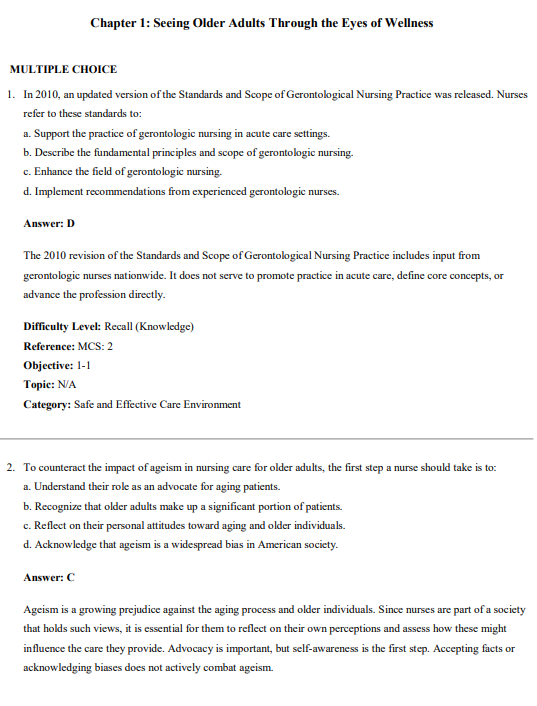
Gerontological nursing is the specialty that refuses to be simple. It looks deceptively familiar — many of the diseases are ones you have already studied. Hypertension. Diabetes. Heart failure. Osteoarthritis. Depression. But in an older adult, every one of those conditions presents differently, responds to treatment differently, carries different risks, and demands a fundamentally different nursing approach.
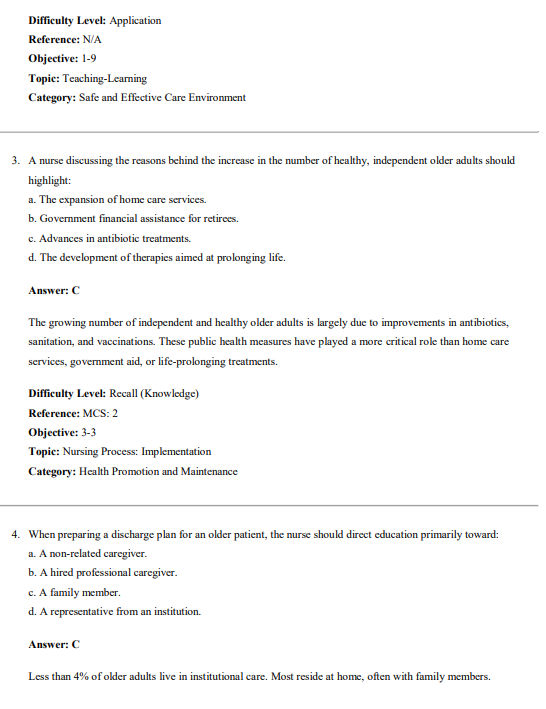
The nurse who walks into a geriatric unit with an adult medicine mindset will miss things. They will misread normal age-related changes as pathology. They will treat atypical presentations of serious illness as minor complaints. They will prescribe — or accept prescriptions for — medications that are dangerous in older adults because they have not learned why. They will underassess pain, overestimate cognitive impairment, and underestimate functional reserve.
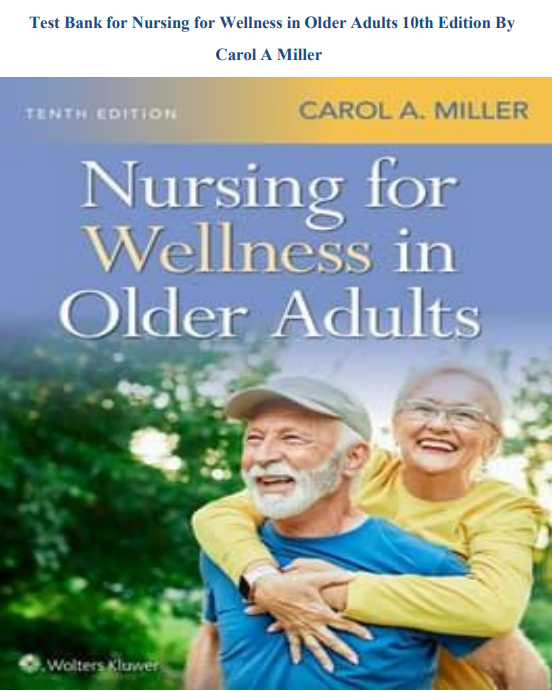
Carol A. Miller’s Nursing for Wellness in Older Adults, 10th Edition is built to prevent exactly that. It is one of the most respected gerontological nursing textbooks available — grounded in the wellness framework, evidence-based, and clinically precise across every dimension of older adult care.
This test bank was built to help you master it — and to help you think like a gerontological nurse from the first exam to the last clinical rotation.
WHY GERONTOLOGICAL NURSING EXAMS CATCH STUDENTS OFF GUARD
Let us be specific about this because the patterns are predictable — and preventable.
The atypical presentation trap. In younger adults, pneumonia presents with fever, productive cough, and chest pain. In an older adult it may present with confusion, falls, and a decline in functional status — no fever, no cough, no obvious respiratory complaint. Students who have not internalized atypical presentation principles will consistently miss these questions.
The normal versus pathological aging trap. Some findings that would be alarming in a 40-year-old are completely expected in an 80-year-old. Some findings that students dismiss as “just aging” are actually early signs of serious disease. The ability to distinguish between the two is the foundation of gerontological assessment — and it is tested heavily.
The polypharmacy and Beers Criteria trap. Older adults take more medications than any other population. Many commonly prescribed drugs are inappropriate or dangerous in older adults due to altered pharmacokinetics, reduced organ reserve, and drug-drug interactions. Students who cannot identify high-risk medications or apply age-appropriate pharmacology principles will miss a significant category of exam questions.
The functional and cognitive assessment trap. Gerontological nursing exams test nursing assessment tools that many students have never seen before — the MMSE, MoCA, GDS, Katz Index, Barthel Index, SPICES, and others. These are not optional knowledge. They are core clinical tools in this specialty.
The dignity, autonomy, and ageism trap. Gerontological nursing is as much an ethical and humanistic specialty as it is a clinical one. Questions about patient autonomy, advance directives, ageism in healthcare, and the nurse’s role in promoting dignity and quality of life appear consistently — and students who have not engaged with the philosophical framework of wellness-based geriatric care answer them incorrectly.
This test bank is built to address every one of these traps systematically. Work through it and you will not be surprised on exam day.
📦 EVERYTHING INSIDE YOUR PURCHASE
Here is exactly what you receive:
- A comprehensive bank of multiple-choice questions covering every unit and chapter of the 10th edition
- Questions written to reflect NCLEX-RN format with gerontological clinical scenarios throughout
- Every question paired with a clearly identified correct answer
- Detailed rationales explaining the physiological, pharmacological, functional, and ethical reasoning behind each answer — including analysis of why wrong answers are wrong
- Questions spanning normal aging, functional assessment, pharmacology in older adults, acute and chronic illness management, cognitive health, end-of-life care, and gerontological nursing across care settings
- Both PDF and Word formats included for flexible, multi-device studying
- Content built exclusively around the 10th edition — fully current, evidence-based, and exam-aligned
📚 COMPLETE CONTENT COVERAGE
Every unit. Every chapter. Every testable concept in the 10th edition.
Unit 1 — Foundations of Gerontological Nursing
- The wellness framework in gerontological nursing — reframing aging as opportunity
- Historical evolution of gerontological nursing as a specialty
- Theoretical frameworks of aging — biological, psychological, sociological
- Biological theories — wear and tear, free radical, immunological, genetic
- Psychosocial theories — disengagement, activity, continuity, gerotranscendence
- Ageism — definition, forms, implicit bias, and impact on healthcare
- The nurse’s role in combating ageism in clinical settings
- Demographics of aging — global and domestic trends
- Diversity in the older adult population — cultural, racial, and socioeconomic considerations
- Standards of gerontological nursing practice
- Evidence-based gerontological nursing — applying research to practice
Unit 2 — Physiological Changes of Aging
- Age-related changes versus pathological changes — the critical distinction
- Integumentary system — skin changes, wound healing implications, pressure injury risk
- Musculoskeletal system — bone density, muscle mass, joint changes, fall risk
- Cardiovascular system — cardiac output changes, baroreceptor sensitivity, orthostatic hypotension
- Respiratory system — reduced lung elasticity, decreased cough reflex, infection risk
- Neurological system — processing speed, sleep architecture, sensory changes
- Sensory changes — vision, hearing, taste, smell, touch, and their clinical implications
- Gastrointestinal system — motility, absorption, constipation risk
- Genitourinary system — bladder capacity, renal function, incontinence risk
- Endocrine system — glucose regulation changes, thyroid function, adrenal response
- Immune system — immunosenescence and infection vulnerability
- Reproductive system — menopause, andropause, and sexual health in older adults
- Hematological system — anemia risk and age-related changes
- Thermoregulation — hypothermia and hyperthermia risk in older adults
Unit 3 — Promoting Wellness in Older Adults
- The wellness model applied to gerontological nursing care
- Health promotion across the domains — physical, cognitive, psychological, social, spiritual
- Preventive care for older adults — recommended screenings, immunizations, and health maintenance
- Nutrition in older adults — requirements, risk factors for malnutrition, assessment tools
- Hydration — dehydration risk, assessment, and prevention strategies
- Physical activity and exercise — benefits, evidence-based recommendations, and safety considerations
- Sleep and rest — age-related sleep changes, sleep disorders, and non-pharmacological management
- Sexual health in older adults — assessment, counseling, and addressing provider discomfort
- Spirituality and meaning — the nurse’s role in supporting spiritual wellness
- Social connectedness and loneliness — health consequences and nursing interventions
- Financial security and health — socioeconomic determinants in older adult care
- Oral health — dental care, dry mouth, and nutritional implications
Unit 4 — Gerontological Nursing Assessment
- The comprehensive geriatric assessment — components and clinical purpose
- Functional assessment — activities of daily living and instrumental activities of daily living
- Katz Index of Independence in Activities of Daily Living
- Barthel Index — scoring and clinical application
- Lawton Instrumental Activities of Daily Living Scale
- Cognitive assessment — differentiating normal aging from mild cognitive impairment and dementia
- Mini-Mental State Examination — administration, scoring, and interpretation
- Montreal Cognitive Assessment — administration and clinical use
- Clock Drawing Test and other brief cognitive screening tools
- Depression screening — Geriatric Depression Scale, PHQ-9 in older adults
- Delirium assessment — Confusion Assessment Method (CAM)
- Pain assessment in older adults — challenges, tools, and strategies for cognitively impaired patients
- PAINAD scale for non-verbal patients
- Nutritional assessment — Mini Nutritional Assessment and MUST tool
- Fall risk assessment — Morse Fall Scale, Hendrich II, STRATIFY
- Pressure injury risk — Braden Scale application in older adults
- Social and environmental assessment — living situation, caregiver support, and safety
- Spiritual and psychological assessment
- SPICES framework — a systematic approach to common geriatric syndromes
Unit 5 — Pharmacology in Older Adults
- Age-related pharmacokinetic changes — absorption, distribution, metabolism, excretion
- Age-related pharmacodynamic changes — receptor sensitivity and drug response
- Polypharmacy — definition, prevalence, causes, and clinical consequences
- The Beers Criteria — categories, rationale, and nursing application
- STOPP and START criteria — practical application in clinical settings
- High-risk medication classes in older adults — benzodiazepines, anticholinergics, NSAIDs, opioids, antipsychotics, digoxin
- Medication reconciliation — the nurse’s role in transitions of care
- Medication adherence in older adults — barriers and nursing strategies
- Herbal supplements and over-the-counter medications — interactions and risks
- Prescribing cascades — recognition and prevention
- Medication administration considerations for older adults — swallowing, vision, cognition
- Patient and caregiver education for medication management
Unit 6 — Gerontological Syndromes
- The concept of geriatric syndromes — multifactorial causes and complex presentations
- Delirium — causes, recognition, prevention, and nursing management
- Differentiating delirium from dementia and depression — the three Ds
- Falls — risk factors, prevention bundles, post-fall assessment, and environmental modification
- Urinary incontinence — types, assessment, and nursing management strategies
- Constipation — causes, prevention, and pharmacological and non-pharmacological interventions
- Malnutrition and unintentional weight loss — assessment and intervention
- Pressure injuries — staging, prevention, and evidence-based wound care
- Frailty — assessment, clinical implications, and nursing approach
- Sleep disorders in older adults — insomnia, sleep apnea, restless legs syndrome
- Dizziness and syncope — assessment and fall prevention implications
- Iatrogenic complications — hospital-acquired conditions in older adults
- Functional decline during hospitalization — prevention and nursing strategies
Unit 7 — Cognitive Health and Illness
- Normal cognitive aging — what changes and what does not
- Mild cognitive impairment — definition, progression risk, and nursing approach
- Alzheimer’s disease — pathophysiology, stages, assessment, and nursing care across the disease trajectory
- Vascular dementia — risk factors, presentation, and nursing management
- Lewy body dementia — distinctive features and clinical implications
- Frontotemporal dementia — behavioral and language presentations
- Nursing care of the person with dementia — communication strategies, behavioral approaches, safety
- Behavioral and psychological symptoms of dementia — assessment and non-pharmacological management
- Antipsychotic use in dementia — risks, the black box warning, and nursing advocacy
- Person-centered dementia care — maintaining dignity and personhood
- Family caregiver support — burden, education, and resources
- Driving and dementia — assessment and reporting considerations
- Legal and ethical issues in dementia care — capacity, consent, power of attorney, guardianship
- Environmental modifications for dementia safety
Unit 8 — Mental Health and Psychosocial Wellness
- Depression in older adults — prevalence, atypical presentation, assessment, and treatment
- Distinguishing depression from dementia and from normal grief
- Suicide risk in older adults — the silent epidemic — assessment and nursing response
- Anxiety disorders in older adults — presentation, assessment, and management
- Alcohol and substance use in older adults — underrecognized and undertreated
- CAGE and AUDIT-C screening in older adult populations
- Grief and bereavement — types of loss in aging and nursing support
- Loneliness and social isolation — health consequences and nursing intervention
- Resilience and positive aging — promoting psychological wellness
- Elder mistreatment — physical, emotional, financial, sexual abuse, and neglect
- Mandatory reporting obligations for elder mistreatment
- Self-neglect — assessment and ethical considerations
Unit 9 — Chronic Conditions in Older Adults
- Cardiovascular conditions — hypertension, heart failure, coronary artery disease, atrial fibrillation in older adults
- Stroke and cerebrovascular disease — prevention, acute care, rehabilitation, and nursing care
- Respiratory conditions — COPD, asthma, and pneumonia in older adults
- Diabetes mellitus — glycemic targets, hypoglycemia risk, and individualized management in older adults
- Musculoskeletal conditions — osteoarthritis, rheumatoid arthritis, osteoporosis, and fracture prevention
- Neurological conditions — Parkinson’s disease, peripheral neuropathy, and nursing care
- Cancer in older adults — screening considerations and treatment tolerance
- Thyroid disorders — hypothyroidism and hyperthyroidism in the older adult
- Chronic kidney disease — medication implications and monitoring
- Sensory impairments — hearing loss, vision loss, and adaptive strategies
- Oral conditions — periodontal disease, xerostomia, and nutrition impact
- Skin conditions — pruritus, xerosis, seborrheic dermatitis, and skin cancer
- Multimorbidity — the clinical challenge of managing multiple coexisting conditions
- Care coordination and transitional care for older adults with chronic illness
Unit 10 — Acute Illness in Older Adults
- Atypical presentations of acute illness — the cornerstone of gerontological assessment
- Infection in older adults — pneumonia, urinary tract infections, sepsis — presentation and management
- Acute coronary syndrome — atypical MI presentation in older adults
- Delirium superimposed on dementia — assessment and management
- Acute kidney injury — causes, recognition, and nursing care
- Acute pain management — challenges and evidence-based approaches in older adults
- Falls and fall-related injuries — hip fracture, head injury — nursing care
- Surgical care of the older adult — preoperative assessment, intraoperative considerations, postoperative complications
- Hospital-acquired conditions — catheter-associated UTI, CLABSI, VAP, pressure injuries — prevention
- Medication errors in hospitalized older adults — high-risk situations and nursing safeguards
- Transitions of care — discharge planning, care coordination, and reducing readmission risk
Unit 11 — Palliative Care and End-of-Life Nursing
- Palliative care philosophy — goals, principles, and integration across the illness trajectory
- Hospice care — eligibility, services, nursing role, and family support
- Differentiating palliative care from hospice care
- Symptom management at end of life — pain, dyspnea, nausea, anxiety, secretions
- Comfort-focused medication use — opioids, anxiolytics, and anticholinergics at end of life
- The dying process — physical signs and nursing response
- Advance care planning — advance directives, POLST, healthcare proxy
- Do-not-resuscitate orders — nursing responsibilities and ethical considerations
- Artificial nutrition and hydration at end of life — ethical framework and nursing role
- Cultural and spiritual considerations in end-of-life care
- Family presence and support at the time of death
- Post-mortem care and bereavement support
- Ethical issues in end-of-life care — futility, withdrawing treatment, and conscientious objection
- The nurse’s experience of patient death — grief, resilience, and self-care
Unit 12 — Gerontological Nursing Across Care Settings
- Acute care of older adults — ACE units, hospital elder life program (HELP)
- Post-acute and transitional care — skilled nursing facilities, rehabilitation settings
- Long-term care — nursing home care, quality indicators, and regulatory framework
- Assisted living — nursing role, regulations, and care considerations
- Community-based care — home health, adult day programs, PACE
- Rural gerontological nursing — access barriers and nursing strategies
- Telehealth and technology in older adult care
- The NICHE program and other gerontological nursing excellence frameworks
- Interprofessional collaboration in geriatric care — the role of the nurse on the geriatric team
- Care of older adults from diverse populations — LGBTQ+ elders, racial and ethnic minorities, homeless older adults
- Nursing home culture change — person-directed care models
- Quality and safety in gerontological nursing settings
🎯 WHO THIS TEST BANK IS FOR
Nursing students enrolled in a gerontological nursing course who want comprehensive, chapter-by-chapter exam practice built specifically around Miller’s 10th edition.
Students preparing for unit exams, midterms, and final exams covering normal aging, geriatric syndromes, pharmacology in older adults, dementia care, or end-of-life content.
Students using Miller’s 10th Edition as their primary text who want practice questions aligned to this specific edition — not a generic geriatrics bank that does not match their content.
NCLEX-RN candidates who recognize that health promotion, reduction of risk potential, physiological adaptation, and psychosocial integrity in older adult populations are heavily tested on the licensing exam.
Nurses working in geriatric, long-term care, home health, or acute care settings who want to deepen their clinical knowledge and strengthen their gerontological nursing foundation.
Nursing faculty teaching gerontological nursing who need a well-organized, evidence-based question bank for building quizzes, unit exams, and comprehensive course assessments.
Nurses preparing for the Gerontological Nursing Certification (RN-BC) who want to use clinical scenario questions as part of their certification preparation.
💡 THE WELLNESS FRAMEWORK — WHY IT CHANGES EVERYTHING
Most students enter a gerontological nursing course expecting a disease-focused curriculum. They expect to learn about the conditions older adults get and how to treat them.
What Miller’s textbook actually teaches — and what this test bank reinforces — is something more nuanced and more clinically powerful than that.
The wellness framework reframes every clinical encounter with an older adult around a central question: what does this person need to live as well as possible, for as long as possible, in a way that honors who they are?
That question changes how you assess. Instead of cataloguing deficits, you identify strengths and resources. Instead of asking only what is wrong, you ask what is still working, what does this person value, what does independence look like for them, and what barriers are standing between them and their optimal function.
It changes how you prioritize interventions. The goal is not always to cure. Sometimes it is to maintain. Sometimes it is to slow decline. Sometimes it is to ensure that the last chapter of a person’s life is lived with dignity, comfort, and connection.
And it changes how you answer exam questions. Gerontological nursing exams written in the wellness framework ask you to consider functional capacity, quality of life, patient preferences, and holistic wellness alongside traditional clinical parameters. Students who approach these questions with a purely biomedical lens consistently choose the wrong answer.
Work through this test bank with the wellness framework in your mind. Ask not only what is wrong and what to do about it — but what this person needs to live well. That shift in thinking is what distinguishes a good gerontological nurse from a merely competent one.
📝 10 SAMPLE QUESTIONS
These are real examples from the full test bank. Work through each one carefully.
Question 1
A nurse is assessing an 82-year-old patient admitted from a nursing facility with a three-day history of confusion and behavioral changes. The patient has no fever, no respiratory complaints, and vital signs are within normal limits. The family reports the patient was “perfectly fine” one week ago. What is the nurse’s priority concern?
- A. New onset dementia consistent with the patient’s age and cognitive decline
- B. Normal aging-related cognitive changes that do not require further evaluation
- C. Delirium secondary to an underlying acute condition requiring immediate investigation
- D. Depression presenting as pseudodementia in an older adult
Correct Answer: C Rationale: Acute onset confusion in an older adult — particularly when the patient had a clear prior baseline — is delirium until proven otherwise. Delirium in older adults is a medical emergency and is almost always caused by an underlying acute condition such as urinary tract infection, pneumonia, medication toxicity, dehydration, or metabolic imbalance. In older adults, these conditions frequently present without typical symptoms like fever, dysuria, or respiratory changes. Dismissing acute confusion as dementia or normal aging delays diagnosis of a potentially life-threatening cause. Immediate investigation including urinalysis, metabolic panel, medication review, and chest x-ray is warranted.
Question 2
A nurse is reviewing the medication list of a 79-year-old patient admitted for a fall. The patient currently takes lorazepam for anxiety, diphenhydramine for sleep, oxybutynin for urge incontinence, and metoprolol for hypertension. Which medications are most directly implicated in the patient’s fall risk based on the Beers Criteria?
- A. Metoprolol and oxybutynin only
- B. Lorazepam, diphenhydramine, and oxybutynin
- C. All four medications carry equal fall risk
- D. Diphenhydramine alone because it is an over-the-counter medication
Correct Answer: B Rationale: The Beers Criteria identifies medications that are potentially inappropriate in older adults due to elevated risk of adverse outcomes. Lorazepam is a benzodiazepine associated with significantly increased fall, fracture, and cognitive impairment risk in older adults. Diphenhydramine is a first-generation antihistamine with strong anticholinergic and sedative effects — a double fall risk. Oxybutynin is a highly anticholinergic bladder agent associated with cognitive impairment, sedation, and fall risk. Metoprolol, a beta-blocker, can contribute to orthostatic hypotension but is not specifically Beers-flagged. The nurse should identify the first three agents as high-priority targets for medication review and deprescribing consideration.
Question 3
A nurse is using the Confusion Assessment Method to assess a hospitalized 84-year-old patient. Which combination of findings confirms the diagnosis of delirium using the CAM algorithm?
- A. Memory impairment and functional decline present for six months
- B. Acute onset and fluctuating course, inattention, and either disorganized thinking or altered level of consciousness
- C. Low score on the Mini-Mental State Examination and a history of Alzheimer’s disease
- D. Agitation, verbal aggression, and refusal to participate in care
Correct Answer: B Rationale: The Confusion Assessment Method requires the presence of features one and two plus either feature three or four. Feature one is acute onset and fluctuating course. Feature two is inattention. Feature three is disorganized thinking. Feature four is altered level of consciousness. This combination is required for a positive CAM result. Chronic memory impairment suggests dementia, not delirium. A low MMSE score reflects cognitive impairment but does not diagnose delirium. Behavioral disturbances alone are insufficient for delirium diagnosis and may reflect dementia-related behavioral symptoms.
Question 4
A nurse is conducting a home visit for a 76-year-old patient recently discharged after hip replacement surgery. The patient reports she has been avoiding her prescribed pain medication because she does not want to become addicted. Her pain rating is 7 out of 10 and she has not been completing her physical therapy exercises as a result. Which nursing response is most appropriate?
- A. Validate the patient’s concern about addiction and encourage her to manage pain using distraction techniques
- B. Reassure the patient that addiction to prescribed pain medication is not possible in older adults
- C. Educate the patient that undercontrolled post-surgical pain impairs rehabilitation and discuss the difference between physical dependence, tolerance, and addiction
- D. Contact the provider to discontinue the pain medication and replace it with a high-dose NSAID
Correct Answer: C Rationale: Fear of addiction is one of the most common barriers to adequate pain management in older adults and leads directly to functional consequences — in this case, inability to complete rehabilitation that is essential for surgical recovery. The nurse’s role is to provide accurate, empowering education. Physical dependence — the body adapting to a medication — is not the same as addiction, which involves compulsive use despite harm. Adequate post-surgical pain control is essential to mobility, therapy participation, and prevention of complications. NSAIDs carry significant gastrointestinal and renal risks in older adults and are not an appropriate escalation strategy.
Question 5
A nurse is assessing a 71-year-old patient who reports feeling sad, tired, and uninterested in activities they previously enjoyed. The patient states, “I know I should not feel this way. I am just getting old.” The patient scores 10 on the Geriatric Depression Scale. Which response best reflects gerontological nursing practice?
- A. Agree with the patient that some sadness is a normal part of aging and offer reassurance
- B. Recognize the GDS score as indicative of possible depression and refer for further evaluation and treatment
- C. Attribute the findings to grief over age-related losses and monitor without intervention
- D. Tell the patient that antidepressants are the appropriate treatment and contact the provider for a prescription
Correct Answer: B Rationale: Depression is not a normal part of aging — it is a pathological condition that is underdiagnosed and undertreated in older adults, partly because patients and providers alike attribute symptoms to aging. A GDS score of 10 falls above the threshold that warrants further evaluation. The nurse must not normalize the patient’s symptoms or dismiss the score. Referral for comprehensive evaluation is the appropriate action. Treatment decisions — including whether medication is indicated — require comprehensive assessment by the provider and ideally an interdisciplinary team. Initiating antidepressant therapy is outside the bedside nurse’s independent scope of practice.
Question 6
An 88-year-old patient with moderate dementia is admitted to the hospital for a urinary tract infection. During the night, the patient becomes increasingly agitated, climbs out of bed repeatedly, and tries to remove their IV. The charge nurse suggests applying wrist restraints. Which nursing action reflects best practice in gerontological care?
- A. Apply the restraints as suggested since the patient’s safety is the priority
- B. Implement non-pharmacological delirium prevention strategies — reorientation, familiar objects, family presence, maintaining day-night cycle — before considering any restrictive intervention
- C. Administer a PRN antipsychotic to sedate the patient and prevent further climbing
- D. Document the behavior and allow the patient to continue since restraints are never appropriate in dementia
Correct Answer: B Rationale: Physical restraints are associated with serious harms in older adults including increased agitation, pressure injuries, deconditioning, aspiration, and death — and they do not reliably prevent falls. They are also associated with worsening delirium, which is likely the primary driver of the patient’s behavior. Evidence-based gerontological nursing requires exhausting non-pharmacological approaches first — environmental orientation cues, maintaining day-night cycles, involving family, providing familiar objects and music, ensuring pain is managed, addressing urinary discomfort. PRN antipsychotics carry an FDA black box warning for older adults with dementia and should not be used as first-line behavioral management.
Question 7
A nurse is admitting a 93-year-old patient with end-stage heart failure. The patient has a valid advance directive stating they do not want CPR, mechanical ventilation, or artificial nutrition. The patient’s adult child arrives and insists that everything possible be done to save their parent. Which nursing action is most appropriate?
- A. Honor the family’s request since they are the closest decision-maker available
- B. Explain to the family that the patient’s documented wishes are legally and ethically binding and guide the care team in understanding the patient’s goals
- C. Contact the ethics committee to determine whether the advance directive should be overridden
- D. Ask the provider to speak with the family before deciding which wishes to honor
Correct Answer: B Rationale: A valid advance directive represents the patient’s autonomous expression of their healthcare wishes made while they had capacity. It is legally binding and ethically obligatory. The nurse must advocate clearly and compassionately for the patient’s documented wishes while acknowledging the family’s grief and distress. The family’s desire — while understandable — does not supersede the patient’s legal document. The nurse’s role includes educating the family about the advance directive’s purpose, validating their emotions, and ensuring that the patient’s dignity and stated preferences guide all care decisions. Deferring the decision to the provider without advocating for the patient’s directive abdicates nursing advocacy responsibility.
Question 8
A nurse is reviewing the chart of a 74-year-old patient who was recently started on a statin for hyperlipidemia and now has a new prescription for a proton pump inhibitor for GI upset. The patient later receives a prescription for a laxative after reporting constipation that began after starting the PPI. What clinical phenomenon does this scenario illustrate?
- A. Therapeutic duplication
- B. A prescribing cascade
- C. Polypharmacy from unrelated conditions
- D. Appropriate stepwise medication management
Correct Answer: B Rationale: A prescribing cascade occurs when an adverse drug effect is misidentified as a new medical condition and treated with an additional medication — which may itself cause additional side effects leading to further prescriptions. In this scenario, the statin caused GI upset, which was treated with a PPI — but PPI use can cause constipation, which was then treated with a laxative. The patient went from one medication to three without the underlying cause being identified and addressed. Prescribing cascades are common in older adults with polypharmacy and represent a major target for medication reconciliation and deprescribing efforts.
Question 9
A nurse is working in a long-term care facility and is caring for an 85-year-old resident who has been withdrawing from social activities, sleeping more than usual, and refusing meals for two weeks. The resident tells the nurse, “I have lived a good life. I am ready to go.” The nursing assistant reports the resident gave away their watch to a family member yesterday. What is the nurse’s priority action?
- A. Document the observations and report to the interdisciplinary team at the next scheduled care conference
- B. Reassure the resident that these feelings are common in long-term care and will likely improve
- C. Conduct a suicide risk assessment immediately and notify the provider and interdisciplinary team of concerns
- D. Contact the family to report the behavior change and ask them to visit more frequently
Correct Answer: C Rationale: The cluster of behaviors — social withdrawal, hypersomnia, appetite loss, verbalized readiness to die, and giving away possessions — constitutes a serious constellation of suicide warning signs in an older adult. Older adults — particularly white males over 85 — have the highest suicide completion rates of any demographic group. This is not a situation to defer to the next care conference or attribute to normal long-term care adjustment. The nurse must conduct an immediate suicide risk assessment using a validated tool, notify the provider, and activate the facility’s crisis response protocol. Family contact is appropriate but does not replace immediate clinical action.
Question 10
A nurse is providing discharge teaching to an 80-year-old patient and their daughter following hospitalization for pneumonia. The patient will be going home with the daughter as caregiver. The daughter says, “I am worried I will not be able to manage everything. There is so much to remember.” Which nursing response best supports both the patient and the caregiver?
- A. Reassure the daughter that caring for a parent is natural and she will figure it out as she goes
- B. Provide all written discharge instructions at once and tell the daughter to call the provider if she has questions
- C. Conduct teach-back with both the patient and daughter for each key instruction, provide written materials in plain language, identify community resources, and ensure a follow-up plan is in place
- D. Suggest the patient consider a nursing facility since the daughter appears overwhelmed
Correct Answer: C Rationale: Effective discharge teaching for older adults and their caregivers requires a systematic, patient- and family-centered approach. Teach-back confirms understanding before the patient leaves the hospital — not after a problem develops at home. Written materials in plain language support recall and reduce medication and treatment errors. Community resources — home health, meals on delivery, caregiver support groups, pharmacy medication management programs — reduce caregiver burden and support safe transitions. The daughter’s expressed concern is a clinical signal requiring a proactive, supportive response. Suggesting institutionalization without assessment of what support would allow safe home care is premature and disrespectful of both patient and caregiver preferences.
3 STUDY STRATEGIES DESIGNED FOR THIS CONTENT
The Age-Change Baseline Method
Before you work through questions on any body system or clinical condition, build your age-related change reference first. List the normal physiological changes of aging for that system — not diseases, just changes. What happens to renal clearance? To baroreceptor sensitivity? To hepatic blood flow? To skin turgor? Once your baseline is clear, the clinical scenarios become easier to interpret. You will recognize atypical presentations because you understand what normal aging looks like first. You will know why certain medications are dangerous in older adults because you understand the physiological substrate they act on. Five minutes of baseline-building before each chapter’s questions pays significant dividends on exam day.
The Three Ds Drill
Delirium, dementia, and depression are the most commonly confused conditions in gerontological nursing — and the most consistently tested. Create a three-column comparison that you update as you move through the course. For each condition, track onset, course, cognition, attention, consciousness level, psychomotor activity, emotional features, and reversibility. Work through every question that involves altered cognition or mental status change using this comparison. Over time you will be able to classify a clinical presentation into the correct category within seconds — which is exactly what NCLEX-format questions require.
The Wellness Reframe Exercise
After working through a set of questions on chronic illness or geriatric syndromes, go back through the scenarios and ask a second question about each patient: what would a wellness-oriented nurse do beyond the acute intervention? What health promotion, functional maintenance, or quality-of-life intervention is indicated for this patient? This exercise keeps you from slipping into a purely disease-management mindset and reinforces the philosophical framework that runs through Miller’s entire textbook — and through the clinical reasoning that gerontological nursing exams reward.
❓ FREQUENTLY ASKED QUESTIONS
Is this the official publisher test bank from Wolters Kluwer? No. This is an independently developed study resource. It is not affiliated with Wolters Kluwer, Lippincott Williams & Wilkins, or Carol A. Miller. It is a supplementary study tool designed to support students and educators using the 10th edition.
Do I need the textbook to use this test bank effectively? Having the textbook available as a reference deepens your learning, especially when a rationale identifies a concept you are not yet familiar with. However, the rationales are written to be informative on their own. Many students use this test bank alongside lecture notes, course slides, and assigned readings rather than re-reading the full textbook.
What formats are included with my purchase? Both PDF and Word formats are included. PDF is ideal for reading on any device without formatting changes. Word allows you to select questions by chapter, edit for clinical context, or build custom assessments if you are an instructor.
How quickly will I receive my file after purchase? Your download link is sent to your email automatically the moment your payment is confirmed. No manual processing is involved. Most students have their file open within minutes of completing checkout.
Is this test bank useful for NCLEX-RN preparation? Yes — and specifically so for the domains of health promotion and maintenance, reduction of risk potential, physiological adaptation, and psychosocial integrity in older adult populations. These are well-represented on the NCLEX-RN and the questions in this test bank are written in NCLEX format throughout.
Is this test bank helpful for Gerontological Nursing Certification (RN-BC) preparation? This test bank is written at the RN generalist level and covers the core content areas of the ANCC Gerontological Nursing Certification exam — normal aging, assessment tools, pharmacology in older adults, geriatric syndromes, dementia care, and end-of-life nursing. It is a strong foundational preparation tool and should be used alongside the ANCC content outline and certification-specific review materials for optimal preparation.
I work in a long-term care facility. Will this test bank improve my clinical practice? The clinical scenarios in this test bank are drawn from real-world gerontological nursing situations across acute care, long-term care, home health, and community settings. Working through the rationales builds the clinical reasoning framework that distinguishes exceptional gerontological nurses — particularly around atypical presentations, medication safety, delirium recognition, and end-of-life care.
Can nursing faculty use this test bank for course exams? Absolutely. All questions include correct answers and detailed rationales. The Word format makes it straightforward to select questions by topic, adapt them for your clinical population, and organize them into course assessments. Many gerontological nursing faculty use independently developed test banks to supplement their examination question pools.
What if something is wrong with my file or my order? Contact our support team directly with your order details. We respond promptly and will resolve any issue quickly. Your access to quality study materials should never be a source of frustration — and it will not be.
🏁 A FINAL WORD ABOUT CARING FOR OLDER ADULTS
There is a moment that happens to almost every nurse who spends significant time in gerontological practice.
It happens when you are sitting with an older patient — maybe at the end of a long shift, maybe at the end of their long life — and you realize that everything you have learned about nursing comes together in this room. The clinical knowledge. The communication skill. The pharmacology. The ethics. The humility. The patience. The capacity to hold someone’s fear and not look away.
Older adults are not simply adult patients with more medications and more comorbidities. They are people who have lived through things you cannot imagine, who have built and lost and rebuilt entire lives, who carry histories that make their current clinical picture make sense in ways that no laboratory value can capture.
Carol Miller’s textbook teaches you to see that. It teaches you to bring your clinical knowledge and your full human presence to the care of older adults — and to call that combination wellness-focused nursing.
This test bank was built to help you learn what the textbook teaches. Use it thoroughly. Use it consistently. And carry what it builds into every older patient room you ever enter.
They deserve that kind of nurse. You are becoming that kind of nurse.

Norah Helen –
Excellent
Theresa M. –
I like it a lot.