
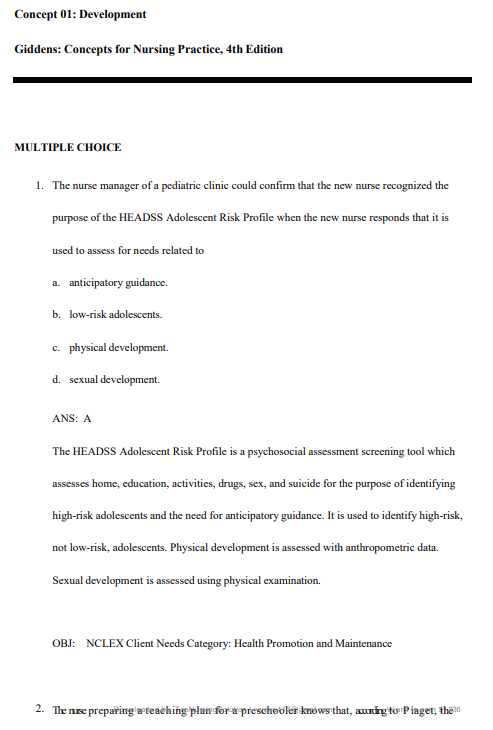

Nursing education is changing. And concept-based learning is leading the way.
For decades, nursing curricula were built around the medical model — organized by disease, by body system, by specialty. Students learned heart failure in cardiac nursing, then learned a completely different set of facts about fluid overload in renal nursing, and somehow had to connect those dots on their own — in the clinical setting, under pressure, when it mattered most.
Concept-based nursing education changes that entirely. Instead of learning isolated disease facts, you learn the foundational concepts that apply across conditions, across specialties, and across the entire scope of nursing practice. You learn fluid and electrolytes once — deeply — and apply that understanding to heart failure, renal disease, burns, liver failure, and postoperative care simultaneously. You learn oxygenation as a concept — and it informs everything from asthma management to post-anesthesia recovery to end-stage COPD.
That is the power of concept-based learning. And that is what this test bank is built to reinforce.
This comprehensive test bank is built for the 4th Edition of Concepts for Nursing Practice by Jean Giddens. It is the most widely used and most intellectually rigorous concept-based nursing textbook in undergraduate nursing education — and this test bank helps you master every concept with the focused, cross-specialty, clinical application practice that concept-based nursing education demands.
Whether you are preparing for a concept-based course exam, a comprehensive nursing assessment, or the NCLEX-RN, this resource delivers the conceptual depth, clinical reasoning breadth, and evidence-based practice precision that Giddens’ framework demands — and that nursing practice rewards across every clinical setting.
What’s Inside?
- Hundreds of practice questions covering every concept and module
- Multiple-choice, select-all-that-apply, priority, and Next Generation NCLEX-style clinical scenario questions
- Complete answer keys with thorough, conceptually grounded clinical rationales
- Questions aligned with current NCLEX-RN and Next Generation NCLEX examination standards
- Coverage of all major nursing concepts — across individual, family, community, and professional nursing domains
Who Is This Test Bank For?
This resource is perfect for:
- Undergraduate RN nursing students in concept-based nursing curricula
- Nursing students in programs using Giddens’ Concepts for Nursing Practice as their primary course text
- NCLEX-RN candidates seeking a concept-organized approach to comprehensive exam review
- Nursing faculty developing concept-based course exams and clinical reasoning assessments
- Nursing students in accelerated BSN or second-degree programs using concept-based curricula
- RN-to-BSN students reinforcing concept-based clinical reasoning and evidence-based practice
- New graduate nurses consolidating concept-based clinical thinking across practice settings
Concepts Covered Include:
Individual Domain — Physiological Concepts:
- Acid-base balance
- Cellular regulation
- Clotting
- Elimination
- Fluid and electrolytes
- Gas exchange
- Glucose regulation
- Hormonal regulation
- Immunity
- Infection
- Inflammation
- Intracranial regulation
- Metabolism
- Mobility
- Nutrition
- Pain
- Perfusion
- Reproduction
- Sensory perception
- Thermoregulation
- Tissue integrity
Individual Domain — Psychosocial Concepts:
- Addiction
- Anxiety
- Cognition
- Coping
- Development
- Grief and loss
- Mood and affect
- Psychosis
- Stress
- Violence
Population and Community Health Concepts:
- Community health
- Family dynamics
- Health disparities
- Health promotion
- Palliative care
Professional Nursing Concepts:
- Accountability
- Care coordination
- Clinical judgment
- Collaboration
- Communication
- Culture and diversity
- Economics of healthcare
- Ethics
- Evidence-based practice
- Healthcare law
- Healthcare organizations
- Health information technology
- Leadership
- Patient education
- Professional identity
- Quality improvement
- Safety
Why This Test Bank Stands Out
Concept-based nursing curricula present a unique academic challenge — and a unique academic opportunity.
The challenge is that concept-based courses do not follow the comfortable, familiar structure of disease-by-disease, system-by-system learning. There is no chapter titled “heart failure” that you can read from start to finish and feel confident you have covered the topic. Instead, heart failure appears under perfusion, under fluid and electrolytes, under gas exchange, under pharmacology, and under patient education — because heart failure is not a single topic. It is a clinical manifestation of multiple intersecting concepts, and understanding it requires understanding how those concepts interact.
The opportunity is that concept-based learning builds the kind of clinical reasoning that traditional curricula struggle to develop. Students who truly master concepts — not just memorize disease facts — are better prepared for the NCLEX, better prepared for clinical practice across all settings and specialties, and better prepared for the complexity of real patient care than students trained on disease lists alone.
This test bank is built to develop that mastery.
Every question is grounded in the conceptual framework that Jean Giddens establishes throughout the 4th Edition. You will not simply recall the definition of perfusion — you will apply the concept of perfusion to a patient with acute coronary syndrome and a patient with peripheral arterial disease simultaneously, recognizing the shared conceptual foundation while differentiating the clinical presentations and nursing priorities. You will not just identify the signs of infection — you will apply the infection concept to a surgical wound, a urinary catheter, a central line, and a community-dwelling elderly patient, recognizing how the same concept manifests differently across clinical contexts.
The 4th Edition introduces expanded Next Generation NCLEX clinical judgment integration, updated evidence-based practice content across all concepts, enhanced interprofessional collaboration content, and the most current population health and health equity framework in the textbook’s history. This test bank is fully aligned with every update.
Detailed rationales explain the conceptual framework, clinical application, evidence-based practice standards, and nursing reasoning behind every correct answer. Questions are organized concept by concept — mirroring the structure of Giddens’ textbook — for focused, concept-specific study. Target the concepts where your clinical application is weakest. Build the cross-specialty clinical reasoning that concept-based education is designed to produce — and that the NCLEX rewards.
Sample Questions
Question 1
A nurse is applying the concept of perfusion to three different patients on a medical-surgical unit. Patient A has peripheral arterial disease with claudication. Patient B has deep vein thrombosis of the left femoral vein. Patient C has acute ST-elevation myocardial infarction. Which statement best reflects the shared conceptual basis of impaired perfusion across all three patients?
- A) All three patients have impaired venous return caused by thrombotic occlusion of major vessels
- B) All three patients experience inadequate delivery of oxygenated blood to tissues due to disrupted blood flow — arterial, venous, or coronary — causing cellular ischemia
- C) All three patients require anticoagulation therapy as the primary nursing intervention for impaired perfusion
- D) All three patients will present with chest pain as the primary clinical manifestation of impaired perfusion
Correct Answer: B
Rationale: The concept of perfusion encompasses the delivery of oxygenated blood to body tissues — and impaired perfusion occurs whenever blood flow is disrupted, regardless of the specific vessel, mechanism, or body region involved. Patient A has impaired arterial perfusion to the lower extremities from atherosclerotic narrowing — causing claudication from ischemic muscle pain during exertion. Patient B has impaired venous drainage from a thrombotic obstruction — causing venous congestion, edema, and risk of pulmonary embolism from thrombus migration. Patient C has impaired coronary perfusion from complete coronary artery occlusion — causing myocardial ischemia and infarction. Despite completely different presentations, locations, and mechanisms, all three share the same conceptual foundation — inadequate delivery of oxygenated blood to tissue cells, causing cellular ischemia. This is the power of concept-based nursing education — understanding perfusion as a concept allows the nurse to recognize impaired perfusion in any clinical presentation, not just memorized disease patterns. Not all impaired perfusion involves thrombosis, anticoagulation is not universal to all perfusion disorders, and chest pain is specific to myocardial ischemia — not a universal manifestation of impaired perfusion.
Question 2
A nurse is caring for four patients and applying the concept of fluid and electrolytes. Which patient assessment finding most urgently indicates a life-threatening fluid and electrolyte imbalance requiring immediate nursing action?
- A) A patient with chronic kidney disease whose serum sodium is 133 mEq/L and reports mild fatigue
- B) A patient with cirrhosis who has developed mild ascites and 1+ bilateral ankle edema
- C) A patient with a nasogastric tube on continuous suction whose serum potassium is 2.8 mEq/L and whose cardiac monitor shows flattened T waves and U waves
- D) A patient post-abdominal surgery who has not had a bowel movement in three days and reports mild abdominal discomfort
Correct Answer: C
Rationale: Applying the concept of fluid and electrolytes requires recognizing which imbalances carry the most immediate life threat — and potassium imbalances, particularly hypokalemia with cardiac manifestations, consistently represent the highest urgency within this concept. A serum potassium of 2.8 mEq/L is severely low — below the critical threshold of 3.0 mEq/L. Hypokalemia causes cardiac membrane instability by altering the resting membrane potential of cardiac cells. The ECG manifestations described — flattened T waves and U waves — are classic electrocardiographic signs of hypokalemia indicating significant cardiac risk. As potassium continues to fall, the risk of life-threatening ventricular dysrhythmias — including ventricular tachycardia and ventricular fibrillation — escalates dramatically. Continuous nasogastric suction removes potassium-rich gastric secretions, creating ongoing losses that must be replaced. This patient requires immediate provider notification, potassium replacement via IV infusion for severe hypokalemia, continuous cardiac monitoring, and reassessment. Mild hyponatremia in CKD and mild ascites in cirrhosis are concerning chronic findings but do not carry the immediate cardiac lethality of severe hypokalemia with ECG changes. Post-surgical constipation requires assessment and intervention but does not represent a fluid and electrolyte emergency.
Question 3
A nurse is applying the concept of clinical judgment to a newly admitted patient with sepsis. Using the NCLEX Clinical Judgment Measurement Model, which action represents the “prioritize hypotheses” cognitive skill in this clinical scenario?
- A) Measuring vital signs, assessing mental status, reviewing laboratory results, and examining skin perfusion
- B) Determining that the most immediately life-threatening concern is hemodynamic instability from distributive shock rather than the source of infection
- C) Administering prescribed IV fluid bolus, broad-spectrum antibiotics, and vasopressors as ordered
- D) Reassessing the patient’s blood pressure, MAP, and lactate level 30 minutes after initiating resuscitation
Correct Answer: B
Rationale: The NCLEX Clinical Judgment Measurement Model identifies six cognitive skills — recognize cues, analyze cues, prioritize hypotheses, generate solutions, take actions, and evaluate outcomes. Prioritizing hypotheses requires the nurse to rank the identified clinical problems by urgency and potential for patient harm — determining which concern demands the most immediate clinical attention. In the sepsis scenario, multiple clinical problems exist simultaneously — the source of infection, the inflammatory response, the hemodynamic instability, and the risk of organ failure. Prioritizing hypotheses requires the nurse to determine that hemodynamic instability — the distributive shock state with vasodilation, hypotension, and inadequate organ perfusion — represents the most immediately life-threatening concern requiring the first clinical intervention. Recognizing cues describes the data-gathering action in Option A — collecting vital signs and assessment data. Generating solutions and taking actions describes Option C — selecting and implementing interventions. Evaluating outcomes describes Option D — reassessing the patient’s response to treatment. Understanding which cognitive skill each nursing action represents is essential for NGN preparation and for applying the clinical judgment framework Giddens integrates throughout the 4th Edition.
Question 4
A nurse is caring for a patient with type 1 diabetes mellitus and applying the concept of glucose regulation. The patient’s morning glucose is 52 mg/dL. The patient is alert, diaphoretic, and reports feeling shaky and anxious. The patient has IV access. Which nursing action is most consistent with evidence-based management of the glucose regulation alteration?
- A) Administer glucagon 1 mg intramuscularly and place the patient on nothing by mouth
- B) Administer 15–20 grams of fast-acting oral carbohydrate, recheck glucose in 15 minutes, and repeat if still below 70 mg/dL — the 15-15 rule
- C) Administer 50 mL of dextrose 50% IV push and notify the provider immediately
- D) Hold the next insulin dose and reassess glucose in one hour without immediate intervention
Correct Answer: B
Rationale: The concept of glucose regulation encompasses the physiological mechanisms of blood glucose homeostasis and the nursing management of alterations in that regulation — both hyperglycemia and hypoglycemia. For a conscious, alert patient with symptomatic hypoglycemia — blood glucose of 52 mg/dL with diaphoresis, tremors, and anxiety — the evidence-based first-line intervention is the 15-15 rule. Fifteen to twenty grams of fast-acting oral carbohydrate — glucose tablets, 4 ounces of juice, or 4 ounces of regular soda — raises blood glucose rapidly through gastrointestinal absorption. The glucose is rechecked in 15 minutes and the treatment repeated if glucose remains below 70 mg/dL. This patient is alert and oriented — oral treatment is safe and appropriate. Glucagon IM is reserved for unconscious patients or those who cannot take oral carbohydrate safely — it is not the first-line intervention for a conscious, cooperative patient. Dextrose 50% IV push is appropriate for severe hypoglycemia with loss of consciousness or inability to take oral intake — using it as first-line for a conscious patient with mild-moderate hypoglycemia is unnecessarily aggressive. Waiting one hour without immediate intervention in a patient with active hypoglycemic symptoms risks neurological injury from prolonged cerebral glucose deprivation.
Question 5
A nurse is applying the professional nursing concept of safety while preparing to administer a high-alert medication — IV insulin — to a patient with diabetic ketoacidosis. Which nursing action best reflects the application of evidence-based safety principles for high-alert medication administration?
- A) Administer the insulin infusion based on the provider’s verbal order given during rounds without written documentation
- B) Prepare and independently administer the insulin infusion after calculating the rate from the standing orders protocol
- C) Perform an independent double-check of the insulin concentration, infusion rate calculation, and pump programming with a second licensed nurse before initiating the infusion
- D) Delegate preparation of the insulin infusion to the nursing assistant while the nurse monitors the patient’s glucose
Correct Answer: C
Rationale: The concept of safety in professional nursing encompasses the systematic application of evidence-based practices designed to prevent healthcare-associated harm — particularly medication errors. Insulin is classified as a high-alert medication by the Institute for Safe Medication Practices because errors in its administration carry a disproportionately high risk of causing serious patient harm — including severe hypoglycemia, cerebral injury, and death. The evidence-based safety standard for high-alert medications — particularly IV insulin infusions — requires an independent double-check by a second licensed nurse. The double-check must be independent — meaning both nurses perform the calculation and verification separately before comparing results — not one nurse checking the other’s completed work. The double-check verifies the medication concentration, the calculated infusion rate, and the pump programming. Verbal orders without written documentation are unsafe and violate medication administration standards — verbal orders should only be accepted in urgent clinical situations and must be immediately documented and verified. Independent calculation without double-check bypasses a critical safety layer for high-alert medications. Insulin preparation and administration requires a licensed nurse — it cannot be delegated to unlicensed assistive personnel under any circumstance.
Frequently Asked Questions (FAQs)
What edition does this test bank cover?
This test bank is written specifically for the 4th Edition of Concepts for Nursing Practice by Jean Giddens. All questions are fully aligned with the current edition’s concept organization, updated evidence-based practice content, expanded NGN clinical judgment integration, and current professional nursing standards.
How are the questions organized?
Questions are organized concept by concept — mirroring the structure of Giddens’ 4th Edition — across the individual, population, and professional nursing domains. This allows you to study specific concepts systematically or target the concepts where your clinical application and cross-specialty reasoning need the most development.
Is this test bank useful for NCLEX preparation?
Absolutely. The NCLEX tests concept-based clinical reasoning — not disease-by-disease fact recall. Students from concept-based curricula are uniquely positioned for NCLEX success because they have learned to apply foundational concepts across multiple clinical scenarios — exactly the cognitive skill the NCLEX and NGN clinical judgment framework demands. This test bank directly reinforces that concept-application capability.
Is this test bank aligned with the Next Generation NCLEX?
Yes. The 4th Edition’s NGN integration is fully reflected throughout this test bank. Clinical scenario questions are built around the six cognitive skills of the NCLEX Clinical Judgment Measurement Model — recognize cues, analyze cues, prioritize hypotheses, generate solutions, take actions, and evaluate outcomes — all within the concept-based clinical reasoning framework Giddens establishes throughout the textbook.
Is this test bank appropriate for students in programs that use multiple concept-based textbooks alongside Giddens?
Yes. While this test bank is specifically aligned with Giddens’ 4th Edition concept organization and framework, the conceptual approach to clinical reasoning it develops is universally applicable across all concept-based nursing curricula. Students in programs that supplement Giddens with other concept-based resources will find this test bank broadly relevant to their concept-based nursing education.
How quickly can I access the test bank after purchase?
Immediately. As soon as your purchase is complete, you receive instant digital access with no waiting period. Study on your own schedule, at your own pace, from any device.
Are the rationales written at the conceptual level that Giddens’ framework demands?
Yes. Every rationale explains the conceptual framework, cross-specialty clinical application, evidence-based practice standards, and nursing reasoning behind the correct answer — reflecting the same conceptual depth and cross-specialty thinking that Jean Giddens establishes throughout the 4th Edition. These rationales build conceptual mastery — not disease memorization.
Can nursing faculty use this test bank for concept-based course assessments?
Absolutely. The concept-by-concept organization, NGN-aligned question formats, cross-specialty clinical scenarios, and conceptual rationale construction make this an outstanding resource for faculty building unit exams, concept-based clinical reasoning assessments, and comprehensive course examinations for undergraduate nursing programs using concept-based curricula.
Marcus T. –
Essential study tool for nursing school
Alena R. –
The rationales are incredibly helpful
Sarah M –
A total lifesaver for exams
Chloe D. –
Helped me ace my clinicals
Winnie M. –
Perfect
Caleb Martins –
It is miles better than I expected
Rosemary R –
Very good
Melania Angel –
Excellent practice questions
Carol Kay –
Super helpful for quick nursing exam prep
Kamara Reid –
Really helped me get into study mode
Lucille Maria –
Questions are clear, relevant, and well-organized
Lisa Horton –
Helps with quickly reviewing key nursing concepts.