Clinical skills are where nursing knowledge becomes nursing action.
You can understand the pathophysiology of a wound infection perfectly. You can recall every risk factor for catheter-associated urinary tract infection from memory. You can articulate the nursing process flawlessly in a written examination. But none of that knowledge protects your patient if you cannot perform a sterile dressing change with flawless technique, insert a urinary catheter while maintaining strict asepsis, or administer a medication via the correct route with the correct preparation and the correct safety checks.
Clinical skills are where the science of nursing becomes the practice of nursing. And mastering them — not just knowing how to perform them, but understanding why every step matters, what the evidence behind each technique requires, and what to do when something goes wrong — is what transforms a competent student into a safe, effective clinical nurse.
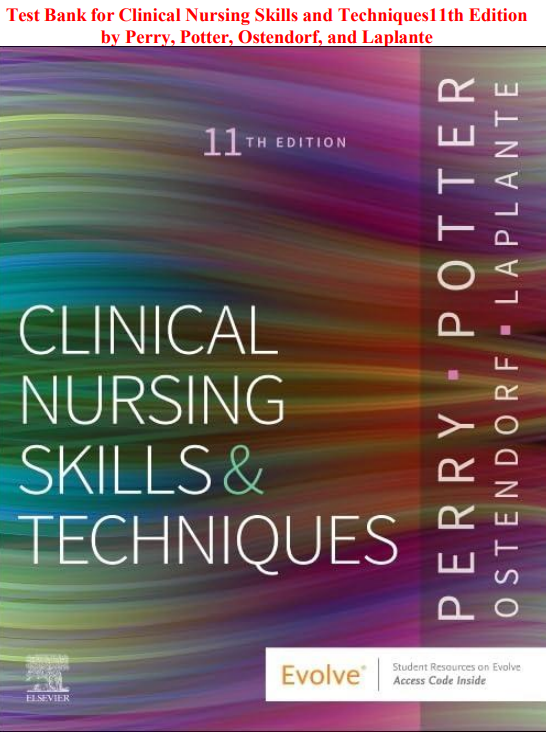
This comprehensive test bank is built for the 11th Edition of Clinical Nursing Skills and Techniques by Perry, Potter, Ostendorf, and Laplante. It is the most widely used, most comprehensively organized, and most evidence-based clinical nursing skills textbook in undergraduate nursing education — and this test bank helps you master every chapter with the focused, technique-precise, safety-centered practice that clinical nursing skill mastery demands.
Whether you are preparing for a clinical skills course exam, a skills laboratory competency evaluation, or the NCLEX-RN, this resource delivers the procedural knowledge, evidence-based rationale, and patient safety depth that Perry, Potter, Ostendorf, and Laplante have always demanded — and that every patient deserves from every nurse who cares for them.
What’s Inside?
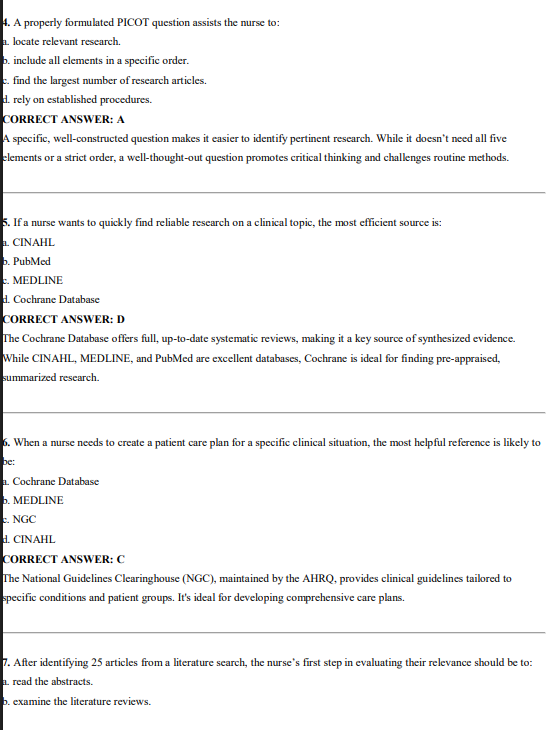
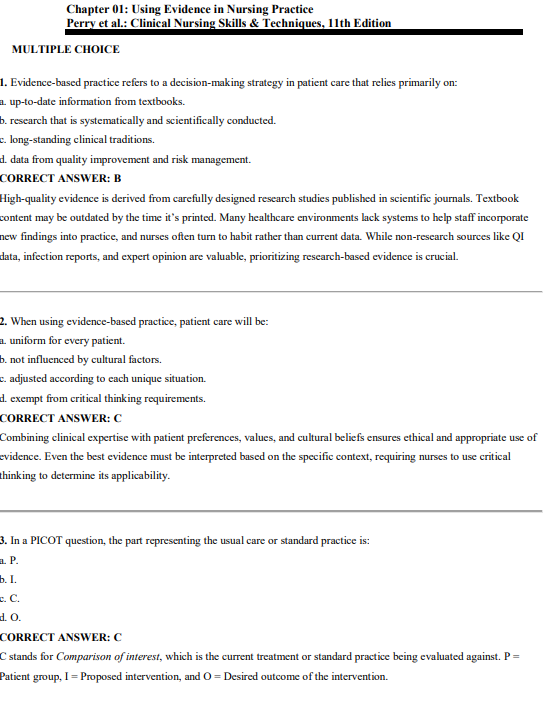
- Hundreds of practice questions covering every chapter and clinical skill area
- Multiple-choice, select-all-that-apply, and clinical scenario questions
- Complete answer keys with thorough, evidence-based procedural and clinical rationales
- Questions aligned with current NCLEX-RN and Next Generation NCLEX examination standards
- Coverage of all major clinical nursing skills — from fundamental care through advanced clinical procedures — fully updated for the 11th Edition
Table of Contents
UNIT 1 Supporting the Patient Through the Health Care System
1. Clinical Judgment in Nursing Practice
2. Communication and Collaboration
3. Admitting, Transfer, and Discharge
4. Documentation and Informatics
UNIT 2 Vital Signs and Physical Assessment
5. Vital Signs
6. Health Assessment
UNIT 3 Special Procedures
7. Specimen Collection
8. Diagnostic Procedures
UNIT 4 Infection Control
9. Medical Asepsis
10. Sterile Technique
UNIT 5 Activity and Mobility
11. Safe Patient Handling and Mobility
12. Exercise, Mobility, and Immobilization Devices
13. Support Surfaces and Special Beds
UNIT 6 Safety and Comfort
14. Patient Safety
15. Disaster Preparedness
16. Pain Management
17. End-of-Life Care
UNIT 7 Hygiene
18. Personal Hygiene and Bed Making
19. Care of the Eye and Ear
UNIT 8 Medications
20. Safe Medication Preparation
21. Nonparenteral Medications
22. Parenteral Medications
UNIT 9 Oxygenation
23. Oxygen Therapy
24. Airway Management
25. Cardiac Care
26. Closed Chest Drainage Systems
27. Emergency Measures for Life Support
UNIT 10 Fluid Balance
28. Intravenous and Vascular Access Therapy
29. Blood Therapy
UNIT 11 Nutrition
30. Oral Nutrition
31. Enteral Nutrition
32. Parenteral Nutrition
UNIT 12 Elimination
33. Urinary Elimination
34. Bowel Elimination and Gastric Intubation
35. Ostomy Care
UNIT 13 Care of the Surgical Patient
36. Preoperative and Postoperative Care
37. Intraoperative Care
UNIT 14 Dressings and Wound Care
38. Wound Care and Irrigation
39. Pressure Injury Prevention and Care
40. Dressings, Bandages, and Binders
UNIT 15 Home Care
41. Home Care Safety
42. Home Care Teaching
Who Is This Test Bank For?
This resource is perfect for:
- Undergraduate RN nursing students in clinical nursing skills courses using the 11th Edition
- LPN and LVN students building foundational clinical nursing skill competency
- Nursing students preparing for skills laboratory competency evaluations and practical exams
- NCLEX-RN and NCLEX-PN candidates reviewing clinical skills and procedural safety content
- Nursing faculty developing clinical skills course exams and skills laboratory assessments
- RN-to-BSN students reviewing evidence-based rationales for established clinical skills
- New graduate nurses reinforcing clinical skill competency and evidence-based technique
- Students whose programs use the updated 11th Edition of Perry, Potter, Ostendorf, and Laplante
Topics Covered Include:
- Infection prevention and control — hand hygiene, PPE, and standard precautions
- Patient safety — fall prevention, restraints, and environmental safety management
- Vital signs assessment — technique, interpretation, and clinical documentation
- Health assessment and physical examination skills
- Documentation and informatics in clinical nursing
- Specimen collection — blood, urine, wound, and sputum collection techniques
- Diagnostic procedures — nursing responsibilities and patient preparation
- Medication administration — oral, parenteral, topical, transdermal, and special routes
- IV medication administration — piggyback, push, and infusion techniques
- Intravenous therapy — peripheral IV insertion, maintenance, and complication management
- Blood transfusion administration and monitoring
- Enteral nutrition — nasogastric tube insertion, feeding, and management
- Parenteral nutrition administration and monitoring
- Urinary elimination — catheterization, bladder irrigation, and continence management
- Bowel elimination — enema administration, ostomy care, and digital removal
- Oxygenation — oxygen therapy, pulse oximetry, and airway management
- Airway management — suctioning, tracheostomy care, and chest physiotherapy
- Chest tube management and water-seal drainage systems
- Wound care — wound assessment, dressing changes, and pressure injury management
- Ostomy and fistula care
- Heat and cold therapy applications
- Perioperative care — preoperative preparation and postoperative nursing skills
- Mobility and immobility — positioning, transfers, and assistive device use
- Skin integrity — bathing, oral hygiene, and hygiene care skills
- End-of-life care skills and postmortem care
Why This Test Bank Delivers Results
Perry, Potter, Ostendorf, and Laplante’s Clinical Nursing Skills and Techniques is not simply a procedures manual. It is the most comprehensively evidence-based clinical skills resource in nursing education — one that grounds every technique in the research evidence that supports it, explains every procedural step in terms of the patient safety principle it serves, and connects every clinical skill to the broader nursing process framework within which it is performed.
The 11th Edition represents the most comprehensive update in this textbook’s distinguished history — incorporating updated CDC infection prevention guidelines, current INS infusion therapy standards, revised wound care evidence, updated urinary catheter care protocols reflecting the most current CAUTI prevention evidence, expanded medication safety content addressing the latest ISMP safety guidelines, and the most current NGN clinical judgment integration in the textbook’s history.
This test bank is built to develop both dimensions of clinical skill mastery — the technical how and the evidence-based why.
Every question requires more than procedural memorization. You will not simply identify the correct order of steps for peripheral IV insertion — you will explain why each step occurs in that sequence, what patient safety principle each step serves, and what clinical consequence results from skipping or incorrectly performing it. You will not just name the correct technique for sterile gloving — you will identify which actions violate sterile technique, explain the contamination mechanism, and determine the correct response when a break in technique occurs. You will not merely recall the assessment parameters to check before medication administration — you will interpret a clinical scenario in which one of those parameters falls outside the safe threshold and determine the correct nursing action.
The 11th Edition’s NGN clinical judgment integration is fully reflected — with clinical scenario questions that challenge students to recognize procedural safety cues, analyze the clinical significance of assessment findings obtained during skill performance, and prioritize nursing actions when complications occur during or after a clinical procedure.
Detailed rationales explain the procedural evidence, patient safety principles, infection control standards, and clinical reasoning behind every correct answer. Questions are organized chapter by chapter — skill by skill — for structured, systematic study. Build the clinical skill mastery that Perry and Potter have always demanded — and that patient safety requires.
Sample Questions
Question 1
A nurse is preparing to insert an indwelling urinary catheter in a female patient with a urinary tract infection. The nurse opens the sterile catheterization kit, establishes a sterile field on the overbed table, and dons sterile gloves using correct technique. While reaching across the sterile field to arrange supplies, the nurse’s dominant sterile glove contacts the outer edge of the sterile drape — approximately one inch from the border. Which action is most appropriate?
- A) Continue with the procedure since the outer edge of the sterile drape is considered a non-critical area and contamination at this location is clinically insignificant
- B) Remove both sterile gloves, perform hand hygiene, obtain a new sterile catheterization kit, and re-establish the sterile field before proceeding with the procedure
- C) Wipe the contaminated glove with a sterile gauze pad saturated with alcohol and continue with the procedure
- D) Switch the contaminated glove to the non-dominant hand and use the uncontaminated dominant glove for the insertion procedure
Correct Answer: B
Rationale: Sterile technique is governed by the absolute principle of binary sterility — an item is either sterile or contaminated, and there is no acceptable degree or location of contamination within a sterile field. The outer edge of the sterile drape — typically defined as the outermost one inch border — is considered contaminated because it contacts the unsterile overbed table surface during placement. Any sterile item or sterile-gloved hand that contacts this border is immediately considered contaminated regardless of how brief or minimal the contact was. The sterile field has been compromised and the procedure must not proceed until a completely new sterile setup has been established. The nurse must remove both sterile gloves — because removing the contaminated glove with the clean glove risks contaminating the clean glove during removal — perform hand hygiene, obtain a new complete sterile catheterization kit, and re-establish the sterile field from the beginning. Wiping the contaminated glove with alcohol does not restore sterility — alcohol is an antiseptic, not a sterilizing agent, and does not eliminate the full spectrum of microorganisms from a contaminated surface. Switching the contaminated glove to the non-dominant hand spreads contamination to both hands through the transfer process. This principle of sterile technique is foundational to infection prevention in all invasive nursing procedures — catheter-associated UTI is one of the most common healthcare-associated infections, and breaches in sterile technique during catheterization are a primary contributing factor.
Question 2
A nurse is administering a peripheral IV medication via IV push — furosemide 40 mg IV push — to a patient with acute pulmonary edema. The nurse has verified the five rights, confirmed IV patency, and is preparing to administer the medication. The furosemide is supplied as 10 mg/mL in a 4 mL vial. How many mL should the nurse administer, and over what minimum time frame does current evidence recommend IV furosemide be administered to prevent ototoxicity?
- A) Administer 4 mL over 30 seconds since rapid administration maximizes the diuretic onset for pulmonary edema
- B) Administer 4 mL over a minimum of 1–2 minutes — current evidence recommends slow IV push administration of furosemide to prevent ototoxicity, which can occur with rapid administration particularly at higher doses
- C) Administer 2 mL over 30 seconds since furosemide IV push should always be diluted before administration
- D) Administer the full vial of 4 mL over 5 minutes regardless of the dose ordered since all loop diuretics require extended administration times
Correct Answer: B
Rationale: This question integrates dosage calculation accuracy with evidence-based IV medication administration technique — two competencies that Perry, Potter, Ostendorf, and Laplante emphasize throughout Clinical Nursing Skills and Techniques. The calculation: desired dose ÷ available concentration = volume to administer. 40 mg ÷ 10 mg/mL = 4 mL. The full 4 mL must be administered to deliver the ordered 40 mg dose. Administration technique: furosemide IV push should be administered slowly — over a minimum of 1–2 minutes for standard doses — to minimize the risk of ototoxicity. Rapid IV administration of furosemide causes transient, high peak plasma and inner ear drug concentrations that can damage cochlear hair cells, producing tinnitus, hearing impairment, or permanent hearing loss — a risk that increases with higher doses (above 40 mg IV), rapid administration, concurrent nephrotoxic drug use, and pre-existing renal impairment. This ototoxicity risk is specifically associated with rapid bolus administration — slow IV push significantly reduces peak concentration exposure to cochlear tissue. Administering 40 mg over 30 seconds creates an unnecessarily high peak concentration that increases ototoxicity risk without improving clinical efficacy — diuretic onset is not meaningfully accelerated by faster bolus administration. Dilution before push is not universally required for furosemide at standard doses, though some facilities require it per policy — the nurse should always follow institutional policy and the current drug reference.
Question 3
A nurse is performing a tracheostomy care and inner cannula cleaning procedure on a patient who had a tracheostomy placed seven days ago following prolonged mechanical ventilation. During the procedure, after removing the inner cannula for cleaning, the patient begins coughing forcefully and the outer cannula becomes dislodged and falls out of the stoma. The nurse attempts to replace the outer cannula but encounters resistance. Which nursing action is the priority?
- A) Attempt forceful reinsertion of the outer cannula using firm, steady pressure until it seats correctly
- B) Leave the stoma open and call for assistance — the stoma will remain patent for several minutes and the patient can breathe through the opening while the RRT or provider is summoned for assistance
- C) Cover the stoma with a sterile gauze and apply oxygen via face mask over the gauze while activating the emergency response system and keeping a spare tracheostomy tube and obturator at the bedside for the provider to reinsert
- D) Insert a smaller suction catheter through the stoma to maintain airway patency and oxygen delivery while calling for immediate assistance with a spare same-size or smaller tracheostomy tube readily accessible
Correct Answer: D
Rationale: Accidental tracheostomy decannulation is a respiratory emergency requiring immediate, systematic response. Tracheostomy stoma maturity — the formation of a stable epithelialized tract — typically requires a minimum of 7–10 days following surgical placement. At seven days, this tracheostomy’s stoma may be partially but not completely mature, meaning the tract may begin to close rapidly without a tube in place. Forcing reinsertion of the outer cannula against resistance risks creating a false passage — inserting the tube through the tracheal wall rather than into the tracheal lumen — which can cause hemorrhage, subcutaneous emphysema, and complete airway obstruction. The priority action is to maintain airway patency and oxygenation while calling for assistance. Inserting a suction catheter through the stoma serves two purposes simultaneously — it maintains patency of the partially matured stoma tract, preventing rapid closure, and provides a guide channel and oxygen delivery conduit while emergency assistance is mobilized. The spare tracheostomy tube — ideally the same size, or one size smaller if resistance prevents same-size insertion — must be immediately accessible at the bedside per Joint Commission standards for tracheostomy patients. Leaving the stoma completely open without any airway maintenance device risks rapid stoma closure given the partial maturity of the tract at day seven. Applying a face mask over the stoma without airway maintenance fails to address the primary risk of stoma closure. Forceful reinsertion risks catastrophic airway injury.
Question 4
A nurse is preparing to administer a subcutaneous heparin injection to a patient receiving prophylactic anticoagulation following knee replacement surgery. Which combination of technique elements reflects current evidence-based subcutaneous heparin injection practice?
- A) Select the deltoid muscle as the preferred injection site, aspirate before injecting to confirm non-vascular placement, and rub the site vigorously after injection to enhance absorption
- B) Select the anterolateral or posterolateral abdominal wall at least two inches from the umbilicus, do not aspirate before injecting, inject slowly, and do not rub the site after injection — apply gentle pressure only if needed
- C) Select the vastus lateralis muscle, use a 1-inch needle at a 45-degree angle, aspirate before injecting, and apply an ice pack immediately after injection to minimize bruising
- D) Select a site in the upper arm, use a 1.5-inch needle at a 90-degree angle, and massage the site vigorously after injection to distribute the medication
Correct Answer: B
Rationale: Evidence-based subcutaneous heparin injection technique is a high-yield nursing skills competency that combines multiple evidence-based elements. Site selection — The preferred subcutaneous heparin injection site is the anterolateral or posterolateral abdominal wall — specifically the fatty subcutaneous tissue at least two inches from the umbilicus, avoiding the two-inch periumbilical zone where subcutaneous tissue is thinner and bruising is more common. The abdomen provides consistent subcutaneous tissue depth and predictable drug absorption. Aspiration — Current evidence-based practice does not recommend aspiration before subcutaneous injection for anticoagulants — aspiration is not required for subcutaneous injections and may increase tissue trauma, bruising, and hematoma formation. The INS and WHO guidelines specifically recommend against aspiration for subcutaneous injections. Post-injection site rubbing — Rubbing or massaging the injection site after heparin administration is specifically contraindicated — it can cause local tissue damage, disrupt the drug depot, accelerate heparin absorption creating unpredictable anticoagulant effect, and significantly increase bruising and hematoma formation. Gentle pressure — not rubbing — may be applied if needed. Injection technique — the standard angle for subcutaneous injection into the abdominal wall is 90 degrees for most adults with adequate subcutaneous tissue — 45 degrees is used when subcutaneous tissue is thin. Needle length — typically 5/8 inch for subcutaneous abdominal injection. The deltoid is an intramuscular site, the vastus lateralis is used for IM injections, and the upper arm deltoid area is used for IM or intradermal — none are the preferred sites for subcutaneous heparin.
Question 5
A nurse is assessing a patient’s peripheral IV site during routine maintenance. The nurse notes that the area around the IV catheter tip is pale, cool, and slightly swollen, the patient reports burning and pain at the site during the infusion, and the infusion rate has slowed despite no positional changes. Aspiration yields no blood return. Which condition does this presentation represent and what is the priority nursing action?
- A) Phlebitis — remove the IV catheter immediately, apply warm compresses, and restart IV access at a new site proximal to the affected area
- B) Infiltration — the IV catheter has become dislodged from the vein and fluid is infusing into the surrounding subcutaneous tissue; stop the infusion immediately, remove the catheter, elevate the extremity, apply appropriate compress per institutional protocol, and restart IV access at a new site
- C) Air embolism — clamp the IV tubing immediately, place the patient in the left lateral Trendelenburg position, and activate the emergency response system
- D) Catheter occlusion — flush the catheter vigorously with 10 mL normal saline using a syringe to clear the obstruction and restore infusion flow
Correct Answer: B
Rationale: This constellation of IV site assessment findings — pallor, coolness, swelling, burning pain during infusion, slowed flow rate, and absent blood return — is the classic clinical presentation of IV infiltration. Infiltration occurs when the IV catheter tip becomes dislodged from the vein lumen — either partially or completely — allowing IV fluid to infuse into the surrounding subcutaneous tissue rather than the vascular space. Absent blood return is a key confirmatory finding — though blood return alone cannot fully confirm or exclude infiltration. The pallor and coolness of the surrounding tissue reflect fluid accumulation in the subcutaneous space compressing local microvasculature, and the pain and burning reflect tissue distension and the irritant effect of IV fluid in the subcutaneous compartment. The priority action sequence for infiltration is — stop the infusion immediately to prevent further fluid accumulation in the tissue, remove the IV catheter while avoiding further pressure on the infiltrated area, document the amount of fluid estimated to have infiltrated and the appearance of the site, elevate the affected extremity to promote fluid reabsorption, apply warm or cool compresses per institutional protocol and the nature of the infusing solution (vesicants require specific protocols), and restart IV access at a new site — ideally in the opposite extremity or proximal to the affected site in the same extremity. Phlebitis presents with warmth, redness, and a palpable venous cord — the opposite of the pale, cool presentation here. Vigorous flushing of a potentially infiltrated catheter would force additional fluid into the subcutaneous tissue — a dangerous and contraindicated action.
Frequently Asked Questions (FAQs)
What edition does this test bank cover?
This test bank is written specifically for the 11th Edition of Clinical Nursing Skills and Techniques by Perry, Potter, Ostendorf, and Laplante. All questions are fully aligned with the current edition’s chapter organization, updated evidence-based technique standards, current CDC infection prevention guidelines, current INS infusion therapy standards, and current NCLEX-RN and NGN examination frameworks.
How are the questions organized?
Questions are arranged chapter by chapter — clinical skill by clinical skill — allowing you to study systematically through every major skill area or focus on specific procedures where your technique knowledge or evidence-based rationale understanding needs the most development, based on your upcoming course exam or skills laboratory competency evaluation schedule.
Is this test bank aligned with the NCLEX-RN and Next Generation NCLEX?
Yes. Questions are written to reflect current NCLEX-RN and NCLEX-PN examination standards and incorporate the clinical judgment emphasis of the Next Generation NCLEX framework. Clinical skills content — including safe medication administration, infection control technique, IV therapy management, and procedural complication recognition — is tested across multiple NCLEX client needs categories, and this test bank covers every one of them with the procedural safety depth the examination demands.
Is this test bank useful for skills laboratory competency preparation?
Absolutely. The procedural sequence questions, evidence-based rationale emphasis, and complication recognition scenarios make this test bank directly relevant to skills laboratory practical examination preparation — not just written course exams. Understanding the evidence behind each procedural step is what distinguishes students who perform skills safely in the lab from students who perform them mechanically without understanding why each step matters.
How does this test bank differ from earlier Perry and Potter skills edition test banks?
This test bank is written specifically for the 11th Edition of Clinical Nursing Skills and Techniques. The 11th Edition includes updated CDC and INS guidelines, revised wound care evidence, expanded medication safety content reflecting current ISMP standards, NGN clinical judgment integration, and current infection prevention protocols not fully reflected in earlier editions. Students using the 11th Edition should use this test bank for fully current, edition-specific exam preparation.
How quickly can I access the test bank after purchase?
Immediately. As soon as your purchase is complete, you receive instant digital access with no waiting period. Study on your own schedule, at your own pace, from any device.
Are the rationales detailed enough to explain the evidence behind each procedural step?
Yes. Every rationale explains the procedural evidence, patient safety principle, infection control standard, and clinical reasoning behind the correct answer — not just identifies the correct action. This approach builds the evidence-based procedural understanding that Perry, Potter, Ostendorf, and Laplante emphasize throughout the 11th Edition — and that patient safety demands from every nurse who performs clinical skills.
Can nursing faculty use this test bank for course assessments?
Absolutely. The chapter-by-chapter skill organization, evidence-based rationale construction, complication scenario emphasis, and NGN-aligned clinical scenarios make this an outstanding resource for faculty building unit exams, skills laboratory written assessments, and comprehensive course finals for undergraduate clinical nursing skills courses at both the RN and PN level.

Lucille Maria –
Great questions that reinforce key nursing concepts
Yunice M –
Clear, concise, and useful for exam preparation
Mary Lincoln –
Helped me identify gaps in my nursing knowledge
Carol Kay –
Perfect
Lucas Gabriel –
Exactly what I needed to get ready for my tests
Terence V. –
Saved hours of study time
Peterson S. –
Highly recommended for nursing students
Craig Bellamy –
An excellent companion to the textbook.
Kamara Reid –
Waaoh, this is very helpful in exam preps.
Catherine Maribel –
Perfectly supplements my other course materials.