Critical care nursing is where every system of the body demands your attention simultaneously — and where the patient in front of you is always more than the sum of their vital signs.
It is where you interpret a pulmonary artery waveform while simultaneously assessing the patient’s neurological status, titrating a vasopressor infusion, managing a ventilator alarm, and supporting a family who has not slept in three days. It is where the technical mastery of hemodynamic monitoring, mechanical ventilation, and advanced pharmacology must be inseparable from the therapeutic presence, ethical reasoning, and family-centered care that define holistic nursing practice.
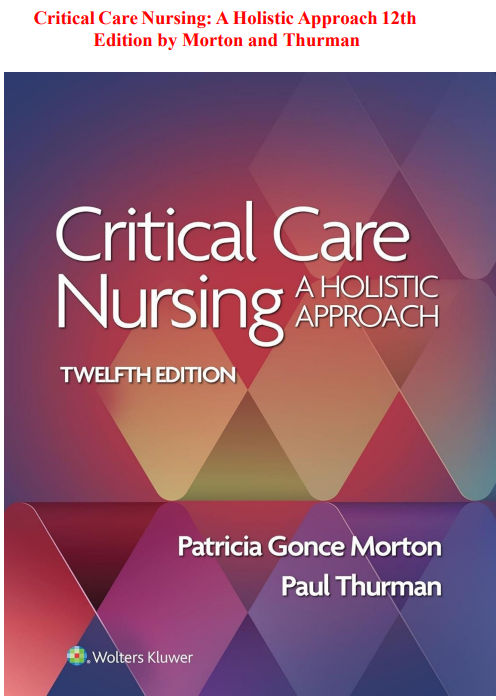
That is what separates Morton and Thurman’s Critical Care Nursing: A Holistic Approach from every other critical care nursing resource — and it is what makes this textbook the gold standard in critical care nursing education for a reason that goes beyond clinical comprehensiveness.
This comprehensive test bank is built for the 12th Edition of Critical Care Nursing: A Holistic Approach by Morton and Thurman. It is one of the most authoritative, most clinically rigorous, and most holistically integrated critical care nursing textbooks in undergraduate and graduate nursing education — and this test bank helps you master every chapter with the focused, high-acuity, evidence-based clinical practice that critical care nursing demands.
Whether you are preparing for a critical care nursing course exam, a progressive care unit competency evaluation, CCRN certification, or building the advanced clinical foundation that ICU nursing requires, this resource delivers the hemodynamic reasoning, pathophysiological depth, holistic care perspective, and evidence-based management precision that Morton and Thurman have established as the standard for critical care nursing education in the 12th Edition.
What’s Inside?
- Hundreds of practice questions covering every chapter
- Multiple-choice, select-all-that-apply, priority, and complex clinical scenario questions
- Complete answer keys with thorough, evidence-based critical care clinical rationales
- Questions aligned with NCLEX-RN and CCRN certification examination content standards
- Coverage of all major critical care body systems, monitoring technologies, advanced nursing interventions, and holistic patient and family care — fully updated for the 12th Edition
Table of Contents
Part 1: The Concept of Holism Applied to Critical Care Nursing Practice
Chapter 1 Critical Care Nursing Practice
Chapter 2 The Patient’s and Family’s Experience with Critical Illness
Chapter 3 Patient and Family Education in Critical Care
Chapter 4 Relieving Pain and Providing Comfort
Chapter 5 Palliative and End-of-Life Care Issues in Critical Care
Chapter 6 Ethical and Legal Issues in Critical Care Nursing
Part 2: Special Populations in Critical Care
Chapter 7 The Pediatric Patient Who Is Critically Ill
Chapter 8 The Pregnant Patient Who Is Critically Ill
Chapter 9 The Older Adult Patient Who Is Critically Ill
Chapter 10 The Patient Recovering from Anesthesia
Part 3: Special Situations in Critical Care
Chapter 11 Rapid Response Teams and Transport of Patients Who Are Critically Ill
Chapter 12 Disaster Management: Implications for the Critical Care Nurse
Part 4: Cardiovascular System
Chapter 13 Anatomy and Physiology of the Cardiovascular System
Chapter 14 Patient Assessment: Cardiovascular System
Chapter 15 Patient Management: Cardiovascular System
Chapter 16 Common Cardiac Disorders
Chapter 17 Heart Failure
Chapter 18 Acute Coronary Syndromes
Chapter 19 Cardiac Surgery
Part 5: Respiratory System
Chapter 20 Anatomy and Physiology of the Respiratory System
Chapter 21 Patient Assessment: Respiratory System
Chapter 22 Patient Management: Respiratory System
Chapter 23 Common Respiratory Disorders
Chapter 24 Acute Respiratory Distress Syndrome
Part 6: Renal System
Chapter 25 Anatomy and Physiology of the Renal System
Chapter 26 Patient Assessment: Renal System
Chapter 27 Patient Management: Renal System
Chapter 28 Acute Kidney Injury and Chronic Kidney Disease
Part 7: Nervous System
Chapter 29 Anatomy and Physiology of the Nervous System
Chapter 30 Patient Assessment: Nervous System
Chapter 31 Patient Management: Nervous System
Chapter 32 Common Neurosurgical and Neurological Disorders
Chapter 33 Traumatic Brain Injury
Chapter 34 Spinal Cord Injury
Part 8: Gastrointestinal System
Chapter 35 Anatomy and Physiology of the Gastrointestinal System
Chapter 36 Patient Assessment: Gastrointestinal System
Chapter 37 Patient Management: Gastrointestinal System
Chapter 38 Common Gastrointestinal Disorders
Part 9: Endocrine System
Chapter 39 Anatomy and Physiology of the Endocrine System
Chapter 40 Patient Assessment: Endocrine System
Chapter 41 Common Endocrine Disorders
Part 10: Hematologic and Immune Systems
Chapter 42 Anatomy and Physiology of the Hematologic and Immune Systems
Chapter 43 Patient Assessment: Hematologic and Immune Systems
Chapter 44 Organ and Hematopoietic Stem Cell Transplantation
Chapter 45 Common Immunologic Disorders
Chapter 46 Common Hematologic Disorders
Part 11: Integumentary System
Chapter 47 Anatomy and Physiology of the Integumentary System
Chapter 48 Patient Assessment: Integumentary System
Chapter 49 Patient Management: Integumentary System
Chapter 50 Burns and Common Integumentary Disorders
Part 12: Multisystem Dysfunction
Chapter 51 Shock, Systemic Inflammatory Response Syndrome, and Multiple Organ Dysfunction Syndrome
Chapter 52 Trauma
Chapter 53 Drug Overdose and Poisoning
Who Is This Test Bank For?
This resource is ideal for:
- Undergraduate RN nursing students in critical care or advanced medical-surgical courses
- New graduate nurses completing critical care unit orientation and competency programs
- CCRN and PCCN certification examination candidates
- Graduate nursing students in acute care or critical care NP programs
- Nursing faculty developing critical care course exams and clinical competency assessments
- Experienced nurses transitioning from general nursing into ICU or progressive care settings
- Flight nurses, transport nurses, and emergency nurses building critical care foundations
- Students whose programs use the 12th Edition of Morton and Thurman as their course text
Topics Covered Include:
- Foundations of critical care nursing — philosophy, holistic approach, and the ICU environment
- Legal, ethical, and end-of-life considerations in critical care
- Building the critical care nurse — competency, communication, and interprofessional collaboration
- Hemodynamic monitoring — arterial lines, CVP, pulmonary artery catheters, and advanced monitoring technologies
- Patient and family response to critical illness — psychological and spiritual dimensions
- Cardiac rhythm interpretation and dysrhythmia management
- 12-lead ECG interpretation in the critical care setting
- Airway management — endotracheal intubation and advanced airway techniques
- Mechanical ventilation — modes, settings, alarms, monitoring, and weaning
- Cardiovascular critical care — acute coronary syndromes, heart failure, and cardiogenic shock
- Shock states — hypovolemic, distributive, obstructive, and cardiogenic pathophysiology
- Cardiac surgery and post-cardiac surgery nursing care
- Pacemakers and implantable cardioverter-defibrillators in critical care
- Respiratory failure — ARDS, pulmonary embolism, and ventilator-associated complications
- Neurological critical care — TBI, stroke, ICP monitoring, and status epilepticus
- Renal critical care — AKI assessment and continuous renal replacement therapy
- Gastrointestinal critical care — GI bleeding, hepatic failure, and acute pancreatitis
- Hematological emergencies and disseminated intravascular coagulation
- Endocrine emergencies — DKA, HHS, and thyroid storm
- Multisystem trauma and burns critical care
- Sepsis — recognition, Surviving Sepsis Campaign protocols, and multiorgan dysfunction
- Pain, agitation, and delirium management in the ICU
- Nutrition support in critically ill patients
- Caring for the critically ill older adult
- Holistic care — family-centered care, cultural considerations, and spiritual support in the ICU
Why This Test Bank Delivers Results
Morton and Thurman’s Critical Care Nursing: A Holistic Approach has earned its standing as one of the most respected and most widely used critical care nursing textbooks for a reason that transcends clinical comprehensiveness alone.
Other critical care textbooks teach you how to manage a hemodynamically unstable patient. Morton and Thurman’s 12th Edition teaches you how to manage a hemodynamically unstable patient who is a person — with a family, with fears, with spiritual needs, with cultural context, and with dignity that does not diminish because they are intubated and sedated in an ICU bed.
That holistic philosophy is not a soft add-on to the hard science of critical care nursing. It is integrated throughout every chapter — from the family communication frameworks embedded in the cardiac surgery chapter to the cultural competence considerations within the sepsis management content. Critical care nursing without holistic care is technically competent but humanly incomplete. This test bank reflects that integration in every clinical scenario.
The 12th Edition is the most comprehensively updated iteration of this textbook — incorporating the latest Surviving Sepsis Campaign hour-1 bundle recommendations, current PADIS guidelines for pain, agitation, and delirium management in the ICU, updated ARDS Network lung-protective ventilation protocols, current ACC/AHA cardiovascular critical care management standards, and expanded holistic and family-centered care content reflecting the most current evidence for patient and family outcomes in the critical care environment.
Every question in this test bank is grounded in real critical care clinical scenarios drawn from the Morton and Thurman framework. You will not simply recall hemodynamic parameters — you will interpret a complete hemodynamic profile, identify the shock state it represents, determine the evidence-based management priority, and consider the family communication implications simultaneously. You will not just name ventilator modes — you will troubleshoot a deteriorating ventilated patient using the DOPE mnemonic, identify the most likely cause of the acute deterioration, and determine the correct priority action while simultaneously communicating with the family at the bedside.
Detailed rationales explain the hemodynamic reasoning, pathophysiological mechanisms, holistic care principles, evidence-based protocols, and critical care clinical decision-making framework behind every correct answer. Questions are organized chapter by chapter for structured, systematic study. Build the advanced, holistic clinical judgment that Morton and Thurman demand — and that critically ill patients and their families deserve.
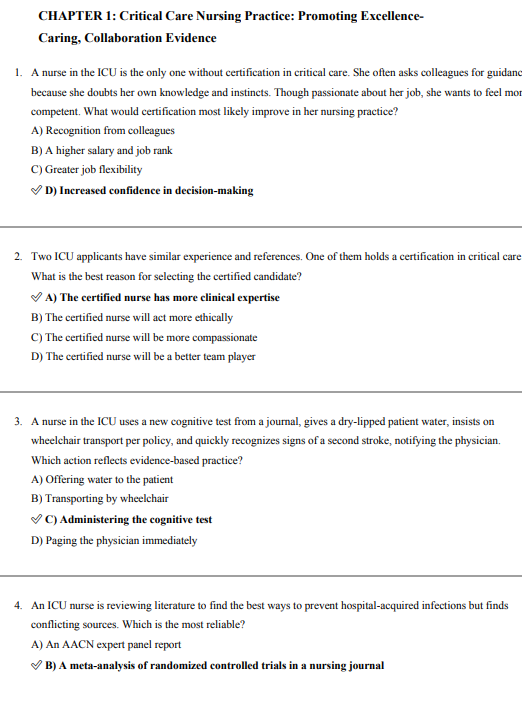
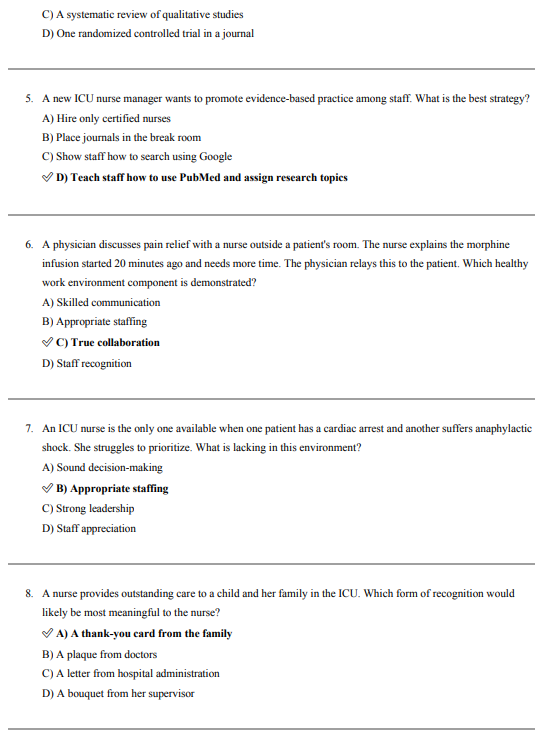
Sample Questions
Question 1
A critical care nurse is caring for a patient with septic shock who has received 30 mL/kg IV crystalloid over the past hour. The patient’s current MAP is 61 mmHg, heart rate is 124 bpm, temperature is 39.4°C, and lactate drawn 30 minutes ago was 5.8 mmol/L. The patient is receiving norepinephrine at 0.08 mcg/kg/min. The nurse notes the patient’s urine output for the past two hours has been 12 mL total. Which combination of assessment findings and nursing actions most accurately reflects current Surviving Sepsis Campaign guidelines and holistic critical care nursing?
- A) The MAP of 61 mmHg meets the target of 65 mmHg — no medication adjustments are needed and the nurse should focus on reassuring the patient’s family that the sepsis is being adequately treated
- B) The MAP remains below the 65 mmHg target, lactate is critically elevated indicating severe tissue hypoperfusion, and urine output indicates acute oliguria — notify the provider for vasopressor titration, anticipate repeat lactate measurement, reassess fluid responsiveness, and simultaneously provide emotional support and clear communication to the patient’s family about the current clinical status
- C) Administer an additional 30 mL/kg crystalloid bolus immediately since the patient’s MAP remains below target and additional fluid will correct the hemodynamic instability
- D) Discontinue norepinephrine since the MAP of 61 mmHg is close to the target range and vasopressors are no longer required given the completed fluid resuscitation
Correct Answer: B
Rationale: This question requires integrating hemodynamic assessment, Surviving Sepsis Campaign protocol application, and holistic critical care nursing simultaneously — reflecting the Morton and Thurman framework throughout. The hemodynamic picture is concerning across multiple parameters. The MAP of 61 mmHg remains below the Surviving Sepsis Campaign target of 65 mmHg or greater — a target established because organ perfusion is severely compromised below this threshold, contributing to the oliguria observed. The lactate of 5.8 mmol/L significantly exceeds the high-risk threshold of 4 mmol/L, indicating severe ongoing tissue hypoperfusion and anaerobic metabolism — lactate at this level is associated with dramatically elevated mortality and requires repeat measurement within two hours to assess the trajectory of clearance as a key resuscitation endpoint. The urine output of 12 mL over two hours — 6 mL/hour — is severely oliguria, confirming inadequate renal perfusion. The provider must be notified immediately for vasopressor titration — increasing norepinephrine dose or considering addition of vasopressin — and anticipatory planning for possible repeat lactate and fluid responsiveness reassessment. Automatic additional fluid boluses without reassessing fluid responsiveness risk fluid overload — particularly concerning in septic shock where capillary leak is already contributing to tissue edema. Simultaneously — and this reflects the holistic dimension that Morton and Thurman emphasize — the patient’s family requires clear, compassionate communication about the current clinical status. Family members in the ICU setting experience acute psychological trauma that significantly affects their long-term outcomes, and proactive family communication during clinical deterioration is an evidence-based holistic nursing priority.
Question 2
A critical care nurse is caring for a patient on day three of mechanical ventilation for ARDS. The patient’s RASS score is +2 — agitated, frequent purposeless movement — despite receiving continuous propofol infusion. The patient is pulling at the endotracheal tube and arterial line. The bedside nurse notes the patient’s eyes are open and they are attempting to communicate. The patient’s wife is at the bedside, visibly distressed, and asks the nurse, “Is my husband in pain? He looks terrified. Why is he awake?” Which response most completely reflects current PADIS guideline-based holistic critical care nursing for this patient and family?
- A) Increase the propofol infusion rate to achieve deeper sedation, explain to the wife that her husband does not feel anything, and limit family visitation to reduce stimulation
- B) Assess the patient for pain using a validated behavioral pain assessment tool since they cannot self-report, communicate findings to the provider for analgesic optimization — following the A1C approach of analgesia first — reassess RASS target appropriately, involve the wife in calming communication with the patient, and educate her about the ABCDEF bundle and her role as a therapeutic presence
- C) Apply physical restraints to prevent self-extubation, increase sedation to RASS -4, and remove the wife from the room until the patient is more deeply sedated
- D) Discontinue the propofol infusion and switch to a benzodiazepine since propofol is inadequate for this level of agitation
Correct Answer: B
Rationale: This question integrates current PADIS guideline application with the family-centered, holistic care philosophy that distinguishes Morton and Thurman’s textbook. Current SCCM PADIS guidelines recommend the analgesia-first approach — also called A1C: Analgesia first, then sedation, then treat delirium — recognizing that pain is the most common and undertreated cause of agitation in mechanically ventilated patients. Before escalating sedation, the nurse must assess for pain using a validated behavioral tool — the CPOT or BPS — since the patient cannot self-report. Uncontrolled pain is frequently misidentified as agitation and treated with deeper sedation, which delays pain management and worsens outcomes. PADIS guidelines also recommend targeting the lightest effective sedation level that maintains patient safety — research demonstrates that lighter sedation targets significantly improve ICU outcomes including shorter ventilator duration, shorter ICU stay, and reduced delirium incidence. The patient’s RASS of +2 may reflect pain, delirium, inadequate analgesic management, or some combination — systematic assessment must precede pharmacological escalation. The holistic dimension — educating the wife that her husband may be experiencing pain or delirium, inviting her to speak calmly to him as a therapeutic presence, and explaining the ABCDEF bundle — reflects the evidence that family engagement reduces patient agitation and delirium in the ICU while simultaneously addressing the family’s acute psychological distress. Routine deep sedation without addressing the analgesic foundation contradicts current evidence. Physical restraints are a last resort, not a first response, and limiting family presence is contraindicated by current family-centered care evidence.
Question 3
A critical care nurse is performing a neurological assessment on a patient with a severe traumatic brain injury. ICP monitoring is in place. Current values — ICP 28 mmHg, MAP 82 mmHg, temperature 38.9°C, PaCO₂ 48 mmHg on current ventilator settings. The patient is showing signs of Cushing’s triad — hypertension, bradycardia, and irregular respirations. The nurse calculates the cerebral perfusion pressure. Which calculation, clinical interpretation, and priority intervention sequence most accurately reflects current brain trauma management principles?
- A) CPP = MAP + ICP = 82 + 28 = 110 mmHg — the CPP is elevated indicating hyperemia requiring immediate hyperventilation to reduce cerebral blood flow
- B) CPP = MAP − ICP = 82 − 28 = 54 mmHg — the CPP is below the Brain Trauma Foundation target of 60–70 mmHg, Cushing’s triad indicates impending brainstem herniation — notify the neurosurgeon immediately, prepare for osmotic therapy with mannitol or hypertonic saline as ordered, avoid hyperthermia which worsens cerebral metabolic demand, and consider controlled reduction of PaCO₂ toward 35–40 mmHg to reduce cerebral vasodilation — this is a neurological emergency
- C) CPP = MAP − ICP = 82 − 28 = 54 mmHg — this CPP is within acceptable range and routine monitoring can continue without immediate intervention
- D) CPP = MAP − ICP = 82 − 28 = 54 mmHg — administer a 1 liter normal saline bolus to raise MAP and improve CPP before notifying the neurosurgical team
Correct Answer: B
Rationale: This question requires integrating neurological critical care assessment with accurate CPP calculation and emergency management prioritization. CPP — cerebral perfusion pressure — is calculated as MAP minus ICP: 82 − 28 = 54 mmHg. The Brain Trauma Foundation guidelines recommend maintaining CPP between 60 and 70 mmHg in severe TBI — below 60 mmHg, cerebral ischemia risk rises significantly. This patient’s CPP of 54 mmHg falls below the lower acceptable limit. More urgently, the presence of Cushing’s triad — the late compensatory brainstem response to critically elevated ICP consisting of widening pulse pressure hypertension, reflex bradycardia, and irregular respirations — indicates that ICP has risen to the level of impending brainstem herniation and represents a true neurological emergency with minutes to irreversible injury. The neurosurgeon must be notified immediately. Osmotic therapy — mannitol 0.25–1 g/kg IV or hypertonic saline — reduces ICP by creating an osmotic gradient that draws water from cerebral interstitial and intracellular compartments into the vascular space. The patient’s PaCO₂ of 48 mmHg is elevated — cerebral vasodilation from hypercapnia is actively increasing cerebral blood volume and worsening ICP. Controlled reduction of PaCO₂ toward the normal range of 35–40 mmHg — not aggressive hyperventilation below 35 mmHg — reduces cerebral vasodilation without causing harmful cerebral ischemia from vasoconstriction. The temperature of 38.9°C must be treated aggressively — hyperthermia increases cerebral metabolic demand and worsens ICP. CPP = MAP + ICP is mathematically and physiologically incorrect. A CPP of 54 mmHg in the context of Cushing’s triad is not acceptable for routine monitoring.
Question 4
A critical care nurse is caring for a patient who underwent emergent coronary artery bypass grafting 12 hours ago and is now developing increasing hemodynamic instability — blood pressure dropping from 108/68 to 84/52 mmHg over 30 minutes, heart rate rising from 88 to 118 bpm, CVP rising from 10 to 18 mmHg, and urine output dropping to 8 mL in the past hour. The cardiac monitor shows sinus tachycardia. On assessment, the nurse notes muffled heart sounds, JVD at 45 degrees, and the chest tube output has dropped from 80 mL/hour to 5 mL/hour over the past two hours. Which condition does this presentation most likely represent and what is the priority nursing action?
- A) Hypovolemic shock from postoperative hemorrhage — administer 1,000 mL IV crystalloid bolus and increase chest tube suction to promote drainage
- B) Acute cardiac tamponade — Beck’s triad of muffled heart sounds, jugular venous distension, and hypotension, combined with cessation of chest tube output suggesting clot formation and pericardial blood accumulation; notify the cardiothoracic surgeon immediately for emergency surgical drainage and prepare for potential bedside pericardiocentesis or emergent reopening
- C) Cardiogenic shock from ventricular dysfunction — initiate dobutamine infusion and furosemide to offload the failing ventricle
- D) Vasodilatory shock from post-bypass systemic inflammatory response — initiate norepinephrine infusion and obtain blood cultures for suspected infection
Correct Answer: B
Rationale: This post-cardiac surgery scenario requires recognizing one of the most feared and time-critical complications of cardiac surgery — acute cardiac tamponade. The clinical presentation is diagnostic. Beck’s triad — the three classic physical examination findings of cardiac tamponade — is present: muffled heart sounds from fluid insulating cardiac sounds, jugular venous distension from impaired venous return as the pericardial collection compresses the right atrium, and hypotension from reduced cardiac output as the pericardial collection compresses all four cardiac chambers, impairing filling and ejection. The hemodynamic profile — rising CVP (18 mmHg) reflecting impaired venous drainage, falling blood pressure, tachycardia, and oliguria — is consistent with obstructive shock from pericardial tamponade. The most critical clinical clue in the post-cardiac surgery context is the cessation of chest tube output — from 80 mL/hour to 5 mL/hour over two hours. This pattern suggests that ongoing mediastinal bleeding has formed a clot that is obstructing the chest tube, preventing drainage while blood continues to accumulate in the pericardial space, compressing the heart. This is surgical tamponade — distinct from medical tamponade — and requires immediate surgical drainage. The cardiothoracic surgeon must be notified immediately for emergency intervention — either bedside median sternotomy reopening in the ICU or emergent return to the operating room. This is an immediately life-threatening emergency where minutes determine survival. Fluid administration for hypovolemia would further increase pericardial pressure. Inotropes and diuretics address different pathophysiology. Vasodilatory shock would present with warm extremities and low SVR — not the obstructive pattern seen here.
Question 5
A critical care nurse is approaching the end of a 12-hour shift when the family of a patient with multiorgan failure secondary to severe sepsis requests a family conference. The family includes the patient’s spouse of 45 years, three adult children, and an adult grandchild who drove eight hours to be present. The patient has a valid advance directive indicating they do not want mechanical ventilation or CPR. The patient is currently intubated and mechanically ventilated — placed on the ventilator during an acute respiratory emergency before the advance directive was located. The spouse says, “We need to talk about what my husband would have wanted — and what we do now.” Which nursing action most completely reflects holistic critical care nursing, ethical practice, and evidence-based family-centered care?
- A) Inform the family that the care decisions are the physician’s responsibility and direct them to speak with the attending provider — the nurse’s role is limited to technical care
- B) Acknowledge the family’s need and courage in initiating this conversation, ensure the interdisciplinary team — physician, palliative care, chaplaincy, and social work — is notified and convened for a structured family conference, advocate for the patient’s documented wishes in the team discussion, provide clear and compassionate information about the patient’s current condition and prognosis, and support the family through the decision-making process with presence, empathy, and honest communication
- C) Advise the family to wait until the patient’s condition improves before making any decisions about withdrawing the ventilator since early withdrawal decisions are premature
- D) Implement the advance directive immediately by extubating the patient without waiting for the family conference or interdisciplinary team involvement
Correct Answer: B
Rationale: This scenario represents the holistic dimension of critical care nursing at its most profound — and most clinically complex. Morton and Thurman’s integration of ethical, spiritual, and family-centered care throughout the 12th Edition is exemplified in exactly this type of scenario. The patient has a valid advance directive — a legal expression of autonomous healthcare wishes made while competent — indicating they did not want mechanical ventilation. The current ventilation, placed emergently before the directive was located, does not nullify the directive’s legal and ethical force. The nurse has a professional and ethical obligation to advocate for the patient’s documented wishes within the interdisciplinary team. However, acting unilaterally without the interdisciplinary team — extubating without team involvement — bypasses the structured, supported process that both the family and the clinical situation require. The appropriate nursing action is to convene the full interdisciplinary team — physician who holds the authority and responsibility for the medical decision, palliative care for expert goals-of-care communication support, chaplaincy for spiritual care of the family, and social work for psychosocial support — for a structured family conference. The nurse’s role in this conference is multidimensional — clinical information provider, patient advocate for the documented wishes, emotional support presence for the family, and facilitator of the therapeutic communication that helps the family process an extraordinarily difficult decision. Deferring entirely to the physician abandons the nursing advocacy role. Delaying the conversation prioritizes clinical comfort over the patient’s rights. Unilateral extubation without structured team process creates clinical and legal risk while abandoning the family at their most vulnerable moment.
Frequently Asked Questions (FAQs)
What edition does this test bank cover?
This test bank is written specifically for the 12th Edition of Critical Care Nursing: A Holistic Approach by Morton and Thurman. All questions are fully aligned with the current edition’s chapter organization, updated evidence-based critical care protocols, current Surviving Sepsis Campaign and PADIS guidelines, and the holistic, family-centered care framework that defines the 12th Edition.
How are the questions organized?
Questions are arranged chapter by chapter, allowing you to study systematically through all critical care content areas or focus on specific high-acuity topics — such as hemodynamic monitoring, mechanical ventilation, shock states, neurological critical care, or family-centered care — based on your course exam schedule or CCRN certification preparation priorities.
Is this test bank aligned with the CCRN examination?
Yes. Questions are written to reflect the clinical complexity, hemodynamic reasoning, and application-level thinking assessed on the CCRN certification examination administered by AACN. The emphasis on critical interpretation, priority clinical decision-making, and complex multi-system patient scenarios directly mirrors the cognitive demands of CCRN board preparation.
How does this test bank differ from other critical care nursing test banks?
This test bank is built specifically around the holistic care philosophy that distinguishes Morton and Thurman’s textbook from other critical care resources. Every question integrates the technical critical care knowledge — hemodynamics, ventilator management, pharmacology — with the holistic dimensions — family communication, ethical reasoning, cultural competence, and spiritual care — that the 12th Edition embeds throughout. This integration reflects the reality of expert critical care nursing practice.
Is this test bank appropriate for new graduate nurses entering critical care?
Absolutely. New graduates completing ICU orientation will find this test bank invaluable for building both the clinical reasoning and the holistic care competency that critical care practice demands. The detailed rationales are particularly valuable for new nurses developing the hemodynamic, ventilator, and family communication skills that experienced critical care nurses integrate simultaneously.
How quickly can I access the test bank after purchase?
Immediately. As soon as your purchase is complete, you receive instant digital access with no waiting period. Study on your own schedule, at your own pace, from any device.
Are the rationales grounded in current critical care evidence and the holistic care framework?
Yes. Every rationale reflects current evidence-based critical care standards — including Surviving Sepsis Campaign, PADIS, ARDS Network, Brain Trauma Foundation, and ACC/AHA guidelines — while also integrating the holistic, family-centered, and ethical care dimensions that Morton and Thurman establish throughout the 12th Edition.
Can nursing faculty use this test bank for course assessments?
Absolutely. The chapter-by-chapter organization, complex clinical scenario emphasis, hemodynamic reasoning questions, holistic care integration, and varied question formats make this an outstanding resource for faculty building quizzes, unit exams, and comprehensive assessments for undergraduate critical care nursing courses and graduate acute care NP programs using the 12th Edition.

Lucille Maria –
Very helpful for identifying areas needing more study
Caleb Martins –
Great resource for consistent nursing exam practice.
Rosemary R –
Challenging questions that prepared me well for exams.
Nelius M. –
Simple, effective, and useful for nursing students.
Perpetual Gates –
Helped me review key concepts and improve test-taking confidence.