About This Test Bank
Pharmacotherapeutics is one of the hardest courses in any advanced practice program. The content is dense. The drug names are long. And the exams test not just what you know, but how well you can apply it in real clinical situations.
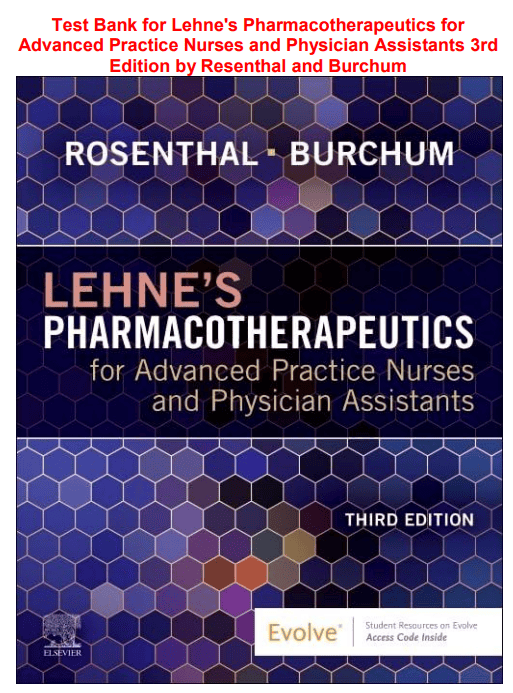
This test bank is built around Lehne’s Pharmacotherapeutics for Advanced Practice Nurses and Physician Assistants, 3rd Edition by Rosenthal and Burchum. It gives you a focused, efficient way to study every chapter — without spending hours re-reading pages you have already covered.
Each question is written to challenge your thinking. Not just recall. Real application. The kind of reasoning you need in both your exams and your clinical practice.
What’s Inside
Here is what you get when you purchase this test bank:
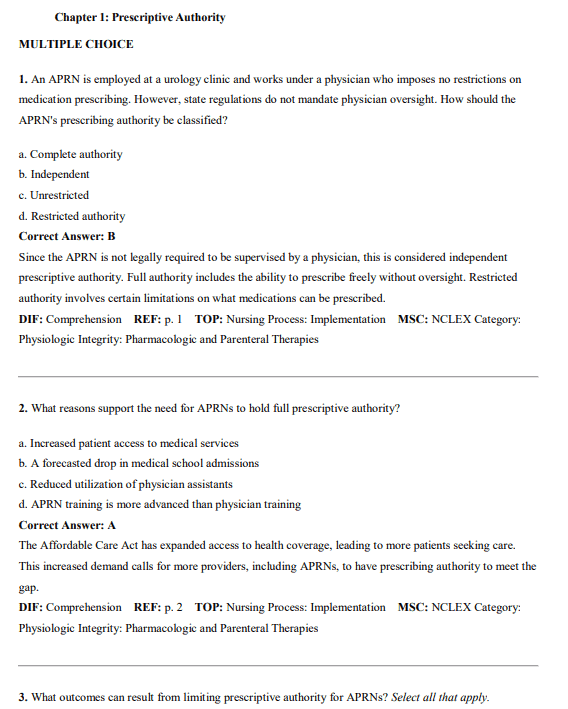
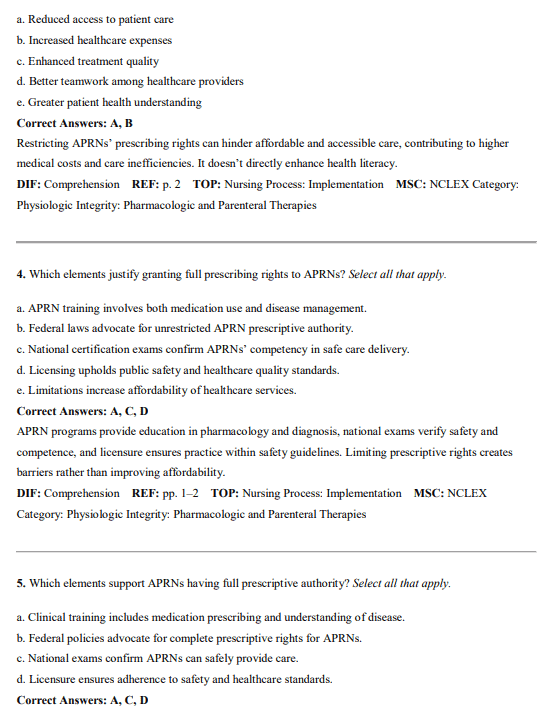
- Hundreds of exam-style multiple-choice questions organized by chapter
- Questions written to reflect APRN board exam and clinical reasoning standards
- Correct answers clearly identified for every question
- Detailed rationales explaining the pharmacological reasoning behind each answer
- Questions covering drug mechanisms, indications, contraindications, side effects, and patient education
- Content fully aligned with the 3rd edition — current, accurate, and relevant
Topics Covered
Lehne’s Pharmacotherapeutics covers a vast range of drug classes and clinical conditions. This test bank includes questions on all major sections:
- Principles of pharmacology and pharmacokinetics
- Drug interactions and adverse effects
- Cardiovascular drugs — antihypertensives, diuretics, anticoagulants
- Respiratory pharmacology — bronchodilators, corticosteroids
- Central nervous system drugs — antidepressants, antipsychotics, anxiolytics
- Endocrine pharmacology — insulin, thyroid drugs, corticosteroids
- Antimicrobial therapy — antibiotics, antivirals, antifungals
- Gastrointestinal pharmacology
- Pain management — opioids, NSAIDs, adjuvant analgesics
- Women’s health and reproductive pharmacology
- Oncology and immunosuppressant drugs
- Pediatric and geriatric pharmacological considerations
- Patient education and medication adherence strategies
Who Should Use This
This test bank is the right fit for:
- Graduate nursing students in APRN, NP, or DNP programs
- Physician assistant students preparing for pharmacology exams
- Students using Lehne’s 3rd Edition as their primary course text
- Advanced practice nurses preparing for certification exams
- Faculty who need high-quality pharmacology test questions
- Anyone who wants to sharpen clinical drug knowledge quickly
If pharmacotherapeutics is part of your program, this resource will help you study smarter and perform better on every exam.
Why Students Love It
Pharmacology is not a subject you can cram. There are too many drugs, too many interactions, and too many clinical nuances to memorize at the last minute.
This test bank helps you build knowledge over time. You work through questions chapter by chapter. When you get one wrong, the rationale tells you exactly why — in plain, clear language. You learn the reasoning, not just the answer.
Students who use this test bank consistently report that they:
- Feel more confident going into pharmacology exams
- Understand drug mechanisms instead of just memorizing names
- Catch gaps in their knowledge before those gaps cost them on a test
- Connect pharmacology concepts to real patient care scenarios
- Save significant study time by focusing on high-yield content
Pharmacotherapeutics does not have to feel impossible. The right practice material makes all the difference.
Sample Questions with Answers & Rationales
Here are 10 sample questions from this test bank. They reflect the depth and clinical focus of the full product.
Question 1
A patient with hypertension and type 2 diabetes is prescribed an ACE inhibitor. Which additional benefit makes this drug class particularly appropriate for this patient?
- A. It lowers blood glucose levels directly
- B. It provides renal protection by reducing proteinuria
- C. It eliminates the need for a diuretic
- D. It reduces the risk of peripheral neuropathy
Correct Answer: B Rationale: ACE inhibitors reduce intraglomerular pressure, which slows the progression of diabetic nephropathy and reduces proteinuria. This dual benefit — blood pressure control and kidney protection — makes them a preferred first-line choice in patients with both hypertension and diabetes.
Question 2
A patient taking warfarin reports starting a new course of antibiotics prescribed by another provider. What is the most important concern for the APRN?
- A. Antibiotics have no effect on warfarin metabolism
- B. Antibiotics may decrease gut flora that produce vitamin K, increasing bleeding risk
- C. The patient should stop warfarin while taking antibiotics
- D. Antibiotics will reduce warfarin absorption significantly
Correct Answer: B Rationale: Many antibiotics reduce the intestinal bacteria that synthesize vitamin K. This can potentiate warfarin’s anticoagulant effect and increase bleeding risk. The APRN should increase INR monitoring frequency and educate the patient about signs of bleeding.
Question 3
Which statement about opioid-induced constipation is correct?
- A. It resolves on its own after a few days of opioid therapy
- B. Tolerance to constipation develops quickly, so it rarely needs treatment
- C. It is a persistent side effect that requires a proactive bowel regimen
- D. It only occurs with short-term opioid use
Correct Answer: C Rationale: Unlike many opioid side effects, tolerance to constipation does not develop. It persists for the duration of opioid therapy. A proactive bowel regimen — including stimulant laxatives — should be initiated at the start of opioid treatment, not after symptoms develop.
Question 4
A patient with asthma is prescribed a short-acting beta-2 agonist (SABA). What is the primary purpose of this medication?
- A. Long-term prevention of asthma attacks
- B. Reduction of airway inflammation over time
- C. Quick relief of acute bronchospasm
- D. Prevention of exercise-induced allergic reactions
Correct Answer: C Rationale: SABAs such as albuterol act quickly to relax bronchial smooth muscle and relieve acute bronchospasm. They are rescue medications, not long-term control drugs. Patients who rely on SABAs more than twice a week for symptom control need their maintenance therapy reassessed.
Question 5
A patient starting metformin for type 2 diabetes asks why they need to stop taking it before a CT scan with contrast. What is the best explanation?
- A. Contrast dye reduces the effectiveness of metformin
- B. The combination can cause dangerous hypoglycemia
- C. Contrast dye can impair kidney function, increasing the risk of lactic acidosis with metformin
- D. Metformin interferes with the imaging results
Correct Answer: C Rationale: Iodinated contrast agents can cause acute kidney injury. If renal function is impaired, metformin can accumulate to toxic levels and increase the risk of lactic acidosis, a rare but life-threatening complication. Metformin is typically held before and 48 hours after contrast administration.
Question 6
Which of the following is the most serious adverse effect associated with fluoroquinolone antibiotics that the APRN should discuss with patients?
- A. Mild gastrointestinal upset
- B. Temporary skin rash
- C. Tendon rupture, especially in older adults
- D. Reduced appetite for the first week of treatment
Correct Answer: C Rationale: Fluoroquinolones carry an FDA black box warning for tendinitis and tendon rupture, particularly the Achilles tendon. Risk is highest in patients over 60, those on corticosteroids, and transplant recipients. Patients should be counseled to stop the medication and report any tendon pain immediately.
Question 7
A patient on lithium therapy comes in reporting tremors, confusion, and nausea. Their serum lithium level is 2.1 mEq/L. What should the APRN do first?
- A. Reassure the patient that these are expected side effects
- B. Reduce the lithium dose by half and recheck levels in a week
- C. Hold lithium immediately and manage toxicity as a medical emergency
- D. Increase fluid intake and recheck the level in 24 hours
Correct Answer: C Rationale: A lithium level above 2.0 mEq/L, combined with neurological symptoms, indicates severe toxicity. This is a medical emergency. Lithium must be stopped immediately and supportive treatment initiated. In severe cases, hemodialysis may be required to remove lithium from the bloodstream.
Question 8
Which patient should not receive a live attenuated vaccine?
- A. A healthy 25-year-old with seasonal allergies
- B. A patient currently taking high-dose corticosteroids
- C. A patient with a history of mild penicillin allergy
- D. A breastfeeding mother with no chronic illness
Correct Answer: B Rationale: High-dose corticosteroids cause immunosuppression, which makes live vaccines dangerous. The weakened virus in the vaccine can cause active infection in immunocompromised patients. Inactivated vaccines are used instead. Allergy to penicillin and breastfeeding are not contraindications to live vaccines.
Question 9
An APRN is prescribing an SSRI for a patient with depression. The patient is also taking tramadol for chronic pain. What is the most important drug interaction to recognize?
- A. SSRIs reduce the effectiveness of tramadol for pain
- B. The combination increases the risk of serotonin syndrome
- C. Tramadol blocks serotonin reuptake and cancels the SSRI effect
- D. SSRIs increase tramadol levels, causing sedation
Correct Answer: B Rationale: Both SSRIs and tramadol increase serotonergic activity. Used together, they can trigger serotonin syndrome — a potentially life-threatening condition characterized by agitation, hyperthermia, tachycardia, and neuromuscular abnormalities. This combination should be avoided or used with extreme caution and close monitoring.
Question 10
A patient asks why they need to take their bisphosphonate medication first thing in the morning with a full glass of water and remain upright for 30 minutes. What is the best explanation?
- A. The medication works better when taken on an empty stomach in the morning
- B. Food and lying down reduce absorption and increase the risk of esophageal irritation
- C. The medication causes dizziness and the upright position prevents falls
- D. Morning dosing aligns with the body’s natural bone remodeling cycle
Correct Answer: B Rationale: Bisphosphonates like alendronate are poorly absorbed and highly irritating to the esophagus. Food and beverages other than plain water significantly reduce absorption. Remaining upright prevents reflux of the medication into the esophagus, which can cause severe esophageal ulceration and damage.
Frequently Asked Questions (FAQs)
Is this the official publisher test bank? No. This is an independently developed study resource. It is not affiliated with Elsevier or the textbook authors. It is designed as a supplementary study tool for students and educators.
Do I need the textbook to use this test bank? Having the textbook as a reference is helpful, but not required. The questions and rationales are detailed enough to be used independently. Many students use this alongside lecture notes and course slides.
What format does the file come in? Your file will be available in both PDF and Word formats. Both are compatible with any device — desktop, laptop, tablet, or phone.
How quickly will I receive my file? Immediately after your payment is confirmed, a download link is sent to your email. There is no waiting period. Most students access their file within minutes of purchase.
Is this test bank helpful for APRN certification prep? Yes. Pharmacotherapeutics is heavily tested on APRN certification exams including the ANCC and AANP. The questions in this test bank are written to the level of clinical reasoning those exams require, making it a strong supplementary prep tool.
Can physician assistant students use this? Absolutely. The content is based on a textbook written for both APRNs and physician assistants. The pharmacology principles, drug classes, and clinical reasoning questions are equally relevant to PA students.
What if I have a problem with my purchase? Contact our support team and we will take care of it. We are committed to making sure every customer gets exactly what they paid for.
Bennytah –
Excellent. well worth the money
Janty956 –
Perfectly organized, top quality test bank.
Martini508 –
I like that every question is followed by the correct answer and a detailed rationale.
kchomba –
what a gem! Keep updating the store with more like this and i will keep coming back
Ngech –
So far so good. Top quality product
Mitacho K –
perfect!
Barbara Kimani –
Great for overcoming exam anxiety
Craig J. –
worth every penny
Kenny Patrick –
Good
Karen G –
exactly what I have been looking for
Gerald M. –
Excellent!
Lydiah Mich –
My first time buying a document here, and I absolutely love it.
Terence Mao –
Makes my studies easier by miles
Mike Prince –
A solid test bank.
Carol Kay –
Very helpful document
Rosemary R –
one of my favorite resource for this course
Thomas K. –
Exactly what I needed to face my finals with renewed confidence
Kevin Fraser –
the best
Caleb Martins –
Great questions perfect answers and detailed rationales
Lucille Maria –
The pdf document is searchable making it it extremely easy for me to find the content I want when I want it.
Winnie M. –
So far so good