Every infection your patients will ever develop began with a microorganism you can study right now.
The bacterium that causes a urinary tract infection. The virus that will kill a patient with HIV if treatment is not optimized. The fungus that colonizes the airways of a cystic fibrosis patient. The prion that silently destroys brain tissue for decades before the first neurological symptom appears. The Clostridioides difficile spores that survive alcohol hand sanitizer and persist on hospital surfaces for months. The antibiotic-resistant Staphylococcus aureus strain that turns a minor surgical wound into a life-threatening bloodstream infection.
These microorganisms are not abstractions. They are the biological agents behind the infectious diseases your patients will present with — in every clinical setting, across every nursing specialty, throughout an entire healthcare career. Understanding them — their structure, their metabolism, their mechanisms of pathogenicity, their ecological relationships with the human host, and the public health systems designed to control them — is not optional background knowledge for healthcare professionals.
It is the foundational science that makes infectious disease clinical reasoning possible.
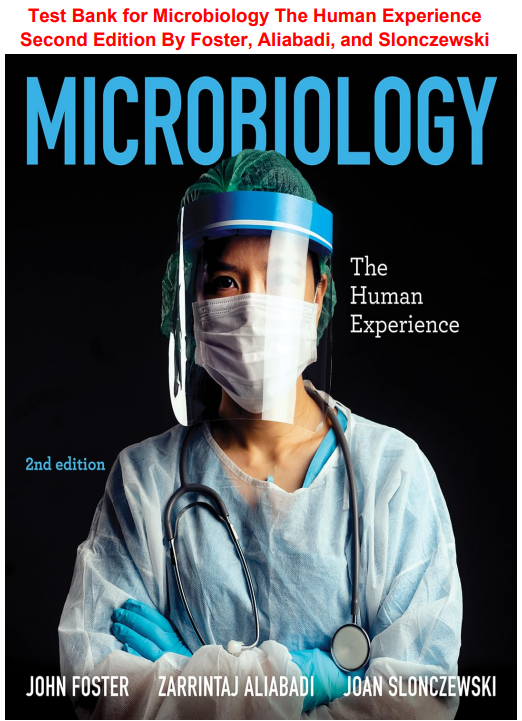
This comprehensive test bank is built for the 2nd Edition of Microbiology: The Human Experience by Foster, Aliabadi, and Slonczewski. It is one of the most clinically connected, most student-accessible, and most rigorously scientific microbiology textbooks in pre-health science education — bringing the human dimension to microbiology by connecting microbial science directly to human health, disease, and the social and environmental context in which infectious disease occurs.
Whether you are completing a pre-nursing microbiology prerequisite, preparing for a course exam, or building the infectious disease science foundation that every healthcare career requires, this resource delivers the microbial science depth, clinical disease connection, and public health relevance that Foster, Aliabadi, and Slonczewski build into every chapter.
What’s Inside?
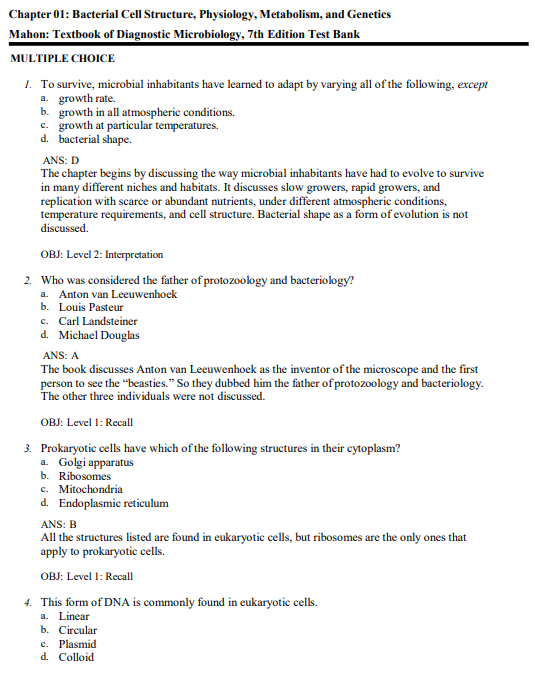
- Hundreds of practice questions covering every chapter
- Multiple-choice, true/false, matching, and clinical application questions
- Complete answer keys with thorough, microbiologically grounded rationales
- Questions covering microbial structure and function, pathogenicity mechanisms, host-microbe interactions, immune response, clinical disease, and public health
- Content aligned with pre-nursing, allied health, and health science program examination standards
Who Is This Test Bank For?
This resource is perfect for:
- Pre-nursing students completing microbiology prerequisites using the 2nd Edition
- Allied health students in medical assisting, respiratory therapy, and radiography programs
- Pre-medical, pre-dental, and pre-pharmacy students in microbiology courses
- Undergraduate nursing students reviewing foundational microbiology concepts
- Science instructors building course exams and unit assessments for the 2nd Edition
- Healthcare professionals seeking a comprehensive microbiology refresher
- Students whose programs use Foster, Aliabadi, and Slonczewski as their course text
Why This Test Bank Delivers Results
Foster, Aliabadi, and Slonczewski built Microbiology: The Human Experience around a philosophy that transforms the way microbiology feels to students who plan to enter healthcare — that microbial science is not a collection of taxonomic classifications and metabolic pathway diagrams to be memorized and forgotten. It is the living, dynamic science that explains the infectious diseases students will encounter every working day of their healthcare careers.
The 2nd Edition advances that philosophy with updated clinical case content reflecting the most current infectious disease landscape — including COVID-19 and SARS-CoV-2 variants, updated antibiotic resistance mechanisms and antimicrobial stewardship frameworks, expanded microbiome content reflecting the explosion of microbiome research in the past decade, enhanced public health and epidemiology content addressing post-pandemic infectious disease surveillance, and the most current immunological content reflecting advances in understanding adaptive and innate immune interactions.
This test bank is built to develop exactly the applied, clinically connected microbiological understanding that Foster, Aliabadi, and Slonczewski embed throughout the 2nd Edition.
Every question requires you to go beyond taxonomic recall and engage with the microbiological mechanisms that determine clinical outcomes. You will not simply name the causative organism of tuberculosis — you will explain why Mycobacterium tuberculosis is able to survive within macrophages, how that survival mechanism produces the granuloma formation characteristic of TB, and why this creates the latency period that makes TB uniquely challenging to eradicate. You will not just identify antibiotic mechanisms of action — you will explain which specific bacterial structure or process each antibiotic class targets, why that target is lethal to bacteria but not to human cells, and how resistance mechanisms evolve to circumvent each target. You will not merely name the phases of the human immune response to infection — you will trace the specific cellular and molecular events from pathogen recognition through adaptive immune memory formation.
Detailed rationales explain the microbial mechanisms, host-pathogen interaction principles, immunological frameworks, antimicrobial pharmacology, and public health significance behind every correct answer. Questions are organized unit by unit and chapter by chapter — mirroring the 2nd Edition’s structure — for structured, systematic study.
Sample Questions
Question 1
A microbiology student is studying the mechanism by which Mycobacterium tuberculosis evades destruction after phagocytosis by alveolar macrophages. Which mechanism most accurately explains how M. tuberculosis survives within macrophages and why this creates the clinical challenge of latent tuberculosis infection?
- A) M. tuberculosis produces a polysaccharide capsule that physically prevents phagosome membrane formation around the bacterium, allowing it to remain free in the macrophage cytoplasm where it is inaccessible to lysosomal enzymes
- B) M. tuberculosis prevents phagosome-lysosome fusion through multiple mechanisms — including the secretion of proteins that block the normal maturation of the phagosome — allowing the bacterium to survive and replicate within the arrested phagolysosome; the host immune response attempts to wall off the infection by forming granulomas — organized collections of macrophages, epithelioid cells, and lymphocytes surrounding the infection; within these granulomas, M. tuberculosis can enter a metabolically dormant state, surviving for decades and potentially reactivating when host immunity is compromised
- C) M. tuberculosis rapidly escapes from the phagosome into the macrophage cytoplasm by secreting pore-forming toxins that disrupt the phagosomal membrane, reaching the cytoplasm where it replicates freely away from phagocytic defenses
- D) M. tuberculosis avoids macrophage uptake entirely through the production of anti-phagocytic surface proteins that prevent receptor-mediated endocytosis — surviving extracellularly in the alveolar space rather than within macrophages
Correct Answer: B
Rationale: The intramacrophage survival of Mycobacterium tuberculosis is one of the most clinically significant and microbiologically sophisticated host-pathogen interactions in infectious disease — and understanding it at the mechanistic level is essential for any healthcare professional managing TB patients or understanding the epidemiology of this global pandemic. After phagocytosis by alveolar macrophages — the body’s intended first line of defense against respiratory pathogens — M. tuberculosis deploys multiple strategies to prevent the normal bactericidal phagolysosomal pathway. The normal sequence of macrophage killing requires phagosome maturation — a process in which the phagosome fuses with lysosomes, creating the acidic, enzyme-rich, reactive oxygen species-containing environment of the phagolysosome that destroys most pathogens. M. tuberculosis secretes proteins including ESAT-6 and the SapM phosphatase that arrest phagosome maturation — preventing the acidification and lysosomal fusion that would kill the bacterium. The mycobacterium thus survives and can slowly replicate within the arrested, non-acidified phagosome. The host immune system responds by activating CD4+ T lymphocytes that release IFN-γ, stimulating macrophages to form granulomas — structured aggregates of activated macrophages, fused giant cells, and lymphocytes that wall off the infection. Within these hypoxic, nutrient-limited granuloma environments, M. tuberculosis can convert to a metabolically dormant state, dramatically reducing its replication rate and becoming less susceptible to immune clearance and antibiotic activity. This dormant state within granulomas is the biological basis of latent TB infection — the bacterium survives for decades within macrophages and granulomas, reactivating when host immunity is compromised by HIV infection, immunosuppressive therapy, malnutrition, or aging.
Question 2
A student is studying antibiotic mechanisms of action and resistance. A patient with a methicillin-resistant Staphylococcus aureus bloodstream infection is being treated with vancomycin. The student must explain why vancomycin retains activity against MRSA when beta-lactam antibiotics have failed, and identify the specific bacterial target of vancomycin. Which explanation most accurately reflects the microbiology of this clinical scenario?
- A) Vancomycin is effective against MRSA because it targets bacterial ribosomes — the same intracellular target that MRSA’s modified penicillin-binding protein cannot protect against since ribosomal structure is unrelated to cell wall synthesis
- B) Beta-lactam antibiotics fail against MRSA because the mecA gene encodes a modified penicillin-binding protein (PBP2a) with reduced beta-lactam affinity — vancomycin retains activity because it targets a different step in cell wall synthesis, binding directly to the D-Ala-D-Ala terminus of peptidoglycan precursors and sterically blocking transpeptidation without requiring PBP binding — making MRSA’s modified PBP irrelevant to vancomycin’s mechanism
- C) Vancomycin is effective against MRSA because it disrupts the bacterial cell membrane rather than cell wall synthesis — since MRSA resistance specifically protects cell wall synthesis while leaving the membrane vulnerable
- D) MRSA produces beta-lactamase enzymes that destroy all beta-lactam antibiotics — vancomycin is unaffected by beta-lactamase since it is not a beta-lactam and the enzyme cannot hydrolyze its chemical structure
Correct Answer: B
Rationale: This question requires mechanistic understanding of both MRSA resistance and vancomycin’s mechanism of action — a high-yield clinical microbiology concept with direct patient care implications. Methicillin resistance in S. aureus is mediated by the mecA gene, which encodes PBP2a — a modified penicillin-binding protein with dramatically reduced affinity for all beta-lactam antibiotics. Penicillin-binding proteins are the transpeptidase enzymes that catalyze the final cross-linking step in peptidoglycan cell wall synthesis — beta-lactams work by covalently binding to the active site of PBPs, blocking transpeptidation and preventing functional cell wall completion, ultimately causing cell lysis under osmotic stress. When PBP2a is expressed, it takes over the transpeptidation function while being inaccessible to beta-lactam binding, conferring resistance to all beta-lactams including methicillin, oxacillin, and the anti-staphylococcal penicillins. Vancomycin bypasses PBP2a entirely because its mechanism of action is upstream of the transpeptidation step — vancomycin is a glycopeptide antibiotic that binds directly to the D-Ala-D-Ala dipeptide terminus of the linear peptidoglycan precursor (lipid II) before the transpeptidase reaction occurs. By sterically blocking the D-Ala-D-Ala terminus, vancomycin prevents the lipid II precursor from being incorporated into the growing peptidoglycan chain — regardless of which PBP is present. Since vancomycin’s target is the peptidoglycan precursor substrate rather than the transpeptidase enzyme, PBP2a’s modified active site is completely irrelevant to vancomycin’s mechanism. This mechanistic understanding also explains the emerging threat of vancomycin-intermediate and vancomycin-resistant S. aureus (VISA/VRSA) — these strains have modified D-Ala-D-Ala to D-Ala-D-Lac, dramatically reducing vancomycin binding affinity.
Question 3
A nursing student is reviewing the epidemiology of Clostridioides difficile infection and the specific characteristics of C. difficile that explain its persistence in healthcare environments and its resistance to standard alcohol-based hand hygiene. Which microbiological characteristics most accurately explain these clinical epidemiological observations?
- A) C. difficile produces a polysaccharide biofilm on skin surfaces that alcohol cannot penetrate — alcohol kills vegetative C. difficile cells but cannot dissolve the biofilm matrix protecting them during hand hygiene
- B) C. difficile produces environmentally resistant endospores — the dormant, metabolically inactive spore form of the bacterium has a multilayered protein coat and outer cortex that provides extraordinary resistance to desiccation, heat, ultraviolet radiation, and chemical disinfectants including alcohol-based hand sanitizers; spores can persist on environmental surfaces for months and are transmitted to new hosts via fecal-oral route, germinating into vegetative toxin-producing cells when they encounter favorable conditions in the colon — this spore formation is the primary reason soap and water hand hygiene is specifically recommended for C. difficile precautions
- C) C. difficile survives alcohol-based hand sanitizers because it is an enveloped virus-like particle rather than a true bacterium — the lipid envelope that normally makes enveloped organisms susceptible to alcohol is absent in C. difficile due to its unique evolutionary history
- D) C. difficile’s alcohol resistance results from its production of alcohol dehydrogenase — an enzyme that metabolizes isopropanol and ethanol in alcohol-based hand sanitizers before they can contact and damage the bacterial cell membrane
Correct Answer: B
Rationale: The clinical epidemiology of C. difficile infection is directly and entirely explained by the microbiological characteristics of bacterial endospores — and this connection between microbial biology and clinical infection control practice is precisely the type of applied microbiological understanding that Foster, Aliabadi, and Slonczewski emphasize throughout the 2nd Edition. C. difficile is an obligate anaerobe — it cannot survive oxygen exposure in the vegetative cell form. However, when C. difficile cells encounter environmental stress, they differentiate into endospores — the dormant survival structure formed by certain gram-positive bacteria through a regulated developmental process called sporulation. The C. difficile endospore is extraordinarily resistant to environmental destruction because of its layered protective architecture — the inner membrane, cortex layer, inner coat, outer coat, and exosporium collectively provide resistance to desiccation, heat, UV radiation, and chemical disinfectants. Alcohol — the active ingredient in hand sanitizers — is highly effective against vegetative bacterial cells by denaturing membrane proteins and disrupting cell membrane integrity. However, alcohol cannot penetrate the multilayered spore coat to reach and damage the dormant metabolic machinery within the spore. This is why C. difficile contact precautions specifically require soap and water hand washing rather than alcohol-based hand rubs — the mechanical friction and surfactant action of soap and water physically removes spores from skin surfaces rather than killing them chemically. C. difficile spores can survive on hospital surfaces — bedframes, call lights, toilets, overbed tables — for months, explaining the environmental persistence and transmission patterns of healthcare-associated C. difficile outbreaks.
Question 4
A student is studying viral pathogenesis and must explain why influenza viruses require annual vaccine reformulation while the measles vaccine provides lifelong immunity from a single vaccination series. Which virological mechanism most accurately explains this difference in vaccine strategy?
- A) Influenza vaccines require annual reformulation because influenza is a DNA virus with inherently high mutation rates — DNA replication enzymes have lower fidelity than RNA replication enzymes, producing more mutations per replication cycle and driving rapid antigenic evolution
- B) Influenza viruses are RNA viruses that use an RNA-dependent RNA polymerase lacking proofreading activity — this generates high mutation rates producing continuous antigenic variation in the hemagglutinin and neuraminidase surface proteins (antigenic drift), along with periodic reassortment events when different influenza strains co-infect the same cell and exchange gene segments (antigenic shift); the measles virus, while also an RNA virus, has significantly lower mutation rates, a single stable serotype, and surface proteins that have remained antigenically consistent for decades — allowing vaccine-induced antibodies to remain effective long-term
- C) Influenza vaccines require annual reformulation because influenza is a bacterium-like particle that develops antibiotic-like resistance to vaccine-induced antibodies — measles does not develop this resistance because the measles vaccine targets intracellular antigens that cannot evolve resistance
- D) The difference in vaccine strategy reflects manufacturing limitations rather than viral biology — influenza vaccines could provide lifelong immunity if produced using the same live-attenuated platform as the measles vaccine, but cost constraints prevent this approach
Correct Answer: B
Rationale: This question addresses one of the most clinically relevant and frequently misunderstood concepts in medical virology — the mechanism of influenza antigenic variation and how it compares to the remarkable stability of measles virus antigenicity. Understanding the answer requires both molecular virology knowledge and an appreciation of its direct public health implications. Influenza A and B viruses are negative-sense, single-stranded RNA viruses that replicate using an RNA-dependent RNA polymerase — an enzyme that, unlike DNA polymerases and most RNA polymerases, lacks a proofreading mechanism to correct replication errors. This high error rate produces approximately one mutation per genome per replication cycle, generating enormous viral genetic diversity. For influenza, mutations accumulating in the hemagglutinin and neuraminidase surface proteins — the primary targets of neutralizing antibodies — gradually alter their antigenic structure (antigenic drift), eventually creating strains that partially escape immunity from previous infection or vaccination. Additionally, influenza A viruses have a segmented RNA genome — eight separate RNA segments — that allows genetic reassortment when two different influenza strains simultaneously infect the same cell. Reassortment can produce completely novel surface protein combinations (antigenic shift) against which no existing population immunity exists, potentially causing pandemic influenza. Measles virus is a non-segmented, negative-sense RNA virus (paramyxovirus) that, while also using an error-prone RNA polymerase, accumulates mutations much more slowly and has only a single stable serotype. The hemagglutinin and fusion proteins of measles virus have remained antigenically consistent since the introduction of the vaccine in 1963 — vaccine-induced antibodies remain effective against current circulating strains, producing the enduring immunity that makes measles elimination theoretically achievable through vaccination.
Question 5
A student is studying the human microbiome and its role in health and disease. A patient has received a broad-spectrum antibiotic regimen for two weeks following a serious infection. The patient develops profuse watery diarrhea and is diagnosed with C. difficile infection. Which microbiological mechanism most accurately explains why antibiotic therapy predisposes this patient to C. difficile infection?
- A) Broad-spectrum antibiotics directly stimulate C. difficile growth by providing the bacterial nutrients released from the destruction of competing bacteria — the more competing bacteria are killed, the more nutritional substrate is available to C. difficile
- B) Broad-spectrum antibiotics disrupt the normal colonic microbiome by eliminating the diverse commensal bacterial populations that compete with C. difficile for nutrients and colonization sites through colonization resistance — the disrupted microbiome loses this competitive suppression, allowing residual or newly acquired C. difficile spores to germinate, colonize the colon in large numbers, and produce toxins A and B that damage colonocytes and cause the profuse diarrhea characteristic of CDI
- C) Broad-spectrum antibiotics kill C. difficile vegetative cells, triggering emergency sporulation — the sudden massive spore release from dying vegetative cells overwhelms host defenses and initiates CDI through a spore toxin that is distinct from the vegetative cell toxins
- D) CDI following antibiotic therapy results from antibiotic-induced suppression of the host immune system — specifically the reduction of intestinal IgA secretion that normally prevents C. difficile adherence to colonocyte surface receptors
Correct Answer: B
Rationale: This question addresses the microbiome-mediated mechanism of antibiotic-associated C. difficile infection — one of the most clinically significant and microbiologically informative topics connecting microbiome science to infectious disease practice. The healthy human colon harbors an extraordinarily diverse microbial community — hundreds of bacterial species at densities exceeding 10¹¹ organisms per gram of content. This community collectively provides colonization resistance — the ecological suppression of pathogen establishment through multiple mechanisms including competitive exclusion for colonization niches, competition for available nutrients (particularly bile acids that C. difficile requires for spore germination), and the production of antimicrobial metabolites including short-chain fatty acids and bacteriocins that inhibit C. difficile growth. C. difficile exists in the colonic environment of many individuals as a low-abundance community member, or is acquired from environmental spores, but is suppressed below pathogenic levels by this colonization resistance. When broad-spectrum antibiotic therapy eliminates large proportions of the commensal microbiome — including the Bacteroidetes, Lachnospiraceae, Ruminococcaceae, and other taxa that contribute most to colonization resistance — the ecological suppression of C. difficile is removed. C. difficile spores germinate in the disrupted colonic environment where nutrients are abundant and competition is absent, rapidly proliferating to high colonization densities. At high densities, C. difficile produces its primary virulence factors — toxin A (enterotoxin) and toxin B (cytotoxin) — which bind to receptors on colonocytes, disrupt tight junctions, cause inflammatory colitis, and trigger the profuse watery diarrhea, pseudomembranous colitis, and in severe cases toxic megacolon that characterize CDI. This mechanism directly explains why fecal microbiota transplantation — restoring colonization resistance by transplanting healthy donor microbiome — is highly effective for recurrent CDI.
Frequently Asked Questions (FAQs)
What edition does this test bank cover?
This test bank is written specifically for the 2nd Edition of Microbiology: The Human Experience by Foster, Aliabadi, and Slonczewski. All questions are fully aligned with the current edition’s chapter organization, updated infectious disease content, current antibiotic resistance mechanisms, updated microbiome science, and current public health and epidemiology frameworks.
Does this test bank follow the textbook’s unit and chapter structure?
Yes. Questions are organized to mirror the 2nd Edition’s complete unit and chapter structure — from Unit 1 (The Microbial World) through Unit 7 (Controlling Microbial Disease) — allowing you to study systematically through all 29 chapters or focus on specific units based on your upcoming exam schedule.
Is this test bank useful for nursing school prerequisite preparation?
Absolutely. Microbiology is a required prerequisite for most nursing and allied health programs, and microbiology knowledge directly supports clinical practice in infection control, antibiotic stewardship, infectious disease recognition, and public health nursing. This test bank directly aligns with the 2nd Edition content and the clinical application level that nursing programs expect.
Is this test bank useful for allied health students beyond pre-nursing?
Yes. Microbiology: The Human Experience is widely used across pre-health science disciplines — pre-medical, pre-dental, pre-pharmacy, respiratory therapy, medical assisting, and more. Any student using the 2nd Edition will find this test bank directly relevant to their coursework.
How does this test bank differ from other microbiology test banks?
This test bank is built specifically for Foster, Aliabadi, and Slonczewski’s 2nd Edition — with its unique emphasis on the human experience dimension of microbiology, connecting microbial science directly to clinical infectious disease, public health, and the social context of human-microbe interactions. Questions reflect that applied, clinically connected approach rather than pure taxonomy or biochemistry recall.
How quickly can I access the test bank after purchase?
Immediately. As soon as your purchase is complete, you receive instant digital access with no waiting period. Study on your own schedule, at your own pace, from any device.
Are the rationales written to reflect the human experience connection that defines Foster, Aliabadi, and Slonczewski’s approach?
Yes. Every rationale connects microbial mechanisms directly to clinical and public health significance — explaining not just what a microorganism does but why it matters for human health outcomes, consistent with the human experience philosophy embedded throughout the 2nd Edition.
Can instructors use this test bank for course assessments?
Absolutely. The unit-and-chapter organization, clinical application emphasis, and mechanistically grounded rationale construction make this an excellent resource for faculty building unit exams, quizzes, and comprehensive course assessments for microbiology courses in nursing and allied health programs using the 2nd Edition.
Lucille Maria –
Perfect!
Patty Townsend –
A very useful resource
Alexander Savic –
Exactly what I needed as I prepare for my midterms
Kevin May –
Very good
Selina Meg –
I like it
Liam Mbogo –
Good resource for repeated topic review.
Charlotte Rivera –
Convenient tool for quick study sessions
Doris King –
Clear wording makes questions easy to follow
Sarah Brown –
Helpful practice questions for strengthening understanding of key topics.
Harry Peters –
Useful resource for reviewing lessons before important exams
Betty Morgot –
Good study material for improving daily revision habits.
Gerald N –
Questions provide valuable practice for independent learners.
Kai Marcus –
Convenient tool for reviewing concepts whenever needed.
Leo Fernandez –
Useful questions for strengthening my understanding of key microbiology topics.
Sally K. –
Makes reviewing difficult topics more manageable
Dorcas M. –
Helpful resource for practicing essential healthcare knowledge.