Every great nurse starts with the fundamentals.
Before you master pharmacology, before you tackle med-surg, before you step into your first clinical rotation with confidence — you need a rock-solid foundation in the core concepts and skills of nursing practice. That foundation starts here.
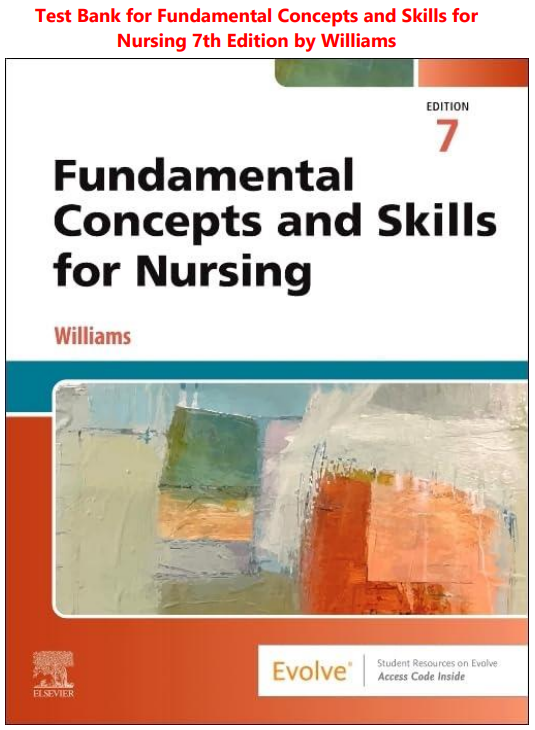
This comprehensive test bank is built for the 7th Edition of Fundamental Concepts and Skills for Nursing by Susan C. Williams. It’s the chapter-by-chapter study companion that nursing students rely on to reinforce foundational knowledge, sharpen clinical thinking, and walk into exams fully prepared.
Whether you’re just beginning your nursing journey or reviewing the basics before the NCLEX, this test bank delivers the focused, purposeful practice you need.
What’s Inside?
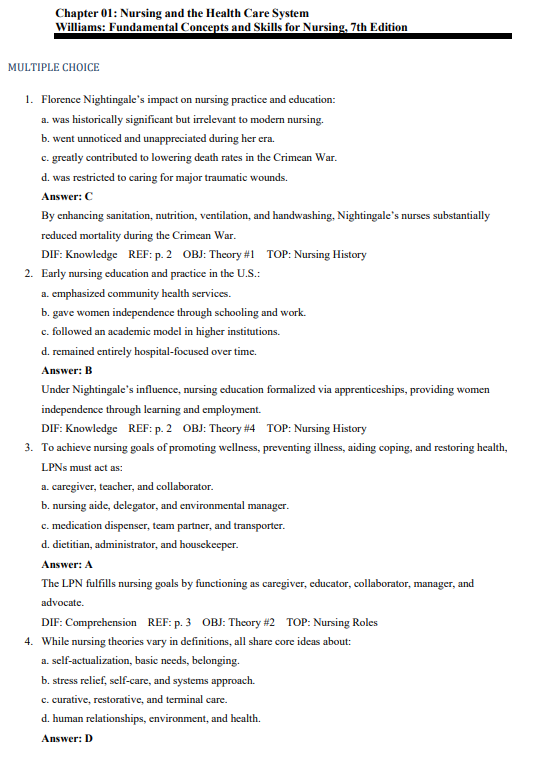
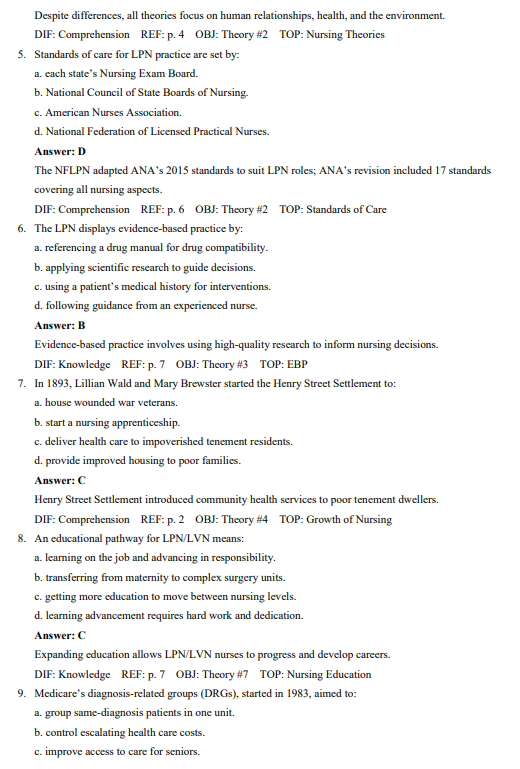
- Hundreds of practice questions covering every chapter
- Multiple-choice, true/false, select-all-that-apply, and clinical scenario questions
- Complete answer keys with thorough, clearly written rationales
- Questions aligned with current NCLEX-RN and NCLEX-PN exam standards
- Coverage of all fundamental nursing concepts, skills, and clinical applications
Who Is This Test Bank For?
This resource is perfect for:
- First and second-year undergraduate nursing students
- LPN and LVN students building foundational nursing knowledge
- RN-to-BSN students reviewing core nursing concepts
- NCLEX-RN and NCLEX-PN candidates refreshing fundamentals
- Nursing faculty creating course exams and skills assessments
- Nursing students in accelerated or second-degree programs
Topics Covered Include:
- History, trends, and professional standards of nursing practice
- Legal and ethical dimensions of nursing care
- Communication, therapeutic relationships, and patient education
- Cultural competence and patient-centered care
- The nursing process — assessment, diagnosis, planning, implementation, evaluation
- Documentation, reporting, and electronic health records
- Infection control, asepsis, and standard precautions
- Vital signs assessment and interpretation
- Physical assessment and head-to-toe examination
- Nutrition, hydration, and fluid balance
- Mobility, positioning, and activity needs
- Wound care, skin integrity, and pressure injury prevention
- Medication administration and safe drug handling
- Pain assessment and non-pharmacological pain management
- Perioperative nursing care
- Urinary and bowel elimination needs
- Oxygenation and respiratory care basics
- Death, dying, and end-of-life care
Why This Test Bank Works
Fundamentals is where nursing students either build confidence — or start to lose it.
The volume of content is enormous. The concepts range from deeply practical to surprisingly complex. And the stakes are high — because everything that comes after nursing fundamentals builds directly on what you learn here.
This test bank makes that foundation solid.
Every question is written to test genuine understanding — not just recognition of familiar terms. You’ll work through clinical scenarios, prioritization questions, and application-level content that mirrors exactly what your professor — and eventually the NCLEX — will ask. Detailed rationales reinforce the reasoning behind every correct answer, turning each practice session into a real learning opportunity.
Questions are organized chapter by chapter so you can study systematically or zero in on specific topics where you need the most work. No flipping through textbooks trying to figure out what to study next. Just focused, efficient exam preparation — from the very first chapter to the last.
Sample Questions
Question 1 A nurse is preparing to administer a medication and notices the patient’s armband name matches the medication record, but the date of birth does not. What is the most appropriate action?
- A) Administer the medication since the name matches
- B) Ask the patient to verbally confirm their name and date of birth
- C) Hold the medication and notify the charge nurse immediately
- D) Check the room number to confirm patient identity
Correct Answer: C Rationale: Safe medication administration requires verification of at least two patient identifiers — typically full name and date of birth — before any medication is given. A discrepancy in one identifier is a patient safety concern that must be resolved before proceeding. Administering the medication despite a mismatch violates the rights of medication administration and puts the patient at risk for a medication error. The charge nurse must be notified so the discrepancy can be investigated and corrected. Room number alone is never an acceptable patient identifier.
Question 2 A nursing student is performing hand hygiene using an alcohol-based hand rub. Which action requires correction?
- A) Applying the product to the palm of one hand
- B) Rubbing hands together covering all surfaces until dry
- C) Rinsing hands under running water after application
- D) Using enough product to keep hands wet for at least 15 seconds
Correct Answer: C Rationale: Alcohol-based hand rubs should not be rinsed off with water — doing so significantly reduces their antimicrobial effectiveness. The correct technique involves applying the product to dry hands, rubbing all hand surfaces together until completely dry through evaporation. Rinsing is appropriate only when using soap and water handwashing. The CDC recommends using enough product to keep hands moist for at least 20–30 seconds of rubbing to ensure adequate pathogen reduction.
Question 3 A nurse is caring for a postoperative patient who rates their pain as 8 out of 10. The patient has a prescribed analgesic available. Before administering the medication, which assessment is the priority?
- A) Asking the patient to describe the quality of pain
- B) Assessing the patient’s respiratory rate and sedation level
- C) Reviewing the patient’s most recent pain score from the previous shift
- D) Confirming the patient’s preferred pain management method
Correct Answer: B Rationale: Before administering any analgesic — particularly opioids commonly used in postoperative care — the nurse must first assess respiratory rate and level of sedation. Opioid-induced respiratory depression is a serious, potentially life-threatening complication. If the respiratory rate is below the safe threshold or the patient shows signs of excessive sedation, the medication should be held and the provider notified. While pain quality, previous scores, and patient preferences are important components of pain assessment, they do not take priority over a safety assessment before opioid administration.
Question 4 A nurse is teaching a newly admitted patient about call light use, room layout, and fall prevention measures. This action best reflects which principle of nursing practice?
- A) Implementing infection control protocols
- B) Fulfilling the legal duty to provide safe care
- C) Establishing a therapeutic nurse-patient relationship
- D) Completing the nursing admission assessment
Correct Answer: B Rationale: Orienting patients to their environment and fall prevention measures is a fundamental nursing responsibility rooted in the legal and ethical duty to provide safe care. Falls are one of the most common — and preventable — adverse events in healthcare settings. Nurses are legally obligated to take reasonable steps to protect patients from foreseeable harm. While building therapeutic relationships and completing assessments are also important nursing functions, the primary principle demonstrated by this specific action is the legal duty of care and patient safety obligation.
Question 5 Which finding during a routine vital signs assessment requires the most immediate nursing action?
- A) Oral temperature of 37.6°C (99.7°F)
- B) Blood pressure of 118/76 mmHg
- C) Respiratory rate of 8 breaths per minute
- D) Pulse rate of 88 beats per minute
Correct Answer: C Rationale: A respiratory rate of 8 breaths per minute is significantly below the normal adult range of 12–20 breaths per minute and indicates bradypnea — a potentially life-threatening finding that requires immediate nursing assessment and intervention. Severely reduced respiratory rate can signal opioid toxicity, neurological compromise, or impending respiratory failure. The other values fall within or near normal ranges. A temperature of 37.6°C is a slight low-grade elevation. A blood pressure of 118/76 mmHg and pulse of 88 bpm are both within normal limits and do not require immediate action.
Frequently Asked Questions (FAQs)
What edition does this test bank cover? This test bank is written specifically for the 7th Edition of Fundamental Concepts and Skills for Nursing by Susan C. Williams. All questions are fully aligned with the current edition’s chapter organization, updated content, and clinical skill standards.
How are the questions organized? Questions are arranged chapter by chapter, making it easy to study systematically from the beginning of the course or focus on specific topics — such as infection control, medication administration, or the nursing process — based on your upcoming exam content.
Is this test bank aligned with the NCLEX? Yes. Questions are written to reflect current NCLEX-RN and NCLEX-PN exam standards, including application-level and clinical reasoning questions. Fundamentals content is heavily represented on both licensing exams, making this test bank a strong NCLEX prep resource as well as a course study tool.
Is this useful for LPN and LVN students? Absolutely. The content is highly relevant for both RN and PN-level nursing students. LPN and LVN students will find the focus on foundational skills, safe practice, and basic clinical concepts directly aligned with their program requirements and licensing exam preparation.
How quickly can I access the test bank after purchase? Instantly. As soon as your purchase is complete, you receive immediate digital access. No shipping delays, no waiting period. Study at your own pace, on your own schedule.
Are the rationales detailed enough to support actual learning? Yes. Every rationale is written to explain the clinical reasoning and nursing principles behind the correct answer — not just identify it. This approach supports genuine comprehension and builds the critical thinking foundation that nursing school — and the NCLEX — demands.
Can this test bank be used by nursing faculty? Absolutely. The chapter-by-chapter structure and varied question formats make this an excellent resource for faculty building unit exams, quizzes, or comprehensive assessments for fundamentals of nursing courses at both the RN and PN level.
Caleb Martins –
I like it
Lucille Maria –
Excellent resource for exam prep
Beverly –
Exactly what I needed to nail my finals
Norah Helen –
Perfect!
Carol Kay –
Well organized test bank with correct answers and rationales
Bruno Molino –
Great practice questions with detailed rationales
Liam Mbogo –
Improved my confidence before nursing exams
Lisa Horton –
Perfect for reviewing difficult concepts.
Kamara Reid –
Fantastic resource for nursing success
Thomas K. –
Clear explanations and realistic scenarios
Cayte N. –
well organized and easy to navigate