
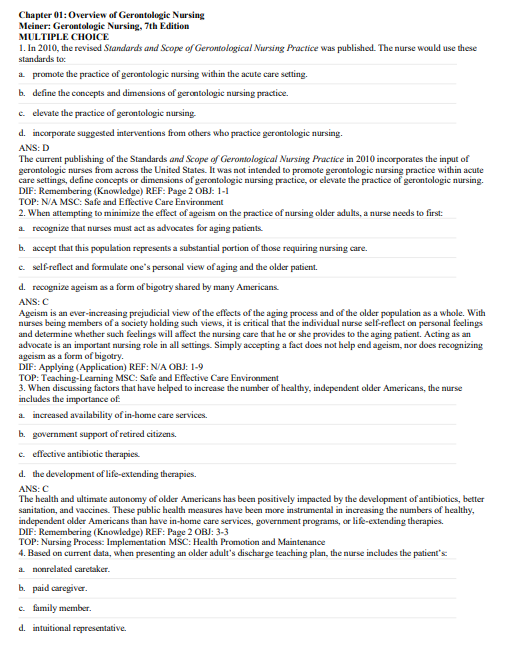

Master Specialized Care for Our Growing Older Adult Population
Older adults represent the fastest-growing demographic in healthcare. Providing competent geriatric care requires specialized knowledge far beyond simply treating elderly patients like older versions of younger adults.
This test bank accompanies Gerontologic Nursing 7th Edition by Yeager, Winton, and Meiner. It delivers comprehensive practice that builds the specialized expertise needed to care for older adults across all healthcare settings.
Stop treating aging as just another health topic. Start building the gerontological expertise that transforms care for this complex, rewarding population.
Built for Specialized Geriatric Nursing
Older adults experience unique physiological changes, present with atypical symptoms, and require individualized approaches to assessment and care. Generic nursing knowledge doesn’t adequately prepare you for geriatric complexities.
This test bank focuses exclusively on gerontological nursing applications. Questions address age-related changes, geriatric syndromes, and evidence-based interventions specific to older populations.
You’ll develop the specialized competence that defines excellent geriatric nursing across acute care, long-term care, and community settings.
Essential Features for Gerontological Excellence:
- Comprehensive aging process coverage
- Geriatric syndromes and conditions
- Age-appropriate assessment techniques
- Medication management in older adults
- Cognitive and mental health assessment
- Fall prevention and safety measures
- End-of-life and palliative care
- Caregiver support and education
- Questions supporting all nursing levels
- Long-term care and home health applications
Why Specialized Gerontological Knowledge Matters
Older adults metabolize medications differently, present with atypical symptoms, and experience complications younger patients rarely encounter. Applying standard adult approaches to elderly patients causes harm.
These questions develop age-specific thinking. You’ll recognize how normal aging differs from pathology. You’ll understand why older adults require different medication dosing. You’ll identify geriatric syndromes requiring specialized intervention.
This specialized knowledge prevents ageism and improves outcomes for older patients.
Comprehensive Gerontological Content
Gerontological nursing encompasses biological, psychological, social, and spiritual dimensions of aging. This test bank addresses all aspects comprehensively.
From cellular aging theories to Medicare coverage, you’ll find thorough coverage of everything affecting older adult health and healthcare.
Core Gerontological Topics:
- Theories and physiology of aging
- Comprehensive geriatric assessment
- Pharmacology and polypharmacy management
- Cognitive disorders and dementia care
- Mental health and depression in elderly
- Sensory changes and adaptations
- Nutrition and hydration challenges
- Mobility and fall prevention
- Skin integrity and pressure injury prevention
- Continence and elimination management
- Pain assessment and management
- Chronic disease management
- Acute care of hospitalized elderly
- Long-term care nursing practice
- End-of-life and hospice care
- Elder abuse recognition and prevention
Normal Aging Versus Pathology
Many healthcare providers incorrectly attribute treatable conditions to “just getting old.” Distinguishing normal aging from disease prevents under-treatment and improves quality of life.
Questions sharpen this critical distinction. You’ll recognize normal age-related changes. You’ll identify pathological processes requiring intervention. You’ll avoid therapeutic nihilism affecting elderly care.
This discrimination ensures older adults receive appropriate, beneficial treatment.
Comprehensive Geriatric Assessment
Standard health assessments miss important geriatric considerations. Comprehensive geriatric assessment evaluates physical health, functional ability, cognition, mood, social support, and environmental safety.
These questions develop comprehensive assessment skills. You’ll perform functional assessments systematically. You’ll screen for geriatric syndromes. You’ll identify fall risks and safety concerns.
This holistic approach addresses the multiple factors affecting older adult health and independence.
Cognitive Assessment and Dementia Care
Cognitive impairment affects millions of older adults. Understanding dementia types, screening tools, and person-centered care approaches proves essential.
Questions address cognitive disorders thoroughly. You’ll administer cognitive screening appropriately. You’ll distinguish dementia types. You’ll implement evidence-based dementia care strategies.
This dementia expertise supports compassionate care for patients and families facing progressive cognitive decline.
Delirium Recognition and Prevention
Delirium represents a medical emergency often overlooked in hospitalized elderly. Understanding risk factors, recognition, and prevention saves lives and prevents permanent cognitive decline.
These questions ensure delirium competence. You’ll recognize delirium versus dementia. You’ll identify delirium risk factors. You’ll implement prevention protocols effectively.
This delirium knowledge prevents devastating complications in hospitalized older adults.
Medication Management in Older Adults
Polypharmacy affects most older adults, increasing adverse drug events significantly. Understanding age-related pharmacokinetic changes and potentially inappropriate medications proves critical.
Questions develop geriatric pharmacology expertise. You’ll recognize Beers Criteria medications. You’ll understand age-related medication changes. You’ll identify medication-related problems requiring intervention.
This pharmacological knowledge prevents adverse drug events that hospitalize and harm older adults.
Fall Prevention Excellence
Falls represent the leading cause of injury death in older adults. Understanding fall risk assessment and evidence-based prevention strategies prevents devastating consequences.
These questions ensure fall prevention competence. You’ll assess fall risk systematically. You’ll implement multifactorial prevention interventions. You’ll recognize environmental hazards requiring modification.
This safety focus prevents life-changing injuries and maintains older adult independence.
Pressure Injury Prevention and Management
Older adults face increased pressure injury risk from multiple factors including decreased mobility, poor nutrition, and skin changes. Prevention requires vigilant assessment and intervention.
Questions address skin integrity comprehensively. You’ll assess pressure injury risk appropriately. You’ll implement prevention protocols. You’ll stage and treat pressure injuries correctly.
This wound care knowledge prevents painful, costly pressure injuries compromising quality of life.
Nutrition and Hydration in Older Adults
Malnutrition and dehydration occur frequently in older populations, worsening outcomes and delaying recovery. Understanding assessment and intervention proves essential.
These questions develop nutritional competence. You’ll screen for malnutrition systematically. You’ll recognize dysphagia risks. You’ll implement evidence-based nutritional interventions.
This nutritional knowledge supports optimal healing and function in older adults.
Continence Management
Urinary and bowel incontinence significantly impacts quality of life but often goes unaddressed. Understanding continence assessment and management improves outcomes and dignity.
Questions address continence thoroughly. You’ll assess incontinence types correctly. You’ll implement behavioral interventions. You’ll recognize when medical evaluation becomes necessary.
This continence knowledge restores dignity and prevents social isolation.
Pain Assessment in Older Adults
Older adults often under-report pain or experience communication barriers preventing adequate pain expression. Specialized assessment tools and approaches ensure appropriate pain management.
These questions ensure pain management competence. You’ll use age-appropriate pain assessment tools. You’ll recognize pain in nonverbal patients. You’ll implement multimodal pain management safely.
This pain expertise prevents unnecessary suffering in older populations.
Chronic Disease Management
Most older adults live with multiple chronic conditions requiring coordinated management. Understanding disease interactions and prioritization proves essential.
Questions address chronic disease management. You’ll coordinate care across multiple conditions. You’ll prioritize interventions appropriately. You’ll recognize when aggressive treatment becomes inappropriate.
This chronic disease knowledge supports comprehensive geriatric care.
Acute Care of Hospitalized Elderly
Hospitalization poses significant risks for older adults including delirium, functional decline, and iatrogenic complications. Age-friendly hospital initiatives prevent these adverse outcomes.
These questions develop acute geriatric expertise. You’ll implement Age-Friendly Health Systems principles. You’ll prevent hospital-associated disability. You’ll recognize atypical illness presentations.
This acute care knowledge protects vulnerable older adults during hospitalization.
Long-Term Care Nursing Practice
Skilled nursing facilities and assisted living communities house millions of older adults. Long-term care nursing requires understanding regulatory requirements, resident rights, and quality indicators.
Questions address long-term care appropriately. You’ll understand OBRA regulations. You’ll implement person-centered care. You’ll recognize quality improvement opportunities.
This knowledge prepares nurses for rewarding long-term care careers.
Mental Health and Depression
Depression affects many older adults but often goes unrecognized and untreated. Understanding screening, treatment, and suicide risk proves life-saving.
These questions ensure mental health competence. You’ll screen for depression appropriately. You’ll recognize late-life depression presentations. You’ll assess suicide risk in elderly patients.
This mental health knowledge addresses the often-overlooked psychological needs of older adults.
End-of-Life and Palliative Care
Many older adults face serious illness and end-of-life decisions. Understanding palliative care principles, advance directives, and hospice services supports quality end-of-life care.
Questions address end-of-life care comprehensively. You’ll facilitate advance care planning conversations. You’ll implement comfort-focused interventions. You’ll support families during dying process.
This palliative expertise ensures dignified, comfortable care during life’s final chapter.
Elder Abuse and Neglect
Elder mistreatment affects vulnerable older adults across settings. Recognizing abuse signs and understanding reporting requirements protects at-risk individuals.
These questions develop abuse recognition. You’ll identify physical, emotional, and financial abuse. You’ll understand mandatory reporting obligations. You’ll implement safety interventions appropriately.
This protection knowledge advocates for vulnerable older adults unable to protect themselves.
Caregiver Support and Education
Family caregivers provide most older adult care, often experiencing significant burden and stress. Supporting caregivers improves both patient and caregiver outcomes.
Questions address caregiver needs. You’ll assess caregiver burden. You’ll provide appropriate education and resources. You’ll recognize caregiver burnout requiring intervention.
This caregiver focus supports the family systems sustaining most older adults.
Medicare and Healthcare Financing
Understanding Medicare, Medicaid, and long-term care financing affects discharge planning and resource access. Healthcare financing knowledge removes barriers to needed services.
These questions develop healthcare financing literacy. You’ll understand Medicare coverage basics. You’ll recognize Medicaid long-term care provisions. You’ll facilitate appropriate resource connections.
This systems knowledge helps older adults access needed services and support.
Cultural Competence in Geriatric Care
Older adults represent diverse cultural backgrounds affecting health beliefs, family dynamics, and care preferences. Culturally sensitive geriatric care improves satisfaction and outcomes.
Questions incorporate cultural considerations. You’ll practice culturally appropriate communication. You’ll recognize cultural influences on aging. You’ll adapt care to respect diverse values.
This cultural competence creates more effective, respectful geriatric care.
Study Efficiently for Specialized Courses
Gerontological nursing courses present unique content beyond standard nursing curricula. Many students initially underestimate geriatric nursing complexity.
This test bank reinforces specialized gerontological knowledge. Focus on geriatric syndromes before exams. Practice comprehensive geriatric assessment concepts thoroughly.
The organization supports efficient mastery of specialized content.
Prepare for Gerontological Certification
Gerontological nursing certification demonstrates specialized expertise. ANCC and other organizations offer geriatric nursing certification requiring comprehensive knowledge.
This test bank supports certification preparation. Content aligns with certification examination blueprints. Question difficulty matches certification standards.
Students pursuing geriatric certification report this resource significantly improved examination readiness.
Long-Term Care Employment Preparation
Many nurses work in skilled nursing facilities, assisted living, or home health caring primarily for older adults. These settings require specialized knowledge and approaches.
Questions prepare you for long-term care practice realities. You’ll understand common long-term care scenarios. You’ll recognize quality indicators and regulatory requirements.
This preparation supports successful transition to rewarding geriatric nursing careers.
Build Progressive Gerontological Competence
Gerontological content builds from aging theories to complex geriatric syndromes. Understanding foundational concepts supports advanced application.
This test bank follows natural progression. Early questions establish aging basics. Advanced questions require integrating multiple geriatric concepts.
The graduated difficulty builds specialized expertise systematically.
Identify Knowledge Gaps Systematically
Wondering which gerontological topics need more study? This test bank reveals weak areas immediately.
Organize practice by topic area or care setting. Take baseline assessments before studying. Your scores show exactly where focused effort provides maximum benefit.
This targeted approach maximizes study efficiency for specialized content.
Connect to Clinical Experiences
Gerontological nursing comes alive during clinical experiences with older adults. This test bank reinforces concepts you’ll observe and apply clinically.
Review relevant chapters before geriatric clinical rotations. Practice questions addressing that day’s clinical focus. Connect classroom learning to actual patient care.
This integration deepens understanding and improves clinical performance.
Advocate for Quality Geriatric Care
Ageism persists in healthcare, affecting treatment decisions and resource allocation. Gerontological nurses advocate for older adults receiving appropriate, respectful care.
Questions develop advocacy awareness. You’ll recognize age discrimination. You’ll understand older adult rights. You’ll promote evidence-based geriatric care standards.
This advocacy orientation creates nurses who champion older adults’ needs and dignity.
Trusted Gerontological Expertise
Yeager, Winton, and Meiner bring decades of gerontological nursing experience and education. Their textbook represents comprehensive, evidence-based geriatric nursing knowledge.
This test bank maintains that specialized excellence. Questions align perfectly with textbook content while challenging comprehensive understanding.
The authors’ geriatric expertise ensures every question reflects current best practices in gerontological nursing.
Your Investment in Specialized Excellence
The aging population creates enormous demand for nurses with gerontological expertise. This specialized knowledge opens career opportunities while improving care for vulnerable populations.
This test bank represents a strategic investment in specialized nursing practice. Students who master gerontological concepts provide superior care and pursue rewarding geriatric careers.
Don’t view geriatric nursing as boring or depressing. Start building specialized expertise today that creates meaningful connections with older adults during their most vulnerable years.
Your future patients deserve nurses with genuine gerontological competence. This test bank helps you become that specialized professional who provides age-appropriate, evidence-based, compassionate care honoring older adults’ dignity, autonomy, and remaining capabilities.

Yunice M –
Good
Valentina –
Excellent practice questions and rationales
Timothy K –
Worth every buck
Caleb Martins –
A solid test bank