Master Physical Assessment for Confident Clinical Practice
Physical examination skills separate competent nurses from exceptional clinicians. Your ability to assess patients systematically, recognize abnormal findings, and document accurately determines patient outcomes and safety.
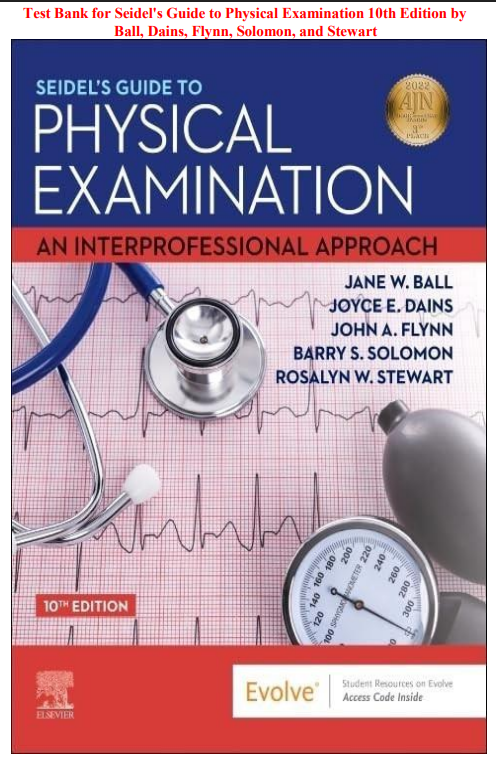
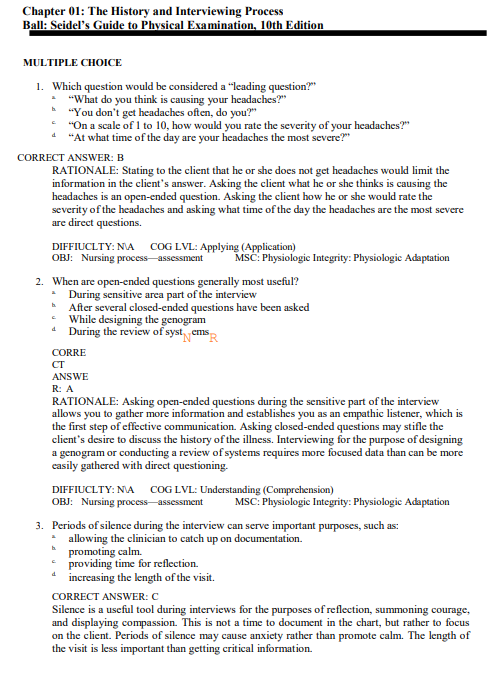
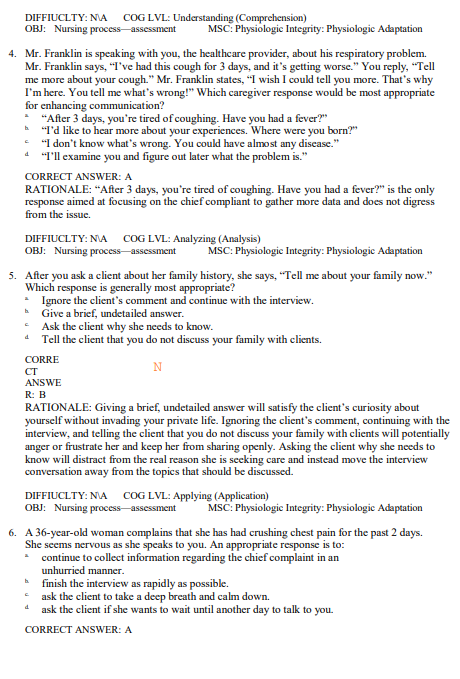
This test bank accompanies Seidel’s Guide to Physical Examination 10th Edition by Ball, Dains, Flynn, Solomon, and Stewart. It delivers comprehensive practice that transforms textbook knowledge into confident bedside assessment skills.
Stop feeling uncertain during patient examinations. Start building the systematic assessment expertise that defines professional nursing excellence.
Designed for All Healthcare Students
Physical assessment proves essential across healthcare disciplines. Nursing students, nurse practitioner students, and physician assistant students all need comprehensive examination skills.
This test bank serves diverse learners effectively. Questions address foundational assessment techniques through advanced diagnostic examination skills.
You’ll develop the physical assessment competence required for your specific educational level and clinical scope of practice.
Essential Features for Assessment Excellence:
- Complete head-to-toe examination coverage
- System-specific assessment techniques
- Normal versus abnormal finding differentiation
- Age-specific examination modifications
- Cultural considerations in assessment
- Documentation and communication skills
- Clinical reasoning and interpretation
- Equipment use and proper technique
- Questions supporting all healthcare programs
Why Physical Assessment Mastery Matters
Technology supplements but never replaces skilled physical examination. Your hands, eyes, and ears detect problems equipment might miss.
These questions develop systematic assessment thinking. You’ll learn proper technique sequences. You’ll recognize significant findings requiring further investigation. You’ll distinguish normal variants from pathological changes.
This assessment foundation supports safe, thorough clinical practice across all healthcare settings.
Comprehensive Physical Examination Coverage
Physical assessment encompasses every body system and region. Thorough examination requires systematic approach and detailed knowledge.
This test bank ensures complete assessment preparation across all examination components and techniques.
Major Assessment Areas:
- General survey and vital signs
- Skin, hair, and nails examination
- Head, eyes, ears, nose, throat assessment
- Thorax and lungs examination
- Cardiovascular assessment
- Breast and axillae examination
- Abdominal assessment techniques
- Male and female genitourinary examination
- Musculoskeletal assessment
- Neurological examination
- Mental status assessment
- Pediatric examination modifications
- Geriatric assessment considerations
- Comprehensive documentation
Master Inspection, Palpation, Percussion, Auscultation
The four cardinal assessment techniques form the foundation of physical examination. Proper technique execution determines assessment accuracy.
Questions develop technical competence systematically. You’ll understand when each technique applies. You’ll learn correct hand placement and movement. You’ll recognize what normal findings should reveal.
This technical mastery ensures accurate, comprehensive physical assessment.
Recognize Normal Versus Abnormal Findings
Identifying abnormal findings requires thorough understanding of normal variations. Age, ethnicity, body habitus, and genetics influence normal presentations.
These questions sharpen abnormal finding recognition. You’ll distinguish pathological changes from normal variants. You’ll recognize subtle abnormalities requiring intervention. You’ll understand which findings indicate urgent problems.
This discrimination prevents both under-recognition and over-reaction to assessment findings.
Vital Signs and General Survey
Every patient encounter begins with vital signs and general observation. These initial findings guide subsequent focused examination.
Questions address vital signs comprehensively. You’ll recognize abnormal vital sign patterns. You’ll understand physiological variations. You’ll perform general survey observations systematically.
This foundational skill ensures no critical information gets overlooked.
Head and Neck Examination Excellence
Head and neck examination reveals numerous conditions from thyroid disorders to intracranial pressure changes. Thorough technique detects problems affecting multiple systems.
These questions develop head and neck expertise. You’ll examine cranial nerves systematically. You’ll palpate lymph nodes correctly. You’ll assess thyroid gland appropriately.
This regional knowledge supports comprehensive assessment of neurological, endocrine, and immune function.
Eye and Vision Assessment
Eye examination reveals both ocular and systemic diseases. Understanding ophthalmoscopic examination and visual testing proves essential.
Questions address eye assessment thoroughly. You’ll test visual acuity properly. You’ll examine external eye structures. You’ll understand fundoscopic findings significance.
This ocular knowledge detects vision-threatening and systemic conditions early.
Ear and Hearing Evaluation
Ear examination assesses hearing, balance, and infection. Proper otoscopic technique reveals important pathology.
These questions ensure ear assessment competence. You’ll perform otoscopic examination correctly. You’ll test hearing appropriately. You’ll recognize abnormal tympanic membrane findings.
This auditory knowledge supports early intervention for hearing and balance problems.
Respiratory Assessment Mastery
Thorough lung examination detects respiratory compromise before it becomes critical. Understanding breath sounds and respiratory patterns proves life-saving.
Questions develop respiratory assessment expertise. You’ll auscultate systematically across lung fields. You’ll distinguish normal from adventitious breath sounds. You’ll recognize respiratory distress patterns.
This pulmonary skill ensures early recognition of respiratory deterioration.
Cardiovascular Examination Skills
Cardiac assessment requires understanding heart sounds, peripheral perfusion, and vascular examination. These skills detect cardiovascular disease and guide emergent intervention.
These questions build cardiovascular assessment confidence. You’ll auscultate heart sounds systematically. You’ll assess peripheral pulses accurately. You’ll recognize murmurs and abnormal rhythms.
This cardiac knowledge supports critical cardiovascular assessment across settings.
Abdominal Assessment Techniques
Abdominal examination follows unique sequencing and reveals gastrointestinal, hepatic, and renal pathology. Proper technique prevents missing important findings.
Questions address abdominal assessment comprehensively. You’ll understand correct examination sequence. You’ll palpate organs safely and effectively. You’ll recognize abnormal bowel sounds and masses.
This abdominal expertise detects surgical emergencies and chronic conditions.
Musculoskeletal Examination
Joint examination assesses range of motion, strength, and structural integrity. Systematic musculoskeletal assessment detects injuries and degenerative conditions.
These questions develop musculoskeletal competence. You’ll assess joints methodically. You’ll test muscle strength appropriately. You’ll recognize deformities and limitations.
This orthopedic knowledge supports mobility assessment and fall prevention.
Neurological Assessment Excellence
Neurological examination assesses consciousness, cranial nerves, motor function, sensory perception, and reflexes. Thorough neuro assessment detects stroke, injury, and degenerative diseases.
Questions ensure neurological assessment mastery. You’ll test cranial nerves systematically. You’ll assess deep tendon reflexes correctly. You’ll recognize neurological deterioration patterns.
This neurological expertise enables early stroke recognition and appropriate intervention.
Mental Status Assessment
Mental status examination evaluates cognition, mood, and thought processes. Understanding psychiatric assessment supports holistic patient care.
These questions develop mental status competence. You’ll assess orientation and memory appropriately. You’ll recognize depression and anxiety signs. You’ll perform cognitive screening correctly.
This psychiatric knowledge supports integrated mental health assessment.
Skin Assessment and Lesion Description
Skin examination reveals dermatological conditions, systemic diseases, and injury. Accurate lesion description enables diagnosis and monitors changes.
Questions address skin assessment thoroughly. You’ll describe lesions using proper terminology. You’ll recognize malignant skin changes. You’ll assess wounds systematically.
This dermatological knowledge supports early cancer detection and wound management.
Pediatric Examination Modifications
Children require age-appropriate examination techniques and sequencing. Developmental considerations affect both approach and normal findings.
These questions ensure pediatric assessment competence. You’ll modify techniques for different ages. You’ll recognize developmental milestones. You’ll understand pediatric normal variants.
This pediatric knowledge supports family and pediatric nursing practice.
Geriatric Assessment Considerations
Older adults present unique assessment challenges and atypical disease presentations. Understanding age-related changes prevents misinterpretation.
Questions incorporate geriatric considerations. You’ll distinguish aging changes from pathology. You’ll perform comprehensive geriatric assessment. You’ll recognize atypical presentations in elderly patients.
This geriatric expertise supports competent care of aging populations.
Cultural Competence in Assessment
Cultural factors influence communication, comfort, and examination acceptance. Culturally sensitive assessment improves care quality and patient cooperation.
These questions develop cultural assessment competence. You’ll adapt communication across cultures. You’ll recognize culturally normal variations. You’ll perform examinations respectfully.
This cultural awareness creates more effective, respectful healthcare encounters.
Equipment Use and Proper Technique
Physical examination requires various instruments from stethoscopes to ophthalmoscopes. Proper equipment use affects assessment accuracy significantly.
Questions address equipment competence. You’ll select appropriate instruments. You’ll use equipment correctly. You’ll maintain and troubleshoot basic problems.
This technical knowledge ensures accurate, professional examinations.
Documentation Excellence
Assessment findings require accurate, complete documentation. Proper documentation creates legal records and communicates findings to healthcare teams.
These questions develop documentation skills. You’ll document findings objectively. You’ll use appropriate medical terminology. You’ll create complete examination records.
This documentation competence supports professional communication and legal protection.
Clinical Reasoning Integration
Physical assessment findings require interpretation and clinical reasoning. Recognizing patterns and determining significance separates novices from experts.
Questions develop clinical reasoning consistently. You’ll cluster related findings. You’ll generate differential diagnoses. You’ll determine which findings require urgent intervention.
This reasoning transforms you from technician to thinking clinician.
Study Efficiently for Skills Courses
Physical assessment courses combine knowledge with hands-on practice. Balancing technique practice with written examinations challenges many students.
This test bank reinforces knowledge supporting practical skills. Review before lab sessions to maximize practice efficiency. Take quizzes after practice to reinforce learning.
The organization supports integration of cognitive and psychomotor learning.
Prepare for Clinical Examinations
Physical assessment courses typically include practical examinations where you demonstrate techniques on standardized patients or instructors.
Extensive practice with this test bank prepares you for both written and practical examinations. You’ll understand proper technique sequences, normal findings, and documentation requirements.
This preparation reduces anxiety and improves performance during high-stakes practical assessments.
Objective Structured Clinical Examinations (OSCE)
Many programs use OSCEs to evaluate clinical competence. These standardized examinations test both physical examination skills and communication.
Questions support OSCE preparation. You’ll understand comprehensive assessment approaches. You’ll recognize key findings requiring identification. You’ll develop systematic examination patterns.
This OSCE readiness ensures successful performance during competency evaluations.
Advanced Practice Assessment Skills
Nurse practitioners and physician assistants require advanced physical examination skills. Diagnostic examination guides independent practice decisions.
Graduate-level questions address advanced assessment. You’ll perform focused examinations based on complaints. You’ll recognize subtle diagnostic findings. You’ll integrate assessment with differential diagnosis.
This advanced competence supports independent diagnostic reasoning.
Identify Learning Needs Systematically
Wondering which body systems or techniques need more study? This test bank reveals knowledge gaps immediately.
Organize practice by body system or examination technique. Take baseline assessments before studying. Your performance shows exactly where focused effort provides maximum benefit.
This targeted approach maximizes learning efficiency before practical examinations.
Build Progressive Competence
Physical assessment develops from basic vital signs to comprehensive system examinations. Early courses introduce techniques. Advanced courses demand integration and interpretation.
This test bank follows natural learning progression. Foundational questions ensure basic technique understanding. Advanced questions require clinical reasoning and pattern recognition.
The graduated difficulty builds confidence while ensuring continuous skill development.
Connect Assessment to Pathophysiology
Physical findings reflect underlying pathophysiology. Understanding why abnormalities occur enhances recognition and interpretation.
Questions link assessment to disease mechanisms consistently. You’ll understand how heart failure produces specific findings. You’ll explain why certain neurological lesions create particular deficits.
This pathophysiological connection deepens assessment understanding significantly.
Transition to Professional Practice
Your first independent patient assessments feel daunting. Will you remember all the steps? Can you recognize important abnormalities? Will you document appropriately?
Extensive practice with this test bank prepares you thoroughly. You’ve mentally performed thousands of examinations. You understand proper technique and finding significance.
Preceptors recognize well-prepared students. Your assessment knowledge translates to confident, competent clinical practice.
Trusted Physical Examination Expertise
Ball, Dains, Flynn, Solomon, and Stewart represent decades of physical examination education excellence. Seidel’s textbook has become the definitive assessment resource globally.
This test bank maintains that educational standard. Questions align perfectly with textbook content while challenging comprehensive understanding.
The authors’ combined expertise ensures every question reflects current best practices in physical examination.
Your Investment in Clinical Excellence
Physical assessment skills serve you throughout your entire healthcare career. Every patient encounter begins with examination determining subsequent care.
This test bank represents a strategic investment in foundational clinical competence. Students who master physical assessment consistently demonstrate superior clinical performance and patient outcomes.
Don’t approach physical examination with uncertainty. Start building systematic assessment expertise today with questions designed to transform textbook knowledge into confident bedside skills.
Your future patients deserve thorough, accurate physical examinations from skilled clinicians. This test bank helps you become that competent professional who detects problems early, documents thoroughly, and practices with confidence and precision.
Winnie583 –
Perfect
Nancy Lewinsky –
Extremely helpful as I prepare for my finals
Beverly –
Great