In emergency care, you do not have the luxury of time to figure out anatomy on the spot.
When a patient is in front of you with a gunshot wound to the chest, a suspected spinal injury, or signs of a developing tension pneumothorax, your understanding of anatomical structures and physiological mechanisms must already be instinctive. There is no pausing to consult a textbook when seconds determine outcomes. The paramedic, EMT, and emergency clinician who truly understands anatomy and physiology can anticipate what is happening inside a patient’s body based on the mechanism of injury and the clinical signs presenting in front of them — before imaging confirms it, before labs return, before the emergency department even sees the patient.
That is what makes anatomy and physiology for emergency care fundamentally different from a standard A&P course. It is not academic knowledge to be tested and forgotten. It is the cognitive foundation upon which every field assessment, every triage decision, and every life-saving intervention is built.
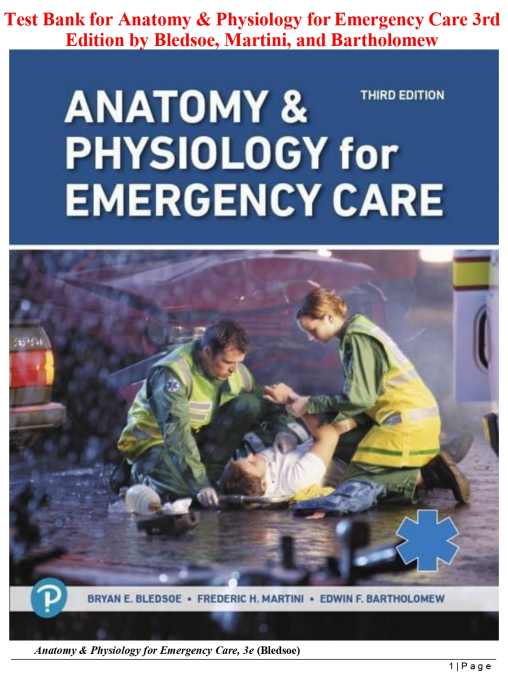
This comprehensive test bank is built for the 3rd Edition of Anatomy & Physiology for Emergency Care by Bledsoe, Martini, and Bartholomew. It is the most clinically focused anatomy and physiology textbook designed specifically for emergency medical services and emergency care education — and this test bank helps you master every chapter with the focused, emergency-application-driven practice that prehospital and emergency clinical practice demands.
Whether you are preparing for an EMT or paramedic anatomy and physiology course exam, the NREMT certification examination, or building the anatomical foundation that emergency clinical practice requires, this resource delivers the structural knowledge, physiological reasoning, and emergency-specific clinical application that Bledsoe, Martini, and Bartholomew have established as essential for prehospital and emergency care education.
What’s Inside?
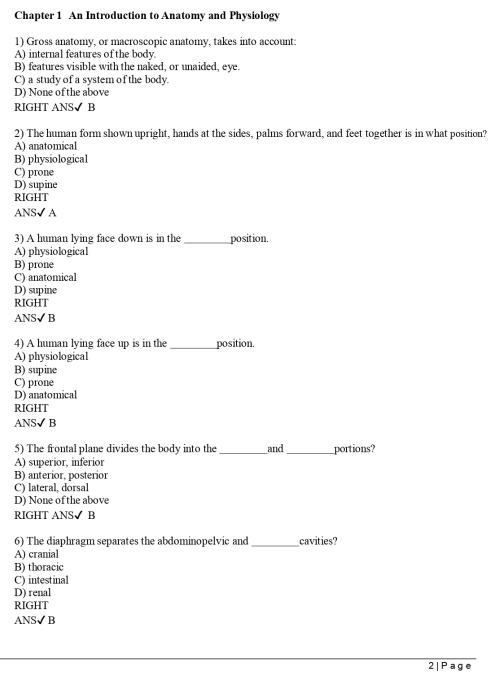
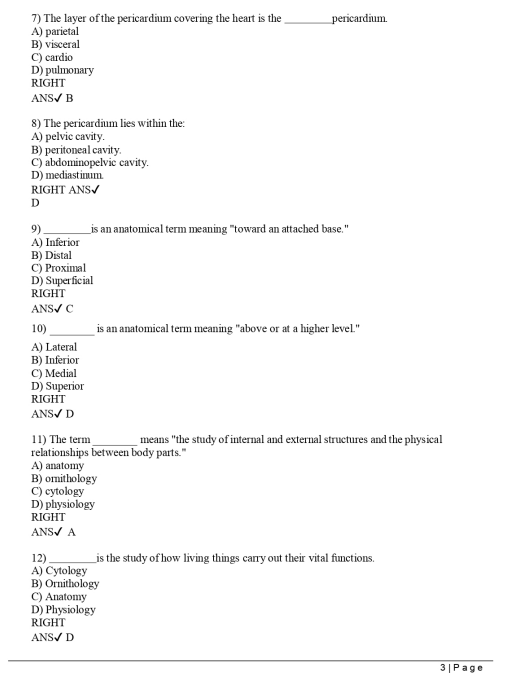
- Hundreds of practice questions covering every chapter
- Multiple-choice, true/false, matching, and emergency scenario application questions
- Complete answer keys with clear, clinically grounded rationales
- Questions covering anatomical structures, physiological mechanisms, and emergency clinical applications
- Content aligned with EMT, paramedic, and emergency care program examination standards
Who Is This Test Bank For?
This resource is perfect for:
- EMT-Basic and EMT-Intermediate students completing anatomy and physiology coursework
- Paramedic students building advanced anatomical and physiological knowledge
- NREMT certification candidates reviewing anatomy and physiology content
- Emergency medical services program faculty developing course exams and assessments
- Pre-nursing and pre-medical students using emergency-focused A&P as their foundational science course
- Emergency department technicians and emergency care support staff
- Firefighter-paramedic and combination public safety personnel completing EMS education
- Nursing and allied health students seeking emergency-application-focused anatomy review
Topics Covered Include:
- Introduction to anatomy and physiology — organizational levels and terminology
- Cellular structure and function in emergency physiology
- Tissues and the integumentary system — burns and skin trauma applications
- The skeletal system — fracture patterns and emergency immobilization principles
- The muscular system — trauma and crush injury physiology
- The nervous system — central, peripheral, and autonomic emergency applications
- The special senses — trauma and emergency assessment relevance
- The endocrine system — diabetic emergencies and hormonal crisis physiology
- The cardiovascular system — cardiac anatomy, conduction, and shock physiology
- The blood — hemorrhage, clotting, and transfusion emergency physiology
- The lymphatic system and immune response in emergency and trauma care
- The respiratory system — airway anatomy and ventilation emergency physiology
- The digestive system — abdominal trauma and emergency physiology
- The urinary system — renal trauma and fluid balance emergencies
- The reproductive system — obstetric and gynecological emergency anatomy
- Fluid, electrolyte, and acid-base balance in emergency and trauma physiology
- Pregnancy and fetal development — emergency obstetric anatomy
- Pediatric anatomical and physiological considerations in emergency care
- Geriatric anatomical and physiological considerations in emergency care
Why This Test Bank Delivers Results
Bledsoe, Martini, and Bartholomew built Anatomy & Physiology for Emergency Care around a clinical truth that distinguishes this textbook from every general A&P resource — emergency clinicians do not have the luxury of treating anatomy and physiology as separate from clinical application. In the field, in the ambulance, in the emergency department trauma bay, anatomical knowledge and clinical decision-making happen simultaneously.
This test bank reflects that integration in every question.
You will not simply identify the structures of the thoracic cavity — you will apply that knowledge to recognize why a stab wound at a specific intercostal space threatens specific organs and structures, and what clinical findings would indicate which structure has been compromised. You will not just memorize the cardiac conduction pathway — you will apply that knowledge to interpret why a specific rhythm disturbance produces the hemodynamic instability you are assessing in your patient. You will not merely describe the anatomy of the airway — you will apply that knowledge to anticipate airway management challenges in a patient with facial trauma, angioedema, or burns.
This emergency-application approach is what makes Bledsoe, Martini, and Bartholomew’s textbook uniquely valuable for EMS and emergency care education — and what makes this test bank uniquely effective at developing the clinical anatomical reasoning that emergency practice demands.
Detailed rationales explain the anatomical structures, physiological mechanisms, and emergency clinical significance behind every correct answer. Questions are organized chapter by chapter for structured, systematic study. Target the body systems and emergency applications where your anatomical and physiological knowledge needs the most reinforcement.
Sample Questions
Question 1
A paramedic is assessing a patient who sustained a stab wound to the left fifth intercostal space at the midclavicular line. Based on anatomical knowledge of this location, which organ injury is the paramedic most concerned about?
- A) Left kidney injury, given the posterior location of the renal structures
- B) Cardiac injury, given the proximity of this location to the heart within the mediastinum
- C) Splenic injury exclusively, since the spleen occupies this entire anatomical region
- D) Gastric injury, since the stomach is the primary structure at this anatomical landmark
Correct Answer: B
Rationale: The left fifth intercostal space at the midclavicular line corresponds anatomically to the location of the cardiac apex and the region overlying the heart within the mediastinum — this is the same anatomical landmark used clinically to locate the point of maximal impulse during cardiac examination. A penetrating injury at this location carries significant risk for cardiac injury, including potential laceration of the ventricular wall, coronary vessels, or pericardium — which can result in life-threatening hemopericardium and cardiac tamponade, or massive hemorrhage if a coronary vessel is lacerated. The paramedic must maintain high suspicion for cardiac injury and associated complications including tension pneumothorax, hemothorax, and cardiac tamponade given this mechanism and anatomical location. The left kidney is located retroperitoneally at a more posterior and inferior position — not at this anterior intercostal landmark. While the spleen is located in the left upper quadrant, it does not occupy the precise location described, and the fifth intercostal space midclavicular line is more specifically associated with cardiac anatomy. The stomach occupies a more medial and inferior position within the abdominal cavity, not this thoracic landmark.
Question 2
An EMT is assessing a patient involved in a high-speed motor vehicle collision who presents with significant abdominal distension, hypotension, and tachycardia. Based on anatomical knowledge of abdominal organ vascularity, which structure’s injury poses the greatest immediate risk for rapid, life-threatening hemorrhage?
- A) The appendix, given its location in the right lower quadrant
- B) The liver and spleen, given their extensive vascular supply and solid organ structure
- C) The gallbladder, given its proximity to major abdominal vessels
- D) The small intestine, given its extensive length within the abdominal cavity
Correct Answer: B
Rationale: The liver and spleen are the two most vascular solid organs in the abdominal cavity and represent the most common sources of life-threatening hemorrhage following blunt or penetrating abdominal trauma. The liver receives blood from both the hepatic artery and the portal vein — making it an extraordinarily vascular organ — while also being relatively fixed in position and protected only partially by the lower rib cage, making it susceptible to laceration during rapid deceleration injuries such as high-speed motor vehicle collisions. The spleen, located in the left upper quadrant beneath the diaphragm, has a thin capsule and extensive vascular supply from the splenic artery, making it highly susceptible to rupture from blunt trauma — splenic injury is among the most common causes of significant intra-abdominal hemorrhage in trauma patients. The combination of abdominal distension (suggesting internal hemorrhage accumulation), hypotension, and tachycardia in this trauma patient strongly suggests significant intra-abdominal bleeding, most likely from liver or splenic injury given the mechanism. The appendix and gallbladder are relatively avascular structures whose injury does not typically produce rapid, life-threatening hemorrhage. While the small intestine can be injured in trauma, it does not carry the same hemorrhage risk as the highly vascular solid organs.
Question 3
A paramedic is managing a patient experiencing a severe asthma exacerbation. Understanding the physiological mechanism of bronchoconstriction, which anatomical structure’s contraction is primarily responsible for the airflow obstruction characteristic of this condition?
- A) The diaphragm, whose spasm prevents adequate lung expansion
- B) Smooth muscle within the bronchiole walls, whose contraction narrows the airway lumen
- C) The epiglottis, whose closure obstructs airflow into the trachea
- D) The intercostal muscles, whose contraction restricts thoracic cavity expansion
Correct Answer: B
Rationale: Asthma is fundamentally a disease of bronchiole smooth muscle hyperreactivity. The bronchioles are surrounded by layers of smooth muscle that, under normal conditions, maintain appropriate airway diameter to support adequate airflow. In asthma, exposure to triggers — allergens, irritants, exercise, or other stimuli — causes inflammatory mediator release that triggers bronchiole smooth muscle contraction, or bronchoconstriction. This smooth muscle contraction narrows the internal diameter of the airway lumen, dramatically increasing airway resistance and making both inspiration and especially expiration significantly more difficult. This is compounded by mucosal edema and increased mucus production within the airways, further narrowing the already constricted lumen. Understanding this specific physiological mechanism explains why bronchodilator medications — which relax bronchiole smooth muscle — are the primary pharmacological intervention for acute asthma exacerbation. The diaphragm and intercostal muscles are involved in the mechanical process of breathing but are not the structures responsible for the airway narrowing characteristic of asthma. The epiglottis functions to prevent aspiration during swallowing and is not involved in asthma pathophysiology.
Question 4
An EMT is assessing an elderly patient who fell and is now presenting with confusion, unequal pupils, and a deteriorating level of consciousness. Understanding the anatomy and physiology of intracranial pressure dynamics, which mechanism best explains the progression of this patient’s neurological deterioration?
- A) Decreased cerebral blood flow from peripheral vasodilation causing global hypoperfusion
- B) Expanding intracranial hemorrhage within the rigid, fixed-volume cranial vault causing increased intracranial pressure and brain tissue compression
- C) Hyperventilation causing cerebral vasoconstriction and reduced cerebral perfusion
- D) Dehydration causing reduced cerebrospinal fluid production and intracranial hypotension
Correct Answer: B
Rationale: The cranium is a rigid, fixed-volume structure — the Monro-Kellie doctrine describes how the skull contains three relatively fixed-volume components: brain tissue, cerebrospinal fluid, and blood. When intracranial hemorrhage occurs — whether epidural, subdural, or intracerebral — the expanding hematoma adds additional volume within this fixed space. Initially, the body compensates by displacing cerebrospinal fluid and reducing intracranial blood volume, but this compensatory capacity is limited. As the hematoma continues to expand, intracranial pressure rises progressively, compressing brain tissue and ultimately compromising cerebral perfusion pressure. The clinical presentation described — confusion progressing to decreased level of consciousness combined with unequal pupils — reflects this progressive intracranial pressure elevation. Unequal pupils specifically suggest compression of the oculomotor nerve, often from uncal herniation as the expanding mass effect pushes brain tissue against the tentorium. This is a neurological emergency requiring immediate transport and intervention to prevent irreversible brain injury or death. Peripheral vasodilation does not explain the focal neurological findings described. Hyperventilation-induced vasoconstriction is actually a therapeutic strategy sometimes used to temporarily reduce intracranial pressure — not the cause of this patient’s deterioration. Dehydration affecting CSF production does not explain this acute presentation following trauma.
Question 5
A paramedic is treating a pediatric patient in cardiac arrest. Understanding the anatomical and physiological differences between pediatric and adult patients, which factor most directly explains why pediatric cardiac arrest is more commonly caused by respiratory failure than primary cardiac dysfunction?
- A) Children have smaller hearts that are more prone to primary dysrhythmias than adult hearts
- B) Children have higher baseline metabolic rates and oxygen demands combined with smaller airway diameters and less respiratory reserve, making respiratory compromise the more common pathway to cardiac arrest
- C) Pediatric coronary arteries are anatomically more susceptible to atherosclerotic occlusion
- D) Children have weaker cardiac muscle tissue that fails more readily under physiological stress
Correct Answer: B
Rationale: Pediatric cardiac arrest differs fundamentally from adult cardiac arrest in its underlying pathophysiology, and this distinction is critical for emergency clinicians to understand. Children have significantly higher baseline metabolic rates and oxygen consumption relative to body size compared to adults, while simultaneously having proportionally smaller airway diameters, fewer alveoli, and less functional respiratory reserve. This combination means that pediatric patients decompensate respiratory significantly faster than adults when faced with airway obstruction, respiratory illness, or inadequate ventilation. Because cardiac arrest in children is overwhelmingly preceded by progressive respiratory failure and hypoxia — rather than the primary dysrhythmic events that more commonly cause adult cardiac arrest from coronary artery disease — pediatric resuscitation protocols emphasize aggressive, early airway management and ventilation as the priority intervention, rather than the rhythm-focused approach often emphasized in adult cardiac arrest management. Children do not have atherosclerotic coronary artery disease at a clinically significant rate — this is fundamentally an adult pathophysiological process. Pediatric cardiac muscle is not inherently weaker — the issue is the differential physiological reserve and the respiratory-driven pathway to arrest. Understanding this anatomical and physiological distinction directly shapes pediatric emergency care protocols and is essential knowledge for any emergency clinician managing pediatric patients.
Frequently Asked Questions (FAQs)
What edition does this test bank cover?
This test bank is written specifically for the 3rd Edition of Anatomy & Physiology for Emergency Care by Bledsoe, Martini, and Bartholomew. All questions are fully aligned with the current edition’s chapter organization, updated emergency-focused physiological content, and current emergency medical services educational standards.
How are the questions organized?
Questions are arranged chapter by chapter — body system by body system — allowing you to study systematically through the entire course or focus on specific systems where emergency clinical application is most heavily tested, such as cardiovascular, respiratory, or neurological anatomy and physiology.
Is this test bank useful for NREMT certification preparation?
Absolutely. A strong foundation in anatomy and physiology is essential for NREMT cognitive examination success at every certification level — EMT, AEMT, and Paramedic. The NREMT tests clinical application of anatomical and physiological knowledge extensively, and this test bank’s emergency-application-focused questions directly support that preparation.
Is this test bank appropriate for paramedic students specifically?
Yes. While foundational for EMT-level education, this test bank’s depth of physiological mechanism explanation and clinical application also serves paramedic students who require more advanced understanding of pathophysiology to support their expanded scope of practice — including cardiac rhythm interpretation, advanced airway management, and pharmacological intervention.
How is this test bank different from a standard anatomy and physiology test bank?
This test bank is built specifically around the emergency care clinical application framework that distinguishes Bledsoe, Martini, and Bartholomew’s textbook from general A&P resources. Every question integrates anatomical and physiological knowledge with emergency clinical scenarios — trauma mechanisms, prehospital assessment findings, and emergency intervention rationale — rather than testing isolated anatomical facts.
How quickly can I access the test bank after purchase?
Immediately. As soon as your purchase is complete, you receive instant digital access with no waiting period. Study on your own schedule, at your own pace, from any device.
Are the rationales written for clinical application, not just anatomical recall?
Yes. Every rationale connects anatomical structure and physiological mechanism directly to emergency clinical significance — explaining not just what a structure is, but why its injury or dysfunction produces the clinical findings emergency clinicians must recognize and respond to in the field.
Can EMS program instructors use this test bank for course assessments?
Absolutely. The chapter-by-chapter organization, emergency scenario application, and clinically grounded rationale construction make this an excellent resource for EMS faculty building unit exams, quizzes, and comprehensive assessments for EMT and paramedic anatomy and physiology courses.
Gloria268 –
Perfect
Rosemary637 –
Total Game-Changer
Winnie M. –
Excellent study guide
Chris martin –
Very very helpful
Lucille Maria –
Reliable study tool for aspiring nurses.
Lucas Gabriel –
Detailed explanations reinforced important concepts
Thomas K. –
Great explanations made difficult concepts easier
Warren Brent –
Easy to use and well-organized test bank