Primary care is the front line of American healthcare — and advanced practice providers are its backbone.
It is where 85% of all healthcare encounters begin. Where chronic diseases are managed before they become catastrophic. Where preventive care saves lives that emergency departments will never see. Where the therapeutic relationship between provider and patient — built over years of trust, consistency, and genuine clinical partnership — produces health outcomes that no single acute care encounter can replicate.
It is also the most clinically comprehensive, intellectually demanding, and professionally rewarding scope of practice in all of advanced practice nursing and physician assistant care. And it is the content area that NP and PA board certification examinations test most thoroughly, most rigorously, and most unforgivingly.
This comprehensive test bank is built for the 7th Edition of Primary Care: Interprofessional Collaborative Practice by Buttaro, Polgar-Bailey, Sandberg-Cook, and Dick. It is the most clinically comprehensive, evidence-based, and interprofessional primary care textbook in advanced practice nursing and PA education — and this test bank helps you master every chapter with the focused, clinically applied, evidence-driven practice that primary care board certification demands.
Whether you are preparing for a graduate primary care course exam, a clinical practicum assessment, or AANP, ANCC, and NCCPA certification examinations, this resource delivers the diagnostic reasoning depth, evidence-based management precision, and interprofessional practice breadth that Buttaro and colleagues have established as the gold standard of primary care advanced practice education.
What’s Inside?
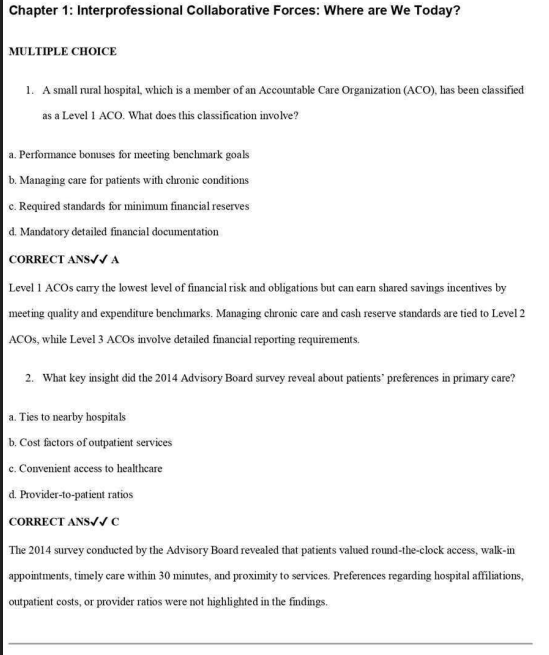
- Hundreds of chapter-by-chapter practice questions
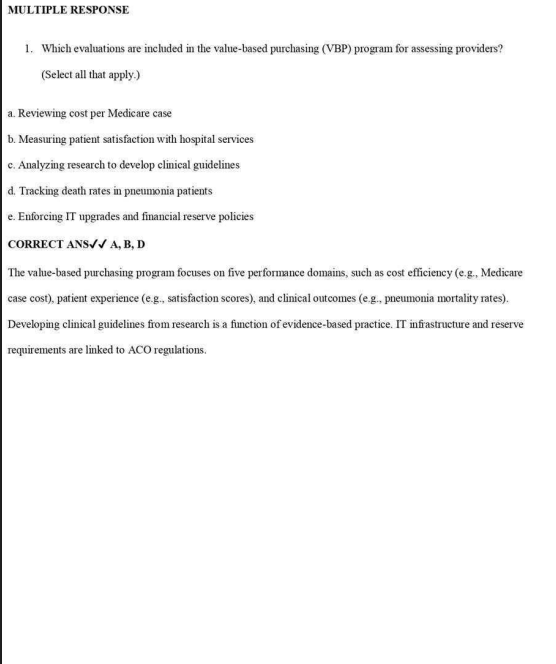
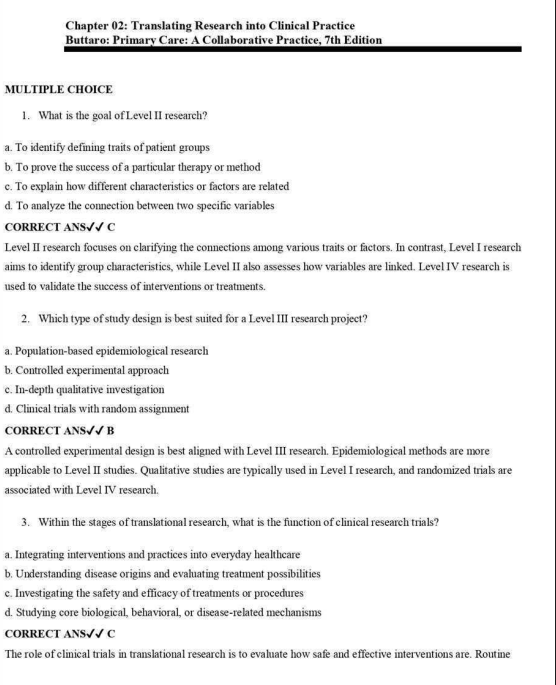
- Multiple-choice, select-all-that-apply, and complex clinical scenario questions
- Complete answer keys with thorough, evidence-based clinical rationales
- Questions aligned with AANP, ANCC FNP-BC, and NCCPA certification examination standards
- Coverage of the full scope of primary care — from health promotion and disease prevention through complex chronic disease management across the entire lifespan
Who Is This Test Bank For?
This resource is ideal for:
- Family NP and Adult-Gerontology Primary Care NP students in graduate primary care courses
- PA students completing primary care clinical rotations and board preparation
- AANP-C and ANCC FNP-BC certification examination candidates
- NCCPA PANCE and PANRE candidates reviewing primary care clinical content
- DNP students completing primary care clinical coursework and scholarly projects
- Nursing faculty developing graduate-level primary care course exams and case-based assessments
- Advanced practice nurses and PAs preparing for recertification examinations
- Primary care providers transitioning into new clinical practice areas
Topics Covered Include:
- Foundations of primary care — philosophy, evidence-based practice, and interprofessional collaboration
- Health promotion and preventive care across the lifespan — USPSTF recommendations
- Comprehensive health assessment and advanced physical examination
- Diagnostic reasoning, differential diagnosis, and clinical problem-solving
- Pharmacotherapeutics in primary care — prescribing principles and drug therapy management
- Cardiovascular disorders — hypertension, coronary artery disease, heart failure, and dysrhythmias
- Lipid disorders and metabolic syndrome management
- Respiratory conditions — asthma, COPD, pneumonia, and upper respiratory infections
- Gastrointestinal disorders — GERD, IBS, peptic ulcer disease, and hepatic conditions
- Endocrine disorders — diabetes mellitus, thyroid disease, and metabolic conditions
- Neurological conditions — headache, seizure disorders, neuropathy, and cognitive decline
- Musculoskeletal and rheumatological conditions in primary care
- Dermatological disorders — common skin conditions and malignancy recognition
- Mental health conditions — depression, anxiety, ADHD, and substance use in primary care
- Genitourinary and reproductive health — male and female conditions
- Hematological conditions in primary care
- Eye, ear, nose, and throat disorders
- Infectious disease management in primary care
- Oncological conditions recognized in primary care
- Pediatric primary care — common childhood conditions and developmental assessment
- Geriatric primary care — functional assessment and age-related conditions
- Women’s health — gynecological conditions, contraception, and menopause
- Interprofessional collaboration and care coordination in primary care
- Quality improvement and patient safety in primary care practice
Why This Test Bank Stands Out
Primary Care: Interprofessional Collaborative Practice by Buttaro, Polgar-Bailey, Sandberg-Cook, and Dick is built around three clinical realities that define advanced practice primary care.
First — primary care providers must diagnose accurately. The clinical picture is rarely complete. Patients present with undifferentiated symptoms. The differential diagnosis must be built systematically from the history, physical examination, and targeted diagnostic testing — not from pattern matching to textbook disease descriptions.
Second — primary care providers must manage comprehensively. Treatment decisions must reflect the most current evidence-based clinical guidelines — not yesterday’s protocols, not habit, not anecdote. And those decisions must account for the whole patient — their comorbidities, their medications, their social determinants of health, their preferences, and their goals of care.
Third — primary care providers must collaborate interprofessionally. The 7th Edition’s interprofessional framework reflects the reality that optimal primary care outcomes require physicians, NPs, PAs, pharmacists, social workers, behavioral health specialists, and community health workers working together — not in parallel silos. This test bank reflects that reality in every question.
Every question is grounded in real primary care clinical scenarios — the kind that appear on NP and PA board examinations and that primary care providers encounter daily. You will build a differential diagnosis from a chief complaint and a set of examination findings. You will select the correct diagnostic workup and interpret the results. You will choose a first-line treatment aligned with current USPSTF, ACC/AHA, ADA, IDSA, or other major clinical authority guidelines. You will counsel a patient on medication risks and lifestyle modifications. You will recognize when a primary care problem has exceeded the scope of primary care management and requires specialist referral.
The 7th Edition reflects the most current evidence-based guidelines across every primary care clinical area — including updated hypertension management thresholds, revised diabetes management algorithms, current lipid management recommendations, updated cancer screening guidelines, and the latest infectious disease management protocols. This test bank is fully aligned with every update.
Detailed rationales explain the diagnostic reasoning, evidence-based management guidelines, interprofessional practice principles, and clinical decision-making framework behind every correct answer — reflecting the clinical authority and evidence-based rigor that Buttaro and colleagues establish throughout the 7th Edition.
Questions are organized chapter by chapter for structured, systematic study. Target clinical areas where your diagnostic reasoning and management knowledge are weakest. Return to high-yield primary care content areas as your certification examination approaches. Build the diagnostic precision, management depth, and interprofessional practice perspective that primary care board certification demands.
Sample Questions
Question 1
A 62-year-old male presents to the primary care clinic with a six-month history of progressive exertional dyspnea, bilateral ankle edema, and a new three-pillow orthopnea. He has a history of hypertension treated with lisinopril and amlodipine. On examination — blood pressure 148/92 mmHg, heart rate 88 bpm, respiratory rate 20 breaths per minute, jugular venous distension at 45 degrees, bilateral crackles at the lung bases, and 2+ bilateral pitting edema to the knees. His BNP returns at 720 pg/mL. Which diagnosis is most consistent with this clinical presentation and what is the most appropriate initial management?
- A) COPD exacerbation — initiate bronchodilator therapy and systemic corticosteroids
- B) Nephrotic syndrome — order 24-hour urine protein and initiate ACE inhibitor therapy
- C) Heart failure with reduced or preserved ejection fraction — order echocardiogram, initiate diuretic therapy, and optimize guideline-directed medical therapy
- D) Hepatic cirrhosis with portal hypertension — order liver function tests and abdominal ultrasound
Correct Answer: C
Rationale: This clinical presentation is the classic constellation of heart failure — exertional dyspnea, orthopnea, JVD, bilateral basal crackles, peripheral edema, and markedly elevated BNP of 720 pg/mL, which is far above the diagnostic threshold of 100 pg/mL for heart failure. The history of hypertension is the most common etiology of both heart failure with reduced ejection fraction and heart failure with preserved ejection fraction. Echocardiography is the gold-standard diagnostic test for heart failure — it quantifies ejection fraction, identifies wall motion abnormalities, assesses valvular function, and guides management decisions. Initial management includes loop diuretic therapy — furosemide — for symptomatic relief of volume overload, followed by optimization of guideline-directed medical therapy based on ejection fraction. Current ACC/AHA guidelines recommend ACE inhibitors or ARBs, beta-blockers, and mineralocorticoid receptor antagonists for HFrEF. COPD exacerbation would present with wheezing and productive cough — not JVD and orthopnea. Nephrotic syndrome produces massive proteinuria and hypoalbuminemia — not the hemodynamic profile seen here. Cirrhosis produces ascites and hepatomegaly — not pulmonary crackles and orthopnea as primary findings.
Question 2
A 45-year-old woman presents for evaluation of fatigue, weight gain of 12 pounds over six months, cold intolerance, constipation, dry skin, and hair thinning. Her menstrual cycles have become irregular. On examination — blood pressure 118/74 mmHg, heart rate 58 bpm, BMI 29, facial puffiness, delayed deep tendon reflexes, and dry, coarse skin. Laboratory results — TSH 18.4 mIU/L, free T4 0.6 ng/dL, TPO antibodies markedly elevated. Which diagnosis and management plan is most appropriate?
- A) Subclinical hypothyroidism — monitor TSH every six months without initiating treatment
- B) Hashimoto’s thyroiditis with overt hypothyroidism — initiate levothyroxine therapy and recheck TSH in four to six weeks
- C) Euthyroid sick syndrome — treat the underlying cause and recheck thyroid function after recovery
- D) Secondary hypothyroidism from pituitary dysfunction — order MRI of the pituitary before initiating thyroid replacement
Correct Answer: B
Rationale: This presentation is classic Hashimoto’s thyroiditis — the most common cause of hypothyroidism in developed countries — confirmed by the combination of overt hypothyroidism, elevated TPO antibodies indicating autoimmune thyroid destruction, and the full symptom constellation of hypothyroidism. Overt hypothyroidism is defined by TSH above the upper limit of normal combined with a low free T4 — both present here. Current ATA guidelines support initiating levothyroxine therapy in all patients with overt hypothyroidism regardless of symptom severity. The starting dose is typically 1.6 mcg/kg/day for otherwise healthy adults, with TSH rechecked four to six weeks after initiation to guide dose titration. The treatment goal is normalization of TSH within the reference range. Subclinical hypothyroidism — elevated TSH with normal free T4 — may warrant watchful waiting in mild cases, but this patient has overt hypothyroidism with significant symptoms and low free T4. Euthyroid sick syndrome occurs during acute illness with transient TSH suppression — not primary hypothyroidism with elevated TSH and TPO antibodies. Secondary hypothyroidism from pituitary dysfunction would present with inappropriately low or normal TSH in the context of low free T4 — the opposite of the elevated TSH seen here.
Question 3
A 38-year-old male presents with a five-day history of productive cough with rust-colored sputum, fever of 39.1°C, right-sided pleuritic chest pain, and dyspnea on exertion. He is a non-smoker with no significant medical history. Examination reveals dullness to percussion, bronchial breath sounds, and increased tactile fremitus over the right lower lobe. Chest X-ray shows right lower lobe consolidation. His CURB-65 score is 1. Which management plan is most consistent with current IDSA/ATS guidelines for community-acquired pneumonia?
- A) Admit to hospital for IV ceftriaxone and azithromycin combination therapy
- B) Initiate outpatient therapy with amoxicillin 1 gram three times daily as monotherapy and follow up in 48 hours
- C) Prescribe azithromycin monotherapy for five days and schedule follow-up in two weeks
- D) Order CT chest before initiating antibiotic therapy to confirm the diagnosis and rule out malignancy
Correct Answer: B
Rationale: Current IDSA/ATS guidelines for community-acquired pneumonia recommend outpatient management for patients with a CURB-65 score of 0–1, indicating low severity and low mortality risk. A CURB-65 score of 1 supports outpatient management with close follow-up. For otherwise healthy adults without comorbidities, the preferred first-line outpatient regimen is amoxicillin monotherapy — its narrow spectrum, high efficacy against Streptococcus pneumoniae, favorable safety profile, and low resistance rate make it the preferred agent over macrolides in most cases. The 48-hour follow-up is essential to confirm treatment response and identify patients who may require escalation. Hospitalization is appropriate for CURB-65 scores of 2 or higher, or when clinical judgment indicates instability — this patient’s score of 1 does not meet hospitalization criteria. Azithromycin monotherapy is no longer recommended as first-line outpatient therapy for CAP due to rising macrolide resistance among pneumococcal strains. CT chest before antibiotic initiation unnecessarily delays treatment in a patient with a straightforward clinical and radiographic presentation of CAP — CT is reserved for diagnostic uncertainty or suspected malignancy in a patient with recurrent or non-resolving pneumonia.
Question 4
A nurse practitioner is evaluating a 55-year-old woman who presents for her annual wellness visit. She has a 20-pack-year smoking history, quit smoking eight years ago, has a family history of lung cancer in her father, and works as a schoolteacher. Her BMI is 24, blood pressure is 122/76 mmHg, and she is otherwise asymptomatic. Which cancer screening recommendation is most consistent with current USPSTF guidelines for this patient?
- A) No lung cancer screening is indicated since she quit smoking more than five years ago
- B) Annual low-dose CT chest screening for lung cancer is recommended given her age and smoking history
- C) Annual chest X-ray screening for lung cancer is the recommended modality for former smokers
- D) Lung cancer screening is only indicated if she has current respiratory symptoms or abnormal physical examination findings
Correct Answer: B
Rationale: Current USPSTF guidelines recommend annual low-dose CT chest screening for lung cancer in adults aged 50–80 years who have a 20 pack-year or greater smoking history and currently smoke or have quit within the past 15 years. This patient is 55 years old, has a 20-pack-year smoking history, and quit eight years ago — she meets all three criteria for annual LDCT screening. The screening interval ends when the patient has been abstinent for more than 15 years, develops a health problem that substantially limits life expectancy, or turns 81. Quitting within the past 15 years does not disqualify the patient from screening — it is specifically included in the eligibility criteria. Chest X-ray is not recommended as a lung cancer screening modality — LDCT has demonstrated a 20% reduction in lung cancer mortality compared to chest X-ray in the National Lung Screening Trial, making it the evidence-based standard. Symptom or examination finding requirements are not part of USPSTF screening criteria — screening is a preventive intervention for asymptomatic patients at elevated risk, not a diagnostic workup for symptomatic disease.
Question 5
A family nurse practitioner is managing a 68-year-old male patient with type 2 diabetes, hypertension, and stage 3a CKD. Current medications include metformin 500 mg twice daily, lisinopril 10 mg daily, and atorvastatin 40 mg daily. His most recent HbA1c is 8.9%, eGFR is 52 mL/min/1.73m², blood pressure is 146/88 mmHg, and urine albumin-to-creatinine ratio is 180 mg/g. Which medication adjustment and addition most accurately reflects current ADA and KDIGO guidelines for this patient?
- A) Discontinue metformin due to CKD stage 3a and initiate sulfonylurea monotherapy for glycemic control
- B) Continue metformin at current dose, increase lisinopril dose, and add an SGLT-2 inhibitor for combined glycemic control and nephroprotection
- C) Discontinue lisinopril due to CKD and initiate amlodipine as the preferred antihypertensive for diabetic nephropathy
- D) Add insulin glargine immediately since HbA1c above 8% always requires insulin initiation in CKD patients
Correct Answer: B
Rationale: Current ADA Standards of Medical Care in Diabetes and KDIGO guidelines support a comprehensive, guideline-directed management approach for this patient. Metformin remains safe at eGFR above 30 mL/min/1.73m² — this patient’s eGFR of 52 meets the threshold for continued use at current or reduced dosing. Increasing lisinopril is appropriate — the target blood pressure for diabetic CKD patients with proteinuria is below 130/80 mmHg per ADA guidelines, and this patient’s blood pressure of 146/88 mmHg requires more aggressive management. ACE inhibitors are the preferred antihypertensive class in diabetic CKD with proteinuria — providing both blood pressure control and independent nephroprotection through efferent arteriolar dilation. SGLT-2 inhibitors — such as empagliflozin or dapagliflozin — are now recommended by both ADA and KDIGO as preferred add-on agents in type 2 diabetic CKD patients with elevated urine albumin-to-creatinine ratio, given their proven cardiovascular and renal protective benefits beyond glycemic control. Discontinuing metformin is not indicated at this eGFR level. Discontinuing lisinopril for CKD contradicts current guidelines — ACE inhibitors are specifically recommended for diabetic nephropathy. Automatic insulin initiation for HbA1c above 8% is not current guideline-recommended practice when other agents have not been optimized.
Frequently Asked Questions (FAQs)
What edition does this test bank cover?
This test bank is written specifically for the 7th Edition of Primary Care: Interprofessional Collaborative Practice by Buttaro, Polgar-Bailey, Sandberg-Cook, and Dick. All questions are fully aligned with the current edition’s chapter organization, updated clinical guidelines, and current evidence-based primary care practice standards — including USPSTF, ACC/AHA, ADA, IDSA, ATA, and other major clinical authority recommendations.
How are the questions organized?
Questions are arranged chapter by chapter, allowing you to study systematically through the full scope of primary care clinical content or focus on specific areas — such as cardiovascular, endocrine, respiratory, or geriatric primary care — based on your certification examination preparation priorities or current clinical rotation focus.
Is this test bank aligned with NP and PA certification examinations?
Yes. Questions are written to reflect the clinical reasoning, diagnostic decision-making, and evidence-based management depth assessed on the AANP-C, ANCC FNP-BC, PANCE, and PANRE certification examinations. The emphasis on differential diagnosis construction, evidence-based treatment selection, and complex chronic disease management directly mirrors the cognitive demands and clinical content of these board examinations.
How does this test bank differ from the Dunphy Primary Care test bank?
This test bank is written specifically for the 7th Edition of Buttaro, Polgar-Bailey, Sandberg-Cook, and Dick’s Primary Care: Interprofessional Collaborative Practice. While both textbooks cover primary care content, they differ significantly in chapter organization, clinical condition coverage, interprofessional framework, and evidence-based guideline integration. Students using the Buttaro 7th Edition should use this test bank for fully aligned, edition-specific exam preparation.
Is this test bank useful for PA students as well as NP students?
Absolutely. Primary Care: Interprofessional Collaborative Practice is widely used in both graduate nursing and PA programs. The clinical scenario emphasis, diagnostic reasoning framework, and evidence-based management approach of this test bank serve both NP and PA students equally — reflecting the interprofessional philosophy at the heart of the Buttaro textbook.
How quickly can I access the test bank after purchase?
Immediately. As soon as your purchase is complete, you receive instant digital access with no waiting period. Study on your own schedule, at your own pace, from any device.
Are the rationales grounded in current primary care evidence and clinical guidelines?
Yes. Every rationale reflects current evidence-based clinical guidelines — including USPSTF preventive care recommendations, ACC/AHA cardiovascular management guidelines, ADA diabetes standards, IDSA infectious disease protocols, and ATA endocrine management recommendations — consistent with the evidence-based, interprofessional framework the 7th Edition establishes throughout.
Can nursing faculty use this test bank for graduate course assessments?
Absolutely. The chapter-by-chapter organization, clinical scenario complexity, evidence-based guideline emphasis, and diagnostic reasoning framework make this an outstanding resource for faculty building quizzes, unit exams, case-based assessments, and comprehensive examinations for graduate-level primary care NP and PA programs.

NurseJane –
Perfectly organized for my studies
Chris M. –
Very comprehensive
Norah Helen –
Perfect
Rosemary R –
what a gem!
Caleb Martins –
An excellent study guide
Bruno Molino –
Very good
Lucille Maria –
Easy to navigate and review.
Helen Christie –
Highly recommend this test bank
Craig Bellamy –
Perfect for quick revision
Thomas K. –
Great study companion
Lucas Gabriel –
Very useful learning tool