Medical-surgical nursing is not a specialty you graduate from. It is the foundation everything else is built on.
Critical care, emergency, oncology, neurology, and cardiology nursing all rest on med-surg knowledge. The ICU nurse managing cardiogenic shock first learned heart failure pathophysiology on a med-surg floor. The emergency nurse who catches early sepsis learned to spot the subtle vital sign changes that come before hemodynamic collapse. The nurse who manages a patient’s first postoperative day mastered the perioperative framework that prevents post-surgical complications.
Med-surg nursing is where clinical depth, assessment skill, pathophysiological reasoning, and nursing judgment meet, in every patient, on every shift.
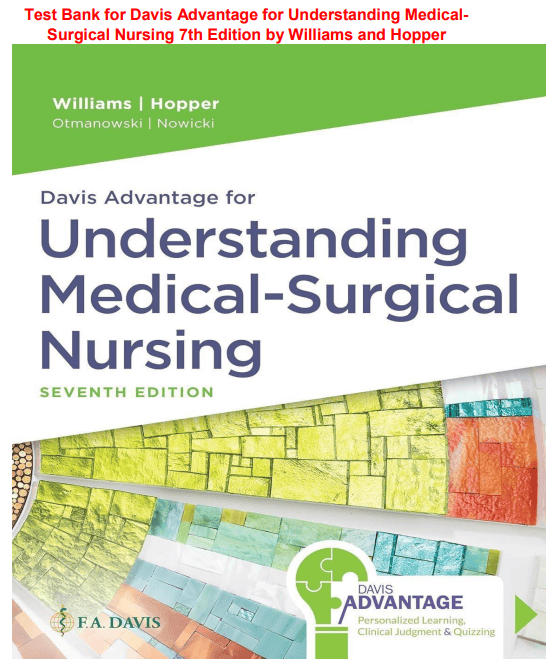
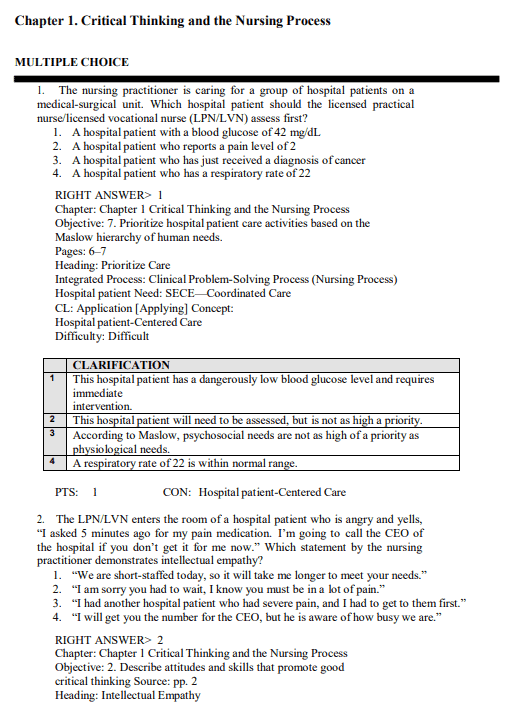
This test bank accompanies the 7th Edition of Davis Advantage for Understanding Medical-Surgical Nursing by Williams and Hopper, a student-friendly, clinically applied text. It gives you rigorous, pathophysiology-driven practice for every chapter. Use it for unit exams, course finals, ATI med-surg assessments, or NCLEX-RN preparation.
What’s Inside
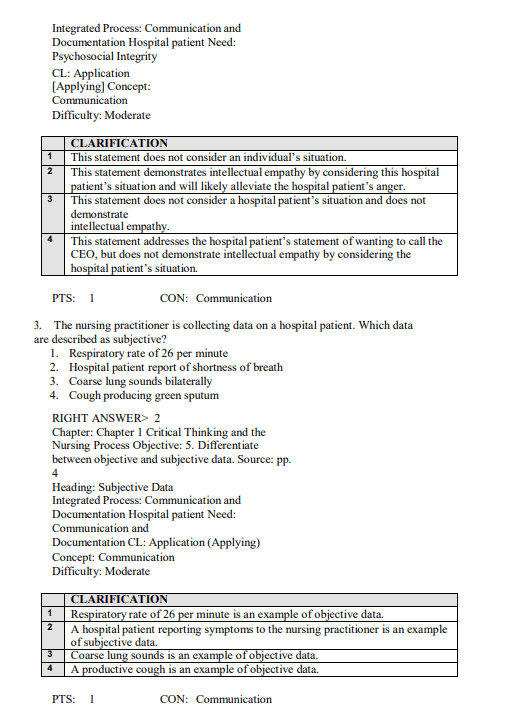
- Hundreds of practice questions mapped to every chapter
- Multiple-choice, select-all-that-apply, priority, delegation, and Next Generation NCLEX-style scenario questions
- Complete answer keys with pathophysiologically grounded rationales
- Alignment with current NCLEX-RN and Next Generation NCLEX standards
- Coverage of all major body systems, surgical nursing concepts, and evidence-based med-surg practice
Who It’s For
- Undergraduate RN students in med-surg courses using the 7th Edition
- NCLEX-RN candidates reviewing med-surg content
- LPN-to-RN bridge students
- Nursing faculty writing 7th Edition-aligned exams
- Accelerated BSN and second-degree students
- New graduate nurses consolidating foundational med-surg skills
- Students preparing for ATI med-surg assessments
Table of Contents
I. UNDERSTANDING HEALTH CARE ISSUES
- Critical Thinking, Clinical Judgment, and the Nursing Process
- Evidence-Based Practice
- Issues in Nursing Practice
- Cultural Influences on Nursing Care
- Complementary and Alternative Modalities
II. UNDERSTANDING HEALTH AND ILLNESS - Nursing Care of Patients with Fluid, Electrolyte, and Acid-Base Imbalances
- Nursing Care of Patients Receiving Intravenous Therapy
- Nursing Care of Patients With Infections
- Nursing Care of Patients in Shock
- Nursing Care of Patients in Pain
- Nursing Care of Patients With Cancer
- Nursing Care of Patients Having Surgery
- Nursing Care of Patients With Emergent Conditions and Disaster/Bioterrorism Response
III. UNDERSTANDING LIFE SPAN INFLUENCES ON HEALTH AND ILLNESS - Developmental Considerations in the Nursing Care of Adults
- Nursing Care of Older Adult Patients
- Patient Care Settings
- Nursing Care of Patients at the End of Life
IV. UNDERSTANDING THE IMMUNE SYSTEM - Immune System Function, Data Collection, and Therapeutic Measures
- Nursing Care of Patients With Immune Disorders
- Nursing Care of Patients With HIV Disease and AIDS
V. UNDERSTANDING THE CARDIOVASCULAR SYSTEM - Cardiovascular System Function, Data Collection, and Therapeutic Measures
- Nursing Care of Patients With Hypertension
- Nursing Care of Patients With Valvular, Inflammatory, and Infectious Cardiac or Venous Disorders
- Nursing Care of Patients With Occlusive Cardiovascular Disorders
- Nursing Care of Patients With Cardiac Arrhythmias
- Nursing Care of Patients With Heart Failure
VI. UNDERSTANDING THE HEMATOLOGIC AND LYMPHATIC SYSTEMS - Hematologic and Lymphatic System Function, Data Collection, and Therapeutic Measures
- Nursing Care of Patients With Hematologic and Lymphatic Disorders
VII. UNDERSTANDING THE RESPIRATORY SYSTEM - Respiratory System Function, Data Collection, and Therapeutic Measures
- Nursing Care of Patients With Upper Respiratory Tract Disorders
- Nursing Care of Patients With Lower Respiratory Tract Disorders
VIII. UNDERSTANDING THE GASTROINTESTINAL, HEPATIC, AND PANCREATIC SYSTEMS - Gastrointestinal, Hepatobiliary, and Pancreatic Systems Function, Data Collection, and Therapeutic Measures
- Nursing Care of Patients With Upper Gastrointestinal Disorders
- Nursing Care of Patients With Lower Gastrointestinal Disorders
- Nursing Care of Patients With Liver, Pancreatic, and Gallbladder Disorders
IX. UNDERSTANDING THE URINARY SYSTEM - Urinary System Function, Data Collection, and Therapeutic Measures
- Nursing Care of Patients With Disorders of the Urinary System
X. UNDERSTANDING THE ENDOCRINE SYSTEM - Endocrine System Function and Data Collection
- Nursing Care of Patients With Disorders of the Endocrine System
- Nursing Care of Patients With Disorders of the Endocrine Pancreas
XI. UNDERSTANDING THE GENITOURINARY AND REPRODUCTIVE SYSTEMS - Genitourinary and Reproductive System Function and Data Collection
- Nursing Care of Women With Reproductive System Disorders
- Nursing Care of Male Patients With Genitourinary Disorders
- Nursing Care of Patients With Sexually Transmitted Infections
XII. UNDERSTANDING THE MUSCULOSKELETAL SYSTEM - Musculoskeletal Function and Data Collection
- Nursing Care of Patients With Musculoskeletal and Connective Tissue Disorders
XIII. UNDERSTANDING THE NEUROLOGIC SYSTEM - Neurologic System Function, Data Collection, and Therapeutic Measures
- Nursing Care of Patients With Central Nervous System Disorders
- Nursing Care of Patients With Cerebrovascular Disorders
- Nursing Care of Patients With Peripheral Nervous System Disorders
XIV. UNDERSTANDING THE SENSORY SYSTEM - Sensory System Function, Data Collection, and Therapeutic Measures: Vision and Hearing
- Nursing Care of Patients With Sensory Disorders: Vision and Hearing
XV. UNDERSTANDING THE INTEGUMENTARY SYSTEM - Integumentary System Function, Data Collection, and Therapeutic Measures
- Nursing Care of Patients With Skin Disorders
- Nursing Care of Patients With Burns
XVI. UNDERSTANDING MENTAL HEALTH CARE - Mental Health Function, Data Collection, and Therapeutic Measures
- Nursing Care of Patients With Mental Health Disorders
Why This Test Bank Delivers Results
Williams and Hopper built their text on one commitment: students should understand med-surg nursing, not just memorize it. When you understand why left-sided heart failure causes dyspnea and orthopnea, you can derive the symptoms instead of memorizing a list. When you understand why compartment syndrome produces its signs, you recognize it sooner. When you understand why insulin needs change during illness, you anticipate complications before they develop.
The 7th Edition is its most thorough update yet, with revised pathophysiology content, evidence-based guidelines updated across every body system, expanded NCLEX-RN and NGN clinical judgment content, stronger pharmacology integration, and current patient-centered care frameworks.
This test bank assesses that same kind of understanding. Its questions ask you to:
- Recognize the earliest sign of increased intracranial pressure before herniation and identify the priority nursing response.
- Connect a laboratory abnormality to the mechanism behind it and judge its clinical significance.
- Interpret a postoperative finding as expected recovery or early complication, and justify the call from the surgical physiology.
- Prioritize four patients at the start of a shift using the clinical data given, not whichever diagnosis sounds most urgent.
These are the judgments the NCLEX tests and the decisions that protect patients. The test bank builds them unit by unit and chapter by chapter.
Sample Questions
Question 1
A nurse is caring for a patient with cirrhosis admitted for worsening ascites and peripheral edema. This morning the patient is more confused than yesterday, has a coarse tremor when the arms are extended, and has a musty, sweet breath odor. Serum ammonia is 112 mcmol/L. The family asks why their loved one is “acting differently.” Which response best explains the pathophysiology in family-friendly language?
A) “Your family member is likely going through alcohol withdrawal because of their history of drinking.”
B) “The liver can no longer remove a waste product called ammonia from the blood. When it builds up, it affects the brain and causes the confusion and tremor you’re seeing. We’re giving a medication to help the body get rid of it.”
C) “This confusion is a normal part of liver disease and doesn’t need treatment right now.”
D) “They may have a blood infection causing the confusion, and we’re waiting on cultures before treating.”
Correct answer: B
Rationale: In cirrhosis, damaged hepatocytes can no longer run the urea cycle, which converts neurotoxic ammonia into urea for renal excretion. Ammonia crosses the blood-brain barrier, where astrocytes convert it to glutamine. The resulting astrocyte swelling and neurotransmitter disruption produce confusion, altered consciousness, asterixis (the coarse flapping tremor), and fetor hepaticus (the musty-sweet breath). Lactulose acidifies the colon, trapping ammonia as non-absorbable ammonium, reducing ammonia-producing bacteria, and promoting elimination through the bowel. Option A confuses hepatic encephalopathy with alcohol withdrawal, which presents and is managed differently. Option C is wrong because an ammonia of 112 with active neurological signs needs treatment. Option D describes septic encephalopathy, which can coexist but doesn’t explain the elevated ammonia in this picture.
Question 2
A nurse is caring for a patient with COPD on 2 L/min oxygen by nasal cannula. Morning ABGs show pH 7.34, PaCO₂ 58 mmHg, PaO₂ 68 mmHg, HCO₃ 32 mEq/L, and SpO₂ 93%. The patient is alert, oriented, and comfortable. The family insists the nurse raise the oxygen because “higher oxygen is better.” Which response best reflects the rationale for controlled oxygen therapy?
A) Increase to 6 L/min, since higher saturation is always the goal in respiratory disease
B) Keep the rate at 2 L/min and explain that many patients with advanced COPD have adapted to chronically high CO₂ and may rely on low oxygen as their main drive to breathe, so a large oxygen increase can cause hypoventilation and worsen CO₂ retention
C) Increase to 4 L/min as a compromise, since moderate increases carry no risk in COPD
D) Stop the oxygen, since an SpO₂ of 93% is acceptable and any supplemental oxygen risks hypercapnic respiratory failure
Correct answer: B
Rationale: The ABG shows chronic compensated respiratory acidosis: the PaCO₂ of 58 is chronically elevated, and the HCO₃ of 32 shows renal compensation that brings the pH to 7.34. In long-standing hypercapnia, central chemoreceptors become desensitized to CO₂, and the patient leans more on peripheral chemoreceptors, which respond to low arterial oxygen. Raising PaO₂ substantially can blunt that stimulus, reducing ventilation, raising PaCO₂, and lowering pH. The usual SpO₂ target for advanced COPD on oxygen is 88–92%, and this patient is already at the upper end. Option D goes too far, because the patient still benefits from controlled low-flow oxygen. The family needs clear, compassionate teaching about why the goal differs from their intuition.
Question 3
A nurse is caring for a patient three days after a right below-knee amputation for peripheral arterial disease with non-healing diabetic foot ulcers. The patient suddenly reports severe cramping pain in the right foot and toes, and says, “I know it sounds crazy, but I can feel my foot hurting, and it isn’t there anymore.” Which response best reflects the pathophysiology and appropriate management?
A) Tell the patient the pain is psychological and will resolve with anti-anxiety medication
B) Acknowledge that the pain is real, explain that phantom limb pain is a recognized neurological phenomenon caused by cortical reorganization after amputation, and notify the provider about treatment such as gabapentin or mirror therapy
C) Attribute the pain to surgical wound healing and give the prescribed opioid without further assessment
D) Document confusion and reassess mental status, since the patient reports pain in a limb that doesn’t exist
Correct answer: B
Rationale: Phantom limb pain affects 60–80% of amputees and is neither psychological nor a sign of confusion. After amputation, the cortical area that represented the limb loses its peripheral input and reorganizes, with neighboring inputs invading it, while its central map still points to the missing limb. Neuromas at the stump, clusters of disorganized regenerating nerve endings, also fire spontaneously and add to the pain signal. Evidence-based treatments include gabapentin or pregabalin, mirror therapy, and in some cases tricyclic antidepressants or NMDA antagonists. Dismissing the pain as psychological erodes trust and blocks effective treatment, and treating it only as incisional pain misses the neuropathic mechanism.
Question 4
A charge nurse beginning a day shift must decide which of four patients to assess first. Which patient takes priority?
A) A 62-year-old with stable chronic kidney disease whose creatinine of 2.8 mg/dL matches his documented baseline and who is asking for breakfast
B) A 55-year-old 18 hours after a laparoscopic appendectomy with incisional pain of 4/10 and normal vital signs 30 minutes ago
C) A 70-year-old with heart failure who was sleeping comfortably at the last check and has just used the call light for sudden severe shortness of breath, inability to lie flat, and “gurgling” breathing
D) A 48-year-old with type 2 diabetes whose morning glucose is 232 mg/dL and who is asking about the breakfast tray
Correct answer: C
Rationale: The priority is the patient with the most acute, potentially life-threatening change from baseline. Sudden severe dyspnea, orthopnea, and gurgling respirations in a patient with heart failure suggest acute decompensation with flash pulmonary edema, in which fluid is flooding the alveoli and large airways faster than it can clear. This patient needs immediate assessment, high Fowler’s position, supplemental oxygen, urgent provider notification for IV diuresis, and readiness to escalate care. The CKD patient is at baseline, the post-appendectomy pain is within expected recovery, and a glucose of 232 mg/dL needs attention but is not an immediate threat.
Question 5
A nurse is giving discharge teaching to a patient with newly diagnosed type 2 diabetes who will start home glucose monitoring. The patient asks, “When should I check my blood sugar, and what numbers should I aim for?” Which response best reflects current evidence-based diabetes education?
A) “Check only when you feel symptoms of low blood sugar. If you feel well, you don’t need routine checks.”
B) “Keep every reading below 100 mg/dL. Anything higher means your diabetes isn’t well managed.”
C) “A common schedule is a fasting check before breakfast and a check two hours after meals. ADA targets for most adults with type 2 diabetes are 80–130 mg/dL fasting and below 180 mg/dL two hours after a meal, but your provider will individualize your targets based on your age, other conditions, and treatment.”
D) “Check once a week at the same time of day. Daily monitoring isn’t necessary if you’re not on insulin.”
Correct answer: C
Rationale: ADA targets for most non-pregnant adults are 80–130 mg/dL fasting and below 180 mg/dL two hours after a meal, individualized by age, comorbidities, hypoglycemia risk, life expectancy, and patient goals. Fasting readings reflect overnight hepatic glucose production and basal control, while postprandial readings show the response to food. Knowing when and why to check helps patients spot patterns and give their provider useful data. Checking only when symptomatic misses asymptomatic hyperglycemia, which still drives microvascular complications. A target below 100 mg/dL for all readings is too strict and raises hypoglycemia risk, especially with secretagogues or insulin. Weekly checks are too infrequent for a newly diagnosed patient who is learning how food, activity, and medication affect glucose.
Frequently Asked Questions
Which edition does this test bank cover?
The 7th Edition of Davis Advantage for Understanding Medical-Surgical Nursing by Williams and Hopper. Questions follow that edition’s chapter organization, updated clinical content, evidence-based practice guidelines, and NGN clinical judgment integration.
Does it follow the textbook’s structure?
Yes. Questions are organized by unit and chapter, from Unit I (Understanding Health Care Issues) through Unit XVI (Understanding Mental Health Care), covering all 57 chapters. You can study in order or focus on the body systems your exam covers.
Is it aligned with the NCLEX-RN and Next Generation NCLEX?
Yes. Questions reflect current NCLEX-RN standards and the clinical judgment emphasis of the NGN. Priority, delegation, clinical deterioration, and complex scenario questions appear throughout.
Is it useful for NCLEX-RN candidates reviewing med-surg?
Yes. Med-surg is the largest content category on the NCLEX-RN, and this test bank pairs unit-by-unit coverage with application-level reasoning questions.
How soon can I access it?
Immediately. You get instant digital access after purchase and can study on any device, on your own schedule.
Are the rationales detailed enough for an understanding-based approach?
Yes. Each rationale explains the pathophysiology, nursing priorities, and clinical reasoning behind the answer, in keeping with the Davis Advantage approach.
Can faculty use it for course assessments?
Yes. The unit-and-chapter organization, understanding-based questions, NGN-aligned scenarios, and clinical depth suit unit exams, finals, and NCLEX-prep assessments in undergraduate med-surg courses.
Henry Wilcox –
Thanks. You saved me a lot of time and money with this
Josh189 –
Perfect! comprehensive, accurate, and well organized
Benjamin Graham –
detailed answers and rationales make it easy for more to understand difficult concepts.
Beverly –
well worth the money
Jennifer –
Simply the best med-surg study guide.
Gerald M. –
I find this extremely helpful for my exam preps
Perry M –
Worth every penny
Barbara Kimani –
very very helpful
Helen Christie –
A solid study guide
Lucille Maria –
Detailed and perfectly organized resource
Peterson S. –
Excellent. The test bank is much better than I expected
Norah Helen –
The detailed rationales makes this test bank an extremely valuable resource
Grace W. –
Perfect!
Jarrod Bent –
Good!
Chris martin –
This has to be exactly what I needed to build exam confidence
Caleb Martins –
I like it
Yunice M –
Miles better than I expected
Vmansteain –
Excellent study guide for med-surg
Betty N. –
I’m very lucky to get hold of this gem
Bruno Molino –
It’s all I needed to nail my finals
Carol Kay –
I am really lucky to have this test bank
Melania Angel –
Very good for exam preps
Lisa Horton –
An excellent exam resource
Theresa M. –
Excellent
Nelly –
A solid test bank with detailed answers
Stephaniemclister –
With this, I know what to expect in the exams and I am now more confident
Kamara Reid –
Excellent nursing test bank, clear questions and accurate explanations.
Lucas Gabriel –
Great resource with realistic questions and detailed rationales
Cayte N. –
Valuable resource for clinical exam preparation
Craig Bellamy –
Made studying more focused and efficient
Kevin May –
Helped me understand challenging concepts much better
Gerald N –
Easy to navigate and use
SHoustone –
Questions were relevant and easy to understand
Liam Mbogo –
Excellent resource for practicing before med-surge nursing exams.
Karen Njiru –
Clear questions with helpful explanations for better understanding.
Leah Kiptum –
Perfect for practicing before nursing exams.
Penny Wajjiru –
Helpful resource that reinforced what I learned in class
Perpetual Gates –
Great practice material with realistic nursing questions.
Nelius M. –
Good variety of questions covering essential med-surg topics.
Tess Mwaure –
Helped me identify areas where I needed more practice.
Carlos Jones –
Questions were challenging but manageable
Catherine Maribel –
Improved my confidence before nursing exams
Peris Hart –
Comprehensive questions covering important nursing concepts.
Patty Townsend –
Very useful tool for NCLEX practice.
Doris King –
I found these questions helpful for reinforcing key med-surg nursing concepts.
Sarah Willock –
This test bank helped me to feel much more prepared and confident
Terry Anne –
Questions cover a wide range of important topics
Sally K. –
Made studying much easier and more focused
Stevie Kims –
Useful test bank for exam preparation.
Betty Morgot –
Great variety of practice questions
Aurora Hezel –
Explanations helped reinforce difficult topics
Moureen Mbaye –
A valuable addition to my study routine.
Lydiah O. –
Great way to review difficult concepts.
Hannon Jerry –
Practical questions with useful answer rationales
Jaqueline M. –
Definitely helpful for consistent exam preparation
Harry Wilson –
Clear, concise, and informative material
Neil O. –
Helped reinforce important nursing topics
George Wayne –
A great addition to my studies
Glen M. –
Very effective for nursing exam review
Selina Meg –
Excellent tool for reviewing before important tests
Selina Charles –
Questions closely matched what I needed to review.
Ruth W –
Easy to use and great for quick studying.
Carl Jr. –
Very useful for building confidence before exams
Terry Jones –
Good variety of questions covering important nursing concepts
Jacky Deon –
Great practice resource for nursing students.
Julius Jones –
Clear questions with helpful explanations
Danielle Kayle –
Convenient resource for study sessions
Joseph M. –
Questions covered many important areas effectively.
James Anderson –
Helpful resource when preparing for comprehensive exams.
Emily Johnson –
Clear questions made studying more productive
Charlotte Rivera –
Useful resource for reinforcing important concepts
Eric Bailey –
Great tool for regular exam preparation.
Mia Murphy –
Questions are easy to understand and practice
Michael Keane –
Useful material for practicing recall in short sessions.
Anne Johnson –
The questions support a consistent approach to independent revision.
Kai Marcus –
Helpful practice for reviewing concepts before class discussions.
Kennedy Walker –
A convenient way to revisit material after completing assignments.
Zipporah Shaw –
Questions make it easier to plan targeted review sessions.
Anna Bilha –
A useful tool for testing understanding chapter by chapter.
Amina M. –
Helpful practice questions for reinforcing foundational principles
Jedida Brown –
Good resource for making revision more systematic.
Beryl A. –
Useful exercises for checking knowledge after completing readings
Dennys Kim –
Helpful questions for reviewing essential nursing concepts
Mercy Charles –
Makes exam preparation more organized and focused
Andrew Pep –
Useful practice for strengthening clinical knowledge.
Matty Cash –
Convenient resource for revising challenging nursing topics.
Andy Sole –
Supports consistent learning through regular self-assessment.
Romy Cleo –
Makes independent study more engaging and productive
Doris King –
Useful questions for checking comprehension of course topics
Alex Saar –
Helpful supplement for maintaining a steady revision routine.