Women’s health is one of the most nuanced — and most rewarding — areas of advanced practice care.
From adolescence through menopause and beyond, women present with a unique and evolving set of health needs. Managing those needs well requires deep clinical knowledge, sharp assessment skills, and evidence-based decision making. That’s exactly what this test bank is designed to build.
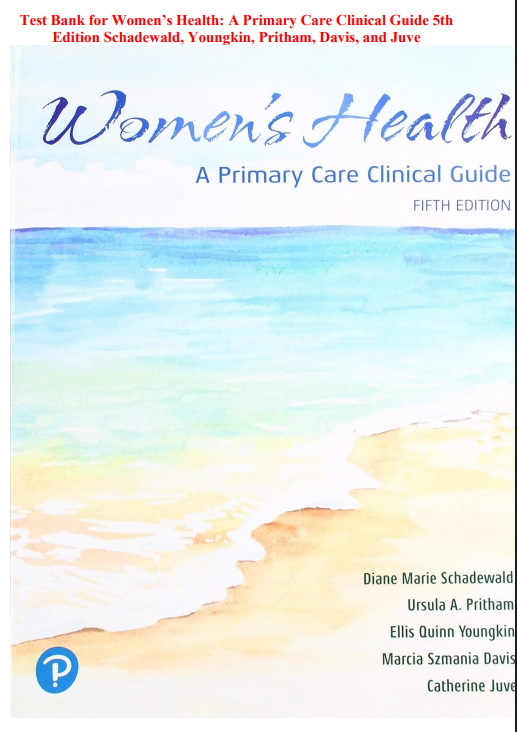
This comprehensive resource is built for the 5th Edition of Women’s Health: A Primary Care Clinical Guide by Schadewald, Youngkin, Pritham, Davis, and Juve. It’s the study companion that NP students, PA students, and women’s health practitioners have been looking for — packed with practice questions that go beyond memorization and into real clinical thinking.
What’s Inside?
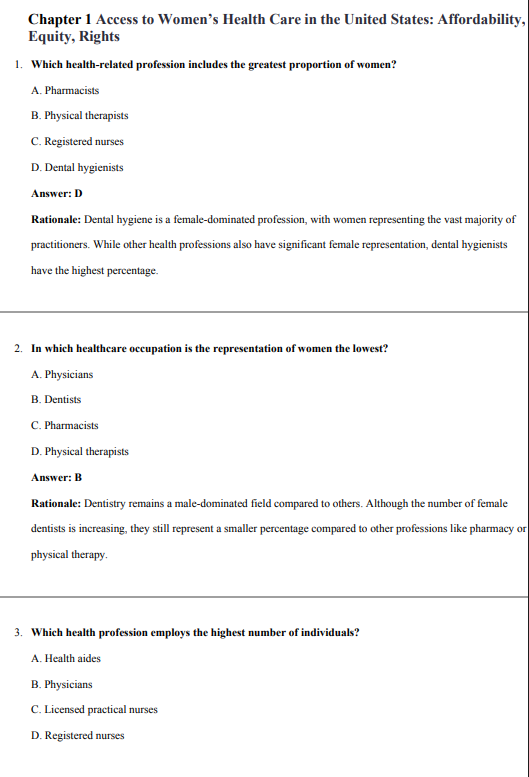
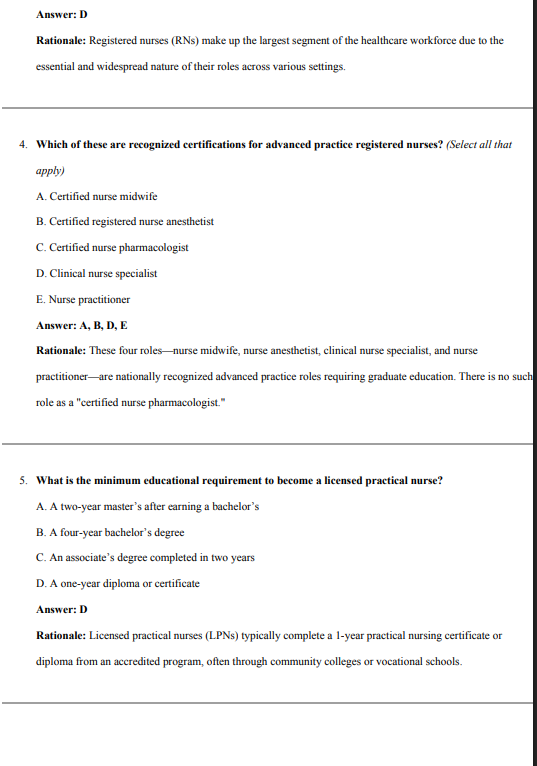
- Hundreds of chapter-by-chapter practice questions
- Multiple-choice, select-all-that-apply, and clinical scenario-based questions
- Complete answer keys with thorough, evidence-based rationales
- Questions aligned with APRN and women’s health certification exam standards
- Coverage of the full lifespan of women’s health — from puberty to post-menopause
Who Is This Test Bank For?
This resource is ideal for:
- Family NP and Women’s Health NP students in clinical coursework
- PA students completing women’s health rotations
- Certified Nurse-Midwife students reviewing primary care concepts
- WHNP-BC and ANP-BC certification exam candidates
- Nursing faculty developing women’s health course exams and assessments
- Primary care providers refreshing their women’s health clinical knowledge
Topics Covered Include:
- Well-woman assessment and health promotion across the lifespan
- Menstrual disorders and abnormal uterine bleeding
- Contraception counseling and family planning
- Preconception care and fertility management
- Sexually transmitted infections and vaginal disorders
- Breast health, breast cancer screening, and benign breast conditions
- Cervical cancer screening, colposcopy, and HPV management
- Menopause, perimenopause, and hormone therapy
- Urinary incontinence and pelvic floor disorders
- Polycystic ovary syndrome and endocrine disorders
- Mental health conditions specific to women
- Domestic violence, sexual assault, and trauma-informed care
- Cardiovascular disease and osteoporosis in women
- Common dermatological and musculoskeletal conditions in women
Why This Test Bank Stands Out
Women’s health primary care demands more than textbook knowledge.
It demands the ability to synthesize patient history, interpret diagnostic findings, counsel patients on sensitive topics, and make evidence-based treatment decisions — often in the same appointment. This test bank puts you in those exact situations.
Every question is grounded in real clinical scenarios. You won’t just identify a diagnosis — you’ll choose the right screening tool, select the appropriate treatment protocol, counsel a patient on contraceptive options, or interpret abnormal lab findings. That applied, scenario-based practice is what separates prepared clinicians from overwhelmed ones.
Questions are organized chapter by chapter. Rationales are thorough and evidence-based — reflecting the same clinical guidelines that Schadewald, Youngkin, Pritham, Davis, and Juve embed throughout the textbook.
Sample Questions
Question 1 A 28-year-old woman presents to the clinic requesting contraception. She has a history of migraines with aura and smokes half a pack of cigarettes per day. Which contraceptive method is most appropriate?
- A) Combined oral contraceptive pill
- B) Levonorgestrel intrauterine device
- C) Transdermal contraceptive patch
- D) Combined hormonal vaginal ring
Correct Answer: B Rationale: Combined hormonal contraceptives — including the pill, patch, and ring — contain estrogen, which is contraindicated in women with migraines with aura due to significantly increased stroke risk. This risk is further compounded by cigarette smoking. A levonorgestrel IUD is a progestin-only, highly effective, long-acting contraceptive method that carries no estrogen-related cardiovascular risks. It is the safest and most appropriate choice for this patient. Progestin-only methods such as the hormonal IUD, implant, or progestin-only pill are recommended in women with estrogen contraindications.
Question 2 A 52-year-old woman reports hot flashes, night sweats, and vaginal dryness that are significantly affecting her quality of life. She has no personal or family history of breast cancer or cardiovascular disease. What is the most appropriate first-line management?
- A) Selective serotonin reuptake inhibitor therapy
- B) Systemic hormone therapy with estrogen and progesterone
- C) Vaginal lubricants and lifestyle modifications only
- D) Phytoestrogen supplementation
Correct Answer: B Rationale: For healthy women under age 60 or within 10 years of menopause onset with no contraindications, systemic hormone therapy remains the most effective treatment for moderate to severe vasomotor symptoms. This patient has no contraindications — no breast cancer history, no cardiovascular disease — making hormone therapy the appropriate first-line choice. SSRIs are a reasonable alternative for women who cannot take hormones. Vaginal lubricants address genitourinary symptoms but not vasomotor symptoms. Phytoestrogens have insufficient evidence to support their use as first-line treatment.
Question 3 During a routine well-woman exam, a 35-year-old woman reports a new lump in her left breast. She noticed it two weeks ago. It is mobile, smooth, non-tender, and approximately 1.5 cm. What is the most appropriate next step?
- A) Reassure the patient and recheck in six months
- B) Order a bilateral diagnostic mammogram and ultrasound
- C) Refer immediately to oncology without further workup
- D) Prescribe antibiotics for suspected mastitis
Correct Answer: B Rationale: Any new discrete breast mass requires prompt diagnostic imaging regardless of clinical characteristics. While a mobile, smooth, non-tender mass is more suggestive of a benign fibroadenoma, clinical features alone cannot reliably distinguish benign from malignant lesions. Diagnostic mammogram combined with ultrasound is the appropriate first step in evaluating a palpable breast mass in a woman over 30. Immediate oncology referral without imaging is premature. Antibiotics are indicated for infectious processes such as mastitis or abscess — not a discrete, non-tender mass with no signs of infection.
Question 4 A 19-year-old sexually active woman presents with mucopurulent cervical discharge, cervical motion tenderness, and lower abdominal pain for three days. She is afebrile with no peritoneal signs. Which is the most appropriate management?
- A) Obtain cultures and await results before treating
- B) Initiate outpatient treatment for pelvic inflammatory disease
- C) Admit to hospital for intravenous antibiotic therapy
- D) Treat for bacterial vaginosis and reassess in one week
Correct Answer: B Rationale: This clinical presentation meets the minimum diagnostic criteria for pelvic inflammatory disease — cervical motion tenderness, uterine tenderness, and mucopurulent discharge. Current CDC guidelines recommend initiating empiric outpatient antibiotic treatment in mild-to-moderate PID cases without indications for hospitalization. Indications for inpatient treatment include surgical emergency, pregnancy, lack of response to oral antibiotics, severe illness with high fever, or inability to tolerate oral medications — none of which apply here. Waiting for culture results before treating increases risk of complications including infertility and chronic pelvic pain.
Question 5 A 42-year-old woman with PCOS presents for her annual visit. Her BMI is 31 and her fasting glucose is 108 mg/dL. She has no current plans for pregnancy. Which recommendation is most important to address at this visit?
- A) Begin combined oral contraceptive therapy immediately
- B) Refer to reproductive endocrinology for fertility evaluation
- C) Screen for type 2 diabetes and initiate lifestyle modification counseling
- D) Prescribe metformin without further metabolic workup
Correct Answer: C Rationale: Women with PCOS are at significantly elevated risk for insulin resistance, impaired fasting glucose, and type 2 diabetes. A fasting glucose of 108 mg/dL falls in the impaired fasting glucose range — a critical early warning sign. The most important intervention at this visit is metabolic risk assessment and evidence-based lifestyle counseling targeting weight management, physical activity, and dietary modification. While metformin may be appropriate, prescribing it without a complete metabolic workup — including HbA1c — is premature. Reproductive referral is not indicated since the patient has no current fertility goals. Oral contraceptives may assist with menstrual regulation but do not address her primary metabolic risk.
Frequently Asked Questions (FAQs)
What edition does this test bank cover? This test bank is written specifically for the 5th Edition of Women’s Health: A Primary Care Clinical Guide by Schadewald, Youngkin, Pritham, Davis, and Juve. All questions are fully aligned with the current edition’s chapter structure, updated clinical guidelines, and evidence-based content.
How are the questions organized? Questions are organized chapter by chapter, allowing you to study systematically or target specific topic areas — such as contraception, menopause, or sexually transmitted infections — based on your exam needs or clinical rotation focus.
Is this test bank aligned with certification exam standards? Yes. Questions are written to reflect the clinical reasoning and knowledge base assessed on APRN and women’s health certification exams — including the WHNP-BC, ANP-BC, and FNP-C. The focus on clinical scenario application mirrors the style and difficulty of these exams.
Is this resource useful for PA students? Absolutely. PA students completing women’s health rotations or preparing for PANCE/PANRE content in reproductive and women’s health will find this test bank highly relevant and directly applicable to their exam preparation.
How soon can I access the test bank after purchase? Immediately. Once your purchase is complete, you receive instant digital access. No waiting, no shipping. Study whenever and wherever works best for you.
Are the rationales clinically accurate and evidence-based? Yes. Every rationale is grounded in current evidence-based clinical guidelines — including CDC, ACOG, and USPSTF recommendations — consistent with the clinical approach used throughout the 5th Edition textbook.
Can nursing faculty use this test bank for course assessments? Absolutely. The chapter-by-chapter organization and varied question formats make this an excellent resource for faculty building quizzes, unit exams, or comprehensive course assessments in women’s health and advanced practice primary care courses.

Norah Helen –
An excellent study guide
Winnie M. –
Perfect!